
The Government Actually Did Something Right: Our Take on the New Food Pyramid
Hey everyone, Jonnie here, lead researcher at Heart and Soil. If you’ve been following the news, you’ve probably seen that the United States government just dropped a brand new food pyramid, and honestly? This is really exciting for us.
I just walked through the entire thing, and I want to share my thoughts with you because this represents a massive shift in how our government approaches nutrition.
Real Food Starts Here
Right at the top of the new guidelines, we’re greeted with broccoli, whole milk, and a steak. Now, they weren’t quite brave enough to go with raw milk (we’ll let that slide for now), but seeing whole milk prominently featured is a huge win.
The opening statement sets the tone perfectly: “Better health begins on your plate. Not in the medicine cabinet.” The new Dietary Guidelines for Americans defines real food as whole, nutrient-dense, and naturally occurring, placing them back at the center of our diets.
Seeing “nutrient-dense” in official government guidance? We’ve been saying this for years. This is incredible progress.
The Data That Can’t Be Ignored
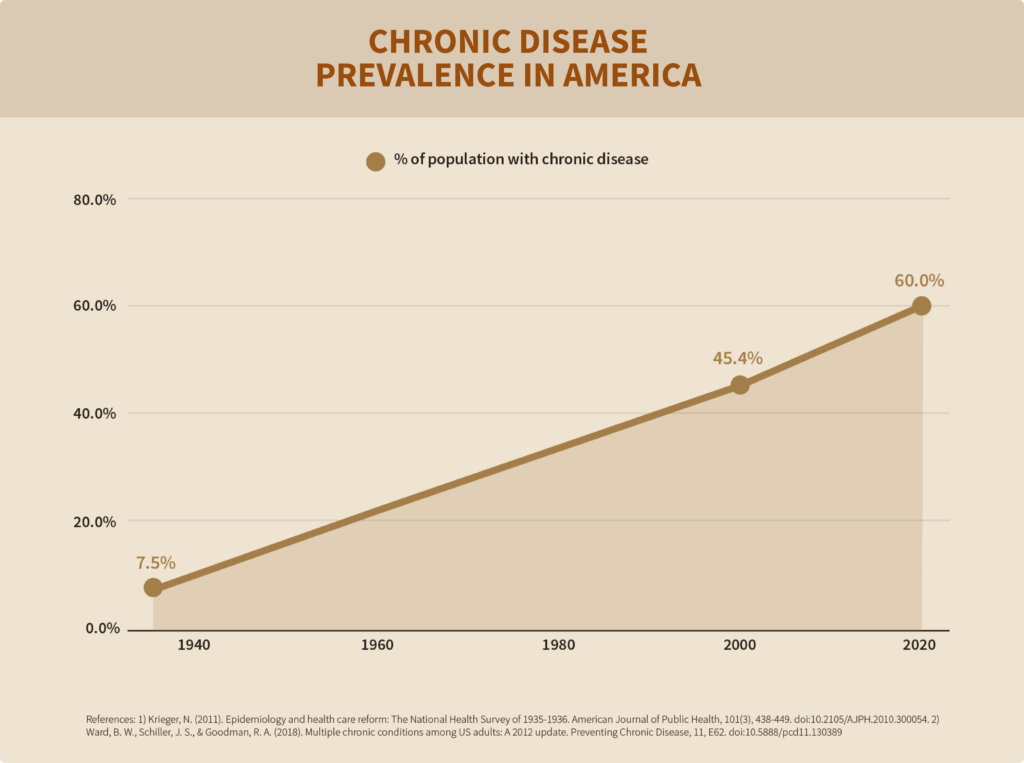
The new guidelines don’t pull any punches about the current state of American health. Here are the sobering statistics they’re highlighting:
50% of Americans have prediabetes or diabetes. Metabolic dysfunction is a huge problem in this country. Many people know someone with diabetes, and countless others are approaching prediabetes without even knowing it.
75% of adults report having at least one chronic condition. Whether metabolic or physical, the health of Americans deserves better than this.
90% of US healthcare spending goes to treating chronic disease, much of which is linked to diet and lifestyle. This stat is particularly important when you think about personal finances. So many people spend their lives diligently saving money, building up their 401(k)s and Roth IRAs, only to spend almost all of it in those final ten years on healthcare costs. It’s a tragedy, and our current healthcare system isn’t set up to prevent it.
Calling Out the Real Problem
For decades, we’ve been misled by guidance that prioritized highly processed foods, and we’re now facing unprecedented rates of chronic disease. The old food pyramid – the one we all saw plastered on the walls of our middle schools and high schools – got it wrong.
But here’s what really impressed me. The new guidelines state: “For the first time, we’re calling out the dangers of highly processed foods and rebuilding a broken system from the ground up with gold standard science and common sense.”
This is absolutely huge. Processed foods are such a major problem in our food system, and seeing the government acknowledge this on their official website is something I never thought I’d see.
The New Pyramid: What’s Changed? Real Food.
Now for the main event – the actual pyramid itself. And let me tell you, this is a complete inversion from what we grew up with.
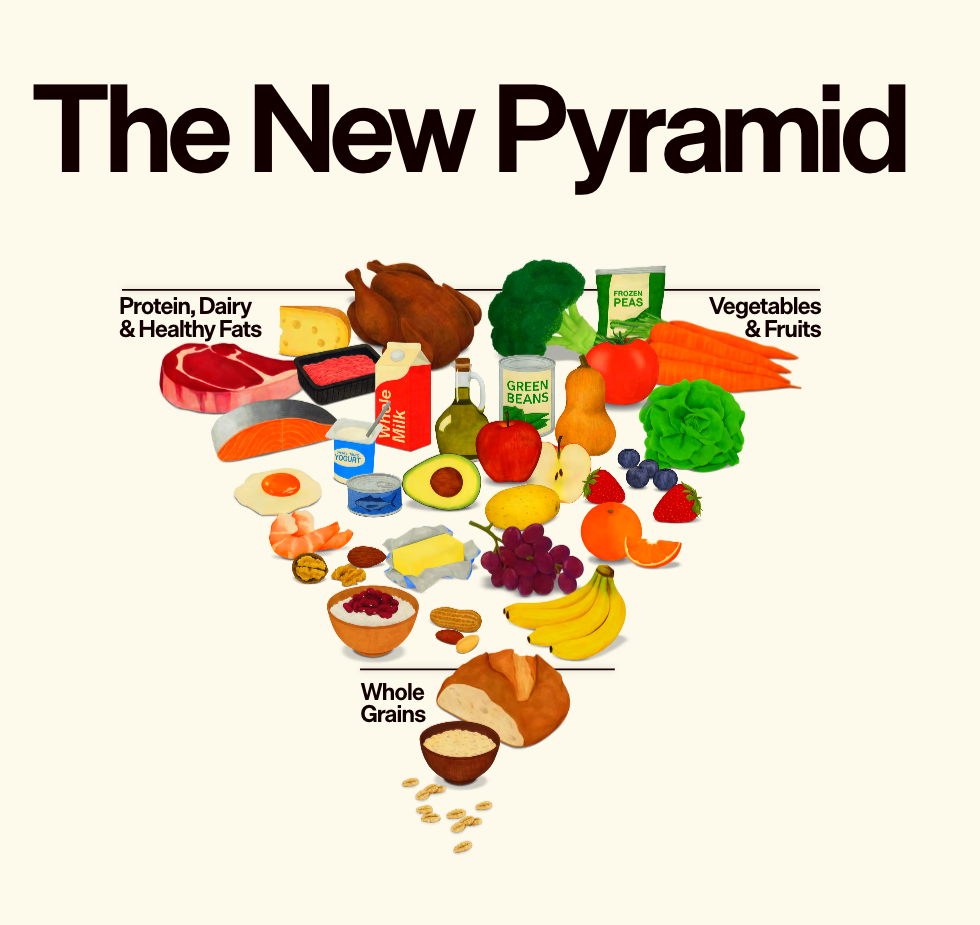
At the Top: Protein, Dairy, and Healthy Fats
We’ve been saying this since 2020: prioritize protein in all your meals, and you really can’t go wrong. The fact that healthy fats are included prominently is super important. And here’s something I noticed – I don’t see a single seed oil in the pictures. There’s a bottle of olive oil in the healthy fats section, and that omission of seed oils appears to be very intentional.
Middle Section: Vegetables and Fruits
This is a great source of carbohydrates. Look, we’re not the biggest fans of all vegetables, but at the end of the day, it’s better than eating processed food, and it’s a great place to start for a lot of people.
Bottom: Whole Grains
The guidelines make an important distinction here: whole grains are encouraged, while refined carbohydrates are not. Now, we’re not the biggest promoters of grains at Heart and Soil. But from what I can see in the images, it looks like they’re featuring sourdough bread rather than white Wonder Bread. That’s a significant difference. If you are going to eat grains, there are ways to prepare and process them so they’re a little more gentle on your gut.
What They Got Right About Fats
For far too long, this country and the West in general has been terrified of fats while completely forgetting their absolute necessity in your biochemistry. Healthy fats support brain health, hormone function, cholesterol levels, sexual hormones, cellular integrity – the list goes on.
The guidelines correctly identify that healthy fats are a natural part of real foods like meat, seafood, dairy, nuts, olives, and avocados. It’s really great to see fats being publicized as necessary for a proper diet.
It’s Not About Perfection
One of my favorite aspects of the new guidelines is this statement: “The new pyramid is a flexible framework meant to guide better choices, not dictate exact meals.”
This is so important. You don’t need to strive for perfection here. If you just try to stick to this pyramid, you’re going to be way ahead of the average American right now. The message is clear: eating real whole foods is one of the biggest levers you can pull for your health.
Our Take: What’s Still Missing
Overall, this represents a huge step above what we’ve seen in the past 30 years. But I do have a couple of critiques and suggestions.
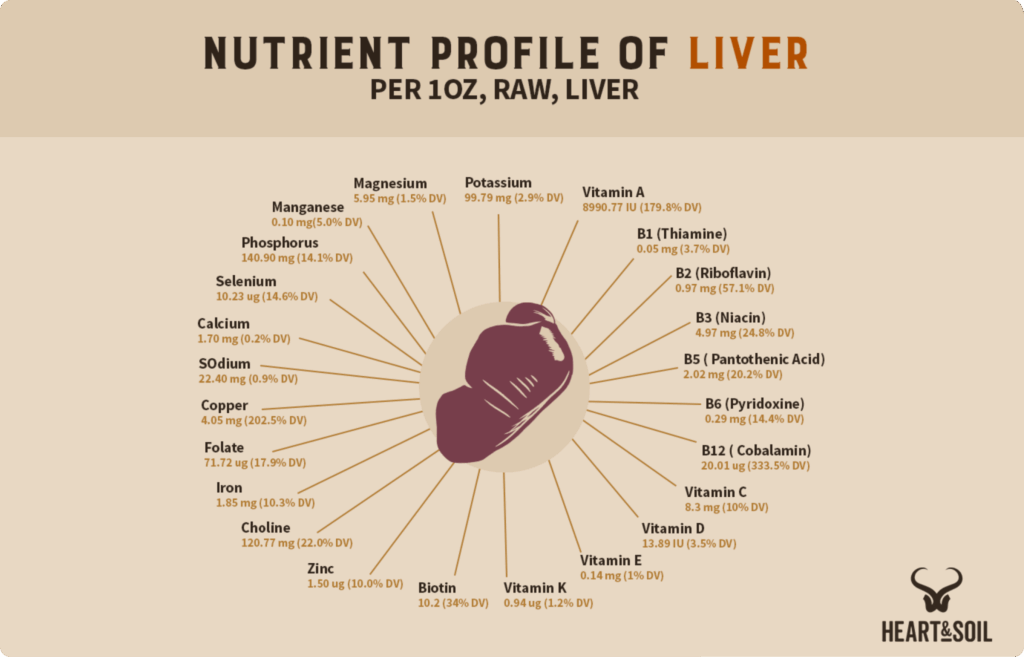
Where are the organ meats? The pyramid prioritizes protein, dairy, and healthy fats. Let’s finish that nose-to-tail approach and get the whole animal in there. Organs would bring in all those different vitamins and minerals that aren’t really being touched on here.
Raw milk over whole milk. Secretary Kennedy, if you’re reading this, you know what needs to happen here.
The vegetable emphasis. While vegetables aren’t our favorite recommendation, if you have a healthy gut or want to include some here and there, they’re certainly going to be way better than reaching for chips or processed snacks.
Taking It to the Next Level
This new food pyramid is genuinely inspiring, and if it motivates you to improve your health and your family’s health, that’s fantastic. But if you want to understand these principles just a little bit deeper and take your health journey to the next level, that’s exactly what we’re here for.
At Heart and Soil, we’ve been preaching this message for at least five years now. We have a whole team of dedicated health guides ready to provide you with meal plans and personalized suggestions to take you from zero to one on your health journey.
Visit us at heartandsoil.co or send us an email at [email protected]. We’re ready to help you and your family get back on the right track.
The Bottom Line
Is this new food pyramid perfect? No. But is it a massive improvement that signals a fundamental shift in how our government approaches nutrition? Absolutely.
For the first time in decades, we’re seeing official recognition that:
- Real food should be the foundation of our diets
- Healthy fats are essential, not dangerous
- Processed foods are a major problem
- Protein should be prioritized
- Better health begins on your plate, not in a medicine cabinet
This is the direction we need to keep moving. And honestly? It feels good to say that the government actually did something right for once.
What do you think about the new food pyramid? Does it align with how you approach nutrition? Let us know your thoughts.
Subscribe to future articles like this:
