
Do you feel like you catch every bug that goes around, or that you’re never fully over one illness before the next shows up? If so, it’s probably not because you’re doing something “wrong.”
Your immune system is incredibly complex. It’s not designed to be pushed harder with quick fixes or constant stimulation. It’s designed to work well when its foundations are supported. When those foundations are weak, every exposure can feel like a setback.
Most people aren’t looking for another temporary boost. They want something that supports the immune system at a deeper level, without the crashes or trade-offs that come from forcing the body into overdrive.
That’s where colostrum is different.
Colostrum immune support doesn’t overstimulate the immune system. Instead, it helps rebuild and regulate the systems your immune response depends on, allowing your body to respond appropriately, recover more efficiently, and feel more resilient on a day-to-day basis.

What Is Colostrum, and Why Does it Matter for Immunity?
Colostrum is the first milk produced by mammals during the first 72 hours after birth. Its primary role isn’t nourishment, but rather protection and instruction.
Before a newborn’s immune system is fully developed, colostrum steps in to help build it by providing (1):
- Immediate defense against pathogens
- Signals that help the gut barrier form correctly
- Guidance that teaches immune cells how to respond (and when not to)
That’s why colostrum contains far higher concentrations of immune compounds than mature milk (2). These compounds are designed to help the immune system develop correctly.
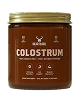
Uncut Colostrum
Colostrum Powder in Its Purest Form

- Supports gut health, immunity, and exercise recovery
- 100% grass-fed, pasture-raised colostrum
- Third-party tested for biological activity
60-day risk-free guarantee. No questions asked.
Immune Health Starts in the Gut
If your immune system feels like it’s constantly under strain, the issue is often not a lack of effort but a stressed or inflamed gut.
The gut is where most immune activity begins. When the gut barrier is compromised or irritated, it sends persistent “danger” signals to the immune system. Over time, this can show up as:
- Frequent infections
- Slow recovery
- Chronic inflammation
- Food sensitivities
- Auto-immune flare-ups
Rather than pushing immune cells to work harder, colostrum immune support focuses on restoring the gut environment that allows immune cells to function correctly, without staying stuck in a reactive state.
The Key Immune Compounds in Colostrum (Explained Simply)
Colostrum doesn’t rely on one standout ingredient. Its power comes from a group of compounds that work together.
Immunoglobulins (Antibodies)
- Immunoglobulins are protective proteins that bind to bacteria, viruses, and toxins in the gut so they can be safely removed (3).
Leukocytes (Immune Cells)
- Leukocytes are living immune cells that help recognize threats and coordinate immune responses.
- They support immune training and communication, especially during times of stress or recovery, rather than simply “boosting” immune activity (4).
Lactoferrin
- Lactoferrin is a protein that binds to iron, limiting the fuel harmful bacteria need to grow while supporting beneficial microbes (5).
- This helps create a more balanced microbiome and reduces microbial-driven inflammation in the gut.
Proline-Rich Polypeptides (PRPs)
- PRPs act like immune regulators, helping balance immune responses rather than pushing them in one direction (#).
- They can calm an overactive immune system while also supporting appropriate responses when the body actually needs them.
Antioxidants
- Antioxidants in colostrum help with oxidative stress, which can damage gut tissue and strain the immune system (7).
- By reducing this stress, antioxidants support tissue repair and healthier immune signaling.
Cytokines & Growth Factors
- Cytokines are signaling molecules that help immune cells communicate clearly, while growth factors support the repair and renewal of gut tissue (8).
- Together, they help the immune system respond appropriately and support long-term gut and immune resilience.

How Colostrum Immune Support Actually Works
1. Strengthens the Gut Barrier
A compromised gut lining allows unwanted particles to enter circulation, triggering immune reactions.
Colostrum supports repair of the intestinal barrier, reducing immune activation at its source. A stronger barrier means fewer false alarms for the immune system (9).
→ People who consistently take colostrum report fewer unexpected reactions to foods, less digestive sensitivity, and a sense that their gut feels more resilient instead of fragile.
2. Soothes Immune Overreaction
Many immune issues stem from overreaction, not underperformance.
PRPs and immunoglobulins help modulate immune activity, teaching immune cells when to respond and when not to. This is a core benefit of colostrum immune support (10).
→ People who consistently take colostrum report fewer inflammatory flare-ups, less immune “noise,” and a body that feels calmer under stress.
3. Supports Microbial Balance
An imbalanced microbiome constantly stimulates the immune system, keeping it in a low-grade state of stress.
Colostrum helps suppress harmful microbes while nourishing beneficial ones, reducing immune burden and supporting long-term gut and immune resilience (11).
→ People who consistently take colostrum report more consistent digestion, fewer swings depending on what they eat, and less day-to-day digestive unpredictability.
4. Aids Immune Communication
Poor immune signaling leads to confusion, manifesting as either sluggish responses or excessive inflammation.
Cytokines in colostrum help immune cells communicate clearly, improving coordination and response accuracy so the immune system can respond appropriately instead of overreacting (12).
→ People who consistently take colostrum report improved mental clarity, fewer lingering symptoms after stress or illness, and more stable energy throughout the day.

5. Enhances Recovery After Immune Stress
Illness, poor sleep, intense training, and chronic stress all place significant strain on the immune system.
Growth factors in colostrum support tissue repair and recovery, helping the immune system return to baseline more efficiently after periods of stress (13).
→ People who consistently take colostrum report bouncing back faster after illness or intense periods, with fewer setbacks and less prolonged fatigue.
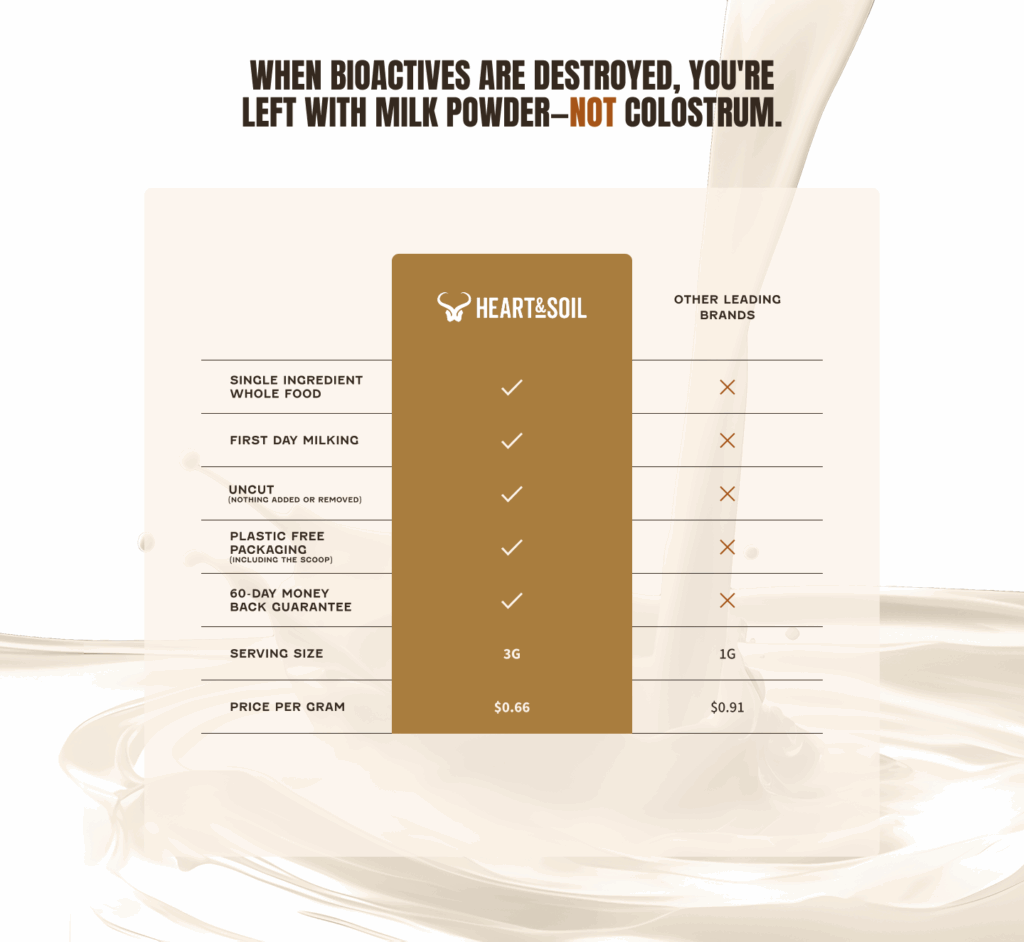
Not All Colostrum Supports Immunity Equally
Colostrum is powerful, but fragile. Many products lose their immune-boosting activity for various reasons.
Common issues include:
- Late harvesting: immune compounds decline rapidly after the first 24 hours
- Grain-fed sourcing: lowers nutrient quality and increases contaminants
- High-heat processing: damages antibodies and peptides
- Defatting: disrupts the whole-food immune matrix
- Additives and fillers: dilute effectiveness
If these steps aren’t respected, the immune benefits disappear even if the label says “colostrum.”
Not sure if colostrum is right for you? Take the Colostrum Quiz.
Why Free-Form Grass-Fed Colostrum is For You
After seeing how many products compromised colostrum’s immune integrity, we created Free-Form Grass-Fed Colostrum to honor the biology.
These details aren’t marketing; they’re what allow colostrum immune support to actually work in the body.
Learn more: The Ultimate Guide to Quality Bovine Colostrum Supplements: 6 Requirements
How to Use Colostrum for Immune Support
Consistency matters more than timing when it comes to taking colostrum. You can mix one serving size with milk, smoothie, yogurt, or water. It’s essential not to add it to hot food or food that hasn’t been cooked yet. You can take it first thing in the morning, before bed, or after a workout.
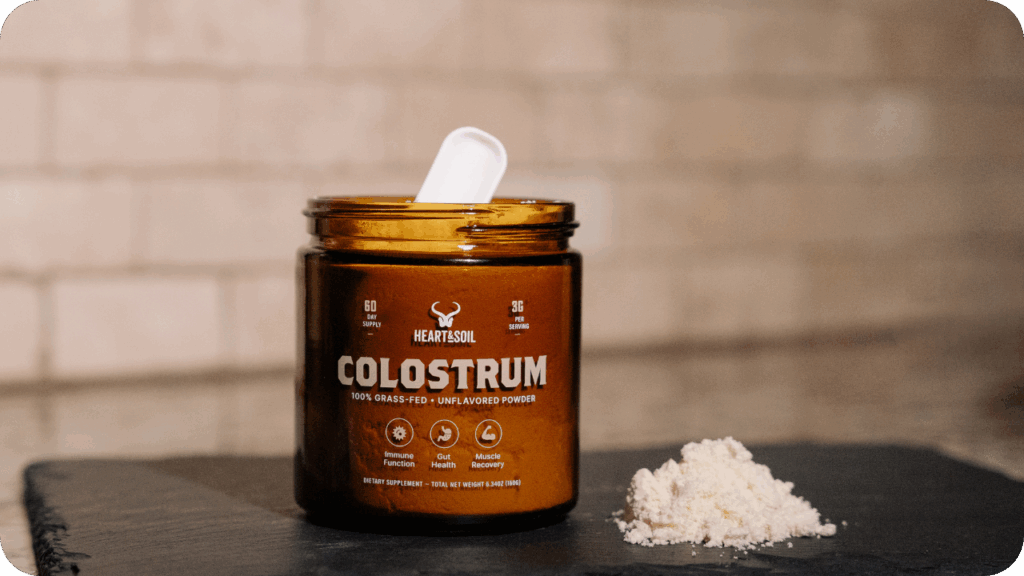
Try our Free-From Colostrum today.
Summary
In today’s modern world, it’s common to feel run down, reactive, and depleted. Colostrum, a true superfood, provides a form of immune support that has existed since the beginning.
By delivering a coordinated system of antibodies, immune cells, antioxidants, enzymes, and growth factors, colostrum supports immune resilience while reinforcing the gut environment that immune health depends on.
Colostrum immune support works because it provides the same immune-training signals humans evolved with, supporting strength, resilience, and radical health.
Uncut Colostrum
Colostrum Powder in Its Purest Form
- Supports gut health, immunity, and exercise recovery
- 100% grass-fed, pasture-raised colostrum
- Third-party tested for biological activity
60-day risk-free guarantee. No questions asked.
Subscribe to future articles like this:
