
Medical disclaimer: This article is for educational purposes only and is not a substitute for professional medical advice.
If regular milk leaves you bloated, gassy, or running to the bathroom, the problem may not be lactose at all.
What is A2 milk? It’s a type of cow’s milk that contains only the A2 form of beta-casein protein instead of the A1 and A2 mix found in most conventional milk, and for many people that single difference changes how their gut handles dairy entirely.
This guide breaks down what A2 milk is, how it differs from A1 milk, whether it’s lactose free, and where to find it, including at Costco.
Table of Contents
TL;DR
- Cow’s milk contains a protein called casein, and most milk has two versions of it: A1 and A2.
- Regular milk from the grocery store has both, but A2 milk only has the A2 version.
- Many people find A2 milk easier on their stomach because the A1 version is what tends to cause the bloating and discomfort usually blamed on lactose.
- A2 milk still has lactose in it, though, so it won’t help if lactose itself is what’s bothering you.

What Is A2 Milk?
A2 milk is milk that contains only the A2 form of beta-casein protein, with none of the A1 variant found in most conventional cow’s milk, and it has essentially the same nutrient composition as regular milk otherwise (1).
Casein makes up roughly 80% of the total protein in mammalian milk, and beta-casein accounts for about 30% of that. Beta-casein comes in two main variants, A1 and A2, and conventional milk from most Holstein Friesian cows contains a mix of both (2, 3). A2 milk skips the A1 variant entirely.
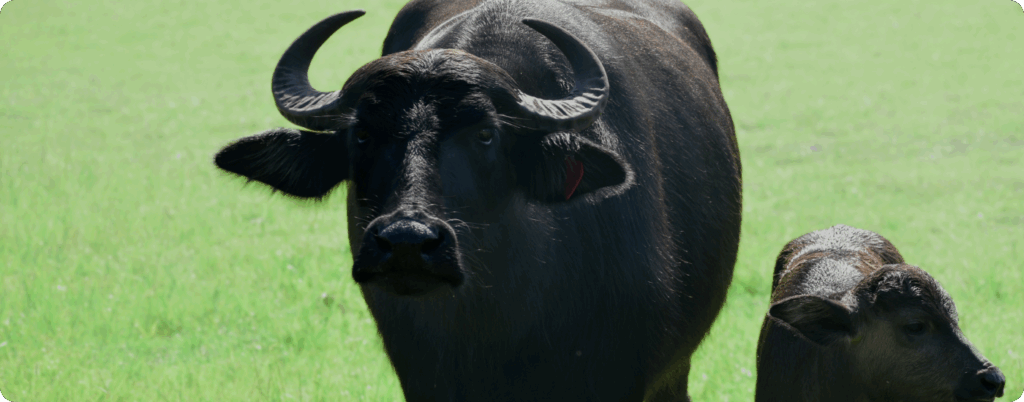
Milk from goats, sheep, buffalo, and many non-Holstein cattle breeds naturally contains only the A2 form, and human breast milk is also predominantly A2 beta-casein, which is part of why researchers have studied A2 milk’s compatibility with human digestion (4).
What Is A1 Cow Milk?
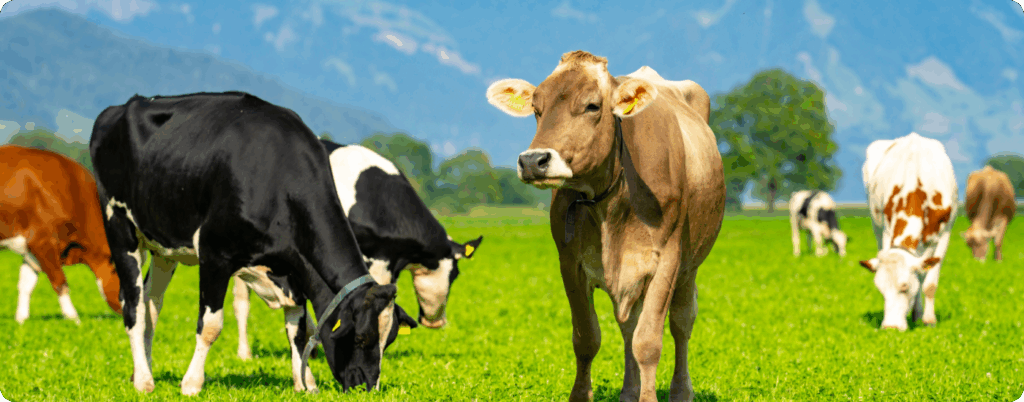
A1 cow milk is the conventional milk found in most grocery stores, containing a mix of A1 and A2 beta-casein protein. It comes primarily from Holstein Friesian cattle, the black-and-white breed that dominates commercial dairy farming worldwide (5).
Indigenous cattle breeds from Asia and Africa, along with European breeds like Guernsey and Jersey, naturally produce A2 beta-casein instead.
The A1 variant differs from A2 by a single amino acid at position 67 of the beta-casein chain: A1 has histidine at that position, while A2 has proline (6, 7). That one substitution changes how the protein breaks down during digestion, which is the root of the A1 versus A2 conversation.
A1 vs A2 Milk: What’s the Difference?
The difference between A1 and A2 milk comes down to structure, digestion, and breed origin. During digestion, A1 beta-casein releases a peptide called beta-casomorphin-7 (BCM-7), which does not form when A2 beta-casein breaks down (8).
For some people, BCM-7 is linked to digestive discomfort and symptoms that closely mimic lactose intolerance (9).
| Factor | A1 Milk | A2 Milk |
| Beta-casein type | Mix of A1 and A2 | A2 only |
| Amino acid at position 67 | Histidine | Proline |
| Digestive byproduct | Releases BCM-7 | No BCM-7 |
| Common source | Holstein Friesian cattle | Guernsey, Jersey, indigenous breeds, goats, sheep, buffalo |
| Typical tolerance | May cause discomfort in sensitive individuals | Generally easier to digest for the same group |
Subscribe to future articles like this:
Is A2 Milk Lactose Free?
Direct answer: No, A2 milk is not lactose free. A2 milk addresses a protein difference, not a sugar difference, so it still contains the same lactose content as conventional milk unless it is separately labeled lactose-free.
This is one of the most common points of confusion around A2 milk. Lactose intolerance comes from a shortage of the lactase enzyme needed to break down milk sugar, causing gas, bloating, and diarrhea (10).
A2 milk instead addresses a different, less-known trigger: the BCM-7 peptide released from A1 beta-casein digestion, which produces overlapping symptoms without involving lactose at all (11).
That means someone who is fully lactose intolerant will likely still react to A2 milk’s lactose content, while someone whose discomfort actually traces back to A1 protein may tolerate A2 milk well.
A true milk protein allergy is different still and requires eliminating milk entirely, regardless of A1 or A2 content.
What Are the Benefits of A2 Milk?
Research on A2 milk and A2 dairy sources points to several potential advantages over conventional A1 milk:
Lower allergenicity in some A2 sources. Goat and sheep milk have been shown to be less allergenic than conventional cow’s milk in some studies, making them worth considering for people with sensitivity to standard dairy (21).
Easier digestion. Multiple studies link A1 milk to diarrhea, abdominal discomfort, and worsened lactose intolerance symptoms, while A2 milk is generally easier on the gut for the same individuals (12, 13). A study on Korean adults found A2 milk to be a safe, effective option for people who experience discomfort after drinking conventional milk (14).
Comparable, sometimes richer, nutrient density. A2 dairy sources like goat and sheep milk carry the same core nutrients as cow’s milk, including protein, calcium, and B vitamins, and in some cases provide more vitamin A, vitamin E, and zinc than conventional cow’s milk (15, 16).
Workout recovery support. Milk is already considered a strong pre- and post-workout option thanks to its protein, minerals, and amino acids, and A2 milk specifically has been studied for supporting recovery and performance in athletes who tolerate it better than conventional milk (17, 18).
Bone-supporting nutrients. Dairy remains one of the most bioavailable sources of calcium and protein for bone health, and people who avoid dairy altogether tend to have a higher risk of bone fracture over time (19).
Lower allergenicity in some A2 sources. Goat and sheep milk have been shown to be less allergenic than conventional cow’s milk in some studies, making them worth considering for people with sensitivity to standard dairy (20).

Where Can You Find A2 Milk?
A2 milk is no longer a niche health-store item. It’s sold at more than 29,000 retailers across the U.S., including Whole Foods, Sprouts, and Walmart (21).
Costco a2 milk shoppers have two main options in the dairy case:
- Kirkland Signature Organic Whole Milk, A2 Protein, Costco’s own private-label organic A2 milk, typically sold in multi-packs of half-gallon cartons.
- a2 Milk® brand whole milk, the original branded A2 product, also available at Costco in some regions.
Check out: Key Differences Between Organic And Conventional Foods
Grass-Fed Colostrum
Digestion. Immunity. Recovery.
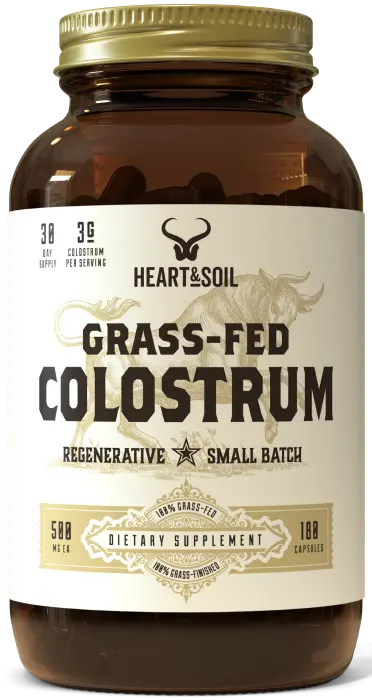
- Support your gut, immune system, and tissue repair
- 100% grass-fed colostrum – no fillers, no fluff
- Bioactive immunoglobulins to protect your body at the cellular level
60-day risk-free guarantee. No questions asked.
Glossary
- Beta-casein: A major milk protein that makes up about 30% of total milk protein, existing in A1 and A2 variants.
- A1 beta-casein: The beta-casein variant with histidine at position 67, found in conventional milk from Holstein Friesian cattle.
- A2 beta-casein: The beta-casein variant with proline at position 67, found in A2 milk, goat milk, sheep milk, buffalo milk, and human breast milk.
- BCM-7 (beta-casomorphin-7): A peptide released during digestion of A1 beta-casein that does not form during A2 beta-casein digestion.
- A2/A2 genotype: The genetic classification for cattle confirmed to carry two copies of the A2 beta-casein gene, used to certify herds and milk as 100% A2.
- Lactose intolerance: A condition caused by insufficient lactase enzyme activity, leading to gas, bloating, and diarrhea after consuming milk sugar.
FAQ: What is A2 Milk?
What is A2 milk? Milk containing only A2 beta-casein, with none of the A1 variant, most often from Guernsey and Jersey cattle, goats, sheep, or A2-tested Holsteins.
What is A1 cow milk? The standard milk in most grocery store cartons, carrying a mix of A1 and A2 beta-casein from Holstein Friesian cattle.
Is A2 milk lactose free? No. A2 milk fixes a protein issue, not a sugar one, so its lactose content matches regular milk unless the carton is separately labeled lactose-free.
What is A2 A2 milk? What is A2/A2 milk? It’s milk from a cow genetically confirmed to carry two copies of the A2 beta-casein gene, meaning its milk contains zero A1 protein.
Does A2 milk taste different from regular milk? No. Since only the protein structure changes, A2 milk tastes the same as conventional whole milk: rich and creamy, with the same fat and flavor compounds intact.
Is A2 milk more expensive than regular milk? Usually, yes. National A2 brands typically cost more per half gallon than standard milk, though private-label options like Kirkland’s A2 organic milk at Costco narrow that gap considerably.
Can toddlers or babies drink A2 milk? A2 status doesn’t change standard guidance on when or how much cow’s milk is appropriate for a child. Talk to your pediatrician about introducing any cow’s milk, A1 or A2, on their usual timeline.
Related Reading
- 6 Reasons Why Grass-Fed Colostrum is an Impressive Superfood
- The Ultimate Guide To The Animal-Based Diet
- 6 Dangers Of Eating Liver: What You Need To Know
- Beef Liver Vs Chicken Liver Benefits: Which Is Healthier
Bottom Line: What is A2 Milk?
A2 milk offers essentially the same nutrition as conventional milk, minus the A1 beta-casein variant that produces the BCM-7 peptide linked to digestive discomfort in sensitive individuals.
A2 milk still contains lactose, so it isn’t a fit for anyone with true lactose intolerance or a milk allergy, but for people whose discomfort traces back to A1 protein, it can be a meaningful difference.
Whether you find it labeled A2, A2/A2, or under the Kirkland or a2 Milk® brand name at Costco, the protein inside the carton is what actually matters for how your gut feels afterward.
Grass-Fed Whey Protein for Muscle Recovery
1 Ingredient. 24 Grams of Protein.

- Supports muscle protein synthesis with naturally occurring leucine
- No flavors, sweeteners, additives, or fillers
- 100% plastic-free packaging (including the scoop!)
60-day risk-free guarantee. No questions asked.
Subscribe to future articles like this:
