
Disclaimer: The information in this blog is for educational purposes only. It is not a substitute for professional medical advice. Consult your healthcare provider if you’re seeking medical advice, diagnoses, or treatment.
Key Takeaways
- Beef liver is the most nutrient-dense food on the planet.
- A single 1-ounce serving delivers roughly 833% of your daily vitamin B12, 456% of your daily copper, and 297% of your daily vitamin A, all in a highly bioavailable form your body recognizes and uses immediately (1).
- 10 evidence-backed beef liver benefits include stronger immunity, better energy, sharper cognitive function, healthier skin, red blood cell production, and more.
Your great-grandmother didn’t take a multivitamin. She ate liver once a week and didn’t think twice about it.
Somewhere between then and now, the modern world convinced you that a synthetic pill in a plastic bottle was more nutritious than the organ that sustained every civilization before us. It wasn’t.
Beef liver benefits are not a trend. They are a return to something your biology has always known.
Cultures across the globe have treasured liver for centuries, and it’s now seeing a resurgence among animal-based eaters who understand that real nutrition comes from real food, not fortified cereals and seed oil-based supplements.
This post will dive into the top ten beef liver benefits and how much liver to eat for radical health.
Table of Contents
Why Is Beef Liver Good For You?
Beef liver is a nutrient-dense organ meat with a nutritional profile that no plant food, multivitamin, or processed superfood touches.
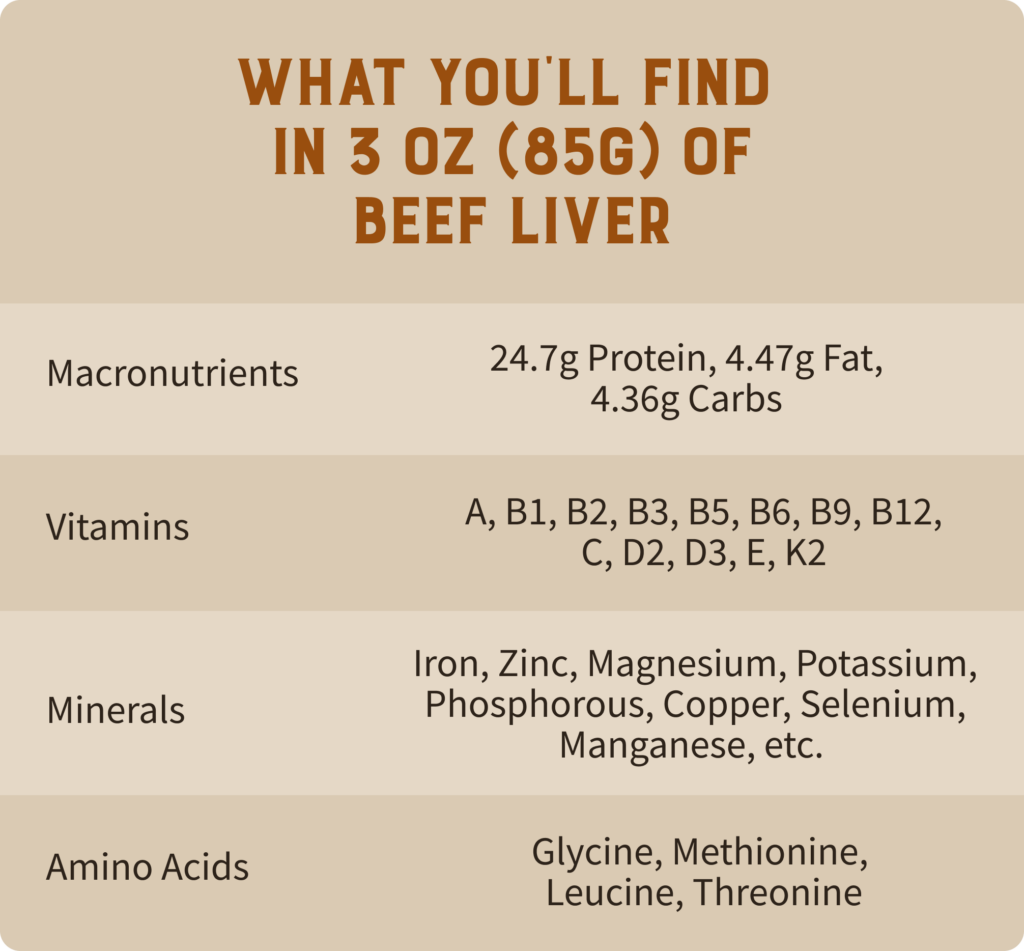
These nutrients are highly bioavailable, meaning much of what you eat is absorbed and immediately utilized by your body (2, 3).
Unlike synthetic supplements or plant-based sources burdened with anti-nutrients, liver delivers nutrition in forms your body evolved to absorb and use without friction.
10 Beef Liver Benefits Backed by Research
1. Unmatched Mineral Density
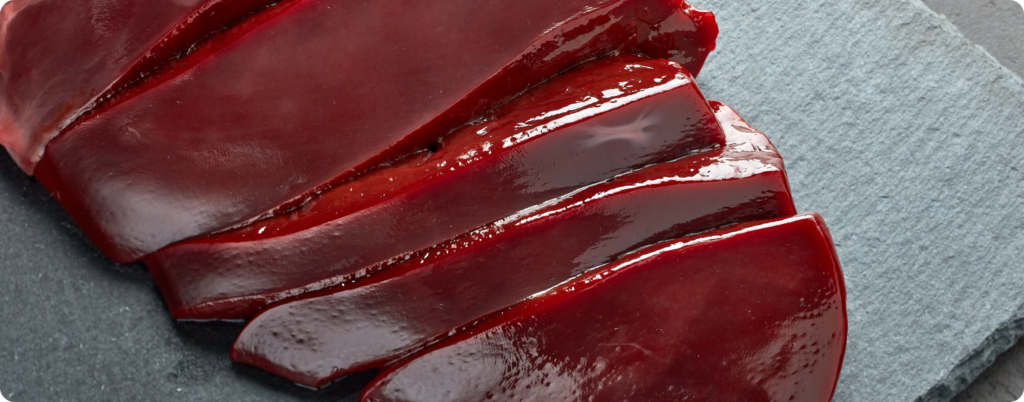
The nutrient profile of liver differs depending on the animal, but each is a bioavailable source of selenium, zinc, copper, iron, and other essential minerals. Beef liver stands out as a rich source of both copper and iron, 2 minerals required for immune function, physical performance, and antioxidant defense (4, 5, 6).
Copper is the most underappreciated mineral in the modern diet. It is required for iron metabolism, connective tissue formation, neurotransmitter synthesis, and mitochondrial function. 3 ounces of liver covers over 1,000% of the Daily Value. No other commonly eaten food comes close.
Learn more: Is Beef Liver Better Than A Multivitamin? (#1 Natural Vitamin)
2. Immune System Support
The iron, copper, and vitamin A in beef liver make it a powerful ally for your immune system, one of the key beef liver benefits (7, 8, 9). Each of these nutrients supports immunity through distinct pathways: iron supports white blood cell production, copper modulates inflammatory response, and vitamin A regulates the development and function of immune cells.
3. Fetal Growth and Prenatal Nutrition
Bovine liver contains nutrients needed for fetal development, like folate, iron, vitamin B12, and vitamin A (10, 11, 12). Vitamin A, in particular, is crucial for developing organs, the immune system, and the skeleton (13).
Traditional cultures around the world fed organ meats to pregnant women specifically because of their concentrated nutritional value. Liver was prenatal nutrition long before prenatal vitamins existed.
Note on vitamin A and pregnancy: Because liver is very high in preformed vitamin A (retinol), discuss specific intake frequency with a qualified healthcare provider familiar with your individual needs.
4. Eye Health
One of the most overlooked beef liver benefits is its support for vision. Vitamin A, also called retinol, is essential for the production of rhodopsin, the pigment in your eyes that allows you to see in low-light conditions (14, 15).
Ancient cultures including the Egyptians and Greeks used animal livers to treat night blindness (16). They did not know the mechanism, but they knew the result!

5. Sexual Health and Fertility
In a study examining the dietary habits of 189 men between 18 and 22, researchers found that organ meat intake was associated with 53% higher sperm count and 8% higher motility compared to men who were not eating organs (17).
Vitamin A is also directly essential for reproduction and the normal function of the reproductive system in both men and women (18).
For anyone on an animal-based diet focused on reproductive vitality, liver is non-negotiable.
6. Brain Function and Cognitive Performance
Many of the nutrients found in beef liver support brain health through multiple, overlapping pathways:
- Copper is involved in brain development and myelin synthesis (19).
- Vitamin A is essential for the infant and adult brain (20).
- Vitamin B12 and folate are required for proper methylation and neurotransmitter production (21).
- Choline, present in significant amounts in liver, is a direct precursor to acetylcholine, a neurotransmitter central to memory and learning (22).
Beef liver has even been added to meatballs to improve children’s cognitive function in a clinical setting (23).
Looking for targeted cognitive support? Heart & Soil’s Mood, Memory & Brain combines desiccated beef brain, liver, kidney, and spleen to give your nervous system exactly what it was designed to run on.
Mood, Memory & Brain
Calm & Clarity with Grass-Fed Organs
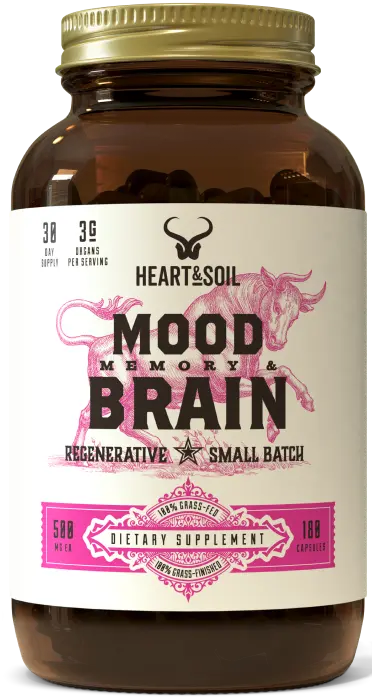
- Brain (including the cortex, hypothalamus, pituitary, and pineal gland), bone marrow, & liver
- Encourages healthy neural connections & mental function
- Helps maintain stress resilience & a positive mood
60-day risk-free guarantee. No questions asked.
7. Athletic Performance
Improved athletic performance is one of the top beef liver benefits. This is the study that changes minds: researchers placed 3 groups of rats in a drum of cold water and timed how long each could swim before giving up. The control group, given no liver or synthetic vitamins, lasted 13.3 minutes. The group given synthetic B vitamins lasted 13.4 minutes, essentially no improvement.
The group fed liver powder swam for 63, 83, and 87 minutes before giving up (24).
That is not a marginal difference! That is a 5 to 6 times improvement in endurance from a whole food. No isolated synthetic nutrient replicated it. The liver did something the vitamin pill could not.
8. Sustained Energy Levels
Although beef heart is a richer source, cow liver is an important dietary source of Coenzyme Q10 (CoQ10) (25). CoQ10 is an antioxidant compound essential for mitochondrial energy production and cellular vitality (26).
Liver also delivers the full B vitamin complex required for your body’s energy metabolism pathways, giving your mitochondria the exact cofactors they need to convert food into cellular energy.
When your energy is consistently low, your cells are often missing the raw materials liver provides.

9. Iron Level Support
Due to its nutrient density, beef liver benefits have included a documented history of correcting anemia and improving red blood cell counts.
Two physicians constructed a special diet for patients with pernicious anemia, centering it on iron-rich proteins like beef liver alongside fruits and vegetables (27). All 45 patients showed “a prompt, rapid and distinct remission of their anemia with at least rather marked symptomatic improvement.” Red blood cell counts improved across the board (28).
A separate study on Egyptian children found that a group of children, 43% of whom were anemic, were fed meatballs containing liver. After 90 days, the anemia had vanished entirely in children under 6 years old and dropped from 43% to just 12% in those over 6 (29).
Heme iron, the form found exclusively in animal foods like liver, is absorbed at 15 to 35%. Non-heme iron from plants absorbs at just 2 to 20% under ideal conditions, and drops further in the presence of phytates and oxalates (30). There is no plant-based equivalent.
10. Skin, Hair, and Nail Health
Adequate consumption of vitamin A is needed to grow and maintain healthy skin and hair (31, 32). As one of the richest sources of bioavailable vitamin A on the planet, liver directly supports skin cell turnover, wound repair, and hair follicle function.
The combination of retinol, zinc, copper, and B vitamins in a single serving creates a concentrated dose of the exact nutrients your skin, hair, and nails require to look and perform their best.
Skin, Hair & Nails
Beauty from the Inside Out
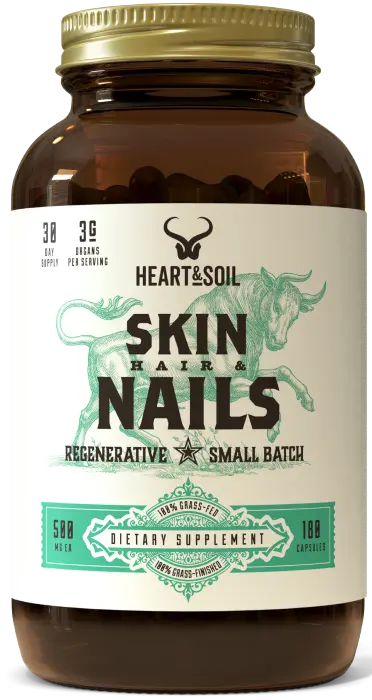
- Grass-fed cartilage, liver, and bone marrow
- Supports thick hair, strong nails, and soft skin
- Naturally occurring collagen, biotin, copper, B vitamins, and more
60-day risk-free guarantee. No questions asked.
The Nose-to-Tail Principle:
Beef liver is the crown jewel of nose-to-tail eating, but it is not the whole picture. Nose-to-tail is the practice of consuming the whole animal: organs, bones, marrow, connective tissue, and muscle meat. Every part of the animal contains a unique concentration of nutrients that muscle meat alone cannot provide.
Your ancestors did not eat boneless skinless chicken breasts. They ate the whole animal and wasted nothing. That practice was not cultural preference; it was nutritional wisdom.
No single organ covers everything. Rotating through multiple organs, or using a multi-organ supplement, gives your body the full spectrum of nutrients it evolved to receive from animal foods.
Like Supports Like: Eating Liver to Support Your Own Liver
Traditional cultures operated on a principle now gaining renewed scientific interest: eating an organ supports that same organ in your own body. This concept is called “like supports like,” and your liver is one of the clearest examples of it in practice.
Your liver carries out over 500 metabolic functions daily. It filters blood, produces bile, metabolizes hormones, recycles nutrients, and runs the methylation pathways your body depends on for detoxification and cellular repair.
To do all of that, it requires a continuous supply of specific micronutrients, many of which are concentrated in, and most easily obtained from, beef liver itself.
Note: beef liver does not accumulate toxins. It processes them and clears them. The nutrients in liver are stored there for metabolic use. When you eat liver, you are getting the concentrated nutrition, not the waste.
Beef Liver vs. Other Organ Meats
Glossary:
- Organ meats (offal): The internal organs of an animal, including liver, heart, kidney, and spleen. Historically the most prized and nutrient-dense parts of the animal.
- Desiccated liver: Beef liver that has been freeze-dried at low temperatures, made into a powder, and put into capsules. Retains the micronutrient profile of fresh liver with no preparation required!
- Bioavailability: The proportion of a nutrient that is absorbed and used by the body, as opposed to being blocked by anti-nutrients or excreted unused.
| Organ | Standout Nutrient | Best Used For |
|---|---|---|
| Liver | Vitamin A, B12, Copper | Overall nutrient density |
| Heart | CoQ10, B vitamins | Cellular energy, cardiovascular support |
| Kidney | Selenium, B12 | Antioxidant support |
| Spleen | Heme iron | Iron and red blood cell support |
Liver wins on overall nutrient density. A rotating protocol of multiple organ meats covers an even broader spectrum of nutrients. Heart & Soil’s Beef Organs combines all 5 major organs in a single daily capsule for exactly this reason.
Beef Organs
Nature's Ultimate Multivitamin
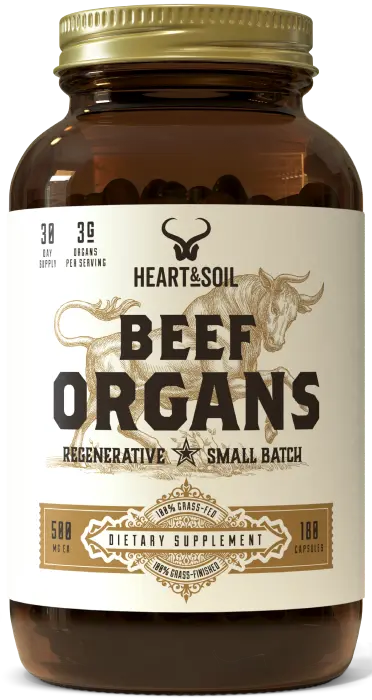
- Grass-fed liver, heart, pancreas, kidney, & spleen
- Designed to support overall energy & well-being
- Ideal daily foundation for nose-to-tail nutrition
60-day risk-free guarantee. No questions asked.
How Much Liver Should I Eat?
We suggest 0.5-1oz of liver per day. One of the advantages of beef liver is that you can eat far less of it than muscle meat and still cover your micronutrient needs, because it is that nutrient-dense.
Practical options for consistent intake:
- Fresh, pan-seared: in butter or tallow. Soak in milk or lemon juice for 30 minutes beforehand to mellow the flavor.
- Blended into ground beef: Add small cubes of raw frozen liver at a 10 to 20% ratio. It disappears into the meat and becomes undetectable in flavor.
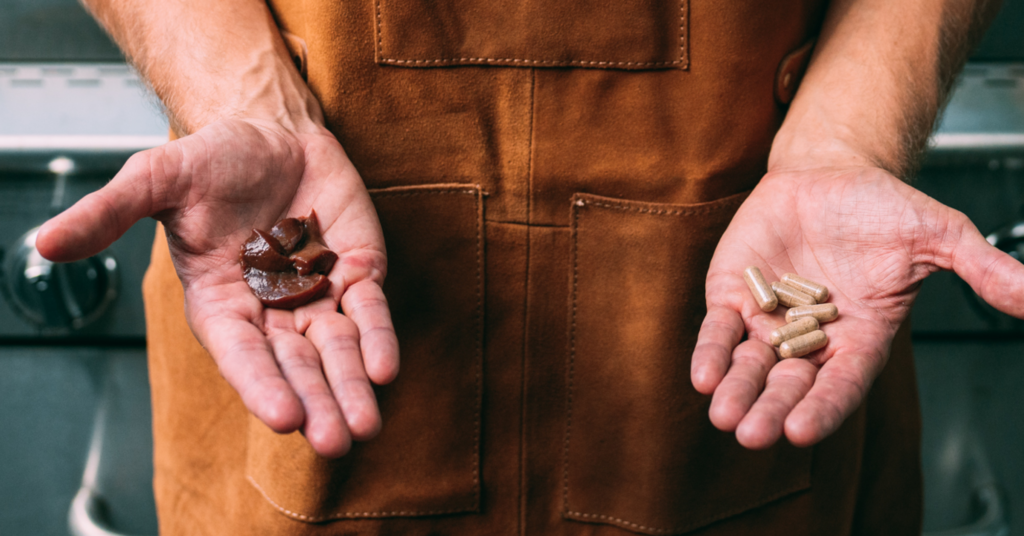
- Desiccated liver capsules: Freeze-dried liver delivers the same micronutrients with zero preparation and no taste. The most consistent and convenient option for daily intake.
A note on vitamin A balance: Because liver is very rich in preformed retinol, eating it daily in very large amounts is not necessary. The intake ranges above reflect traditional consumption patterns and what practitioners familiar with organ-based nutrition commonly recommend. For more detail, read Heart & Soil’s guide on vitamin A toxicity and how to find the right balance.
Where to Find Beef Liver
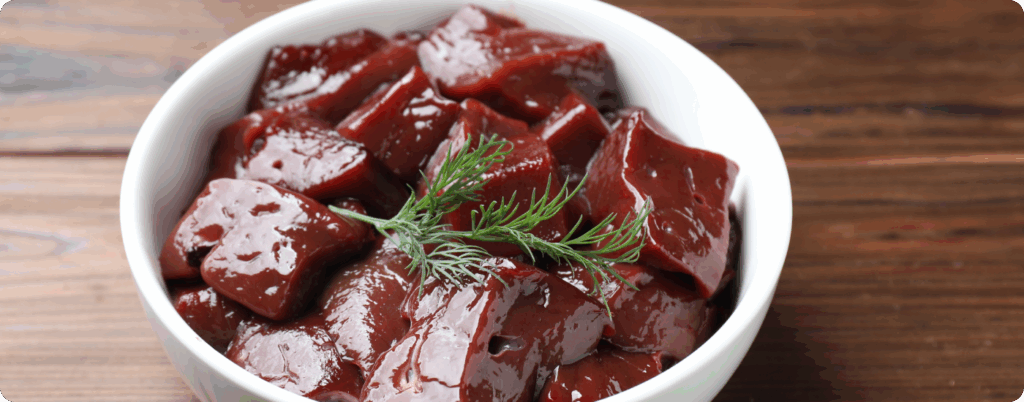
Fresh beef liver is available at local farmers markets and in the frozen sections of stores like Whole Foods and Sprouts. When sourcing fresh liver, prioritize 100% grass-fed and pasture-raised cattle. Grass-fed liver contains a better fatty acid profile and higher concentrations of fat-soluble vitamins than grain-fed alternatives.
If you cannot access high-quality fresh liver or prefer not to cook it, a freeze-dried desiccated liver supplement is the next best option. Common beef liver supplement benefits include convenience, shelf-stable capsules, and consistent dosing, with the same key nutrients found in fresh liver.

FAQ: Beef Liver Benefits
Q: Why is beef liver called nature’s multivitamin? A: A 3-ounce serving of beef liver delivers highly bioavailable protein, vitamins A and B12, and key minerals including iron, copper, zinc, and selenium, plus CoQ10. Because these nutrients are absorbed and used efficiently by the body, liver provides an exceptional nutritional profile that no synthetic supplement stack replicates.
Q: How does beef liver support immunity, eye health, and skin? A: Iron, copper, and vitamin A in liver work together to support immune defenses. Vitamin A (retinol) is essential for vision and was historically used by ancient Egyptians and Greeks to treat night blindness. Adequate vitamin A also supports skin cell turnover and healthy hair growth.
Q: Can beef liver improve athletic performance and energy? A: The evidence says yes. In a controlled experiment, rats fed liver powder swam 5 to 6 times longer than those given synthetic B vitamins alone. Liver also provides CoQ10, which supports mitochondrial energy production. The combination of B vitamins, CoQ10, and heme iron gives your body’s energy system the full set of cofactors it needs.
Q: How much liver should I eat per week? A: Most adults doing well on an animal-based diet consume 0.5 to 1 ounce of liver daily or 4 to 7 ounces per week. Children are suggested to eat it once weekly. Because of its high retinol content, very large daily amounts are not necessary. See Heart & Soil’s vitamin A balance guide for detail.
Q: Is beef liver safe during pregnancy? A: Liver has been consumed by pregnant women across virtually every traditional culture. Its folate, iron, B12, and vitamin A content make it exceptionally valuable during pregnancy. Because of its high retinol content, discuss your specific intake with a qualified healthcare provider.
Q: Are beef liver supplements as effective as fresh liver? A: High-quality freeze-dried liver retains the majority of the fat-soluble vitamins, minerals, and bioavailable proteins found in fresh liver. Desiccated liver capsules are an effective option for people who want consistent daily liver nutrition without sourcing, storing, or preparing fresh organ meat.
Q: What is the difference between beef liver and chicken liver? A: Both are highly nutrient-dense. Beef liver generally contains more vitamin A, B12, copper, and iron per serving than chicken liver. Chicken liver has a milder flavor and is easier for newcomers to start with. Both belong in an animal-based diet.
Q: Does cooking destroy liver’s nutrients? A: Light cooking (medium doneness, not well-done) preserves the vast majority of liver’s nutrient profile. Overcooking reduces water-soluble B vitamins to a greater degree. Cook liver just until it is no longer pink in the center for maximum nutrient retention.
Related Reading
- 6 Dangers of Eating Liver: What You Need to Know
- Beef Liver Supplements: Benefits, Dosage, and How to Choose the Best
- Vitamin A Toxicity: Is the Threat Real?
Bottom Line
If you are not eating liver, you are leaving the most important nutritional tool on the table. The beef liver benefits covered here, from immune support to eye health, fertility, brain function, athletic endurance, and red blood cell production, represent what your ancestors built their health on, in a form that modern food processing has nearly erased from the average plate.
Eat 0.5-1 ounce of liver daily. If you cannot or will not eat it fresh, use a high-quality desiccated liver supplement. Either way, make it non-negotiable for radical health.
Subscribe to future articles like this:
