
PLEASE NOTE: The information in this blog is for educational purposes only. It is not a substitute for professional medical advice. Consult your healthcare provider if you’re seeking medical advice, diagnoses, or treatment.
The term “vegetable oil” sounds healthy and pleasant, doesn’t it? Yet, a closer look beneath the surface reveals a different reality.
Vegetable oils are cheap and can be used for a wide variety of needs in the kitchen, but this convenience comes at a cost. These oils are emerging as a critical piece of the rising rates of obesity and other chronic diseases seen globally.
As the hysteria around saturated fats (think butter, tallow, ghee, or coconut oil) settles down, the pendulum is swinging back toward traditional fats and away from vegetable oils.
This article walks you through 7 healthy alternatives to vegetable oil!
Table of Contents
TL;DR
Healthy alternatives to vegetable oil include tallow, butter, ghee, lard, olive oil, coconut oil, and avocado oil. Vegetable oils are high in linoleic acid, an omega-6 PUFA that oxidizes at cooking temperatures and is overrepresented in the modern Western diet (1). Animal fats like tallow, butter, and ghee are primarily saturated and monounsaturated, making them more stable at high heat. For baking, butter and coconut oil are the most direct vegetable oil substitutes. For frying and sautéing, tallow and ghee perform best at high heat.
Why Should You Avoid Vegetable Oils?
Vegetable oils are made from nuts, legumes, oilseeds, or fruits and contain high levels of linoleic acid, an omega-6 polyunsaturated fatty acid (PUFA) (2). Linoleic acid is the most abundant omega-6 in the Western diet, and vegetable oils are its primary source (3).
The typical Western diet already contains an excessive ratio of omega-6 to omega-3 fatty acids, a pattern associated with obesity, cardiovascular disease, and other chronic conditions (4).
The structural problem with vegetable oils is oxidative instability. High PUFA content makes these oils prone to oxidation when exposed to heat, light, or air, producing aldehydes and other reactive compounds during cooking (5). The oxidation can lead to hazardous molecules that can be harmful to health.
Fat sources higher in saturated and monounsaturated fat are significantly less likely to oxidize (6). Animal fats are primarily saturated and monounsaturated, while vegetable oils are primarily oleic and linoleic acid (7).
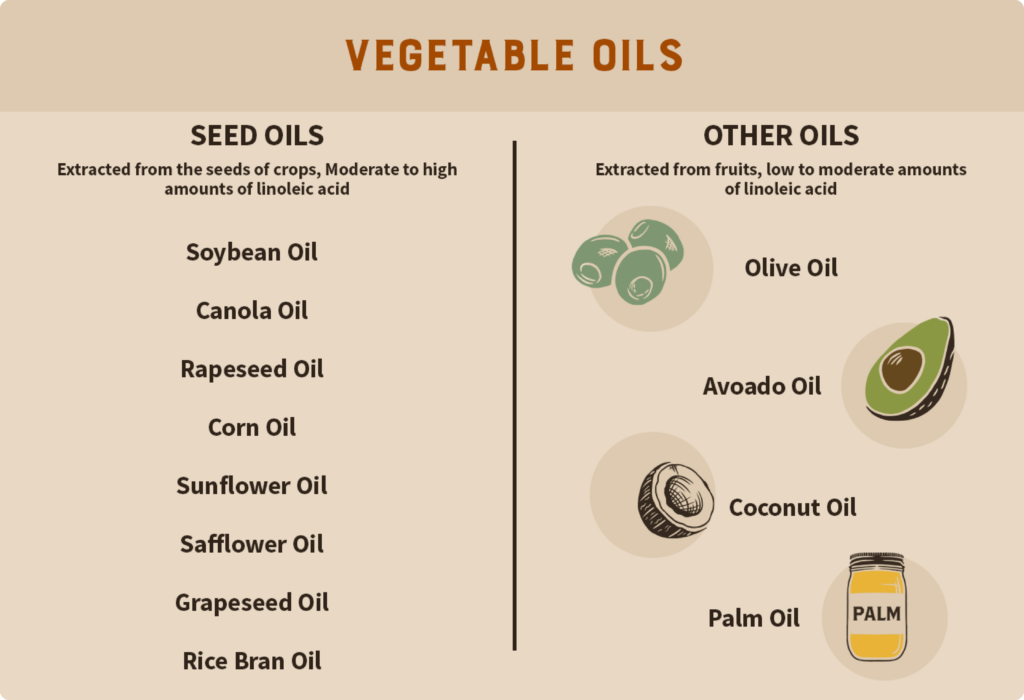
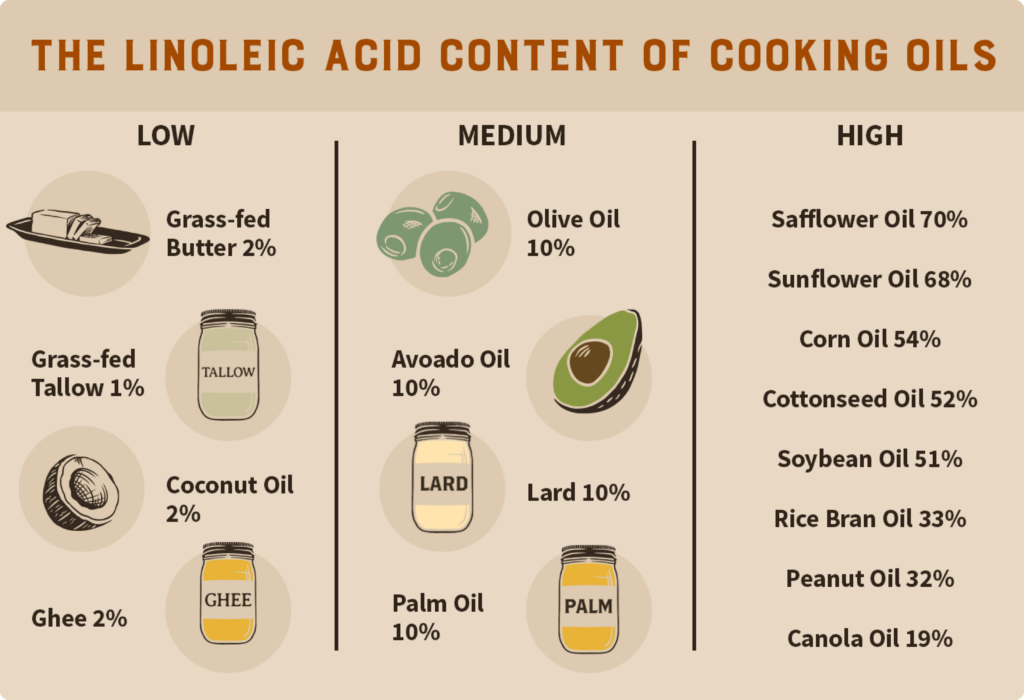
Vegetable oils high in linoleic acid to avoid:
- Canola oil (~21% linoleic acid)
- Safflower oil (~75% linoleic acid)
- Sunflower oil (~65% linoleic acid)
- Corn oil (~57% linoleic acid)
- Soybean oil (~54% linoleic acid)
- Cottonseed oil (~52% linoleic acid)
Due to their lower cost, vegetable oils are used in most restaurants and are found in highly processed foods.
While it has many issues, the typical Western diet contains an excessive amount of omega-6 fatty acids, which can contribute to obesity, cardiovascular disease, and other major challenges (2).
Vegetable oils can also oxidize due to their high polyunsaturated fat (PUFA) content, potentially promoting disease processes (3). Fat sources higher in saturated and monounsaturated fat are less likely to oxidize (4).
Animal fats mainly contain saturated and monounsaturated fatty acids, but vegetable oils are primarily oleic and linoleic acid (5).
In particular, linoleic is the most abundant omega-6 fatty acid in the Western diet (6). Vegetable oils often contain high levels of linoleic acid.
7 Healthy Alternatives to Vegetable Oil
The following options are the best healthy alternatives to vegetable oil that can be used for various cooking needs.
1. Tallow
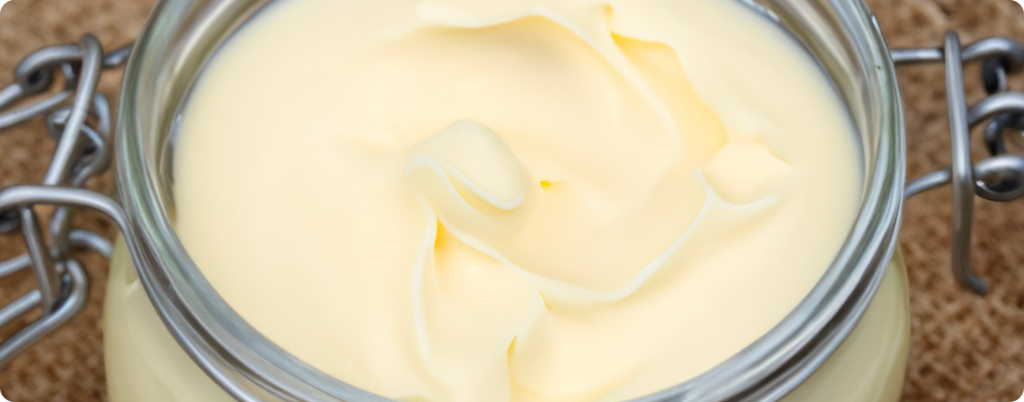
Tallow is rendered beef fat, often from kidney fat (suet), and is one of the most stable cooking fats available. It is excellent for frying, roasting, sautéing, and baking savory dishes. Its high saturated fat content makes it resistant to oxidation at high cooking temperatures.
Tallow provides fat-soluble vitamins A, D, E, and K, conjugated linoleic acid (CLA), and omega-3 fatty acids (8). Grass-fed tallow has a more favorable fatty acid profile than tallow from grain-finished cattle. It has a neutral flavor that does not compete with the food being cooked, making it the most versatile animal fat for savory cooking.
Best for: High-heat frying, roasting vegetables, sautéing, pan sauces
Smoke point: ~420°F (215°C)
Linoleic acid content: ~3% (conventional), ~1% (grass-fed)
Promote Healthy Weight Management
Metabolism. Energy. Drive.
- 1 ingredient: grass-fed & finished suet
- Rendered at low temperatures to preserve nutrients
- Encourages the absorption of fat-soluble vitamins
60-day risk-free guarantee. No questions asked.
2. Butter
Butter is the most familiar healthier alternative to vegetable oil and works in virtually every cooking context from low-heat sautéing to baking. It is one of the oldest animal fats in human use, valued for its nutrient density and flavor (9). Butter provides vitamins A, D, E, and K2, along with butyrate, a short-chain fatty acid that supports gut health.
The case against saturated fat from butter is weakening. Research increasingly distinguishes between the effects of isolated saturated fatty acids studied in labs and the diverse nutrient matrix found in whole-food dairy (10). Choose grass-fed butter with a simple ingredient list: cream, and salt if you prefer salted.
Watch out! Some commercial butters contain canola or other seed oils, so read labels carefully.
Best for: Baking, pan sauces, low-to-medium heat cooking, finishing dishes
Smoke point: ~302°F (150°C) for whole butter; ~350°F (177°C) for clarified
Linoleic acid content: ~2% (conventional), ~1% (grass-fed)
Learn more: Is Butter A Healthy Fat? What The Science Says
3. Ghee
Ghee is clarified butter with the milk solids and water removed, resulting in a pure butterfat with a higher smoke point than regular butter and a rich, nutty flavor. It has been used in Ayurvedic medicine for thousands of years and is a staple fat across South Asian culinary traditions (11).
Because the milk proteins are removed, ghee is better tolerated by people who are sensitive to lactose or casein.
Ghee retains the fat-soluble vitamins of butter and has a similar fatty acid profile, but its higher smoke point makes it suitable for higher-heat applications where butter would brown or burn. It is a direct vegetable oil substitute in almost any recipe that calls for oil.
Best for: High-heat sautéing, stir-frying, roasting, Indian and South Asian cooking
Smoke point: ~485°F (252°C)
Linoleic acid content: ~2%
Learn more: Top 5 Ghee Benefits: A Timeless Fat For Modern Health
4. Lard
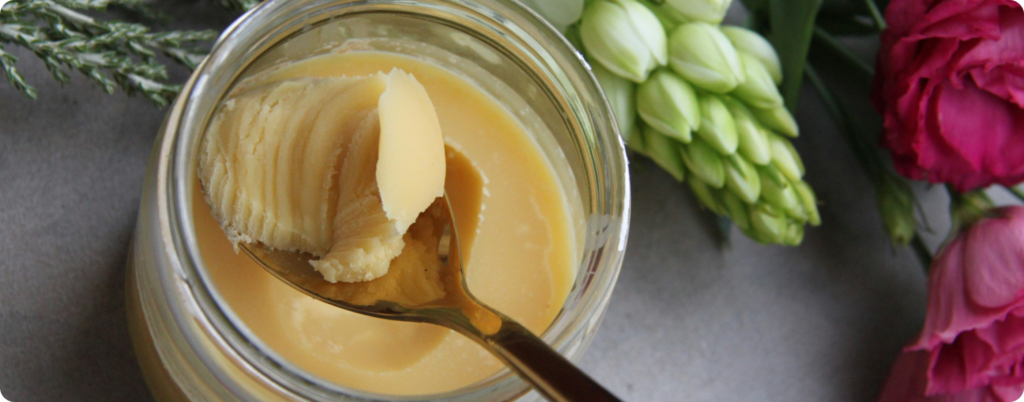
Lard is rendered pork fat and a traditional cooking fat used across European, Latin American, and Asian cuisines for centuries. It contains vitamin D, choline, and other fat-soluble nutrients (12).
A 2023 study found that compared to vegetable or ginger oil, lard and other animal fats are more beneficial for cardiovascular health in adults over 65 (13). Lard is higher in PUFAs than tallow or butter, so it is best used in moderation.
Lard produces exceptionally flaky pie crusts and biscuits, which is why it was the standard baking fat before vegetable shortening replaced it in the 20th century. Leaf lard, rendered from fat around the kidneys, is the highest quality variety and the most neutral in flavor.
Best for: Baking (pie crusts, biscuits), frying, tamales, refried beans
Smoke point: ~374°F (190°C)
Linoleic acid content: ~10%
5. Olive Oil
Olive oil is technically a fruit oil, not a seed oil, and its primary fatty acid is oleic acid, a monounsaturated fat that is significantly more stable than the PUFAs in vegetable oils. Extra-virgin olive oil (EVOO) also contains polyphenols with antioxidant properties (14). While olive oil has a lower smoke point than animal fats, it performs well for low-to-medium heat cooking and is one of the best options for cold applications like dressings and dips.
The olive oil market has significant quality issues. One study found that many commercially sold olive oils are adulterated with soybean, canola, or other cheaper seed oils (15). Choose a reputable brand with a harvest date on the label, stored in a dark glass bottle, and ideally with a single-origin certification.
Best for: Dressings, dips, low-to-medium heat cooking, finishing S
moke point: ~375°F (190°C) for EVOO
Linoleic acid content: ~10%

Learn more: Is Olive Oil A Seed Oil? (7 Powerful Benefits)
7. Coconut Oil
Coconut oil is extracted from coconut palm fruit and is one of the richest plant sources of saturated fatty acids, which gives it strong oxidative stability at cooking temperatures. It is approximately 90% saturated fat, predominantly medium-chain triglycerides (MCTs), which are metabolized differently than long-chain saturated fats (16).
Potential benefits including memory enhancement and weight loss have been proposed, but the scientific evidence does not yet fully support these specific claims (17, 18). It remains a stable, minimally processed fat that outperforms vegetable oils on oxidative stability. Choose unrefined virgin coconut oil over refined versions.
Best for: Baking, Southeast Asian cooking, medium-heat sautéing
Smoke point: ~350°F (177°C) for unrefined; ~450°F (232°C) for refined
Linoleic acid content: ~2%
7. Avocado Oil
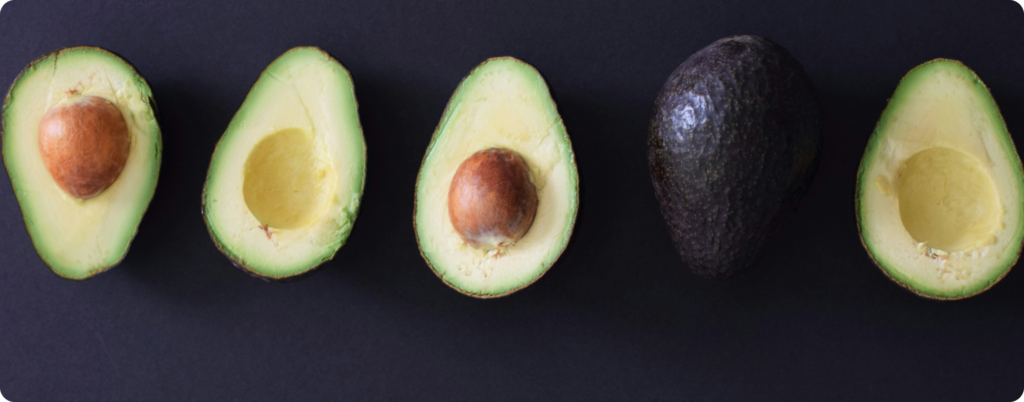
Avocado oil is pressed from avocado fruit and is primarily oleic acid, giving it one of the highest smoke points among commonly available cooking oils. It has a mild flavor that does not overpower food, making it one of the most versatile plant-based options. Avocado oil also contains vitamin E and antioxidants (19).
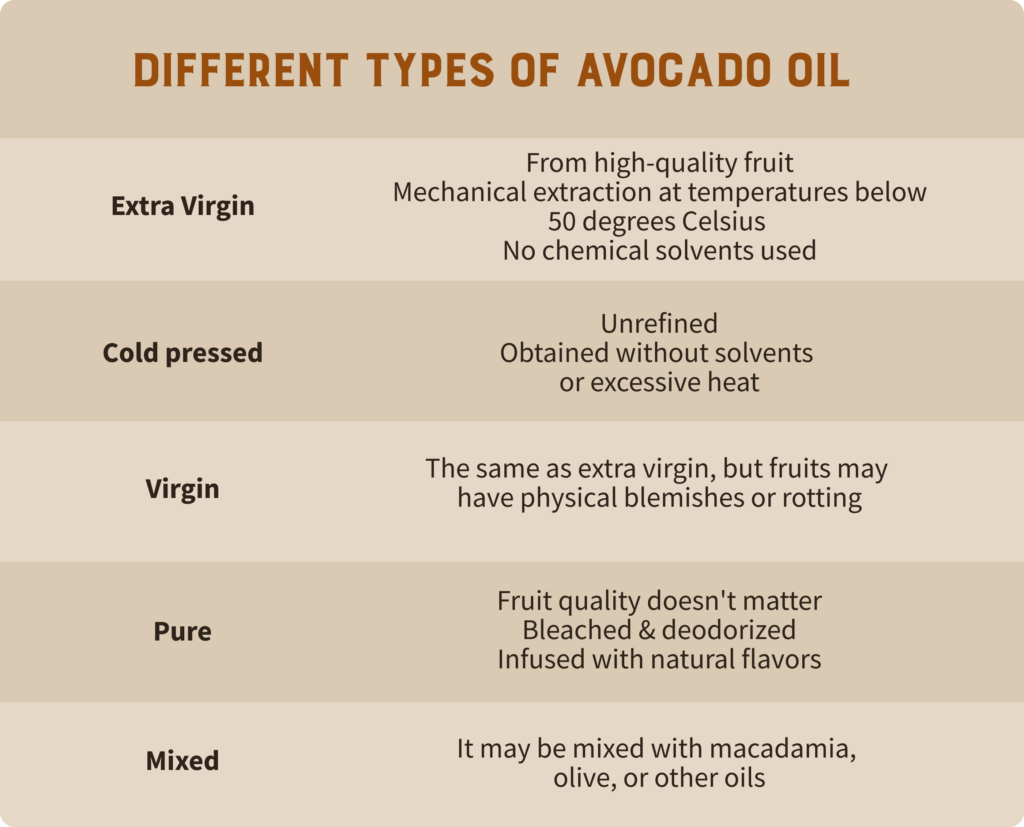
The avocado oil market has significant fraud problems. A 2020 study found that most tested samples were already oxidized before their listed expiration date, and 2 samples were almost 100% soybean oil (20). This is a meaningful risk: if you are buying avocado oil to avoid seed oils, adulterated avocado oil defeats the purpose. Look for cold-pressed, single-origin avocado oil from a brand with third-party testing.
Best for: High-heat cooking, grilling, dressings, mayonnaise
Smoke point: ~520°F (271°C) for refined; ~375°F (190°C) for unrefined
Linoleic acid content: ~12%
How Do These Alternatives Compare?
Healthy Alternatives to Vegetable Oil: At a Glance (21):
| Fat | Primary Fat Type | Linoleic Acid | Smoke Point | Best Use |
|---|---|---|---|---|
| Tallow (Grass-fed) | Saturated/MUFA | ~1% | ~420°F | Frying, roasting, sautéing |
| Butter (Grass-fed) | Saturated/MUFA | ~1% | ~302°F | Baking, finishing, low heat |
| Ghee | Saturated/MUFA | ~2% | ~485°F | High-heat cooking |
| Lard | Saturated/MUFA | ~10% | ~374°F | Baking, frying |
| Olive Oil | MUFA | ~10% | ~375°F | Dressings, low-medium heat |
| Coconut Oil | Saturated (MCT) | ~2% | ~350°F | Baking, medium heat |
| Avocado Oil | MUFA | ~10% | ~375-520°F | High heat, dressings |
| Vegetable Oil (soybean) | PUFA | ~54% | ~450°F | Avoid |
| Canola Oil | PUFA | ~21% | ~400°F | Avoid |
The single most impactful swap most people can make in their kitchen is replacing vegetable oil with tallow, butter, or ghee. The linoleic acid difference alone, from ~54% in soybean oil to ~2% in butter.
What Is a Healthy Alternative to Vegetable Oil in Baking?
The best healthy alternatives to vegetable oil for baking is butter, melted coconut oil, or ghee in a 1:1 ratio. Each provides the fat and moisture content that baking recipes require, without the linoleic acid load of vegetable oil.
For most baked goods, the substitution is straightforward:
- Butter (melted): Use in a 1:1 ratio. Adds richness and flavor. Best for cakes, muffins, quick breads, and cookies.
- Coconut oil (melted): Use in a 1:1 ratio. Neutral flavor in refined form; slight coconut flavor in unrefined. Best for dairy-free baking.
- Ghee: Use in a 1:1 ratio. Higher smoke point than butter and a nuttier flavor. Works in cookies, cakes, and savory baked goods.
- Lard: Use in a 1:1 ratio. Produces exceptionally flaky pastry. Best for pie crusts, biscuits, and savory baked goods.
The healthy alternatives to vegetable oil in baking is not a compromise. Butter-based baked goods are richer, more flavorful, and nutritionally superior to anything made with soybean or canola oil.
Can You Use Avocado Oil Instead of Vegetable Oil?
Yes. You can use avocado oil instead of vegetable oil in a 1:1 ratio for virtually any cooking application. Avocado oil has a neutral flavor, a high smoke point, and a significantly lower linoleic acid content than soybean or corn oil. It performs well in frying, roasting, sautéing, and baking.
The substitution works directly: if a recipe calls for 1 cup of vegetable oil, use 1 cup of avocado oil. The caveat is sourcing. As noted above, avocado oil fraud is widespread, and many commercial products are adulterated with seed oils. Verify the source before relying on avocado oil as your primary vegetable oil substitute.
Can You Replace Vegetable Oil With Canola Oil?
No. Canola oil is not one of the healthy alternatives to vegetable oil. It is a vegetable oil. Canola oil contains approximately 21% linoleic acid, compared to 54% in soybean oil, which makes it lower in omega-6 PUFAs but not low. It still oxidizes at cooking temperatures and undergoes extensive industrial processing, including high-heat extraction, bleaching, and deodorizing, before it reaches a bottle.
A canola oil replacement should be an animal fat or a minimally processed plant oil, not a different seed oil. If you are looking to replace vegetable oil with a healthier option, canola is not it.
Learn more: Is Canola Oil Bad for You?

Glossary
Vegetable oil substitute: Any cooking fat used in place of vegetable oil. The best substitutes are lower in polyunsaturated fatty acids, more stable at cooking temperatures, and minimally processed. Animal fats (tallow, butter, ghee, lard) and certain plant oils (extra-virgin olive oil, unrefined coconut oil, quality avocado oil) are the leading options.
Linoleic acid: An omega-6 polyunsaturated fatty acid that is the primary fatty acid in most vegetable oils. It is the most abundant omega-6 in the Western diet and is prone to oxidation when heated. Excessive linoleic acid intake relative to omega-3 intake is associated with chronic inflammation and disease (22).
Polyunsaturated fatty acid (PUFA): A fatty acid with 2 or more double bonds in its carbon chain. PUFAs are structurally unstable and susceptible to oxidation when exposed to heat, light, or oxygen. Vegetable oils are high in PUFAs, which is why they degrade more readily than animal fats during cooking.
Saturated fatty acid (SFA): A fatty acid with no double bonds in its carbon chain. SFAs are stable at cooking temperatures and resistant to oxidation. Animal fats like tallow, butter, and ghee are high in saturated fatty acids.
Monounsaturated fatty acid (MUFA): A fatty acid with 1 double bond. MUFAs are more stable than PUFAs and are the primary fat in olive oil and avocado oil. Animal fats also contain significant MUFAs.
Smoke point: The temperature at which a fat begins to visibly smoke and break down. Above the smoke point, a fat degrades rapidly and produces harmful compounds. Fats with higher smoke points are generally more suitable for high-heat cooking.
Tallow: Rendered beef fat, typically from suet (kidney fat). Tallow is high in saturated and monounsaturated fatty acids, with approximately 3% linoleic acid, making it one of the most stable and versatile cooking fats available.
Ghee: Clarified butter from which milk solids and water have been removed. Ghee has a higher smoke point than butter (~485°F), a rich nutty flavor, and is well tolerated by people sensitive to lactose or casein.
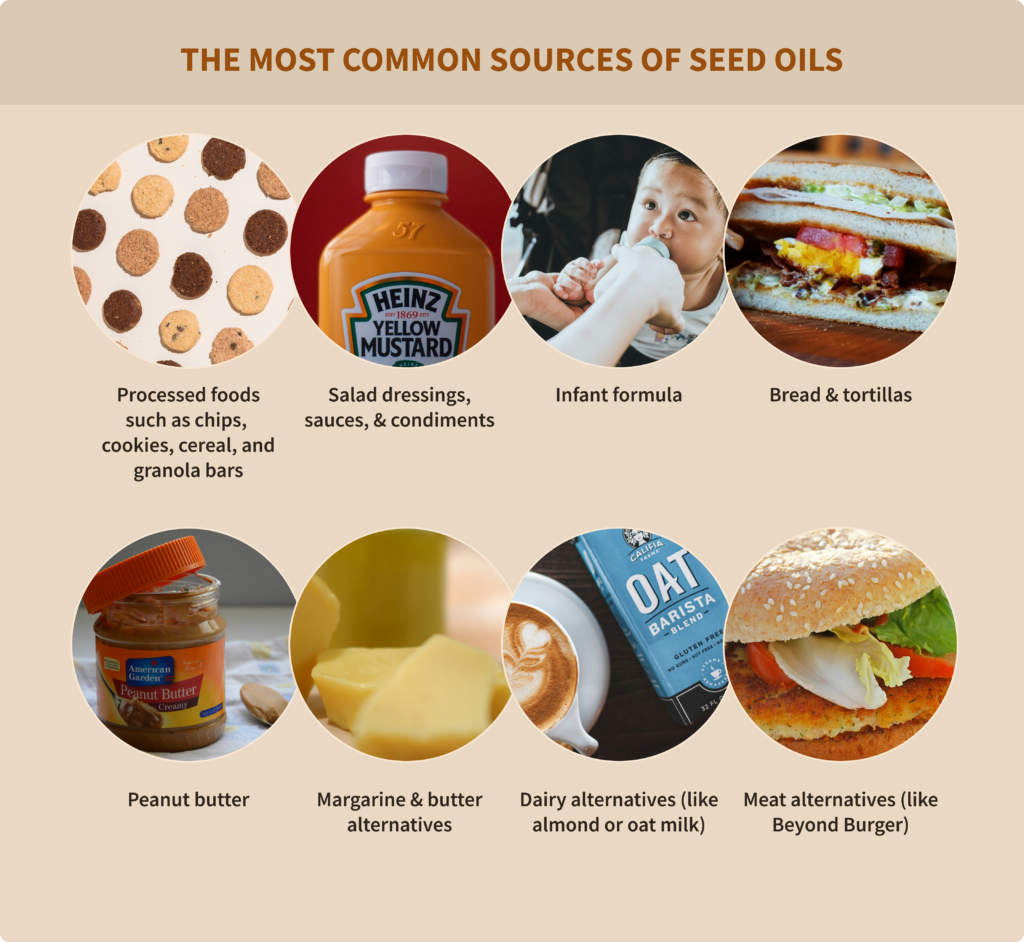
Seed oils: A category of vegetable oils extracted from the seeds of crops, including soybean, corn, sunflower, canola, cottonseed, and safflower. Seed oils are high in linoleic acid and omega-6 PUFAs, and require extensive industrial processing for production.
FAQ
What are the healthy alternatives to vegetable oil for everyday cooking? Tallow, butter, and ghee are the most reliable healthy alternatives to vegetable oil for everyday cooking. All 3 are primarily saturated and monounsaturated fats, stable at cooking temperatures, and low in linoleic acid. Ghee is ideal for high-heat applications. Butter is best for baking and low-heat cooking. Tallow is the most versatile for savory cooking across all temperatures.
Is olive oil a healthy alternative to vegetable oil? Yes, extra-virgin olive oil is a healthier alternative to vegetable oil for low-to-medium heat cooking and cold applications. Its primary fat is oleic acid, a stable monounsaturated fatty acid with a low linoleic acid content (~10%). The key risk is sourcing: the olive oil market has widespread adulteration with cheaper seed oils. Buy from verified, reputable producers.
What are the healthy alternatives to vegetable oil in baking? Melted butter, coconut oil, and ghee all substitute 1:1 for vegetable oil in baking. Butter is the most neutral and familiar. Coconut oil works well for dairy-free recipes. Lard produces superior pastry texture. All 3 perform better nutritionally than vegetable oil and produce comparable or better results in most baking applications.
What are the healthy alternatives to vegetable oil for frying? Tallow and ghee are the best options for frying. Both have high smoke points (tallow ~420°F, ghee ~485°F), are stable at frying temperatures, and contain minimal linoleic acid. Tallow was the standard frying fat for most of the 20th century before vegetable oils replaced it.
Is coconut oil a good vegetable oil substitute? Coconut oil is a stable, minimally processed vegetable oil substitute with approximately 2% linoleic acid. Its high saturated fat content makes it resistant to oxidation. The distinct coconut flavor works well in baking and certain cooking applications but is noticeable in neutral dishes. Choose unrefined virgin coconut oil for the most intact nutrient profile.
Can you use avocado oil instead of vegetable oil? Yes. Avocado oil substitutes 1:1 for vegetable oil in all cooking applications. It has a neutral flavor, high smoke point, and lower linoleic acid content than soybean or corn oil. The major risk is fraud: many avocado oils on the market are adulterated with cheaper seed oils. Source carefully from verified producers.
Can you replace vegetable oil with canola oil? No. Canola oil is a vegetable oil. It contains approximately 21% linoleic acid and undergoes the same industrial processing as other seed oils. A canola oil replacement should be an animal fat or a quality plant oil, not a different refined seed oil. Canola is not one of the healthy alternatives to vegetable oil.
What does Heart & Soil recommend instead of seed oils? Animal fats: tallow, butter, and ghee. These are the fats humans used for most of culinary history, before vegetable oils existed. They are stable, nutritious, and free from industrial processing. Read more about why seed oils are a problem here.
Related Reading
- Are Seed Oils Bad for You? What the Research Actually Shows
- The Hidden Link Between Seed Oils and Chronic Disease
- The Ultimate Guide to the Animal-Based Diet

Bottom Line
The 7 best healthy alternatives to vegetable oil are tallow, butter, ghee, lard, olive oil, coconut oil, and avocado oil. Every one of them is lower in unstable polyunsaturated fatty acids than the vegetable oils they replace.
The simplest approach: use tallow or ghee for high-heat cooking, butter for baking and finishing, and extra-virgin olive oil for cold applications. Remove soybean oil, corn oil, sunflower oil, and canola oil from your kitchen. That single substitution is one of the highest-leverage nutritional changes most people can make.
Subscribe to future articles like this:
