
If you’re reading this, you’ve likely tried different diets, workout programs, or supplements in the past without getting the results you wanted. That can be incredibly frustrating. But you’re not alone.
For the typical dieter, more than 80% of lost weight is regained within five years (1).
Sustainable fat loss doesn’t mean living on tiny meals, cutting every carb, or spending hours on the treadmill.
An animal-based diet for fat loss takes a different approach.
The goal isn’t just to weigh less. It’s to lose body fat while keeping the muscle, energy, strength, and healthy habits you want to carry with you for years to come.
The information in this blog is for educational purposes only. It is not a substitute for professional medical advice. Consult your healthcare provider if you’re seeking medical advice, diagnoses, or treatment. These statements have not been evaluated by the Food and Drug Administration. Our products are not intended to diagnose, treat, cure, or prevent any disease.
Key Takeaways
- Start with minimally processed, nutrient-dense foods before cutting calories.
- Prioritize protein to support muscle and help you stay full.
- Carbohydrates can still fit, especially when you’re active.
- Strength training helps preserve lean mass during fat loss.
- Sleep can influence whether weight loss comes from fat or lean tissue.
- Learn roughly how much you’re eating before making aggressive reductions.
- Aim for gradual fat loss you can sustain instead of a crash diet.
Table of Contents
What Is an Animal-Based Diet for Fat Loss?
An animal-based diet for fat loss uses nutrient-dense animal foods as the nutritional foundation while adjusting the rest of the diet to support a gradual reduction in body fat.
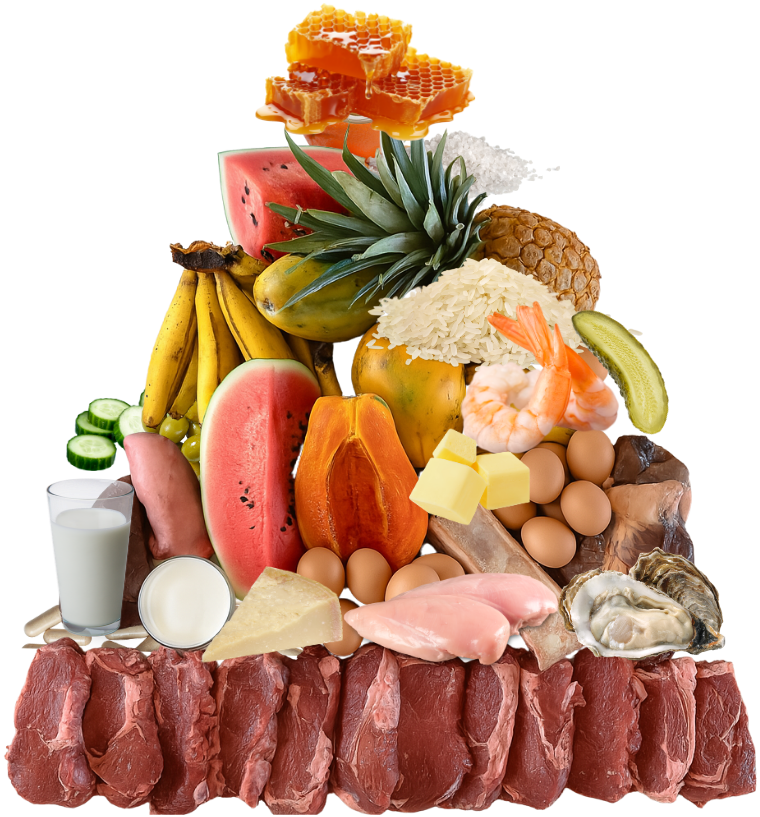
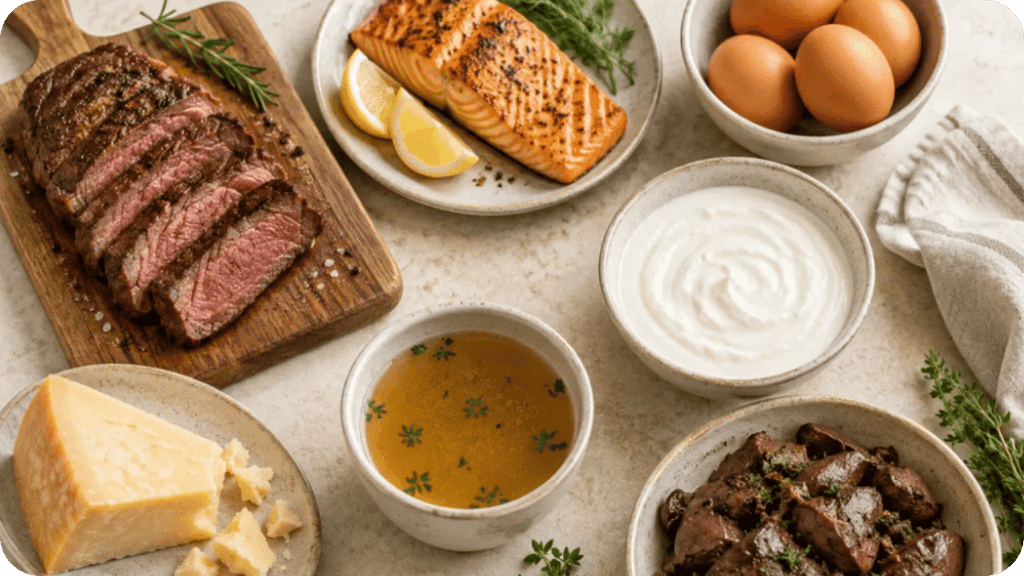
That foundation can include beef, eggs, seafood, dairy, organs, and other animal foods.
Whole-food carbohydrates can fit alongside them based on your activity, preferences, and nutritional needs. That might include fruit, honey, squash, sweet potatoes, and white rice.
An animal-based diet for fat loss is therefore not automatically carnivore, ketogenic, or zero-carb.
Fat loss ultimately requires your body to use more energy than you consume over time. But that does not mean your first move should be eating as little as possible.
Start here instead.
Animal-Based Diet for Fat Loss – 7 Strategies
1. Eat Mostly Whole Foods
Before counting every calorie, improve what those calories are coming from.
Build most meals around recognizable foods such as meat, organs, seafood, eggs, dairy, fruit, cooked vegetables, properly prepared starches, butter, tallow, honey, and maple syrup in amounts that suit your needs.
This food-quality-first approach is central to how we think about an animal-based diet for fat loss. The idea is to create a satisfying, nutrient-dense baseline before deciding whether portion sizes need to change.
There’s good experimental evidence that food form matters.
In a controlled NIH trial, adults ate either an ultra-processed or unprocessed diet for two weeks before switching to the other. The foods offered were designed to match calories, protein, carbohydrate, fat, sugar, sodium, and fiber.
When participants could eat as much as they wanted, they consumed about 508 extra calories per day on the ultra-processed diet and gained roughly 0.9 kg. They lost about 0.9 kg during the unprocessed phase (2).
That doesn’t mean calories stop mattering.
It means food quality can change how easy it is to eat an appropriate amount without constantly fighting your appetite.
Before you eat less food, try eating better food.
Use the “great-grandmother test”
Look at an ingredient list and ask whether your great-grandmother would recognize what’s in it.
It isn’t a scientific definition of healthy food, but it’s a surprisingly useful filter for highly industrial formulations.
Single-ingredient foods usually make the decision even easier.
2. Prioritize Protein
Protein should be the anchor of an animal-based diet for fat loss.
Good sources include:
- Meat from ruminant animals: beef, bison, lamb, or venison
- Beef heart
- Chicken and turkey
- Eggs
- Fish and shellfish
- Greek yogurt and cottage cheese
- Milk and kefir
- Whey protein
Protein matters for two major reasons: muscle and satiety.
A meta-analysis of randomized controlled trials found that higher-protein intake increased fullness and satiety while reducing hunger and desire to eat in acute studies.
That can be especially useful when you’re deliberately eating less.
Protein also helps support lean mass.
In a four-week randomized trial, young men exercised while following a substantial calorie deficit. Those consuming 2.4 g of protein per kilogram of body weight per day lost more fat and gained more lean mass than those consuming 1.2 g/kg.
That was an aggressive intervention in young men, so 2.4 g/kg shouldn’t be treated as a universal target.
A larger meta-analysis of resistance-training research found that benefits for fat-free mass tended to level off around 1.6 g/kg/day of total protein. (3)
A simple practical target we often use is roughly 0.8–1 gram of protein per pound of body weight, depending on your goals, size, and activity. Dr. Paul Saladino demonstrates what that looks like with real food in the video below.

Watch: How Dr. Paul Saladino Stays Lean at 49
In the video, Dr. Paul Saladino walks through the eating, training, and lifestyle habits he uses to maintain roughly 10–12% body fat at age 49.
His approach starts with meat and adequate protein but also includes fruit, honey, squash, dairy, sleep, sunlight, resistance training, and avoiding excessive exercise. Pasted text
3. Eat Carbs According to Your Activity
You do not have to eliminate carbohydrates to follow an animal-based diet for fat loss.
Carbohydrates provide energy, particularly when you’re lifting, running, playing sports, working a physical job, or simply moving a lot throughout the day.
Dr. Paul eats around 250–300 grams of carbohydrate on highly active days, primarily from fruit and honey. He also discusses squash, roots, white rice, and properly prepared grains as other options.
Someone training hard several days per week will often have different energy needs from someone who is mostly sedentary.
Start with foods you digest well and scale portions according to:
- Activity
- Training performance
- Hunger
- Body-composition goals
- Digestive tolerance
4. Build Muscle
Cardio is valuable. Walking, running, biking, hiking, swimming, and other aerobic activities can improve cardiovascular fitness and provide plenty of health benefits.
But if body composition is the goal, don’t neglect resistance training.
A 2025 systematic review and meta-analysis of 25 randomized controlled trials found that adding resistance exercise to dietary weight loss helped preserve fat-free mass, increased fat loss, and improved strength compared with diet alone (4).
Resistance training may also help protect your resting metabolic rate (RMR)—the calories your body burns at rest. In a randomized weight-loss trial, women who resistance trained maintained both fat-free mass and resting energy expenditure, while those doing aerobic exercise or no exercise saw resting energy expenditure decline (5). Another randomized trial found resistance training increased RMR by about 170 calories per day, although not every trial has found a significant increase (6, 7).
That’s another reason to protect and build muscle during fat loss: resistance training can help preserve the metabolically active tissue you have and may help keep daily energy expenditure from dropping as much while you lose weight.
Focus on basic movements and progressive overload, which means gradually increasing the resistance, repetitions, or difficulty as you get stronger.
Examples: pull-ups, push-ups, leg raises, and lower-body resistance exercises, with strength improving progressively over time.
Two to four resistance-training sessions per week is a realistic starting point for many people.

5. Sleep Like Fat Loss Depends on It
Food and exercise get almost all the attention. Sleep deserves more.
In a randomized crossover study, adults followed the same calorie-restricted diet while receiving either 8.5 or 5.5 hours of sleep opportunity each night.
With shorter sleep, the amount of weight lost as fat fell by 55%, while the loss of fat-free mass increased by 60%. Participants were also hungrier (8).
The study included only 10 adults, so we shouldn’t treat those exact percentages as universal.
But it demonstrates something important: the same calorie deficit can produce a very different body-composition outcome depending on sleep.
Start with the basics:
- Give yourself enough time in bed.
- Keep your room cool, dark, and quiet.
- Reduce unnecessary nighttime light.
- Maintain a reasonably consistent schedule.
- Address persistent sleep problems rather than treating exhaustion as normal.
Get more tips: 15 Proven Tips For How To Improve Sleep Naturally
6. Establish Your Baseline Before Cutting Calories
At this point, you’re eating better food, prioritizing protein, training, and sleeping.
Now we can talk about food quantity.
We suggest thinking about an animal-based diet for fat loss in three phases:
Phase 1: Improve food quality
Spend time building meals around nutrient-dense whole foods and removing highly processed foods.
Promote Healthy Weight Management
Metabolism. Energy. Drive.
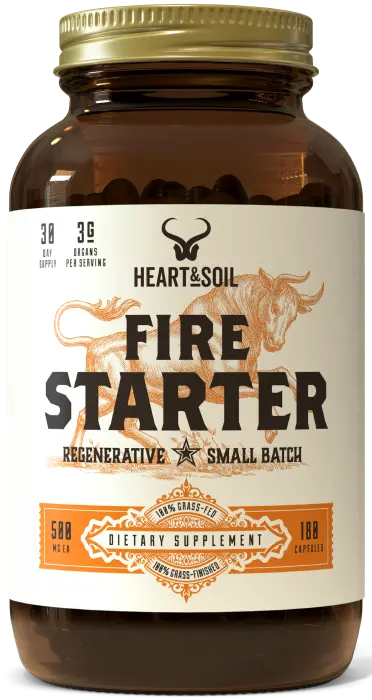
- 1 ingredient: grass-fed & finished suet
- Rendered at low temperatures to preserve nutrients
- Encourages the absorption of fat-soluble vitamins
60-day risk-free guarantee. No questions asked.
Phase 2: Learn your baseline
Figure out roughly how much food you’re currently eating and how your body is responding.
A food-tracking app can be useful for a week or two. You don’t need to track forever.
Phase 3: Create an intentional deficit
If body fat still isn’t moving toward your goal, reduce food intake modestly while continuing to prioritize protein, resistance training, sleep, and recovery.

The key difference is that calorie restriction isn’t step one.
We first want to understand your current diet. That’s especially useful if someone has spent years jumping between restrictive diets and overeating.
Long-term energy restriction can also lead to adaptive changes in energy expenditure. This is often called adaptive thermogenesis, meaning the body may reduce energy expenditure during weight loss beyond what would be expected from the reduction in body mass alone.
It doesn’t make fat loss impossible; it’s another reason to favor the smallest effective deficit rather than immediately slashing food intake.
7. Lose Fat Slowly Enough to Keep Your Muscle
When people decide to lose weight, the instinct is often:
“How quickly can I make the scale move?”
Try asking a better question:
“How can I lose fat while keeping as much muscle as possible?”
In a randomized trial of athletes, participants targeted either about 0.7% or 1.4% body-weight loss per week while resistance training.
Both groups lost weight, but the slower group lost more fat and increased lean body mass by 2.1%, while lean mass remained essentially unchanged in the faster group (9).
These were trained athletes, so 0.7% isn’t a magic number for everybody.
The larger point is that faster is not automatically better.
Our three-phase framework uses the same philosophy: once you intentionally enter a fat-loss phase, give yourself time rather than continuing to push calories lower and lower.
Be patient. Your body composition didn’t change overnight. It won’t completely change in 30 days either.
Consistency with food, movement, resistance training, sleep, and reasonable portions is far more useful than bouncing between extreme restriction and giving up.
Animal-Based Fat Loss vs. Crash Dieting
| Crash Diet | Animal-Based Diet for Fat Loss |
| Immediately slashes calories | Improves food quality first: meat, organs, fruit, dairy |
| Often cuts whole food groups | Keeps tolerated foods that serve a purpose |
| Focuses mainly on scale weight | Prioritizes fat loss and muscle retention |
| Relies heavily on cardio | Includes resistance training |
| Treats hunger as something to ignore | Uses protein and whole foods to improve satiety |
| Often sacrifices sleep and recovery | Treats recovery as part of body composition |
| Ends when willpower runs out | Builds habits you can continue |
What Does a Day of Eating Look Like?
There is no single menu required for an animal-based diet for fat loss.
One day might look like:
Breakfast = Eggs cooked in butter with Greek yogurt and berries. Beef organ supplements.
Lunch = Ground beef, white rice, avocado, and fruit.
Snack = Cottage cheese, leftover meat, milk, or a whey protein shake.
Dinner = Steak with roasted squash or potatoes and a piece of fruit.
These are just ideas. The goal is to build meals that provide adequate protein and nutrients while fitting your appetite, activity level, digestion, and body-composition goals.
Do You Need to Count Calories?
Not necessarily. But calories do still matter.
Improving food quality and protein intake may naturally reduce how much you want to eat. The controlled ultra-processed-food trial we discussed earlier is a good example of why food selection can affect spontaneous calorie intake.
If your animal-based diet for fat loss is working, you may never need to track.
If several weeks pass and your weight, waist circumference, and photos show no meaningful change, briefly tracking intake can reveal where extra energy is coming from.
Common examples include:
- Large amounts of cheese
- Heavy cream
- Added butter
- Honey or maple syrup
- Liquid calories
- Very large portions of calorie-dense foods
None of those foods has to be “bad.” Sometimes the portion simply needs to change.
How to Know if Your Plan Is Working
Don’t judge your progress by one morning on the scale because body weight fluctuates with hydration, sodium, carbohydrate intake, digestion, and other factors.
Instead, look for trends over several weeks.
Track some combination of:
- Weekly average body weight
- Waist circumference
- Progress photos
- How your clothes fit
- Strength in the gym
- Energy
- Hunger
- Sleep and recovery
And especially how you feel.
If your waist is getting smaller while your strength remains stable or increases, that can tell you more about body composition than a single weigh-in.
Frequently Asked Questions
Can you lose weight on an animal-based diet?
Yes. An animal-based diet for fat loss can support weight loss when your average energy intake is low enough for your body to draw on stored energy. The advantage of the approach is its emphasis on protein, nutrient density, minimally processed foods, strength, and recovery rather than calorie cutting alone.
How much protein should I eat for fat loss?
A practical starting point for many active people is around 0.8–1 gram per pound of body weight, although individual requirements vary. Research on resistance training suggests benefits for lean mass tend to level off around 1.6 g/kg/day on average.
Should I cut fruit and honey to lose fat?
Not automatically. Fruit and honey can fit an animal-based diet for fat loss. Consider the whole diet, your activity level, appetite, and progress before removing carbohydrate sources you tolerate well.
Is cardio necessary for fat loss?
No single form of cardio is required. Cardiovascular exercise is useful for fitness and health, but resistance training deserves special attention during weight loss because it helps preserve fat-free mass and supports metabolism. Walking and recreational activity can complement your lifting without turning every workout into an attempt to burn as many calories as possible.
How quickly should I lose fat?
There is no universal rate. In athletes, slower loss around 0.7% of body weight per week produced better lean-mass outcomes than a faster approach. Use that as context rather than a rigid target, and prioritize a pace that preserves strength, energy, nutrition, and adherence.
Related Reading
- Animal-Based Diet on a Budget: Under $10 a Day
- How to Stick With an Animal-Based Diet
- Animal-Based Recipes
The Bottom Line
An animal-based diet for fat loss doesn’t have to begin with restriction.
Start by eating mostly whole foods, prioritizing protein, eating carbohydrates according to your activity and tolerance, building muscle, and getting enough sleep.
That creates an animal-based diet for fat loss that is about more than watching a number on the scale go down; it’s about getting leaner while preserving the muscle, energy, and habits you want to keep when the fat-loss phase
is over so you can feel your best in a sustainable way.
Fat Loss Stack
Grass-Fed Organs for Metabolic Health
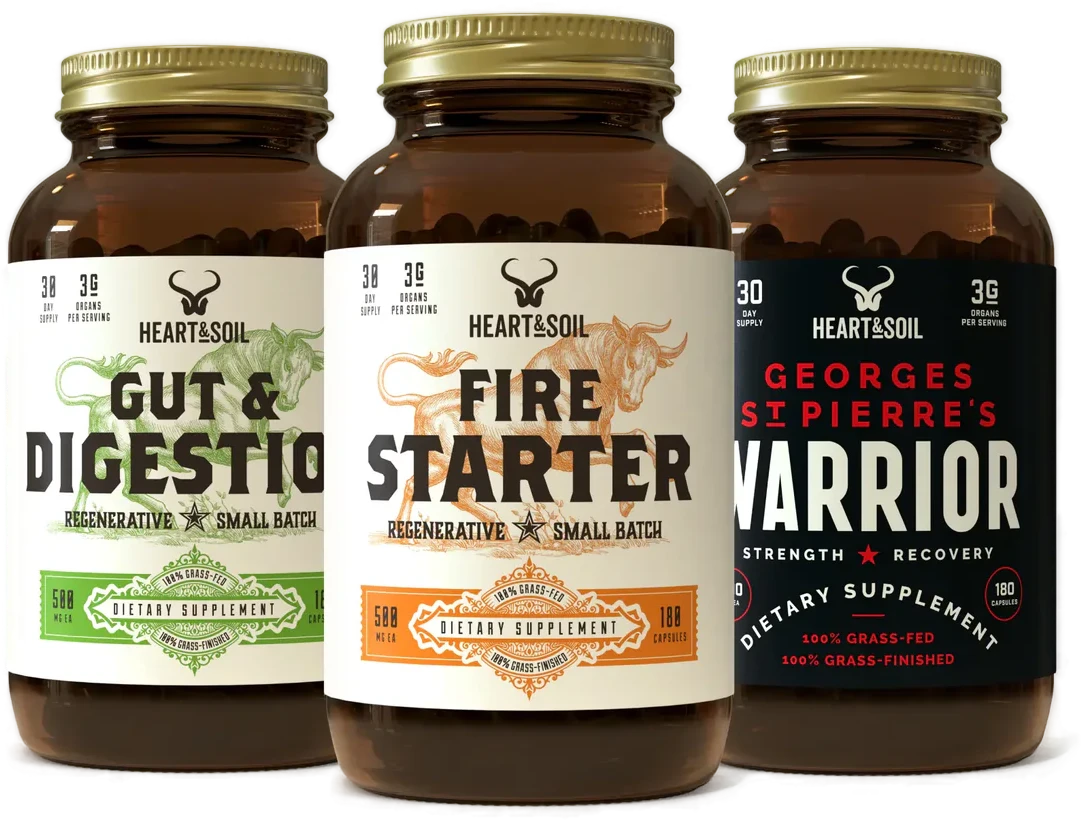
- Firestarter, Gut & Digestion, Warrior
- Supports sustainable fat loss while enhancing metabolism and muscle retention
- Help fight cravings, boost energy, and nourish your gut
60-day risk-free guarantee. No questions asked.
Subscribe to future articles like this:
