
We put organs in capsules because many people want the nourishment without having to cook liver, kidney, or spleen. That convenience also makes it easy to forget that they’re still real animal foods, and their nutrients count toward your daily intake.
Heart & Soil organ supplements use freeze-dried organs, and we test our products for contaminants including heavy metals, pesticides, and microbes. That testing matters, but so does knowing which organs are in each formula and how they fit with the rest of your diet. Liver, for example, contains preformed vitamin A, so combining liver-containing products can raise your total intake without making the overlap obvious.
Knowing what’s in each bottle helps you keep the convenience of nose-to-tail nourishment while making informed choices about serving sizes, daily use, and overlapping formulas.
Disclaimer: The information in this blog is for educational purposes only. It is not a substitute for professional medical advice. Consult your healthcare provider if you’re seeking medical advice, diagnosis, or treatment. These statements have not been evaluated by the Food and Drug Administration. Our products are not intended to diagnose, treat, cure, or prevent any disease.
Table of Contents
What Are Heart & Soil Supplements Made From?

Our supplements contain actual animal organs, so the nutrients depend on which tissues we use. Liver, heart, kidney, spleen, and pancreas aren’t nutritionally interchangeable, and that’s one reason we offer both focused and broader combinations.
We make Pure American Liver from freeze-dried beef liver, and we combine liver, heart, pancreas, spleen, and kidney from grass-fed, grass-finished cattle in Beef Organs. We freeze-dry the organs so you can bring nose-to-tail variety into your diet without preparing every organ yourself.
You’ll find liver in more than one of our formulas because it’s valuable alongside different organs. That overlap is intentional, though you still need to consider your total intake when combining products.
How Are Heart & Soil Supplements Tested?
Beef Organs
Nature's Ultimate Multivitamin
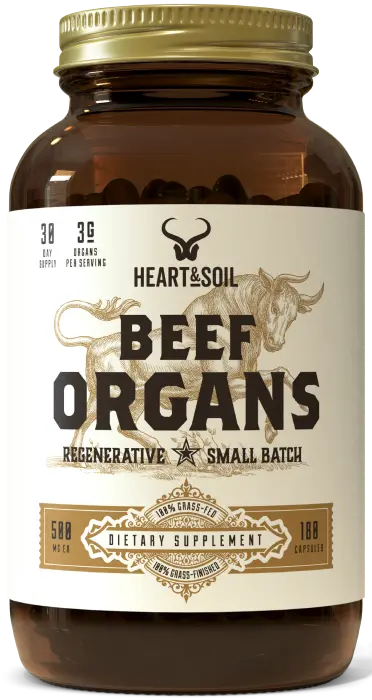
- Grass-fed liver, heart, pancreas, kidney, & spleen
- Designed to support overall energy & well-being
- Ideal daily foundation for nose-to-tail nutrition
60-day risk-free guarantee. No questions asked.
Our organ products undergo product-specific quality checks for relevant contaminants, including microbes, heavy metals, and pesticides. Because certifications and test panels differ by product, check the current listing for the exact formula you’re considering.
We test our finished products for quality and contaminants rather than asking you to take our sourcing claims on faith. Certifications also apply to specific formulas, so a seal on one bottle doesn’t necessarily cover every product we make.
Can Heart & Soil Supplements Cause Side Effects?
Yes, some people experience nausea, stomach discomfort, or changes in bowel habits when they start an organ supplement. An ingredient or capsule material may also trigger a food sensitivity or allergy. It’s important to explain those reactions clearly rather than brush them off as part of the process.
Headaches, rashes, or stomach discomfort after starting a product don’t always demonstrate that your body is “detoxing.” Those symptoms can have several causes, including ingredient sensitivity. Check what changed instead of treating discomfort as proof the supplement works.
For mild discomfort, check when it started and whether you introduced several supplements at once. Stop using the product if symptoms persist, worsen, or recur. Trouble breathing or swelling of the face or throat requires urgent medical attention.
Why Might Organ Supplements Upset Your Stomach?
If you’re new to organ supplements, starting with a full serving may upset your stomach. Digestive discomfort can also come from taking several capsules together, trying multiple new products at once, or taking them without food.
Our practical suggestion for someone new to organ supplements is to begin with a smaller amount and work toward the label’s serving if it’s well tolerated. That helps you see which ingredient or serving agrees with you.
Gradual introduction isn’t a safe workaround for a possible food allergy. If you know you react to beef, gelatin, or mammalian products, check the full ingredient list and seek appropriate medical guidance before using a product containing those ingredients.
How Much Should You Take?
Start with the serving directions for the specific formula you’re taking. Some of our organ products come in 500-milligram capsules with a suggested six-capsule serving, but the serving can vary between products. Use the directions on your container rather than assuming one formula’s serving fits another.
When you’re new to our organ supplements, we generally suggest starting with one or two capsules and increasing gradually as tolerated. You’ll be able to judge tolerance before moving to the full labeled serving.
More capsules aren’t necessarily more useful. Stick with the directions for your chosen formula, and don’t assume that doubling one product is the right serving for a different blend.
Is It Safe to Take Organ Supplements Every Day?

Yes, our organ products are designed for regular use at their recommended servings. Some people cook liver and heart, while others take freeze-dried capsules, and many do both. We offer capsules so you can include more of the animal even if you never cook those organs.
We use a different combination of organs and nutrients in each formula. Choose the one that fits what you eat, and use its own serving directions. After all, the ingredient is still food, just in a convenient capsule.
What About Vitamin A From Liver?
Beef liver contains preformed vitamin A, which supports normal vision, immune function, and cellular processes. That’s one of liver’s nutritional strengths and a reason we want organs back on the menu.
Total vitamin A intake matters most when someone has specific medical guidance, is pregnant, or also uses high-dose preformed vitamin A supplements. In those situations, the serving size and other sources are worth reviewing. For most readers, the practical starting point is simply to follow the organ product’s directions.
Can You Take Multiple Heart & Soil Supplements Together?
Yes, many of our organ products can be taken together. We include some of the same organs in different formulas because each blend has a different nutritional purpose. Start with what you want to add to your diet, then compare the ingredients and serving directions.
In Beef Organs, we combine liver, heart, pancreas, spleen, and kidney for broader variety. We focus on liver in Pure American Liver, while Lifeblood contains whole blood extract, spleen, and liver for more focused blood-related nutrition. They serve different purposes, so compare the organs and your total intake before deciding whether to combine them.
If you take prescription medicines or have a medically advised nutrient restriction, it’s worth checking your specific combination in that context. Otherwise, nutrient overlap between whole-organ formulas isn’t automatically a reason to avoid using them together.
Who Should Be Extra Cautious With Organ Supplements?
Organ supplements are food-based, but allergies, pregnancy, and medically required nutrient restrictions can change which products are appropriate. Here’s when extra care matters.
People With Alpha-Gal Syndrome
Alpha-gal syndrome is an allergy associated with exposure to products from mammals. The CDC identifies mammalian organ meats and gelatin among potential exposures. Because our products may contain beef organs or bovine gelatin, people with alpha-gal syndrome shouldn’t assume an organ supplement is suitable without advice from a qualified clinician.
Pregnant or Breastfeeding People
Pregnancy changes nutritional priorities and makes certain nutrient exposures more important to assess. Because liver contains preformed vitamin A and product formulas differ, people who are pregnant or trying to conceive should review organ products with their prenatal-care clinician rather than borrow someone else’s serving routine. The same principle applies to breastfeeding when a clinician recommends a tailored supplement plan.
People Taking Medications or Other Supplements
If you use prescription medication or several nutritional products, start with the actual ingredient lists and amounts. A clinician can help when an established nutrient interaction or an individualized restriction applies, while most ordinary supplement combinations don’t need to be treated as a medication problem.
People With Existing Medical Conditions
If you have an iron-loading disorder or follow a medically restricted diet, review the actual organs and nutrients in the formula with your clinician. Those conditions call for specific guidance, not a blanket warning against organ foods.
What About Histamine Intolerance?
Histamine tolerance differs between people, and handling and storage can influence histamine formation in animal foods. We freeze-dry our organs to help preserve the original food, and we take care with sourcing and processing because freshness matters. That doesn’t guarantee identical tolerance for everyone, so the meaningful question is whether a particular ingredient agrees with you.
If you’ve consistently reacted to a particular organ food or supplement, take that experience seriously and look at the ingredients and circumstances involved. Individual tolerance varies, but histamine concerns alone don’t make all freeze-dried organ products unsuitable.
How Do You Know If You Should Stop Taking an Organ Supplement?
An upset stomach and a severe allergic reaction aren’t the same problem. Here’s how to respond based on the symptoms you’re experiencing.
| What you notice | Practical response |
| Mild, brief digestive discomfort after introducing a product | Consider stopping temporarily, reviewing serving size, and reassessing tolerance |
| Symptoms that persist, worsen, or recur when the same product is used | Stop using it and seek medical guidance, especially if you suspect an ingredient sensitivity |
| Hives, swelling, wheezing, trouble breathing, or severe allergic symptoms | Stop the product and seek urgent or emergency care as appropriate |
Are Desiccated Organ Supplements Safe?
Desiccated simply means dried. Removing moisture helps preserve animal tissue, but the quality of an organ supplement also depends on sourcing, handling, storage, and testing. How was it made, and what’s actually in it? Those are the questions worth asking.
Freeze-drying removes water without prolonged high-heat exposure, which helps us preserve the character of the original organ food. We also care about sourcing, careful handling, and finished-product testing because the drying method is only one part of quality. Our freeze-drying explainer covers how processing methods differ.
What’s Inside Our Organ Supplements Matters
Daily Nourishment for Seasonal Wellness
Strategic Immune Support
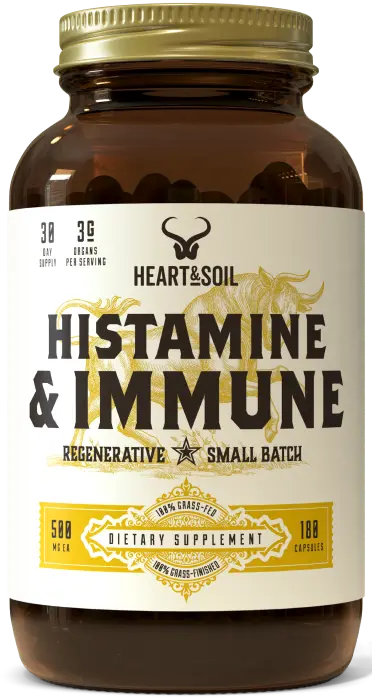
- Grass-fed thymus, lung, spleen, liver, and kidney
- Contains diamine oxidase (DAO) to aid histamine metabolism
- Helps your body respond naturally and stay resilient
60-day risk-free guarantee. No questions asked.
We’re bringing real organs back into the diet, and we think the way they’re prepared matters. Freeze-drying makes liver, heart, spleen, kidney, and pancreas easier to eat regularly, while information about sourcing, handling, and testing helps you judge the quality of the finished product. We won’t dress up a concerning reaction as ‘detox,’ either.
We combine five freeze-dried organs in Beef Organs and focus on liver in Pure American Liver. We make these foods convenient because nose-to-tail nourishment shouldn’t depend on your willingness to cook a kidney. If you want help choosing, our Health Success Team can walk you through the formulas. We apply high standards to organ foods, even when they come in capsules.
Frequently Asked Questions About Heart & Soil Supplement Side Effects
Are Heart & Soil organ supplements safe?
For many adults, our freeze-dried organ supplements offer a convenient way to eat more of the animal and broaden the nutrients already coming from a food-first diet. We focus on ingredient quality, careful preservation, and testing, while the right serving depends on the specific formula. That said, relevant food allergies and medical restrictions still deserve individualized attention.
Do Heart & Soil supplements have side effects?
Some users may notice mild digestive changes or discomfort after introducing a product. A food sensitivity or allergic reaction is also possible. Symptoms shouldn’t automatically be described as detoxification or proof that the supplement works. If a reaction is persistent, worsening, or significant, stop the product and seek appropriate care.
Is it safe to take organ supplements daily?
Daily use is consistent with how organ supplements are commonly intended to complement the diet, provided the individual product’s serving directions and your nutritional situation support it. The capsules aren’t identical to high-dose isolated vitamin tablets. Because their composition depends on the organs used, labels and personal circumstances still matter.
Are desiccated organ supplements safe?
Desiccated organ products are made from dried animal tissues. Their safety and quality depend on the original ingredient, the drying process, handling, manufacturing standards, and finished-product testing. Freeze-drying is a preservation method, though it isn’t a substitute for testing. Look for specific answers about sourcing and contaminants rather than vague assurances.
Can Heart & Soil supplements cause an allergic reaction?
Yes. Ingredients sourced from mammals can matter for people with a beef allergy or alpha-gal syndrome, and capsule materials such as gelatin can also be relevant. The CDC lists mammalian organs and gelatin among possible alpha-gal exposures. Swelling of the face or throat, breathing trouble, or severe allergic symptoms require urgent medical attention.
Can I take Heart & Soil supplements with other supplements?
Often, yes. We design many of our organ products to work alongside one another, and overlap between whole-organ ingredients is expected. Our Beef Organs, Pure American Liver, and Lifeblood each have a different nutritional focus, so we recommend comparing their roles and following the product directions rather than assuming stacking is inherently problematic. Specific medication or medical restrictions still need attention.
Subscribe to future articles like this:
