



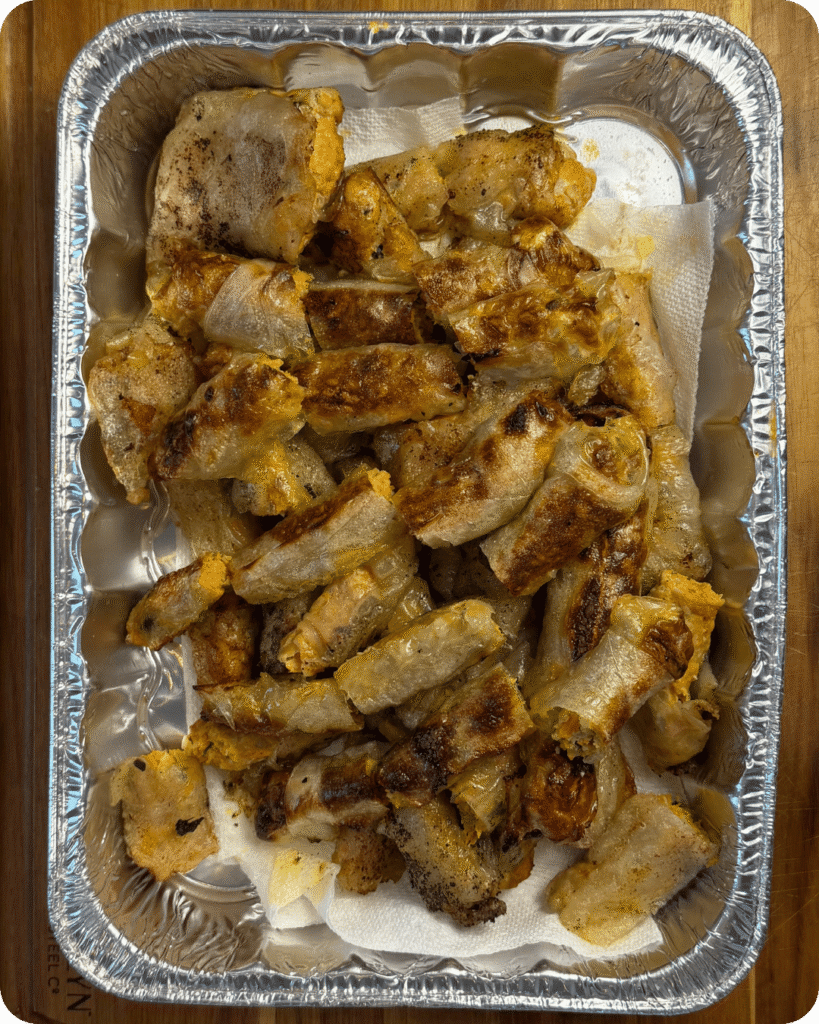
Few things beat lumpia straight from the pan: crispy on the outside, savory in the middle, and dangerously easy to eat one after another.
Traditional Filipino lumpia typically pairs a seasoned meat-and-vegetable filling with a paper-thin wrapper and a hot fry. This lumpia recipe keeps everything you want (the salty filling, golden crust, and bright dipping sauce) but swaps the wheat-based wrapper for rice paper and fries the rolls in beef tallow instead of vegetable oil.
And if you want to sneak a little organ meat into dinner? The filling is perfect for that, too.
Table of Contents
What Makes This Lumpia Recipe Different?
Two simple swaps set this recipe apart:
- Rice paper replaces traditional wheat-based lumpia wrappers for a gluten-free option that’s more aligned with the animal-based diet. Rice paper creates a slightly different shell than traditional lumpia wrappers. It bubbles, blisters, and gets intensely crisp when fried, especially if you double-wrap the rolls.
- Beef tallow replaces refined vegetable oil for frying. Tallow is also well-suited to high-heat cooking. Because it contains a greater proportion of saturated and monounsaturated fats than many polyunsaturated vegetable oils, it is relatively resistant to oxidation during heating.
More importantly for dinner, it makes really good animal-based fried food.
Subscribe to future articles like this:
Ingredients
For the Lumpia
- 2 lbs ground pork
- 2 medium carrots, finely minced
- 2 medium white onions, finely minced
- ½ cup fresh parsley, chopped
- Rice paper wrappers
- Beef tallow, for frying
- Salt, to taste
For the Dipping Sauce
- 2 tablespoons fish sauce
- 1 teaspoon maple syrup
- Juice of ½ lime
How to Make This Crispy Lumpia Recipe in 4 Steps
1. Make the Filling
- Add the ground pork, carrots, onions, parsley, and salt to a large bowl.
- Mix until everything is evenly distributed, but don’t overwork the meat. You want the filling to hold together without becoming dense.
- Keep the filling refrigerated until you’re ready to roll.
2. Soften the Rice Paper
- Fill a shallow plate or pan with warm water.
- Dip one rice paper wrapper into the water for just a few seconds. It doesn’t need to become completely floppy in the water—it will continue softening after you remove it.
- Set it on a clean work surface and wait a few seconds until pliable.
Tip: Don’t oversoak rice paper. Very soft wrappers become sticky and harder to roll without tearing.
3. Roll It Tight
- Place a thin strip of pork filling near the lower third of the wrapper.
- Fold the bottom over the meat, tuck in both sides, and continue rolling tightly like a small burrito.
- Repeat with the remaining wrappers and filling.
Tip: Keep the rolls relatively thin. Lumpia is at its best when there’s plenty of crispy wrapper in every bite rather than one giant tube of filling.
Optional: Double-wrap for maximum crunch. This step is optional, but worth trying if you want an especially crisp shell. After rolling your lumpia, wrap each one in a second softened rice paper sheet before frying. The extra layer creates more bubbles, ridges, and crunchy edges as it hits the hot tallow. It’s less traditional, but very good.
4. Fry in Beef Tallow
- Add enough beef tallow to a skillet to generously coat the bottom and heat over medium to medium-high heat.
- Once hot, carefully add the lumpia without crowding the pan.
- Fry until deeply golden and crisp, turning as needed so every side cooks evenly. The pork filling should be completely cooked through before serving.
- Transfer the finished lumpia to a rack or paper towel and let them cool for a few minutes.
The 30-Second Dipping Sauce
The rich pork and tallow in this lumpia recipe need something salty, acidic, and slightly sweet alongside them.
Stir together:
- 2 tablespoons fish sauce
- 1 teaspoon maple syrup
- Juice of ½ lime
For more heat, add a little fresh chili.
Watch it Made on Instagram
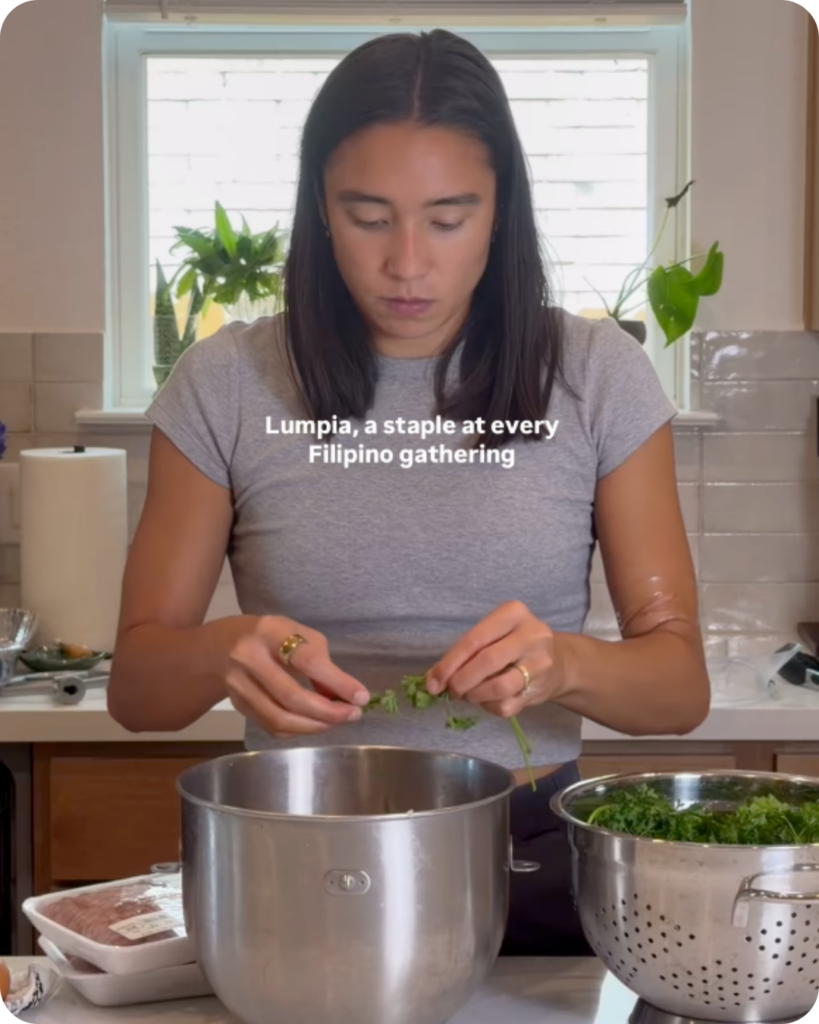
See how it comes together on Instagram
Want to Add Organ Meat?
This lumpia recipe makes it easy to incorporate organs because the meat is already minced, seasoned, and mixed with vegetables.
Try replacing a small portion of the ground pork with finely ground beef heart or liver. Or open Heart & Soil capsules and add the contents to the pork mixture.
If you’re new to organ meats, start small. A little liver adds richness without overpowering the filling, while heart has a milder flavor and texture closer to traditional muscle meat.
There’s a nutritional reason to make the swap, too.
A 2024 analysis of U.S. beef offal found that liver, heart, and kidney provide significant amounts of several essential nutrients. Beef liver was particularly rich in vitamin B12, copper, vitamin A, riboflavin, and other micronutrients, while heart provided protein, B vitamins, iron, and zinc (1).
You don’t need to turn every lumpia roll into an organ-meat delivery system. But if you’re looking for an easy way to eat more nose-to-tail, the filling gives you plenty of room to experiment.
Beef Organs
Nature's Ultimate Multivitamin

- Grass-fed liver, heart, pancreas, kidney, & spleen
- Designed to support overall energy & well-being
- Ideal daily foundation for nose-to-tail nutrition
60-day risk-free guarantee. No questions asked.
Save and Share
FAQ
What is lumpia?
Lumpia is a Filipino spring roll made with a thin wrapper and savory filling, often containing ground meat and vegetables. Depending on the style, it may be served fresh or fried. Lumpiang Shanghai, the small meat-filled fried version, is especially famous for its crisp exterior.
Is this lumpia recipe gluten-free?
It can be. This recipe uses rice paper rather than traditional wheat-based lumpia wrappers. Check the ingredient label on your rice paper, fish sauce, and any other packaged ingredients if you need to strictly avoid gluten.
Can I make this lumpia recipe with ground beef?
Absolutely. Ground beef works well in place of pork. You can also combine the two or mix ground beef with a small amount of liver or heart.
Can you bake lumpia instead of frying it?
Yes, although the texture won’t be quite the same. Brush or coat the rolls lightly with melted tallow before baking and cook until the wrappers are browned and crisp and the filling is cooked through. For the crunchiest result, frying wins.
Why does my rice paper tear or stick?
It’s usually too wet. Rice paper only needs a quick dip in warm water. If you wait for it to become completely soft before removing it, it can turn sticky and difficult to handle. Also, leave a little space between uncooked rolls so they don’t stick to each other.
Can I make this lumpia recipe ahead of time?
Yes. Assemble the rolls ahead of time and keep them covered in the refrigerator until you’re ready to cook. Because rice paper can become sticky as it sits, keep the rolls separated rather than stacking them directly on top of each other.
Glossary
Lumpia: A Filipino spring roll with countless regional and family variations, served either fresh or fried.
Lumpiang Shanghai: A small, fried Filipino lumpia commonly filled with seasoned ground meat.
Tallow: Rendered beef fat traditionally used for cooking and frying.
Offal: Edible animal organs and other parts outside conventional muscle meat, including liver, heart, and kidney.
More Recipes
- Caldereta Recipe
- Carnivore Pizza Recipe
- Beef Tongue Tacos
- Homemade Samoas Protein Cookies
- Crispy Carnivore Fried Chicken
The Bottom Line
This gluten-free lumpia recipe swaps traditional wrappers for rice paper, fries them in beef tallow, and fills them with savory pork, vegetables, and—if you’re feeling adventurous—a little organ meat.
Roll them thin, fry them until golden, and don’t skip the fish sauce and lime.
Just make more than you think you’ll need.
Subscribe to future articles like this:
