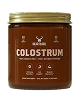
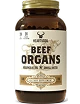

Greens supplements are everywhere.
Promising a world of good with every scoop.
But they aren’t the superfood goodness they’re made out to be.
Most greens powders contain chlorella, spirulina, barley grass, and wheat grass.
Translation? Highly concentrated grasses and algae aka what you eat when you’re starving in the woods and can’t hunt or find fruit.
At no point in human history did our ancestors EVER choose grass and algae as a preferred source of nutrition.
They always chose meat, organs, fruit, and honey instead.
“But what about all the essential nutrients and phytonutrients in plants?”
Fair question and heres your answer:
With the exception of Vitamin C, there are NO nutrients in plants that you can’t get in a more bioavailable form from animal foods.
Yet there are MANY nutrients in animal foods you can ONLY find in animal foods.
Vitamin B12. Taurine. Carnosine. Choline. Vitamin K2.
The list goes on.
Take iron, for example…
In some studies more than 50% of women were shown to have low iron levels.
Yet instead of reaching for beef liver (the most bioavailable source of heme-iron on the planet), they’re told to eat spinach or take synthetic iron pills.
Here’s what makes liver so powerful:
It doesn’t just deliver iron in the form your body actually recognizes and absorbs…
It packages that iron with Vitamin A , Zinc, and Copper — the exact co-factors your body needs for proper iron utilization.
Plant-based non-heme iron can’t compete with that. And neither can synthetic iron pills.
Our ancestors didn’t eat grass.
They ate animals. And they always ate the organs first.
Every. Single. Time.
This wasn’t superstition, it was wisdom honed from thousands of generations of knowledge.
ALL ancient cultures were obsessed with organs.
From the Inuit treasuring whale liver… to the Maasai drinking fresh blood… to Native Americans honoring the buffalo heart.
Turns out they were onto something.
During the mid-20th century, scientists made a remarkable discovery.
One that’s been gathering dust in obscure European medical journals for decades.
When you consume an organ, the nutrients and compounds from that organ don’t just randomly distribute throughout your body…
They specifically target and accumulate in your CORRESPONDING organ.
This isn’t speculation.
It’s documented science that’s been buried by time and corporate interests.
Why haven’t you heard about this before?
Because these groundbreaking studies were published in German and French… left untranslated in dusty archives… and gradually forgotten as pharmaceutical companies took control of medical research.
You see, you can’t patent food.
But you CAN patent a pill.
As the pharmaceutical industry grew more powerful, research funding shifted away from natural solutions toward synthetic drugs.
After all, there’s more profit in creating new medications than in studying the healing properties of foods our ancestors relied on.
Here’s what those forgotten studies revealed:
→ A 1958 study showed that when isotope-labeled thyroid tissue was consumed, it accumulated specifically in the recipient’s thyroid – and nowhere else (Kment, 1958).
→ A 1956 study discovered the same with heart and liver tissue – the consumed material traveled directly to the matching organs (Allman, 1956).
But here’s where it gets even more fascinating…
These compounds don’t just show up.
They actively stimulate and revitalize the corresponding organ.
Clinical trials with liver tissue showed improved liver function in 59% of subjects (Santoro, 1993).
Studies on thymus consumption showed increased production of immune cells and enhanced resistance (Cazzola, 1987).
Research on pancreatic tissue revealed better digestive enzyme activity than pharmaceutical alternatives (Westermarck, 1987).
And this “organ-specific targeting” happens regardless of species.
Whether the organs come from cows, pigs, or other animals – they still support the corresponding organ in humans (Kalb, 1959).
This is why our formulations work.
When you eat liver, those nutrients support YOUR liver.
When you eat heart, those nutrients support YOUR heart.
When you eat testicle or ovaries, those nutrients support YOUR testicles or ovaries.
It’s not just about getting nutrients in their most bioavailable form (though that’s incredibly important).
It’s about providing targeted, specific support to the organs and systems that need it most.
And the nutrients in organs are FAR superior to what you’ll find in plants or synthetic multivitamins.
Look, we’re not going to pretend organs taste like a seared ribeye.
But there’s a reason humans have eaten them since we first figured out we could crack skulls on rocks…
And there’s a reason your great-grandparents probably ate them regularly.
At Heart & Soil, every formulation we create follows this ancient principle: like supports like.
Gut & Digestion contains tripe and intestines for digestive health.
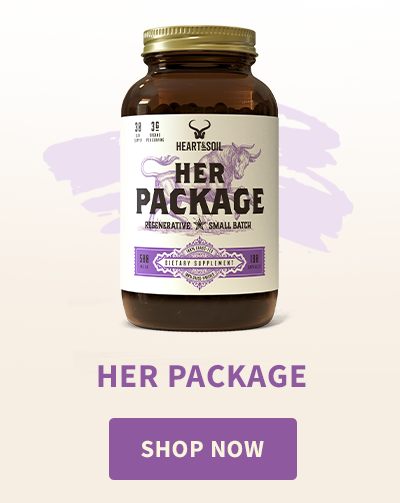
Her Package contains ovary, uterus, and fallopian tubes for female reproductive wellness.
Mood, Memory & Brain contains brain tissue for cognitive function.
Our marketing team doesn’t make up these formulations…
Our research team does.
And they are based on wisdom passed down through thousands of generations… validated by groundbreaking research… and proven by the transformative results our customers experience every day.
When you take our products, you’re not getting random nutrients.
You’re rediscovering what your ancestors knew, and what modern science is finally catching up to.
So while a greens powder might make you feel virtuous, organs make you feel alive. There’s a difference.
To your radical health,
The Heart & Soil Team
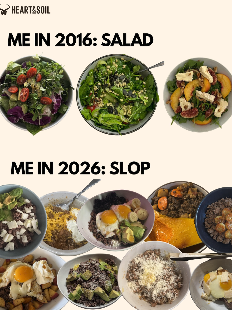
This week on Instagram:
This week on Radical Health Radio:
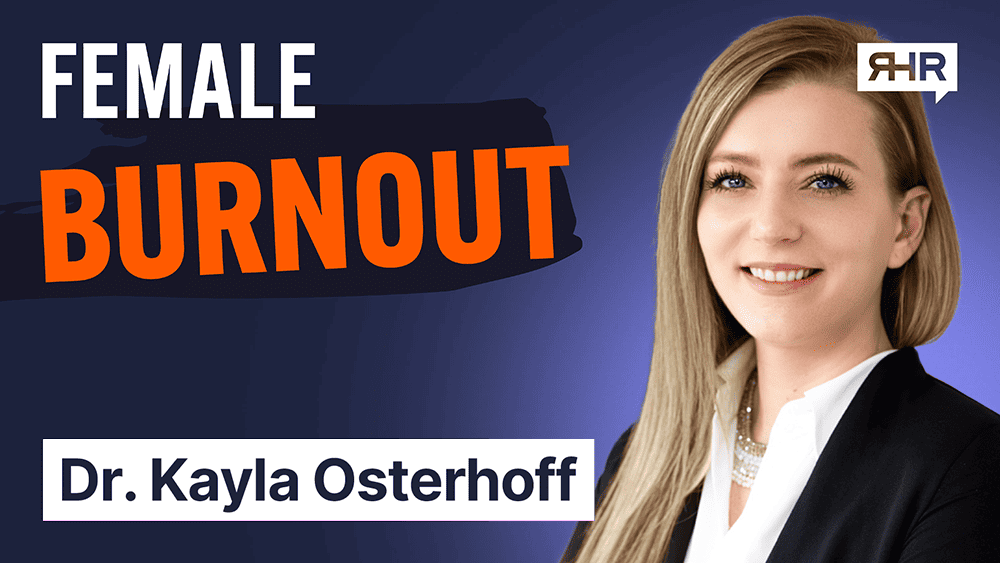
Why Women’s Health Research Is Broken (Dr. Kayla Osterhoff) | Ep. 154
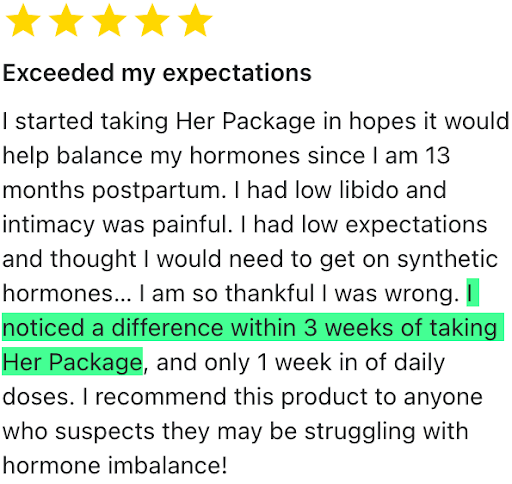
This week in customer reviews: Her Package
References:
Allman, D. W., Mahler, H. R., & Walter, H. (1956). Influence of adult tissue homogenates on formation of similar embryonic proteins. Science, 124(3234), 1251-1252.
Cazzola, P. et al. (1987). In vivo modulating effect of a calf thymus acid lysate on human T lymphocyte subsets and CD4+/CD8+ ratio in the course of different diseases. Current Therapy Research, 42, 1011-1017.
Kalb, H.W. (1959). Über die spezifisch stoffwechselsteigernde Wirkung von Organextrakten in vitro [On the specific metabolism-enhancing effect of organ extracts in vitro].
Kment. (1958). Untersuchungen der Meerschweinchen-Schilddrüsen-Aktivität mit Radioisotopen (J 131) nach Siccacell Präparaten. Zellular-Therapie in Wissenschaft Und Praxis, 20, 2-9.
Santoro, R.L., Weyhreter, A.F. (1993). Support of human gland/organ function with raw protein concentrate as measured by improvement in serum chemistry values. Journal of Applied Nutrition, 45, 48-6.
Westermarck E. (1987). Treatment of pancreatic degenerative atrophy with raw pancreas homogenate and various enzyme preparations. Zentralblatt fur Veterinarmedizin. Reihe A, 34(10), 728-733.
Subscribe to future articles like this:
