



Medical Disclaimer: This article is for educational purposes only and does not constitute medical advice. Consult a qualified healthcare provider before making changes to your diet.
Most people who find keto or carnivore low-carb diets do so because something is broken. Their digestion is a wreck, their energy is gone, their brain is foggy, and nothing else has worked.
And then, often within days, these diets deliver real relief. That experience is real, and it matters.
But relief is not the same as restoration. This article explains the difference and why knowing it changes everything.
TL;DR
Ketogenic and carnivore diets can feel life-changing. They lower blood sugar, calm inflammation, reduce bloating, lift brain fog, and provide relief for stubborn gut issues or autoimmune symptoms. These benefits are real, and for many people, these diets offer their first taste of what “better” feels like.
At the same time, keto and carnivore aren’t meant to be forever. They work beautifully as short-term therapeutic tools, and we generally recommend keeping them to 90 days or less. Beyond that window, the body begins to show signs of strain, especially around thyroid status, stress hormones, and overall metabolic function.
Table of Contents

Why People Gravitate Toward Keto and Carnivore
Many people are drawn to low-carb diets during periods when their health feels unstable. Keto or carnivore often gains traction because it can provide noticeable relief relatively quickly. Common wins include:
- Weight loss: Reducing carbs often leads to dramatic early changes on the scale.
- Stable blood sugar: Glucose and insulin fluctuations tend to calm almost immediately.
- Less inflammation: People often feel “lighter,” less puffy, and less achy.
- Mental clarity: Ketones can bring a clean, steady sense of focus and energy.
- Digestive relief: Removing common irritants gives a struggling gut a chance to rest and reset.
These improvements matter. They help people build confidence, momentum, and hope. And for many people, keto or carnivore is exactly what is needed to interrupt symptoms and begin healing.
Beyond symptom removal, ketogenic diets also shift the body’s metabolic signaling environment. Ketone bodies have been shown to support intestinal repair and regulate inflammatory pathways (1, 2), which helps explain the early improvements many people notice in digestion, inflammation, and overall well-being.
Who Keto or Carnivore May Help Most
If you’re coming off a plant-based diet, you might benefit most from our traditional animal-based approach. If you’re primarily seeking weight loss or metabolic restoration, our pro-metabolic approach may be the better fit.
That said, keto or carnivore can be an excellent choice if you:
- Are dealing with significant gut distress or extreme food sensitivities
- Need rapid inflammation reduction
- Are looking for quick weight loss to kickstart a larger transformation
Learn more: What’s the Difference Between Carnivore and Animal-Based?

Tips for a Smoother Ketogenic Experience
If you’re using a low-carb diet as a phase intentionally, a few key considerations help you get the most out of your experience:
1. Be mindful of protein
Too much protein can keep you out of ketosis, which is why our calculator sets protein targets a bit lower for this approach. That said, follow what makes you feel best. A carnivore diet isn’t necessarily ketogenic, and that’s not necessarily a bad thing.
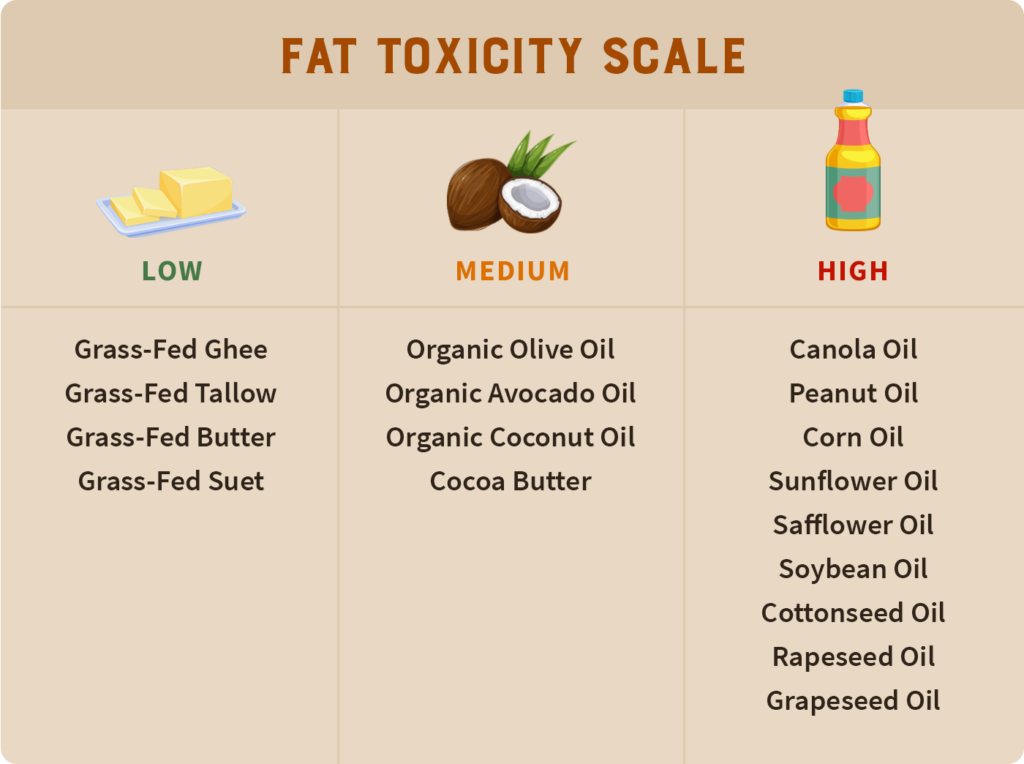
2. Choose clean, low-PUFA fats
Fat is your primary fuel on this diet, but the type of fat you consume is critical. Seed oils are obviously off the table, but here’s what many people miss: pork, poultry, and eggs from animals fed seed oil-laden feed will be rich in the same polyunsaturated fatty acid (linoleic acid) that makes seed oils so problematic.
If you’re eating bacon, duck fat, or lard, do your due diligence and email the producer and confirm the animals were never given feed containing seed oils. “Corn- and soy-free” labels aren’t enough, since there are many other seed oils beyond corn and soybean oil.
3. Verify your olive oil
Olive oil can be a great addition, but you need to confirm it’s legitimate and pure. Reach out to manufacturers for documentation confirming olive oil is the only ingredient, and ask about the product’s Delta-K value. Check out Dr. Paul’s olive oil video for more on this.
4. Be cautious with avocado oil
Even “pure” avocado oil can be problematic. If producers don’t remove the pit before pressing, the finished product contains both avocado flesh oil and avocado seed oil, making it, effectively, a seed oil. Definitely avoid all snack foods with avocado oil.
Used this way, keto or carnivore can be an empowering tool. But like any tool, it has a specific purpose, and also a point where it stops being helpful.
Get more tips: 10 Keto Flu Symptoms and How to Avoid Them
The Problem with Staying on Low-Carb Diets Long-Term
After years of nonstop messaging from low-carb and ketogenic influencers, it’s no surprise that many people now assume carbohydrates are harmful while low-carb diets are never not anything but beneficial. The narrative has become so skewed that some influencers now insist glucose is a “backup fuel” and that perpetual ketosis is the metabolic state humans were designed to live in.
This isn’t accurate.
Your body relies on carbohydrates to support:
- A healthy metabolic rate
- Stable insulin sensitivity (yes, really)
- Appropriate cortisol levels (not just serum; tissue, too)
- Balanced sex hormones
- Thyroid hormone conversion
- Muscle growth and maintenance
- Strong training output and recovery
- Optimal sleep quality
Glucose is so essential that, when you do not eat enough of it, the body uses stress hormones to convert your own muscle tissue into sugar (3). This process is called gluconeogenesis. It is a brilliant survival mechanism, but not one you want to rely on chronically.
Many people cite gluconeogenesis as proof that carbohydrates are unnecessary. It is true: you can survive without them. You can also run a marathon barefoot. It is possible, but it hinders performance and raises your injury risk at the same time. Surviving without carbohydrates is not the same as thriving.
Why Long-Term Low-Carb Diets = A Chronic Stress Signal
During the first weeks of eating a low-carb diet, cortisol rises sharply to generate glucose (4). This is your body doing what it must to keep blood sugar stable. One of the primary amino acid sources for this process is your own muscle tissue, which is your largest glucose sink, your most metabolically active tissue, and your strongest long-term protector against insulin resistance.
Burning muscle to create glucose works directly against the goals most people come to keto with.
And even when blood cortisol appears to normalize after a few weeks, tissue-level cortisol activity often remains elevated. This happens because of shifts in the enzyme 11-beta-HSD1, which regenerates cortisol inside tissues (4, 5). Blood tests may look normal. The body is still running in a heightened stress state.
Low-Carb Diets and Thyroid Function
Carbohydrate restriction has a consistent, measurable effect on thyroid hormones. Research shows that low-carb diets tend to lower T3 (the active thyroid hormone) and raise reverse T3, the inactive form that blocks T3’s actions (6, 7).
This happens for several converging reasons:
- Low insulin signaling suppresses the deiodinase enzymes needed to convert T4 into active T3, while activating the enzyme that creates reverse T3 (8)
- The liver, which handles a large portion of thyroid hormone conversion, struggles when glycogen stores stay chronically depleted
- Elevated cortisol further disrupts healthy thyroid hormone activation, again, at the tissue level, not just in blood
T3 sits at the center of what might be called highly efficient oxidative metabolism: the cleanest, most energy-productive way for cells to generate ATP. When T3 drops, everything slows. People often interpret this as “adaptation.” In reality, it reflects a downregulated metabolism.
Ketogenic Diets and Metabolic Efficiency: A Step Forward, But Not the Endpoint
From an energy metabolism standpoint, ketogenic diets are often an improvement over the standard Western diet. By reducing glycemic volatility and removing inflammatory foods, keto lowers metabolic stress and can improve short-term energy stability.
But ketosis is not the most efficient metabolic state over the long run.
Fat- and ketone-dominant metabolism increase mitochondrial redox pressure, reflected by a higher NADH-to-NAD+ ratio. This places greater electron load on the electron transport chain and increases reactive oxygen species (ROS) generation compared to carbohydrate-supported oxidative metabolism (9,10).
These metabolic states also produce less carbon dioxide (CO2), which plays a critical role in oxygen delivery, vascular function, and buffering oxidative stress by stabilizing intracellular pH (11).
This helps explain why many people thrive initially on keto or carnivore, then experience plateaus or subtle signs of strain: declining recovery, hormone disruption, and increasing metabolic rigidity.
In those cases, supporting a more efficient, carbohydrate-fueled oxidative metabolism becomes the logical next step.

How Your Body Tells You It’s Time to Reintroduce Carbs
Your physiology is smart, and it will communicate clearly when a low-carb phase has run its course. Common signs include:
- Less frequent bowel movements
- Cold hands and feet
- Loss of period or cycle irregularities
- Hair loss, especially thinning of the outer third of the eyebrows
- Sleep issues
- Worsening digestive symptoms
- Decreasing muscle mass or significant challenges with muscle gain
- Persistent fatigue
- Weight-loss plateaus
These are not signs of a healing crisis. They are your body asking for carbohydrate support.

Why a Pro-Metabolic Strategy Tends To Work Better Long-Term
Keto and carnivore can be transformative in the short run. But durable health depends on restoring and maintaining:
- Healthy thyroid function
- Strong glucose metabolism
- Stable and resilient stress hormone patterns
- Restoring and maintaining insulin sensitivity
- Full muscle glycogen stores
- Consistent, high-quality sleep
- A metabolism that runs cleanly and efficiently (little ROS; much CO₂; much ATP)
And to achieve all of that, the body needs adequate carbohydrates from the right sources, paired with nutrient-dense animal foods.
Everything people hope to achieve with keto—better blood sugar, calmer digestion, less inflammation, sharper focus, healthier body composition—is achievable and sustainable on a pro-metabolic animal-based diet. The difference is that the pro-metabolic approach fuels your thyroid, stabilizes your hormones, supports your muscles, and builds the metabolic resilience to sustain those results for years.

Glossary
Gluconeogenesis: The metabolic process by which the body produces glucose from non-carbohydrate sources, primarily amino acids from muscle tissue and glycerol from fat. Activated by stress hormones when dietary carbohydrate is insufficient.
Reverse T3 (rT3): An inactive form of thyroid hormone that blocks the action of active T3. Produced in greater quantities during carbohydrate restriction and chronic stress.
11-beta-HSD1: An enzyme that regenerates active cortisol inside tissues. Upregulated during low-carb dieting, contributing to elevated cellular cortisol even when blood cortisol appears normal.
Ketosis: A metabolic state in which the body primarily oxidizes fatty acids for energy, producing ketone bodies (acetoacetate, beta-hydroxybutyrate, and acetone) as a byproduct. These ketones serve as an alternative fuel source for tissues including the brain. Ketosis can occur through fasting, carbohydrate restriction, or prolonged exercise. Beneficial short-term; associated with thyroid and hormonal strain when maintained chronically.
Oxidative metabolism: The most efficient pathway for cellular energy production, yielding up to 36–38 ATP per glucose molecule via the citric acid cycle and oxidative phosphorylation — far exceeding anaerobic glycolysis— with CO₂ and water as byproducts. It can utilize glucose, fatty acids, ketone bodies, and amino acids as fuel, though adequate carbohydrate intake meaningfully supports the pathway by suppressing stress hormones and promoting favorable thyroid conversion (higher T3, lower Reverse T3), which upregulates mitochondrial activity.
FAQ: Keto, Carnivore, and Long-Term Metabolic Health
Q: How long should I stay on keto or carnivore? A: 90 days or less for most people. This window is long enough to experience the therapeutic benefits, such as reduced inflammation, digestive relief, and a metabolic reset, without incurring the downstream hormonal and thyroid costs of chronic carbohydrate restriction.
Q: Will my thyroid recover when I reintroduce carbs? A: For many people, yes. T3 levels often respond quickly to carbohydrate reintroduction, but factors such as micronutrient intake and light exposure are also important. The key is transitioning gradually, choosing quality carbohydrate sources (fruit, white rice, honey, root vegetables), and continuing to prioritize nutrient-dense animal foods throughout. Consider Grass-Fed Thyroid+ for support during this time.
Nourish Your Thyroid, Naturally
100% Grass-Fed Thyroid, Liver, & Kidney

- Healthy thyroid hormone production
- Supports a strong metabolism to help you feel energized and maintain a healthy weight
- Contains iodine, copper, selenium, B12, and more
60-day risk-free guarantee. No questions asked.
Q: Do I have to give up meat to go pro-metabolic? A: Not at all. A pro-metabolic animal-based diet still centers on high-quality animal foods like beef, liver, eggs, dairy, seafood. The difference is the addition of quality carbohydrates to support thyroid function, cortisol balance, and metabolic efficiency.
Q: Is keto or carnivore safe for women specifically? A: Women tend to be more sensitive to the thyroid and hormonal effects of long-term carbohydrate restriction. Loss of menstrual cycle, hair thinning, and cold intolerance are common signals that the body needs carbohydrates. These symptoms warrant a transition sooner rather than later.
Q: Can I do keto more than once? A: Yes. Some people use short keto or carnivore phases seasonally, or when dealing with a specific inflammatory flare or digestive issue. The key is treating it as a tool with a defined window and not a permanent metabolic identity.
Q: What carbohydrates should I reintroduce first? A: Start with easily digestible, low-fiber sources: ripe fruit, raw honey, white rice, and cooked root vegetables like potatoes and squash. These provide glucose without the digestive load of high-fiber grains or legumes, making the transition smoother for a gut that has been in a low-carb state.
Related Recipes & Reading
- Carnivore Pizza Recipe: High-Protein, Zero-Grain Crust You Need to Try
- Is Intermittent Fasting Healthy? What You Need to Know
- Beef Tongue Tacos: A Delicious High-Protein, Animal-Based Recipe
- How to Avoid Processed Food: 8 Easy Tip
The Bottom Line: Low-Carb Diets
Low-carb diets like keto and carnivore have their place. For many people, they’re the doorway into relief they’ve been searching for, such as less inflammation, calmer digestion, clearer thinking, more stable energy. Used wisely, they can help you reclaim your footing and remember what “good” feels like.
But they’re not meant to be lifelong strategies. These approaches are most helpful when they’re short-term tools that help you transition toward a way of eating that supports your metabolism for years to come. That’s where the pro-metabolic approach shines.
Everything people hope to achieve with a low-carb diet (better blood sugar control, better digestion, less inflammation, sharper focus) can be achieved and sustained on a pro-metabolic diet, and in a way that fuels your thyroid, stabilizes your hormones, supports your muscles, and strengthens your body’s capacity to produce clean, efficient energy daily.
Subscribe to future articles like this:
