
Medical Disclaimer: This article is for informational purposes only and does not constitute medical advice. Consult a qualified healthcare provider before making changes to your diet, especially if you have an existing medical condition.
You are eating the best steak of your life. It’s grass-fed, perfectly seared, and every bite is better than the last. And yet, somewhere in that animal (the liver, the heart, the kidneys) sits a nutritional profile that makes your ribeye look like a side dish.
That is not a knock on steak. It is the honest truth about offal meat, the most nutrient-dense category of animal food most people in the modern world actively avoid. Your great-grandmother did not avoid it. Indigenous populations around the world do not avoid it.
Organ meats specifically refers to glandular organs like the liver and kidneys. Offal meat is the broader term that includes organ meats plus non-muscle cuts like tripe, tongue, and marrow.
And if you care about optimizing your health on an animal-based diet, you should not avoid it either.
This guide answers every question you have about what is offal meat, why it belongs in your diet, and exactly how to start eating it, even if the idea currently makes you grimace.
Table of Contents
What Is Offal Meat? A Complete Definition
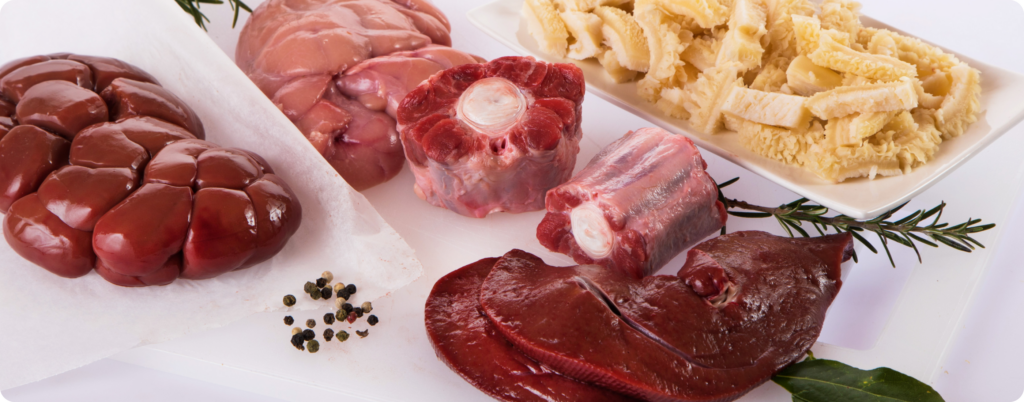
Offal (pronounced ɑfel)refers to the internal organs, glands, and non-skeletal-muscle cuts from a butchered animal. The term is derived from the phrase “off fall,” the pieces that fall away from the carcass during processing.
Offal is not a single ingredient. It is an entire category of animal foods, each with a distinct nutritional profile.
Common Types of Offal
Organ meats (glandular):
- Liver: the most nutrient-dense food known, often called “nature’s multivitamin”
- Kidney: rich in selenium, B12, and riboflavin (1)
- Heart: the highest natural source of CoQ10; technically a muscle but classified as offal (2)
- Spleen: exceptionally high in heme iron (3)
- Brain: dense in omega-3 DHA and phosphatidylserine (4)
- Pancreas (sweetbreads): rich in digestive enzymes and zinc (5)
Non-organ offal:
- Tongue: a fatty, collagen-rich muscle eaten worldwide (6)
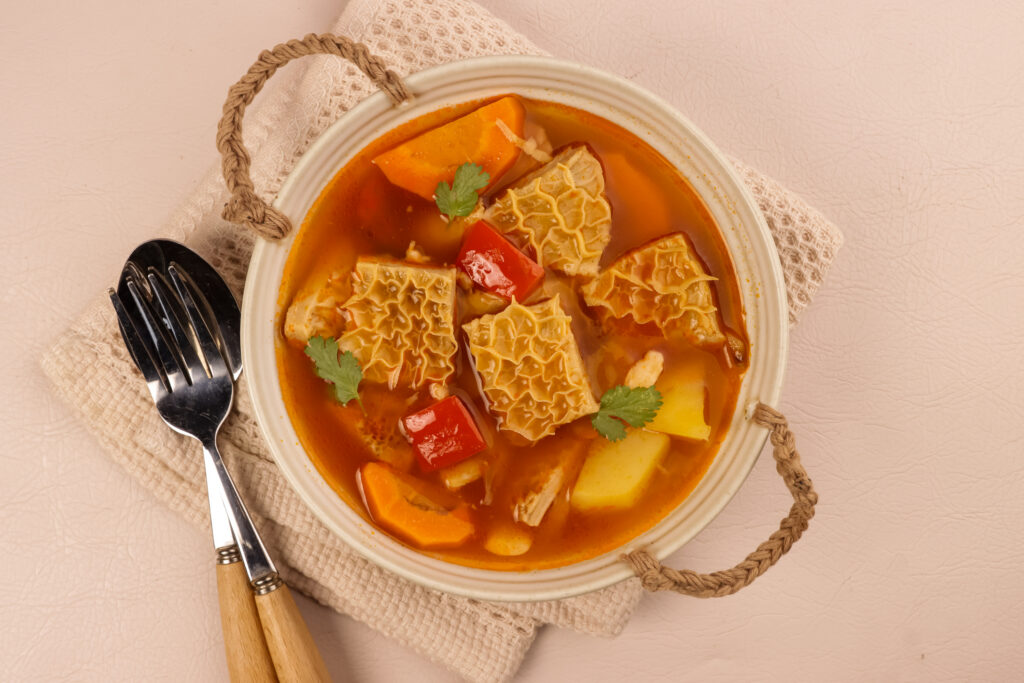
- Tripe (stomach lining): high in collagen and glycine (7)
- Bone marrow: rich in fat-soluble vitamins and adiponectin (8)
- Intestines: eaten across traditional cultures from Mexico to Asia
Why Offal Meat Matters: The Nutritional Case
Muscle meat is excellent food. But it tells only part of the animal-nutrition story.
Offal Delivers What Muscle Meat Cannot
Consider a direct comparison of 3.5 oz beef liver versus beef muscle (ribeye):
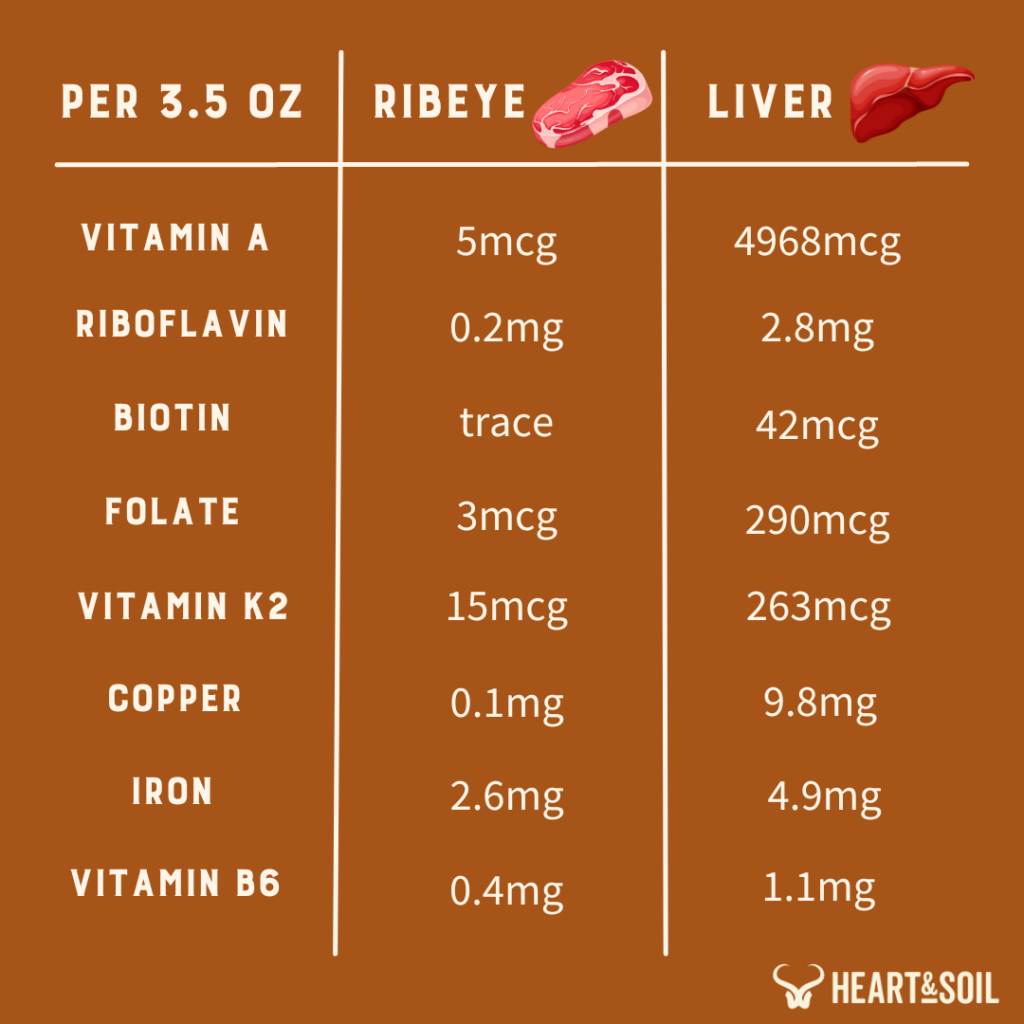
This is not a marginal difference. Liver provides 3,462% of the daily recommended B12 in a single serving. No plant food, no supplement stack, and no muscle meat matches that.
A single 3-ounce serving of beef liver delivers more than 100% of the RDI for vitamins A, B2, B12, copper, and folate (9).
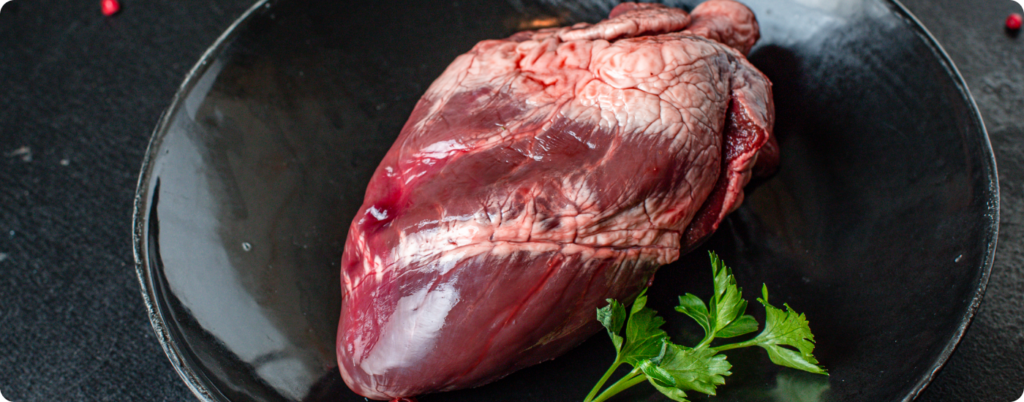
CoQ10, critical for mitochondrial energy production and cardiovascular function, is found at concentrations of approximately 11.3 mg per 100g in beef heart, the highest of any commonly eaten food (10).
Learn more: Is Beef Liver Better Than a Multivitamin? (#1 Natural Vitamin)
Why This Matters for an Animal-Based Diet
An animal-based or carnivore diet eliminates the plant foods that many people rely on for folate, vitamin C, and trace minerals. Offal fills those gaps not with synthetic fortification, but with bioavailable, whole-food nutrients your body recognizes and absorbs efficiently.
Heme iron (found exclusively in animal tissue) is absorbed at a rate of 15–35%, compared to 2–20% for non-heme iron from plants (11). The iron in a chicken liver is not the same as the iron in a spinach salad.
The Best Offal Meats to Start With
Not all organ meats taste the same, and not all of them require the same culinary courage. Here is a practical hierarchy from easiest to most challenging.
Easiest Entry Points
Heart is the gateway organ. It tastes and chews like a lean, slightly mineral-forward muscle steak. Slice thin, marinate in olive oil and herbs, and grill or sear. Most people who claim to hate organ meats eat beef heart without complaint on their first try.
Tongue is surprisingly another beginner-friendly cut. Slow-braised until tender, the texture is soft and the flavor is rich and beefy. The outer membrane peels off after cooking. Tongue tacos are a staple of Mexican cuisine for a reason.
Bone marrow is arguably the mildest offal of all. Roasted and spread on toast (or, on an animal-based diet, eaten by the spoonful), it tastes like deeply savory butter.
Intermediate Offal
Kidney has a more pronounced flavor due to its filtration function. Soaking in cold water or milk for 1–2 hours before cooking significantly reduces the intensity. Steak and kidney pie is a British staple that has sustained populations for centuries.
Spleen is underrated and under-used. Its iron density rivals liver, and it pairs well with strong flavors like caramelized onions and red wine.
Advanced Offal (for the Committed)
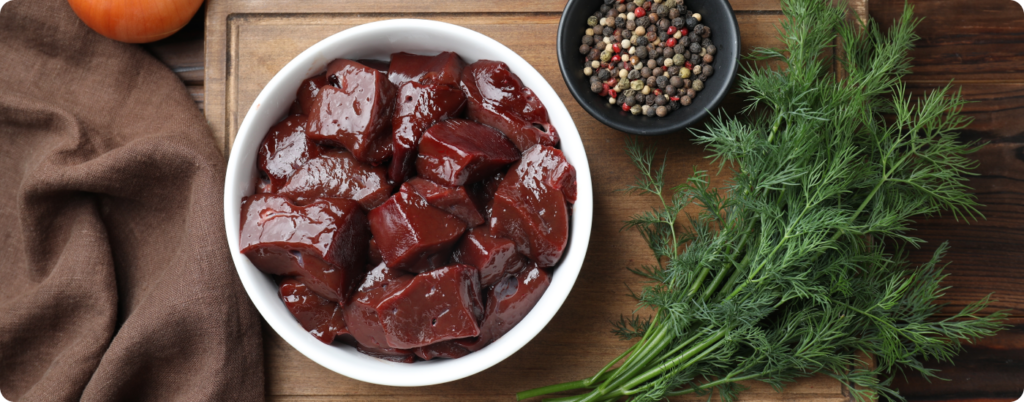
Liver sits in its own category. Beef liver has a strong, earthy flavor that divides people sharply. The trick: do not overcook it. Overcooked liver turns grainy and bitter. Properly cooked (seared hot and fast, pink in the center), it is earthy, rich, and satisfying. Chicken and lamb liver are milder alternatives for liver beginners.
Brain and thymus are deeply nutritious and deeply polarizing. If you are committed to ancestral eating and want the full benefit of DHA and fat-soluble brain nutrients, these are the endpoint.
How to Source High-Quality Offal
Quality matters. You want organs from animals that lived well for the highest-quality nutrition.
What to look for:
- Grass-fed and grass-finished for beef organs
- Pasture-raised for pork and poultry organs
- Certified organic when possible
- Local farms and farmers’ markets. Pro tips: organs are often cheap or free from local farmers who can’t sell them
- Specialty butchers who carry the full animal
Where to buy:
- Local farms (often the most affordable option)
- Farmers’ markets
- Specialty online butchers (US Wellness Meats, White Oak Pastures)
- Some Whole Foods and natural grocers carry fresh liver and heart
What About Supplements?
If you cannot access quality organs or the taste is a genuine barrier, desiccated organ supplements from Heart & Soil offer a whole-food alternative. Heart & Soil’s Beef Organs supplement contains liver, heart, kidney, pancreas, and spleen from 100% grass-fed New Zealand cattle. No fillers, no seed oils, no synthetic additives.
Beef Organs
Nature's Ultimate Multivitamin
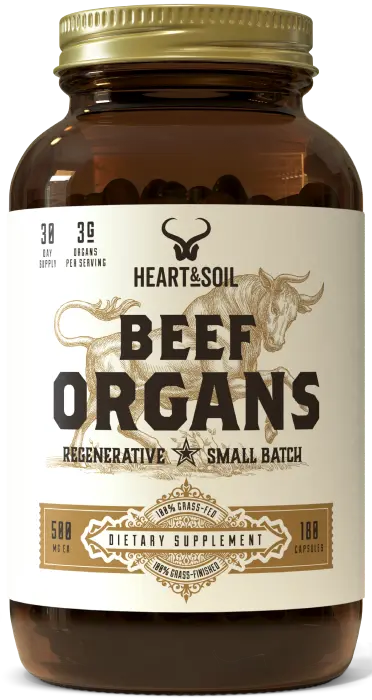
- Grass-fed liver, heart, pancreas, kidney, & spleen
- Designed to support overall energy & well-being
- Ideal daily foundation for nose-to-tail nutrition
60-day risk-free guarantee. No questions asked.
What About the “Offal Is Toxic” Concern?
This is the most common objection, and it deserves a direct response.
The concern: The liver processes toxins, so eating liver means eating stored toxins.
The reality: The liver processes toxins, but it does not store them. Fat-soluble toxins are stored in fat tissue; heavy metals accumulate in bone. What the liver does store in abundance are fat-soluble vitamins A, D, E, and K2, along with glycogen and essential minerals.
A grass-fed animal raised on clean pasture has a liver that is functionally rich in nutrients and low in harmful residues. The concern about organ toxicity is largely a myth that keeps modern eaters away from the most nutritious food available.
One legitimate caution: Liver is extremely high in preformed vitamin A (retinol). That’s why we suggest consuming 0.5-1oz of liver every day. No need for more than that, especially not consistently.
Learn more here: Vitamin A Toxicity: Is the Danger Real?
How to Cook Offal Meat: 4 Starter Methods
You do not need to be a trained chef to make organ meats taste good. You need to follow a few basic rules.
4 fundamental rules for cooking offal:
- Source matters more than technique. Fresh, high-quality organs from healthy animals need minimal intervention.
- Do not overcook. Liver and kidney are best medium-rare to medium. Overcooking ruins texture and flavor.
- Fat is your friend. Cook organs in tallow, butter, or lard and never seed oils (seed oils introduce oxidative stress that defeats the purpose of eating nutrient-dense food).
- Add acid. A squeeze of lemon or a splash of red wine vinegar brightens the mineral flavor of liver and kidney.
Simple starter recipe: seared beef liver:
- Slice liver ¼ inch thick, pat dry
- Season generously with salt and pepper
- Sear in beef tallow over high heat, 90 seconds per side
- Rest for 2 minutes; finish with butter and fresh thyme
- Internal temperature: 145°F (medium); do not exceed 160°F
Learn More: How to Cook Organ Meat With Anya
Offal in Traditional Cultures: This Is Not a New Idea
Every traditional culture on earth prioritized organ meats. This is not a wellness trend, but rather a return.
- Inuit populations eat raw liver and kidney from freshly hunted animals
- Traditional French cuisine centers on pâté, rillettes, andouille, and foie gras
- Chinese medicine has prescribed organ meats for specific organ support for over 2,000 years
- West African cuisine uses offal in slow-cooked stews as a primary protein source
- Indigenous North American peoples gave hunters the liver, heart, and kidneys of the kill first, before the muscle meat
The abandonment of offal in Western diets coincides precisely with the rise of chronic disease. Correlation is not causation, but the nutrient deficiencies that characterize modern metabolic disease (B12, vitamin A, zinc, CoQ10) map directly onto the nutrients found most abundantly in the organ meats we stopped eating (12).
Offal, Seed Oils, and the Animal-Based Philosophy
The animal-based movement rests on a simple premise: eat nose-to-tail.
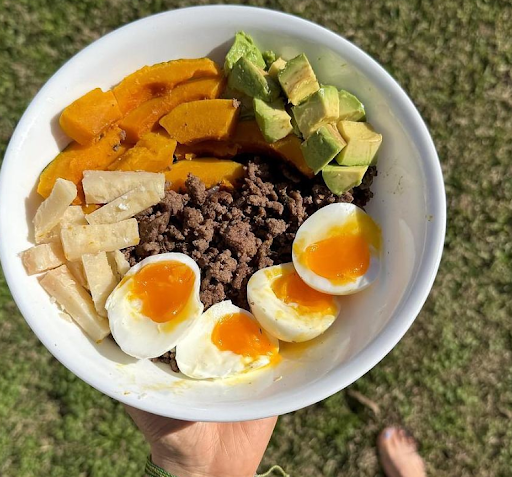
Muscle meat is incomplete nutrition. Organs complete it. Combining high-quality muscle meat with regular servings of liver, heart, and kidney gives you the broadest possible spectrum of animal-derived nutrition without supplementation.
Avoiding seed oils(canola, soybean, sunflower, safflower, corn) is equally essential. Cooking organ meats in seed oils replaces their anti-inflammatory fat-soluble nutrients with pro-inflammatory oxidized PUFAs. Tallow, butter, and lard are the best cooking fats for offal, and for everything else.
Learn more: The Ultimate Guide to the Animal-Based Diet
FAQ: What Is Offal Meat?
Q: Is offal the same as organ meat? Organ meat refers specifically to glandular organs like liver, kidney, and heart. Offal is a broader term that includes organ meats plus non-muscle cuts like tripe, tongue, bone marrow, and intestines.
Q: Is offal safe to eat? Yes. Offal from healthy, pasture-raised animals is safe and exceptionally nutritious. The concern that organs store toxins is largely a myth; the liver processes toxins rather than retaining them. Source quality is the primary variable to control.
Q: How often should you eat organ meats? 0.5-1 oz of liver per day is a practical and safe target for most adults. Daily consumption of liver in large amounts is unnecessary and risks excess vitamin A intake over time.
Q: What does offal taste like? It varies widely by organ. Heart tastes like a lean, mineral steak. Tongue is soft and beefy. Liver has a strong, earthy flavor that is heavily influenced by cooking method and sourcing. Bone marrow tastes like rich, savory butter.
Q: Can I get the benefits of offal from supplements? Whole, fresh organ meats are always the gold standard. However, high-quality desiccated organ supplements, like those from Heart & Soil, offer a convenient, effective alternative when whole organs are not practical.
Q: Is offal keto or carnivore-friendly? Yes. Organ meats are zero-carbohydrate, nutrient-dense animal foods fully compatible with ketogenic, carnivore, and animal-based dietary frameworks.
Q: Why did people stop eating offal? Post-World War II food industrialization shifted Western diets toward muscle meat and processed foods. Organs became associated with poverty and fell out of cultural favor.
Maximize Your Performance, Strength, & Recovery
Georges St-Pierre's WARRIOR
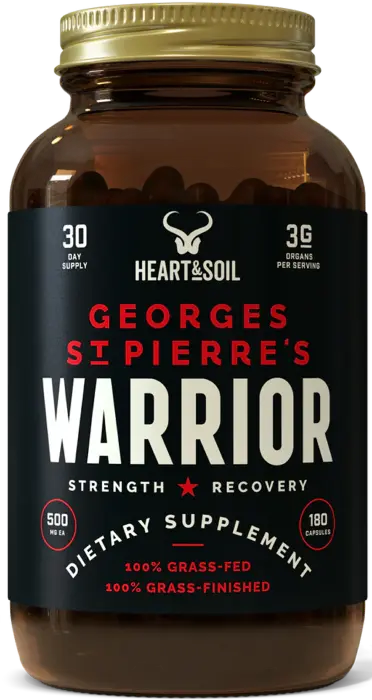
- 100% grass-fed heart and liver to support training output
- 12+ powerful nutrients: CoQ10, creatine, taurine, & more
- Foundational support for unlocked energy
60-day risk-free guarantee. No questions asked.
The Bottom Line
What is offal meat? It is the internal organs and non-muscle cuts of an animal, and it is the most nutrient-dense food category available to you on an animal-based diet.
Liver alone delivers more vitamin A, B12, folate, copper, and riboflavin than any other food on the planet (13). Heart provides CoQ10 (14). Kidney concentrates selenium and B12. Spleen rivals liver for iron density. No supplement, superfood, or plant food replicates what the whole animal delivers through its organs.
Start with heart or tongue, and work toward liver. Source grass-fed when possible, cook in tallow, and avoid seed oils. If whole organs are not accessible, use a quality desiccated supplement as your foundation.
Nose-to-tail eating is not a trend. It is what humans ate for the entirety of our existence on this planet. Offal is ancestral nutrition, and your body already knows what to do with it.
Subscribe to future articles like this:
