
Most ice cream is engineered to be cheap with stabilizers, gums, artificial flavors, and low-quality seed oils standing in for fat.
This homemade ice cream recipe is different, made with just 3 main ingredients: raw cream, egg yolks, and raw honey blended together in a KitchenAid ice cream maker in under an hour.
It is richer than anything in a carton, it actually fills you up, and every ingredient in it does something nutritionally that most desserts cannot claim.
Here is the animal-based recipe, the nutrition behind each ingredient, and everything you need to know about using raw milk and cream to make homemade ice cream.
Table of Contents
TL;DR
Homemade ice cream made with raw cream, egg yolks, raw honey, and vanilla is one of the most nutrient-dense desserts you can make. The homemade ice cream recipe is 2 cups raw cream, 2 egg yolks, 1/2 cup raw honey, a pinch of salt, and 1 tsp vanilla extract. Churn in a KitchenAid ice cream maker and freeze.
Raw cream provides fat-soluble vitamins and CLA. Egg yolks deliver choline, retinol, and fat-soluble vitamins A, D, E, and K. Raw honey adds enzymes and bioactive compounds that are largely absent from processed sweeteners.
You can also add a scoop of Animal Based Protein or Grass Fed Whey for a high-protein, animal-based dessert or Grass-Fed Colostrum for additional immune and gut health support.
The Recipe: Homemade Ice Cream
Ingredients:
- 2 cups raw cream
- 2 egg yolks (more egg yolks make it richer)
- 1/2 cup raw honey
- 1 pinch of salt
- 1 tsp vanilla extract
Instructions:
- Whisk raw cream, egg yolks, and raw honey together until combined and slightly pale.
- Add the vanilla extract and salt. Stir to combine.
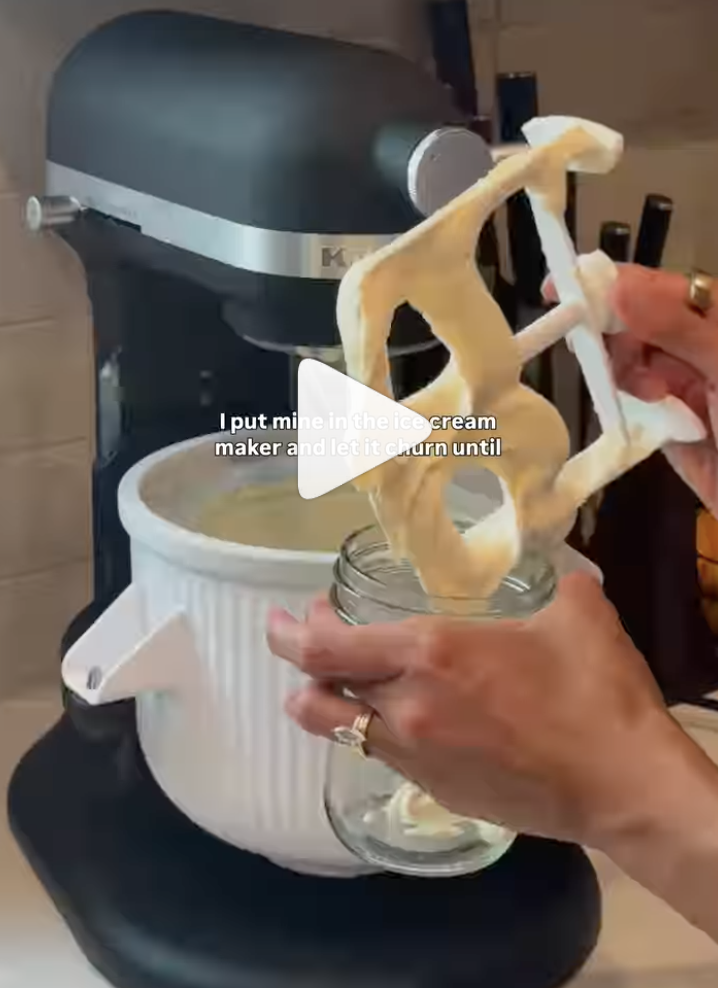
- Churn in a KitchenAid ice cream maker according to the manufacturer’s instructions.
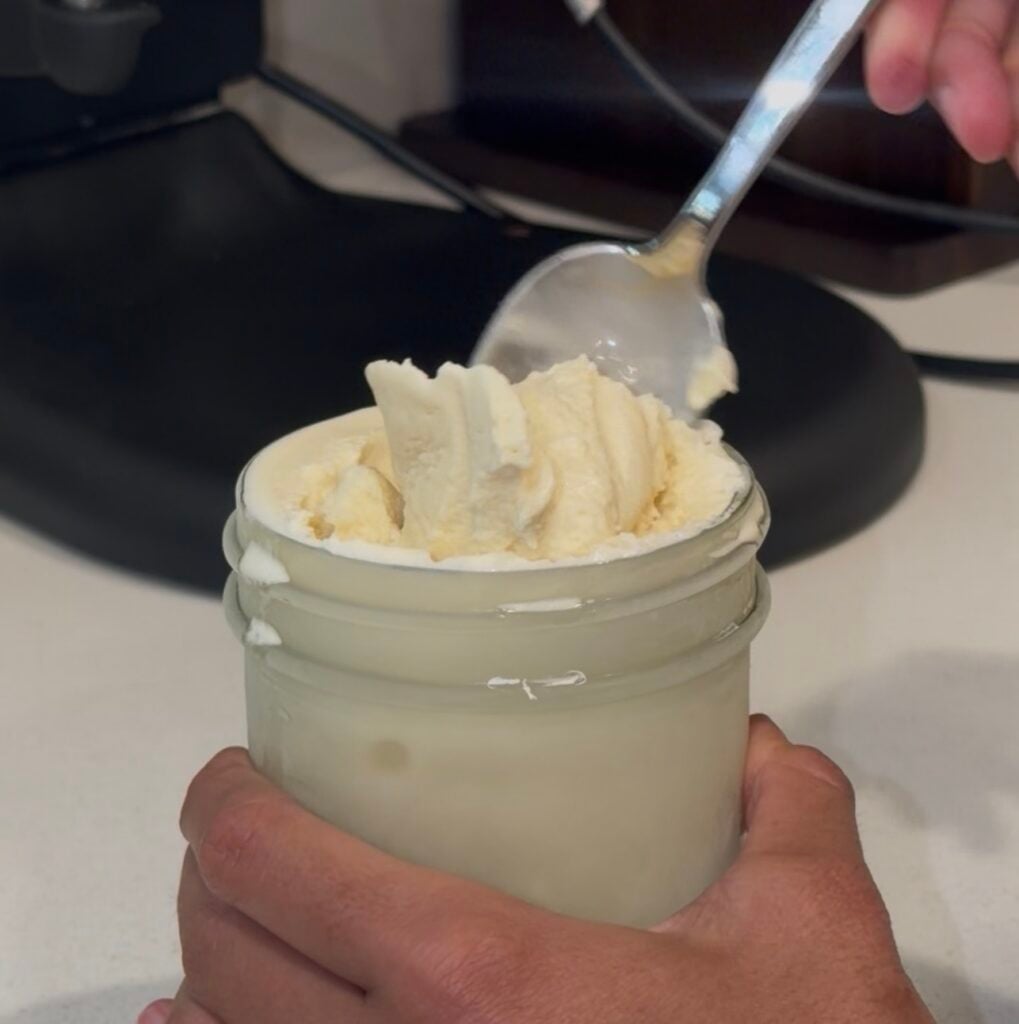
- Transfer to a container and freeze for 2 to 4 hours for a firmer texture, or serve immediately as soft serve.
Makes: approximately 1 quart | Time: 20 minutes active, 2 to 4 hours chill and freeze
Optional: Add a scoop of Animal Based Protein or Grass Fed Whey to the base before churning for a high-protein version. Or a scoop of Grass-Fed Colostrum for additional immune and gut health benefits.
Watch It Made on Instagram
Nutrition of Cream
Fat-soluble vitamins A, D, E, and K2 all require dietary fat for absorption, and the cream in this homeamde ice cream recipe provides both the vitamins and the fat they need in the same package.
Grass-fed cream specifically is higher in conjugated linoleic acid (CLA) and Vitamin K2 (MK-4) than cream from grain-fed animals, a difference that shows up consistently in the research on pasture-raised dairy (#, #).
Raw milk contains a broad array of bioactive compounds, including immunoglobulins, lactoferrin, and enzymes, alongside its fat-soluble vitamin content. Many of these bioactive compounds are heat-sensitive, which is relevant to how you source and handle cream for ice cream (#).
This homemade ice cream recipe uses 2 cups (480ml) of cream split across roughly 8 servings, so about 60ml / ~58g per serving. At 58g per serving (#):
| Nutrient | Per 58g serving | %DV | Rating |
| Vitamin A | 559 mcg RAE | 62% | Excellent Source |
| Total fat | 51.1 g | 65% | High |
| Vitamin E | 1.46 mg | 10% | Good Source |
| Vitamin K | 4.4 mcg | 4% | Low |
| Calcium | 89.7 mg | 7% | Low |
| Riboflavin | 0.15 mg | 12% | Good Source |
| Vitamin D | 1.8 mcg | 9% | Low |
The fat in cream also does something important for this homemade ice cream recipe: it creates a smooth, scoopable texture without the gums and stabilizers commercial ice cream depends on. The fat globule structure of cream, particularly unhomogenized raw cream, produces a natural creaminess that pasteurized, homogenized cream approximates but does not fully replicate.
Nutrition of Egg Yolks
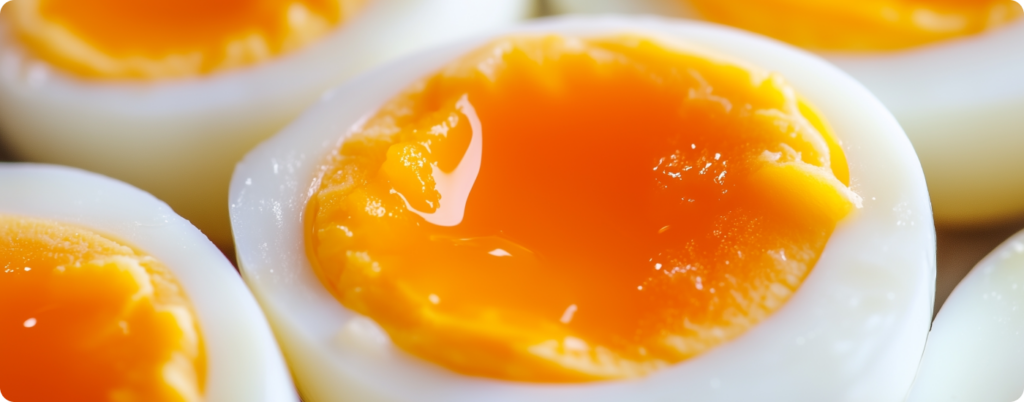
Egg yolks contain nearly all of the fat-soluble vitamins and micronutrients in an egg. The white provides protein. The yolk provides everything else. In fact, the yolk contains 680x more choline than the egg white per 100g, and iron is 49x higher in the yolk. The fat-soluble vitamins (A, D, E) are entirely absent from the white.
One large egg yolk contains retinol, Vitamin D, Vitamin E, Vitamin K, all B vitamins including B12 and folate, choline, iron, zinc, selenium, and phosphorus (#).
Approximately 90% of Americans are below the adequate intake for choline (#). Egg yolks are the most concentrated source of choline in the American diet (#). Choline is required for cell membrane structure, neurotransmitter synthesis (acetylcholine), liver function, and fetal brain development.
What egg yolks deliver (#):
- Choline: The most concentrated dietary source; supports liver, brain, and cell function
- Retinol (Vitamin A): Active, preformed form; directly usable without conversion
- Vitamin D: One of the few food sources outside of fatty fish and organ meats
- Lutein and zeaxanthin: Carotenoids that support eye health; found only in the yolk
- Biotin (B7): Supports fatty acid synthesis and carbohydrate metabolism
- Folate (B9): Critical for DNA synthesis and cell division
The homemade ice cream recipe calls for 2 egg yolks minimum. More yolks make the ice cream richer, denser, and more nutritionally complete. The yolks are what give this ice cream its characteristic golden color and custard-like depth.
Nutrition of Raw Honey
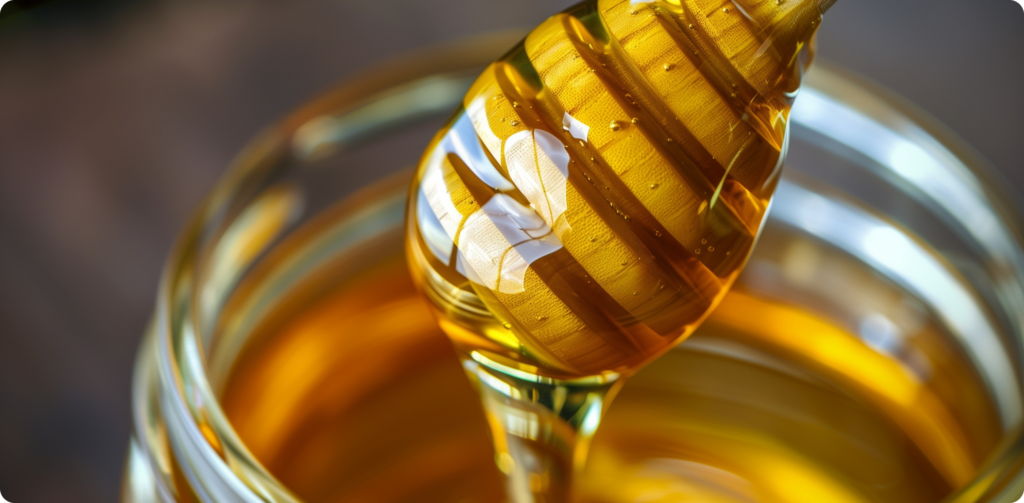
Raw honey retains pollen, propolis, enzymes (including glucose oxidase, which produces hydrogen peroxide and contributes to antimicrobial activity), antioxidants, and trace minerals (#). The enzyme activity in raw honey is one of the most straightforward markers of quality: heat destroys it, which is why most commercially available honey tests low for enzymatic activity.
In this recipe, honey replaces refined sugar, bringing its own nutritional profile. The natural fructose-glucose ratio in raw honey also produces a slightly sweeter taste per gram than sucrose, which means you need less of it to achieve the same sweetness level.
What raw honey delivers (#):
- Enzymes: Including glucose oxidase, diastase, and invertase
- Antioxidants: Including flavonoids and phenolic acids, which vary by floral source
- Trace minerals: Potassium, calcium, magnesium, and manganese in small but food-form amounts
- Prebiotics: Oligosaccharides that support gut microbiome diversity
- Natural sugars: Fructose and glucose in a ratio the body processes differently than sucrose
The 1/2 cup in this homemade ice cream recipe provides enough sweetness without competing with the vanilla and cream. If you prefer a less sweet version, start with 1/3 cup and adjust after tasting the base.
Can You Use Raw Milk to Make Ice Cream?
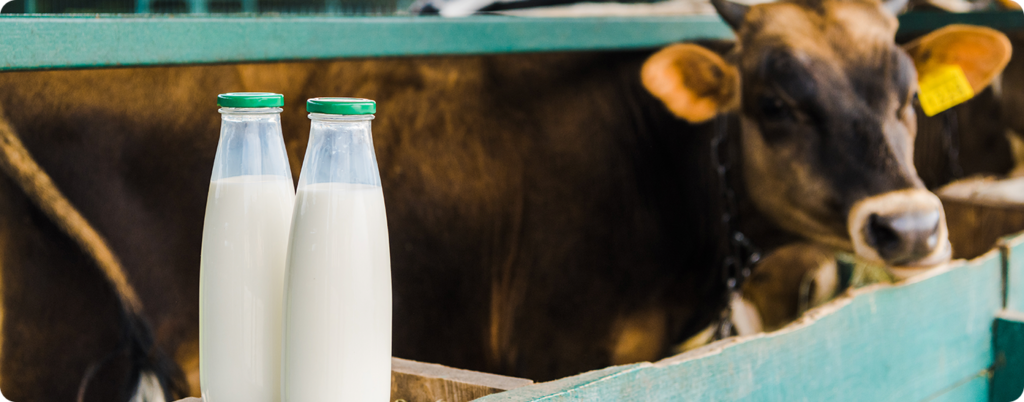
Can you use raw milk to make ice cream? Yes. Ice cream from raw milk is one of the best applications for raw dairy because the freezing process preserves the heat-sensitive compounds that cooking would destroy.
Unlike pasteurization, which reaches 72°C or higher, freezing leaves the bioactive compounds in raw cream structurally intact. You get the nutritional advantages of raw dairy in a form that preserves them.
The considerations for using raw milk or raw cream for ice cream:
- Source quality matters more than it does for pasteurized dairy. Use raw cream from a farm you trust, with regular testing practices.
- Keep everything cold. Raw dairy should stay refrigerated at all times before use. Chill your ice cream base thoroughly before churning.
- The recipe here uses cream, not whole milk. Raw cream produces a significantly richer, smoother result than raw whole milk. If you substitute whole milk for part of the cream, expect a slightly icier texture.
For a raw milk ice cream recipe specifically made with whole milk rather than cream, reduce the cream to 1 cup and add 1 cup of raw whole milk. The result will be lighter and less rich but still nutritious and delicious.
FAQ
How to make homemade ice cream without an ice cream maker? Pour the chilled base into a shallow freezer-safe container. Freeze for 45 minutes, then stir vigorously with a fork to break up ice crystals. Repeat every 30 minutes for 3 to 4 hours until the texture is smooth and scoopable. It takes more hands-on time but produces a workable result.
How do you make homemade ice cream richer? Add more egg yolks. The recipe calls for 2 minimum. 4 yolks produce a noticeably denser, custard-like result. More fat-soluble vitamins, more choline, more richness.
How to make homemade vanilla ice cream without vanilla beans? 1 tsp of pure vanilla extract is the substitute used in this recipe. If you prefer vanilla bean paste, use 1 tsp in place of the extract.
Can you use raw milk to make ice cream? Yes. Raw milk ice cream is safe when made from high-quality, properly handled raw dairy and kept frozen. The freezing process preserves the heat-sensitive enzymes and bioactive compounds that pasteurization removes.
How to make ice cream with raw milk vs. raw cream? Raw cream produces a richer, smoother ice cream because of its higher fat content. Raw whole milk can be used as a partial substitute. A 50/50 blend of raw cream and raw whole milk gives a lighter result; all cream gives the richest.
What are the best raw milk ice cream recipe variations? This vanilla base works as the foundation for most flavors. Add 2 tablespoons of raw cacao powder for chocolate. Add 1/2 cup of fresh or frozen fruit after churning for a fruit swirl.
Is homemade ice cream healthier than store-bought? This specific homemade ice cream recipe contains no seed oils, no gums or stabilizers, no refined sugar, and no artificial flavors. Commercial ice cream almost universally contains several of those. If you are going to eat ice cream, this is the version that gives something back.
More Animal-Based Recipes
- Animal-Based Chocolate Chip Cookie Dough Recipe
- Healthy Angel Food Cake
- Beef Tongue Tacos: A Delicious High-Protein, Animal-Based Recipe
- Carnivore Pizza Recipe: The High-Protein, Zero-Grain Crust You Need to Try
Grass-Fed Colostrum
Digestion. Immunity. Recovery.
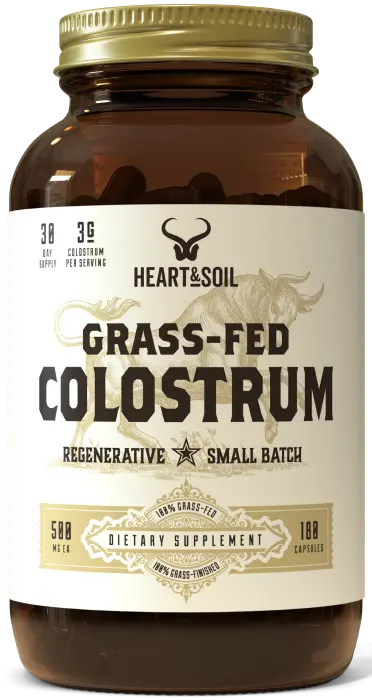
- Support your gut, immune system, and tissue repair
- 100% grass-fed colostrum – no fillers, no fluff
- Bioactive immunoglobulins to protect your body at the cellular level
60-day risk-free guarantee. No questions asked.
Subscribe to future articles like this:
