
The information in this blog is for educational purposes only. It is not a substitute for professional medical advice. Consult your healthcare provider if you’re seeking medical advice, diagnoses, or treatment. These statements have not been evaluated by the Food and Drug Administration. Our products are not intended to diagnose, treat, cure, or prevent any disease.
Most protein powders are obsessed with grams of protein per scoop.
But that only tells you part of the story.
Beef organ protein powders try to do something different. They combine a protein source with organs. These are foods that bring an entirely different set of nutrients to the table.
But not every organ protein powder is built the same way.
One might give you a solid dose of beef protein plus several organs. Another might get most of its protein from collagen or bone broth and sprinkle in a relatively small amount of organ powder.
So that 20-gram protein callout on the front of the tub? It doesn’t tell you how much liver, heart, or spleen you’re actually getting.
In this guide, we’ll explain what beef organ protein powder is and what the organs add. We’ll also compare it with regular protein powder and show you what to look for before buying.
Table of Contents
What Is Beef Organ Protein Powder?
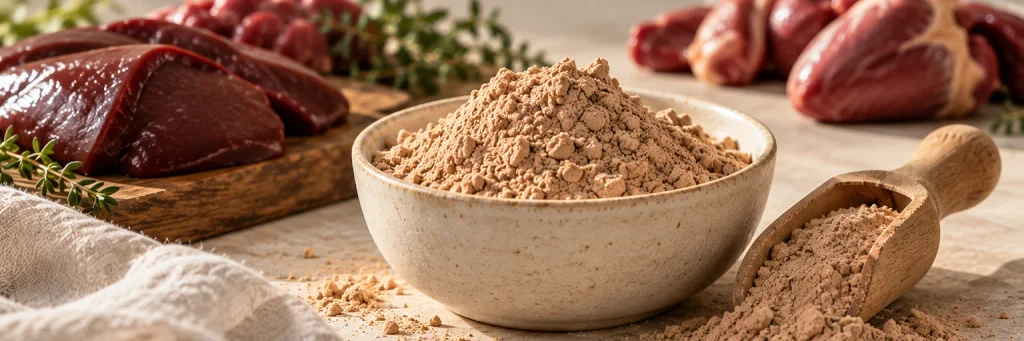
Beef organ protein powder is a broad term for powdered formulas that combine a substantial protein component with beef organs such as liver, heart, kidney, or spleen. It is not one standardized recipe. Some formulas use beef protein isolate as the main protein source, while others rely heavily on collagen, bone broth, or a combination of animal proteins and organ ingredients.
Basically, these three products sound almost identical but are actually very different things.
|
Product type |
What it is |
What it’s primarily designed to provide |
|
Beef protein powder |
A powdered formula built around concentrated beef-derived protein, often hydrolyzed beef protein isolate |
A substantial serving of protein |
|
Beef organ powder |
Dried and ground organ tissue, such as liver or a blend of several organs |
Organ tissue in a concentrated, convenient form |
|
Beef organ protein powder |
A hybrid formula combining a protein base with one or more beef organs |
Protein and organ ingredients in the same serving |
In short, beef organ powder and beef organ protein powder are not the same thing.
Desiccated beef liver powder is basically liver with the water removed. It naturally contains protein because liver is animal tissue, but you’re typically taking it in gram-level servings as an organ food. You’re not drinking 20 or 30 grams of it as a protein shake.
Beef organ protein powder is built differently. It starts with a protein base (often beef protein isolate, collagen, bone broth, or some combination) and adds organs like liver, heart, kidney, or spleen.
That’s also why beef protein isolate is not another name for beef organ protein powder. It’s one possible ingredient in it.
Is Organ Meat Protein Powder Better Than Regular Protein?
Organ meat protein powder is not better than regular protein for building muscle just because it contains organs. Muscle-building value comes from the protein source, its essential amino acid profile, and how much protein you get. The organs add a different kind of nutritional value, not better protein quality.
Beef protein already holds its own here.
Researchers pooled seven randomized trials with 270 people and found no meaningful difference between beef protein and whey for gains in lean body mass. Beef protein also increased lean body mass compared with no protein supplement.
So you don’t need organs to somehow “upgrade” beef protein into something your muscles can use.
Pay closer attention to collagen. A lot of animal-based protein powders lean heavily on collagen because, yes, collagen is protein.
But it isn’t a complete protein. It doesn’t provide tryptophan and its essential amino acid profile looks very different from whey or a complete beef protein.
In a 10-week resistance-training study, young adults were given either whey or collagen with the leucine content matched between the two. The whey group still gained more muscle thickness in both the thigh and biceps.
This is not to say collagen is bad. It just isn’t the same thing as a complete muscle-building protein.
So where do the organs fit?
They’re not there to make protein more protein-y.
Liver, heart, kidney, and spleen bring something different to the table. That’s the reason an organ protein powder can be more interesting nutritionally than a plain protein powder.
What Nutrients Do Beef Organs Add?
Beef organs add different nutrients depending on the organ. Liver is especially rich in retinol, vitamin B12, riboflavin, and copper. Spleen stands out for heme iron. Kidney is rich in B12, riboflavin, and selenium. Heart provides B vitamins and is one of the richer food sources of CoQ10.
Liver
A 2024 analysis of U.S. beef offal, tested in USDA-approved laboratories, found about 3,702 mcg of retinol, 85 mcg of vitamin B12, 3.38 mg of riboflavin, and 11.9 mg of copper per 100 grams of raw beef liver.
That’s why liver earns the “nature’s multivitamin” nickname.
Liver gives you preformed vitamin A for vision and immune function, plus B12 for healthy blood and nerves. It also provides riboflavin for energy metabolism and copper, which helps your body use iron properly.
Spleen
Spleen brings something completely different. In a study measuring iron across beef cuts and organs, beef spleen contained 31.2 mg of iron per 100 grams, compared with an average of just 1.4 mg per 100 grams across the muscle-meat cuts tested. About 73% of the iron in spleen was heme iron.
Heme iron is the animal form of iron your body uses to make hemoglobin, the protein that carries oxygen in your blood. So if you’re looking at organs through an iron lens, spleen is in the heavyweight category.
Kidney
Kidney has its own strengths. The same offal analysis measured about 43 mcg of vitamin B12 and 2.91 mg of riboflavin per 100 grams of raw beef kidney.
U.S. food-composition data also puts raw beef kidney at roughly 170 mcg of selenium per 100 grams, far above ordinary cooked beef.
Kidney doesn’t get the attention liver does, but it brings its own mix.
Riboflavin helps your cells turn food into energy, while selenium is built into enzymes involved in antioxidant defense and thyroid-hormone metabolism.
Heart
And heart is more than another piece of muscle meat. Reviews of food-composition studies report roughly 6 to 11 mg of CoQ10 per 100 grams of beef heart, compared with about 1.6 to 4.9 mg per 100 grams in ordinary beef muscle. Review of CoQ10 concentrations in foods
Heart makes sense when you think about what the tissue does all day. It contracts without stopping, so it has huge energy demands.
CoQ10 is part of the mitochondrial machinery cells use to make ATP, and heart also brings taurine and carnitine, two compounds heavily involved in muscle and energy metabolism.
Does Beef Organ Protein Powder Taste Like Liver?
Flavored beef organ protein powder usually tastes much milder than plain liver. Liver and kidney can still bring metallic, livery notes, while heart tends to taste much closer to regular beef.
Where it gets interesting is that different organs genuinely taste different.
In a 2026 consumer study, researchers added 15% beef heart, liver, or kidney to ground beef patties and asked people what they tasted. The liver patties were described as “liver-like” by 47.8% of participants and “metallic” by 18.3%. Kidney came next at 28.5% liver-like and 12.9% metallic.
Heart was a completely different story. Only 6% of people described the heart patties as liver-like, and their overall liking, aroma, and texture scores were very close to regular beef.
Now, that study used ground beef patties, not protein powder. But it proves liver, kidney, and heart do not bring the same flavor to a formula.
Liver carries the strongest organ signature. Kidney can bring some of the same metallic, liver-like notes. Heart is much closer to the taste of regular beef.
A second recent sensory study found the same pattern, with heart-containing patties scoring much closer to the control while higher-kidney formulas picked up more metallic and liver-like character.
So why do some organ protein powders taste almost like a regular chocolate or vanilla shake?
Because flavor is doing a lot of work.
Cocoa, vanilla, salt, sweeteners, and especially a creamy base can cover a surprising amount of organ character. In other words, plain water is the hardest way to drink its formula because there’s nothing there to soften the taste.
Combining milk, yogurt, smoothies, or another creamy base is the way to go.
How to Choose the Best Protein Powder With Organ Meats
Choose an organ protein powder that tells you exactly what supplies the protein, which organs are included, how much organ material you get, how the organs were processed and sourced, and what the finished product was tested for. If the label hides those basics behind words like “organ complex” or “third-party tested,” you still don’t know what you’re buying.
The front of the bag can make almost anything sound impressive.
Grass-fed. Nose-to-tail. Five organs. Complete nutrition.
Flip it over.
1. Find Out What’s Actually Providing the Protein
Twenty grams of protein can come from very different formulas.
A powder built mostly around beef protein isolate is not the same product as one where a large share of those grams comes from collagen. We already covered why that matters for amino acids and muscle, so there’s no need to run through the science again here.
For buying purposes, just find the answer to one question:
What ingredients are responsible for most of the protein in this scoop?
Look for beef protein isolate, collagen peptides, bone broth protein, whey, egg, or whatever combination the company actually uses.
If the brand publishes a full amino acid profile, even better. Now you can see what the grams on the front of the bag actually represent rather than treating every protein number as interchangeable.
2. Look for the Actual Organ Amount
This is where labels get interesting.
A product can list liver, heart, kidney, spleen, and pancreas without giving you a large serving of any of them.
For dietary supplements, FDA rules even allow ingredients inside a proprietary blend to be listed without disclosing the individual amount of each ingredient. The company has to disclose the total blend weight and list its ingredients in descending order by weight, but not the dose of every component.
So don’t count organ names. Look for milligrams or grams.
Here’s what that looks like in products currently on the market:
|
Current formula |
Protein per serving |
What supplies the protein |
Organ disclosure |
|
Within You Total Carnivore |
17 g on the current product page |
Beef protein isolate + hydrolyzed beef collagen |
Liver, heart, kidney, spleen, and pancreas listed; total organ amount is not disclosed on the current product page |
|
Noble Origins All-in-One |
21 g on the current Nutrition Facts panel |
Beef protein isolate + 5 g collagen |
150 mg total: 25 mg each of liver, kidney, spleen, pancreas, blood, and bone/marrow |
|
Organised Daily Blend |
13.1 g |
8.91 g collagen + 5 g bone broth |
857.5 mg of liver, kidney, heart, lung, and spleen |
That’s a huge spread.
Noble tells you exactly what its 150 mg blend contains. Organised discloses 857.5 mg. Within You names five organs but doesn’t currently state their combined weight on the product page.
Nobody has to tell you which one is “best.” Now you have numbers you can actually compare.
3. Pay Attention to Which Organs You’re Getting
More organs does not automatically mean a better formula.
You just saw why in the previous section. Liver, heart, kidney, and spleen do not bring the same nutrition.
So look past “5-organ blend” and read the names.
A formula centered on liver is different from one containing liver, spleen, heart, kidney, and pancreas. If you’re choosing an organ blend because you want nose-to-tail variety, the tissues themselves should be clearly identified.
There’s no reason for real food to hide behind a mysterious name.
4. Find Out How the Organs Were Dried
“Desiccated” sounds specific.
It isn’t.
Desiccated simply means dried. It does not tell you whether the organs were freeze-dried, hot-air dried, spray-dried, or processed another way.
Freeze-drying starts with frozen tissue and removes water under reduced pressure. It limits prolonged heat exposure, which can be useful when the goal is preserving heat-sensitive compounds. It does not mean every nutrient or peptide survives perfectly unchanged.
Heart & Soil goes much deeper into the actual methods in its guide to freeze-dried vs. heat-processed organs.
For this buying decision, the rule is simple.
If a company tells you the organs are “desiccated,” ask how.
5. Make Sourcing Specific
“Grass-fed” is a start. But people want more than that.
Where were the cattle raised? Were they pasture-raised? Does the sourcing claim apply to the organs, the protein ingredient, or both? Can the company trace those ingredients beyond a generic country-of-origin statement?
Current brands show how different that level of disclosure can be.
Within You says its beef protein isolate and the liver in its organ blend come from grass-fed sources.
Organised goes further and currently identifies Colorado, Texas, and Vermont as the sources of its liver, heart, kidney, lung, and spleen.
That’s what useful sourcing information looks like.
Not because a farm story automatically proves a product is more nutritious, but because you can actually trace where the food came from.
6. Don’t Accept “Third-Party Tested” as the Whole Answer
Ask what was tested. A serious testing program can look for things like:
- Lead, cadmium, arsenic, and mercury
- Bacterial contamination, yeast, and mold
- Product identity and label accuracy
- Amino acid composition where relevant
- Other contaminants appropriate to the ingredients
NSF’s supplement-certification program, for example, verifies label claims and tests for toxic elements and microorganisms rather than treating “third-party tested” as a standalone quality badge.
Then ask the next question:
Was the finished product tested, and can you see the results?
Organised currently publishes batch testing and says each batch is screened for heavy metals, bacteria and mold, pesticides, and mycotoxins, with its amino acid profile also verified.
A logo is nice. A batch-specific result is better.
7. Read the Ingredients That Aren’t Protein or Organs
This sounds obvious, but it changes the product more than people realize.
Colostrum is milk-derived. Whey and casein are too. Some formulas add tallow, sweeteners, gums, fruit powders, flavors, extra amino acids, or other ingredients.
Organised, for example, contains 142 mg of bovine colostrum and explicitly labels the product as containing milk/lactose.
Within You Total Carnivore, by contrast, specifically excludes whey, egg, dairy, and casein.
Neither fact tells you which product you should buy.
It tells you they’re different foods. And that’s really the point of this whole section.
A good organ protein powder shouldn’t make you guess. You should be able to turn the bag around and know what the protein is, what the organs are, how much you’re getting, where they came from, how they were handled, and what was tested.
The louder the claims on the front, the more reason to read the back.
All-in-One Organ Protein vs Protein + Organs Separately
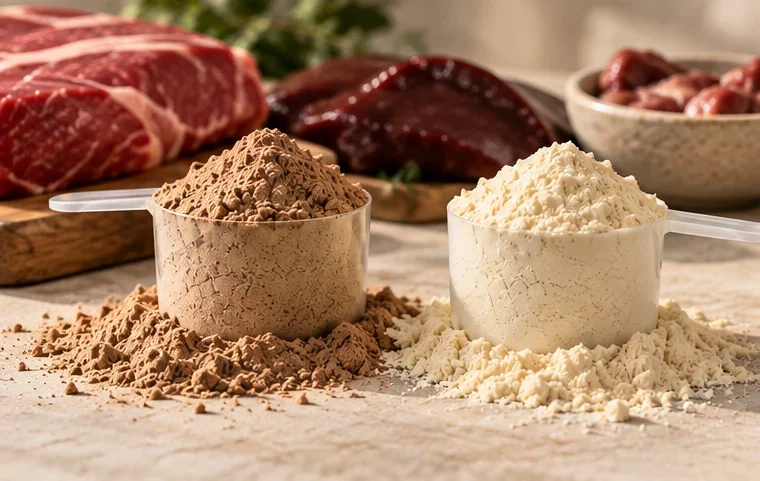
An all-in-one organ protein powder is better for convenience. Keeping protein and organs separate gives you more control. With separate products, you can change your protein intake without automatically changing your organ intake, and vice versa.
That sounds like a small difference until you use these products in real life.
Say you train hard one day and want another protein shake. With an all-in-one formula, another scoop also means another serving of whatever organ blend is built into it.
Or flip it around. Maybe you already ate plenty of protein from eggs, meat, or dairy but still want your organs that day. With an all-in-one, you have to take the protein along with them.
One scoop locks the two together. Separate products don’t.
Where an All-in-One Formula Wins
One tub. One scoop. One habit. That’s convenience.
If you already like the protein source and want the amount of organs built into that serving, there’s nothing inherently wrong with combining them.
For someone who wants the fewest moving parts possible, that simplicity has real value.
Why Heart & Soil Keeps Them Separate
Our current Animal Based Protein provides 19 grams of protein per serving from grass-fed whey concentrate with collagen and 2 grams of colostrum.
Beef Organs, on the other hand, is built around freeze-dried liver, heart, pancreas, spleen, and kidney. It isn’t positioned as a protein powder.
Heart & Soil’s own product FAQ confirms that its organ supplements provide about 2 grams of protein per six-capsule serving.
That separation is intentional:
- Want more protein after training? Have more protein.
- Want your organs without another shake? Take your organs.
- Already ate liver with dinner? You can change what you do that day without having to change your protein intake too.
If you want to decide how much protein you eat and when you eat your organs independently, keeping them separate gives you that freedom.
Can Organ Protein Powder Replace Organ Supplements or Fresh Organs?
No. Beef organ protein powder should not be treated as a one-for-one replacement for fresh organs or a dedicated organ supplement. The serving sizes, organ mix, calories, protein, and amount of actual organ tissue can be very different.
Here’s a real-world example:
Noble Origins currently puts 150 mg of organ blend into one scoop of its all-in-one protein. Organised lists 857.5 mg of freeze-dried organ powder per serving.
Now compare that with a dedicated organ supplement.
Heart & Soil Beef Organs contains 500 mg per capsule, with six capsules in the full daily serving. That works out to 3 grams of freeze-dried liver, heart, pancreas, spleen, and kidney per serving.
So a dedicated organ supplement can contain several times more organ material than an all-in-one protein powder.
In those examples, Heart & Soil’s full Beef Organs serving contains about 3.5 times as much organ material as Organised and 20 times as much as Noble’s 150 mg blend.
That still does not make 3 grams of freeze-dried organs the same thing as eating 3 grams of fresh liver.
Fresh organs contain a lot of water. Freeze-drying removes that water under low temperature and vacuum, leaving a much lighter, more concentrated food. Reviews of freeze-drying show that the method generally preserves nutrients, but the finished powder is still not gram-for-gram equivalent to the fresh food it came from.
Heart & Soil itself makes the same distinction. Our organ guide says fresh organs provide meaningful protein and calories and can be part of a meal, while freeze-dried organ supplements use much smaller servings and are there to make organ intake easier.
Think about the three forms like this:
|
Form |
What you’re getting |
|
Fresh organs |
Whole food, including its protein, fat, water, calories, and naturally occurring nutrients |
|
Dedicated organ supplement |
A concentrated, dried serving of specific organ tissues without turning it into a meal |
|
Organ protein powder |
A protein product with some amount of organ tissue built into the formula |
Heart & Soil’s own position is that fresh organs come first when you enjoy them and can get them. Supplements exist because plenty of people do not want to cook liver, heart, kidney, spleen, or pancreas every day.
The Bottom Line
Beef organ protein powder wins on convenience, not superiority.
If one scoop gives you the protein and organs you actually want, use it. If you want more control, keep them separate.
There’s no nutritional bonus for cramming everything into one tub. Choose the format that fits how you actually eat.
FAQ
Is beef organ protein powder dairy-free?
Beef organ protein powder is dairy-free only when the complete formula contains no milk-derived ingredients. Beef protein and beef organs themselves are dairy-free, but some organ protein formulas add whey, casein, or bovine colostrum. Check both the ingredient list and allergen statement for milk before assuming a beef-based powder is dairy-free.
Does beef organ protein powder contain complete protein?
Beef organ protein powder contains complete protein when its primary protein source provides all nine essential amino acids. Beef protein can meet that standard, while collagen alone cannot because it lacks enough of certain essential amino acids, including tryptophan. Check whether the protein grams come primarily from beef protein, collagen, bone broth, or a blend.
Can you take beef organ protein powder every day?
Beef organ protein powder can be used daily only when the serving fits your total protein and micronutrient intake. Pay particular attention to liver-containing formulas because liver can contribute substantial preformed vitamin A and copper. Count other liver, organ supplements, multivitamins, and vitamin A products before treating an organ protein powder as an automatic daily serving.
Does beef organ protein powder contain vitamin A and iron?
Beef organ protein powder can contain vitamin A and iron when the formula includes organs that supply them in meaningful quantities. Liver is particularly rich in preformed vitamin A, while spleen is notably rich in heme iron. The ingredient list alone cannot tell you the amount per scoop; look for disclosed organ quantities or measured nutrition information.
How much organ powder should a beef organ protein powder contain?
There is no established minimum amount of organ powder that defines a high-quality beef organ protein powder. Instead, look for a manufacturer that states the organ dose in milligrams or grams per serving. For example, 150 mg and 850 mg of organ material are clearly different exposures even if both labels list several organs.
Is beef organ protein powder the same as beef liver powder?
Beef organ protein powder is not the same as beef liver powder. Beef liver powder is dried liver and is primarily used to provide liver-derived nutrients. Beef organ protein powder combines a substantial protein source with liver and potentially heart, kidney, spleen, or other organs, so protein and organ material serve separate roles in the formula.
Subscribe to future articles like this:
