
Before there’s milk, there’s colostrum.
It’s the first food a cow produces after birth, built by biology to deliver a remarkably concentrated mix of immunoglobulins, lactoferrin, peptides, growth factors, protein, fat, vitamins, minerals, and other naturally occurring compounds.
That distinctive whole-food matrix is exactly why colostrum has become one of the most talked-about animal foods in modern nutrition.
But popularity has also brought plenty of hype. Colostrum gets credited with everything from rebuilding the gut to transforming immunity and recovery, and the research doesn’t support every claim equally.
What the evidence does support is bovine colostrum may support gut-barrier integrity, normal immune function, and recovery from demanding exercise.
Human research is strongest around intestinal permeability and exercise-related immune outcomes, while evidence for muscle growth, general performance, and some broader claims remains mixed.
A 2024 meta-analysis of randomized trials found improvements in certain measures of intestinal permeability after colostrum supplementation, although differences in product quality, serving amount, and study duration still leave important questions to answer.
If you’d rather talk it through with someone first, our Health Success Team can help you work out where to start.
Table of Contents
What Is Bovine Colostrum?
Bovine colostrum is the first milk a cow produces after giving birth. Its biological function is to deliver early nutrition and passive immune protection to the newborn calf, and that function determines its composition.

Compared with mature milk, colostrum is naturally richer in:
- Immunoglobulins
- Growth factors
- Lactoferrin
- Cytokines
- Oligosaccharides
- Proteins
- Fat-soluble nutrients
- Other bioactive compounds
Supplements for adults come as powder, capsules, tablets, flavored drink mixes, and combination protein products. Your digestive system isn’t a newborn calf’s, though, so don’t assume adults absorb and use every colostrum compound the same way.
What’s in Bovine Colostrum?
| Component | What it is | Relevant nutritional role |
| Immunoglobulins | Antibody proteins, including IgG, IgA, and IgM | Participate in immune defense within the source animal and may have local activity in the digestive tract |
| Lactoferrin | Iron-binding milk protein | Studied for antimicrobial, immune-modulating, and inflammatory effects |
| Growth factors | signaling proteins such as IGF and TGF families | Involved in growth, differentiation, and tissue-maintenance processes |
| Oligosaccharides | Complex carbohydrates | May positively interact with microbes and the intestinal environment |
| Protein | Amino-acid source | Supports tissue maintenance and general nutrition |
| Peptides | Short amino-acid chains | Activity varies depending on sequence and digestion |
| Fat | Energy and fat-soluble nutrient carrier | Contributes to protecting the whole-food matrix |
| Vitamins and minerals | Micronutrients in variable quantities | Support normal metabolic and physiological functions |
Exact composition shifts with collection timing, breed, cow health, diet, processing, defatting, heat exposure, storage, and whether the product has been standardized.
Two jars can carry identical descriptions and hold materially different products, which is why serving size and the testing a brand can document tell you more than the ingredient name does.
What Are the Main Colostrum Benefits?
- May support intestinal-barrier integrity
- May support the gut during periods of intense exercise
- May support normal immune function
- May reduce upper-respiratory symptom days in some athletes
- May support recovery during demanding training
- Provides immunoglobulins, lactoferrin, peptides, and growth factors
- Offers a whole-food, dairy-derived supplement format
The strength of evidence varies by outcome, and many of the published trials used physically active populations and serving amounts different from today’s retail products.
That doesn’t make colostrum irrelevant outside those studies, but it does mean the research should be interpreted in context rather than treated as a guarantee.
Colostrum’s value also comes from being a complex whole food, not from reducing it to a single isolated outcome or compound.
Colostrum May Support Gut-Barrier Integrity
Your intestinal lining absorbs nutrients, separates the contents of the gut from the rest of the body, regulates what crosses the gut wall, and interacts continuously with immune cells and gut microbes. Intense exercise, heat, illness, and medication can all affect how permeable it is.
A 2024 meta-analysis of ten studies found colostrum reduced two urinary measures used to assess intestinal permeability, though results were heterogeneous and the authors called for more randomized trials.
A separate systematic review in athletes reached a similar conclusion, concluding colostrum may improve exercise-associated permeability while noting the field lacks long-term studies and agreement on dosing.
So colostrum may support intestinal-barrier integrity and help maintain normal gut permeability under physical stress. It doesn’t heal leaky gut, seal the gut permanently, treat inflammatory bowel disease, reverse intestinal damage, or cure digestive disorders.
Colostrum May Matter Most During Intense Exercise
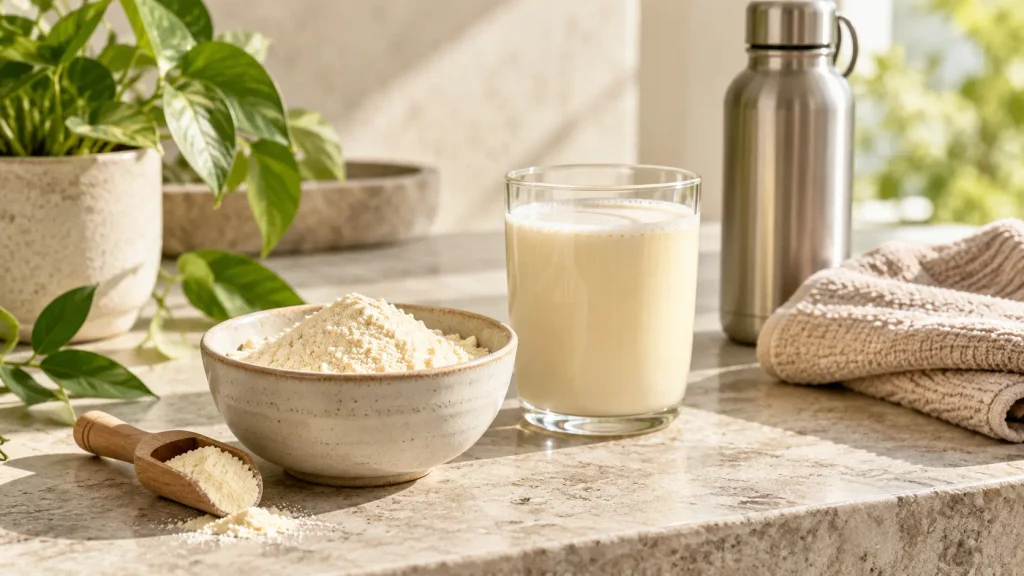
Long or demanding sessions can temporarily affect gut permeability, gastrointestinal comfort, immune markers, illness risk, and recovery needs all at once, which is why athletes dominate this research.
A systematic review of supplements used around exercise-associated gut stress found most colostrum studies reported improvements in selected markers of gut-cell damage or permeability, though protocols and outcomes varied a lot.
One controlled trial found colostrum reduced the exercise-associated rise in permeability, and another conducted during exercise in heat found no benefit for physiology or performance. A single positive marker doesn’t establish a performance benefit.
Colostrum May Support Normal Immune Function
Colostrum contains immunoglobulins, lactoferrin, cytokines, and other immune-modulating compounds, which makes immune support biologically plausible. The human evidence is more mixed than that plausibility suggests.
A meta-analysis of ten randomized trials in physically active people found little or no consistent improvement in common immune markers like serum immunoglobulins, lymphocytes, neutrophils, or salivary IgA.
But a separate meta-analysis of five trials found fewer upper-respiratory symptom days and episodes among adults in exercise training, with study-quality limitations worth keeping in mind.
Supports normal immune function is accurate, and so is may support immune resilience during intense training. Prevents colds, stops infections, works better than vaccination, treats immune deficiency, and supercharges the immune system aren’t.
Lactoferrin Adds to the Immune and Gut Picture
Lactoferrin is an iron-binding glycoprotein found naturally in milk and colostrum, studied for immune modulation, antimicrobial activity, inflammatory signaling, respiratory outcomes, and gut function.
A systematic review of lactoferrin supplementation found mixed but potentially promising effects on selected inflammatory and immune outcomes, with inconsistent respiratory benefits in adults. Evidence on isolated lactoferrin doesn’t automatically transfer to a colostrum product, because the dose and the whole formulation are different.
Colostrum Contains Naturally Occurring Growth Factors
Colostrum contains insulin-like growth factors, transforming growth factors, and other signaling proteins involved in cellular communication, growth and differentiation, tissue development, and maintaining the intestinal environment.
Eating colostrum isn’t equivalent to injecting IGF-1, because oral proteins are broken down by digestion before they reach circulation while an injection bypasses that step entirely. A review of colostrum in sport concluded that early concerns about it consistently raising systemic IGF-1 aren’t supported by the overall evidence across different doses and durations.
Accurate: contains naturally occurring growth factors, provides a complex whole-food matrix, and those growth factors may contribute to local gut activity. Not accurate: raises IGF-1 substantially, works like injected IGF-1, creates pharmaceutical muscle growth, rebuilds tissue rapidly, or heals injuries.
Does Colostrum Help With Exercise Recovery?
Partly, and the distinction matters. Some studies suggest benefits for recovery during intensive training, gut integrity during exercise, illness risk, and protection against decline under training stress. Evidence for strength, endurance, muscle gain, body composition, and performance is far less consistent.
A sports-nutrition review concluded the evidence is more favorable for gut permeability and illness risk than for body composition or performance. One endurance-running trial reported improved recovery but not performance, and other research found no meaningful performance benefit in the heat.
Colostrum may support recovery and help you keep training consistently, but nothing in the current evidence supports it making you faster or stronger.
Does Bovine Colostrum Build Muscle?
No. Colostrum contains protein and growth factors, but a retail serving provides much less protein than whey, and muscle protein synthesis responds to adequate complete protein, resistance training, sleep, and total calories.
Colostrum can complement recovery nutrition without substituting for it. Choose colostrum for its bioactive whole-food matrix, and choose whey or another complete protein when the goal is meeting protein targets.
Is Colostrum Good for General Gut Health?
Gut health also reflects the rest of your diet and lifestyle. Within Heart & Soil’s Animal-Based framework, that foundation starts with nutrient-dense animal foods such as meat and organs, high-quality dairy if you tolerate it, and well-tolerated carbohydrate sources such as fruit, honey, squash, and root vegetables. Sleep, hydration, stress, training load, medications, and underlying gastrointestinal conditions matter too.
Colostrum fits naturally alongside those foods as another nutrient-dense animal food with a distinctive mix of immunoglobulins, lactoferrin, peptides, growth factors, and other bioactive compounds.
How Much Colostrum Did the Studies Use?
Doses vary enormously, from small capsule servings up to tens of grams a day in athletic research. One randomized trial used 20 grams daily, another 25 grams, and a recovery trial 60 grams.
Findings from a 20 to 60 gram study shouldn’t be applied to a product providing a fraction of that amount. Concentration, processing, immunoglobulin content, defatting, source, population, and duration all make direct comparison difficult. Don’t reproduce research doses at home.
How Long Does Colostrum Take to Work?
There’s no universal timeline. Studies have assessed outcomes anywhere from one to twelve weeks, but they measured specific markers rather than tracking when someone starts to feel different.
Assess your goal, your consistency, how well you tolerate it, your training context, whether the serving resembles the dose used in relevant research, and whether the symptom you’re chasing needs medical evaluation instead. Customer testimonials don’t establish a timeline.
Heart & Soil Grass-Fed Colostrum
Heart & Soil offers Grass-Fed Colostrum two ways. The free-form powder contains 180 grams and 60 servings, and the capsules contain 500 milligrams per capsule, 180 capsules, and 30 full servings.
Both are first-milking colostrum from 100% grass-fed, pasture-raised cattle. It’s a whole food, non-defatted, with nothing removed and nothing added, and it’s third-party tested for purity, biological activity, heavy metals, pesticides, and microbial contaminants.
- 100% grass-fed and pasture-raised
- First milking
- Ethically sourced
- Whole-food and non-defatted, nothing removed or added
- Low-temperature and low-pressure processing
- Third-party tested
- Powder or capsules
- Contains naturally occurring immunoglobulins, lactoferrin, peptides, and growth factors
Heart & Soil Grass-Fed Colostrum is built around a whole-food approach rather than an isolated-fraction approach. Keeping the naturally occurring fat and broader matrix intact preserves the combination of immunoglobulins, lactoferrin, peptides, growth factors, proteins, and other naturally occurring components that make colostrum distinctive.
Its appropriate role is supporting normal gut-barrier function, immune function, and exercise recovery. Those structure-function benefits shouldn’t be expanded into claims that colostrum treats disease, replaces medical care, or produces pharmaceutical effects.
Powder vs Capsules
| Feature | Free-form powder | Capsules |
| Current format | 180 grams, 60 servings | 500 mg per capsule, 180 capsules |
| Current full serving | One scoop daily | Six capsules daily |
| Convenience | Easy to mix into food or drinks | Portable, no taste |
| Serving flexibility | Easier to adjust gradually | Easy to count |
| Taste | Mild dairy flavor may be noticeable | Minimal |
| Best for | People who prefer powder or larger servings | People prioritizing travel and convenience |
| Cost per serving | Lower per gram across 60 servings | Higher per gram across 30 servings |
Neither format is more effective, and no direct comparative testing supports a bioavailability difference between them. Take the free-form powder if you want a flexible serving, or capsules if portability and minimal taste matter more.
How to Take It
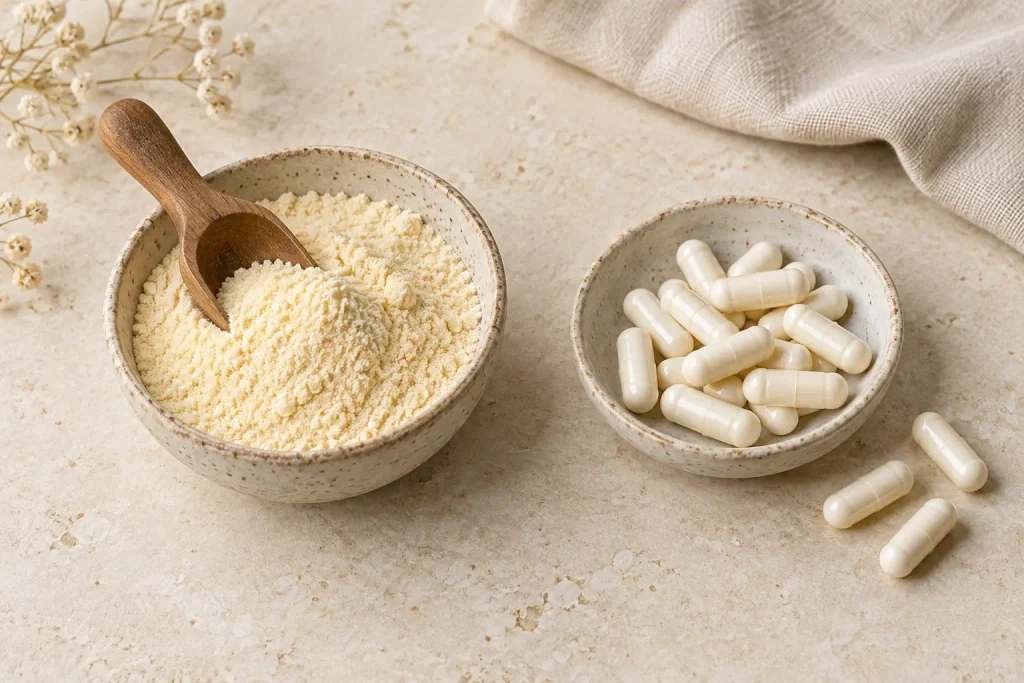
Powder: one scoop once daily. New users can start with half a scoop and add half a scoop after a week until they reach a full serving, or follow professional guidance.
Capsules: six capsules once daily. New users can start with one capsule and add one each week until they reach a full serving, or follow professional guidance.
Labels change, so check the current directions before you start, and don’t exceed them.
FDA Disclaimer:
These statements have not been evaluated by the Food and Drug Administration. This product is not intended to diagnose, treat, cure, or prevent any disease.
Is Bovine Colostrum Worth It?
It may be worth considering if you:
- Are interested in gut-barrier support
- Do demanding endurance or high-volume training
- Want a whole-food source of immunoglobulins and lactoferrin
- Understand results aren’t guaranteed
- Can afford it without displacing better nutrition
- Have found a transparent, tested product
- Tolerate dairy
It’s a lower priority if you:
- Aren’t eating enough protein or calories
- Have a basic diet that needs work first
- Expect medication-like results
- Need treatment for a diagnosed gastrointestinal condition
- Have an untreated cow’s-milk allergy
- Are looking at a product with no sourcing or testing disclosed
- Are buying a serving far below the amount used in relevant research
- Would be displacing essential food or medical care
Colostrum can fit naturally into an Animal-Based routine alongside meat, organs, dairy, fruit, honey, and other well-tolerated whole foods. It brings a different nutritional matrix to the diet, particularly immunoglobulins, lactoferrin, peptides, growth factors, and other compounds that aren’t present in the same combination in ordinary muscle meat.
How Colostrum Compares to Whey and Collagen
Colostrum and whey both come out of dairy, collagen comes out of connective tissue, and all three end up in the same cupboard. Protein content separates them fastest. A Grass-Fed Whey serving carries 24 to 25 grams of complete protein, while a full colostrum serving is around three grams of colostrum in total, only part of which is protein. That gap decides which one belongs in your routine for which reason.
Colostrum vs Whey Protein
Both come from dairy and they do different jobs. Colostrum is known for immunoglobulins, lactoferrin, growth factors, and gut and exercise-stress research. Whey is known for complete protein, essential amino acids, leucine, and helping you hit daily protein targets.
Heart & Soil Grass-Fed Whey currently provides 24 to 25 grams of complete protein and 2.5 grams of leucine per serving. Use colostrum for its bioactive matrix and whey when you need protein. A small capsule serving of colostrum doesn’t replace a protein shake.
Colostrum vs Collagen
Colostrum contains immunoglobulins, lactoferrin, growth factors, protein, peptides, oligosaccharides, fats, and micronutrients. Collagen provides collagen peptides, glycine, proline, hydroxyproline, and amino acids associated with connective tissue.
They aren’t interchangeable. Colostrum is usually chosen for gut, immune, or recovery support, and collagen for its amino-acid profile. Neither replaces complete dietary protein.
Heart & Soil Animal-Based Protein
Animal-Based Protein combines grass-fed whey, collagen, and colostrum in one formula, which suits anyone who wants all three without juggling separate tubs.
Standalone Grass-Fed Colostrum is still the more focused option when colostrum itself is the priority. Don’t assume the colostrum in a blend equals a standalone serving without checking the current label.
Heart & Soil GLP-1 Protocol
If you’re eating less and thinking about gut support, the GLP-1 Protocol groups Grass-Fed Whey, Beef Organs, Gut & Digestion, and Grass-Fed Colostrum together.
Grass-Fed Colostrum sits in that protocol alongside complete protein, organ-derived nutrients, and digestive support. Its role there is gut-barrier and normal immune support, not nausea, constipation, or delayed gastric emptying.
Does Sourcing Actually Change the Product?
Grass-fed sourcing, first-milking collection, and keeping colostrum whole and non-defatted all tell you something different about how the product was produced. First-milking timing has a particularly clear relationship with colostrum composition, while grass-fed sourcing and non-defatted processing reflect Heart & Soil’s broader commitment to high-quality animal foods and preserving the natural food matrix.
Is Grass-Fed Colostrum Better?
Grass-fed sourcing tells you something about brand standards, agricultural practices, traceability, and the overall fat and nutrient matrix. It hasn’t been shown to produce superior clinical effects, because that would take direct comparative trials.
For Heart & Soil, grass-fed and pasture-raised sourcing is part of the quality standard because the health of the animal and the way it was raised matter to the food it produces. Direct human trials haven’t established that grass-fed colostrum creates superior clinical outcomes on its own, so we don’t need to make that claim.
It’s one part of a broader quality picture that includes first-milking collection, whole-food processing, serving amount, and finished-product testing.
Does First-Milking Colostrum Matter?
Colostrum shifts toward mature milk in the hours and days after birth, so first-milking sourcing suggests collection closer to the initial postpartum window, when immunoglobulin and bioactive content is naturally higher.
It doesn’t guarantee a particular immunoglobulin percentage, superior outcomes, better absorption, or greater effectiveness. Finished-product testing is what settles that.
What Does Non-Defatted Mean?
Non-defatted or whole colostrum keeps its naturally occurring fat instead of stripping it out. Brands do this to preserve the whole-food matrix, retain fat-soluble components, avoid extra processing, and keep the product closer to its original composition.
Heart & Soil deliberately chooses the non-defatted approach because it keeps the naturally occurring fat and broader food matrix rather than stripping part of the food away. That doesn’t require claiming clinical superiority over every defatted product. It’s a deliberate whole-food formulation choice that aligns with the way we approach Animal-Based nutrition.
How to Choose a Quality Colostrum Supplement
Transparent source: Look for country of origin, grass-fed and pasture-raised claims, farm standards, animal health, and how the colostrum is collected. A brand that can describe its supply chain in specifics usually controls it, while one offering only adjectives usually bought a generic ingredient and printed a label.
Collection timing: The brand should state whether it uses first or early milking rather than gesturing at freshness. Immunoglobulin concentration falls as the interval between calving and collection widens, which makes this one of the few sourcing claims with a measurable effect behind it.
Whole vs defatted: The label should disclose whether fat or other components have been removed. Neither approach is clinically superior, but you can’t compare two products meaningfully until you know which one you’re holding.
Processing method: Check temperature, pressure, drying method, and storage. No process preserves every biological compound completely, so a brand claiming otherwise is stating something no manufacturer can verify, which is worth knowing before you weigh its other claims.
Serving amount: You want grams or milligrams per serving, scoop size, capsule count per full serving, and servings per container. This determines what you’re actually taking, and it’s the figure most often obscured behind an impressive capsule count.
Testing: Relevant testing covers heavy metals, pesticides, microbial contamination, identity, purity, immunoglobulin content, and biological activity. Ask whether documentation is available on request, since a company that tests properly holds certificates and one that doesn’t holds adjectives.
Realistic claims: Avoid products claiming to cure leaky gut, replace vaccines, prevent all infections, treat autoimmune disease, produce dramatic muscle growth, raise IGF-1 like an injectable, heal injuries, or reverse aging. A brand making unsupportable claims on the front of the jar has shown you how it handles the parts you can’t check.
Safety, Tolerance, and Who Should Avoid It
The reported side effects are almost entirely digestive and mild, and the serious consideration isn’t dose-related at all. Because colostrum is a dairy product, whether it suits you comes down to how you handle milk protein and lactose, which are two separate questions that get conflated constantly. One rules colostrum out completely and the other usually just means starting small.
Is Bovine Colostrum Safe?
Evidence reviews describe bovine colostrum as generally well tolerated, though individual reactions happen and long-term safety data is thinner than the marketing volume suggests.
Possible issues include:
- Digestive discomfort, bloating, nausea, or diarrhea
- Dairy sensitivity and allergic reactions
- Variable lactose content between products
- Contamination in poorly controlled products
Who Should Avoid Colostrum or Ask a Doctor First
Cow’s-milk allergy: Colostrum is a dairy product and carries the same milk proteins that trigger allergic reactions. No processing method removes them, so whole, grass-fed, or first-milking sourcing makes no difference to the risk. This is the one entry on this list that means avoid entirely rather than ask first.
Lactose intolerance: This is a different condition from milk-protein allergy, and the two get conflated constantly. Intolerance is a digestive response to the sugar rather than an immune response to the protein, and lactose content varies with composition and processing. Many people with mild intolerance manage a small serving, so start well below a full one and judge from there.
Pregnancy or breastfeeding: Supplement-specific safety data is limited, which reflects a lack of trials rather than evidence of harm. That gap is why no general recommendation belongs here in either direction. Take the product page to your midwife or obstetrician and let them decide.
Children: Adult servings are sized for adult body weight, and a six-capsule serving isn’t a child’s serving scaled down. Pediatric supplement guidance is its own field, so a decision about a child belongs with their pediatrician rather than with a label written for adults.
Significant gastrointestinal disease: Inflammatory bowel disease, celiac disease, persistent diarrhea, gastrointestinal bleeding, severe abdominal pain, and unexplained weight loss all need diagnosis and treatment, some of it urgently. Colostrum’s permeability research doesn’t extend to any of these conditions. The real risk is symptoms going uninvestigated while a supplement gets the credit for managing them.
Hormone-sensitive conditions: Colostrum contains naturally occurring growth factors, and the research hasn’t addressed what that means for someone with a hormone-sensitive condition. We won’t tell you it’s fine and we won’t tell you it’s dangerous, because neither position is supported. Take the ingredient list to the clinician who knows your case.
Competitive athletes: Any dairy-derived supplement carries contamination risk regardless of the manufacturer’s intent, and batch testing and sports certification exist to manage exactly that. Check what your federation requires before you start rather than after a test result.
Common Colostrum Myths
| Myth | Reality |
| Colostrum works better than vaccines | Small or limited studies can’t support that, and the comparison shouldn’t be made |
| Colostrum heals every leaky gut | Promising for selected permeability measures under exercise stress, not proof it cures gastrointestinal disease |
| Growth factors make it a muscle-building drug | Systemic anabolic effects comparable to injected growth factors haven’t been established |
| More colostrum always works better | Research doses vary widely, and more may just mean more cost and digestive discomfort |
| Colostrum replaces protein powder | Different purposes. Whey provides far more complete protein per serving |
Which Colostrum Benefits Hold Up, and What Heart & Soil Offers
Bovine colostrum is a complex whole food carrying immunoglobulins, lactoferrin, growth factors, peptides, protein, fat, vitamins, and minerals. The evidence is most promising for gut permeability and exercise-related gut stress, and it may support immune resilience and fewer upper-respiratory symptom days in some athletes even though the biomarkers don’t consistently move.
Direct muscle growth, body-composition change, and performance enhancement remain limited or mixed. Product quality, collection, processing, serving size, and testing all matter, and a retail serving shouldn’t be assumed to reproduce a study that used tens of grams a day. It’s dairy-derived, so it’s out if you have a cow’s-milk allergy.
Within an Animal-Based diet, colostrum fits naturally alongside the foundation of meat, organs, high-quality dairy, fruit, honey, and other well-tolerated whole foods. Its value comes from adding a distinctive nutritional matrix while staying consistent with Heart & Soil’s preference for high-quality animal foods that remain as close to their natural form as practical.
If the colostrum benefits worth taking seriously are the ones you’re after, Heart & Soil Grass-Fed Colostrum offers first-milking, whole-food colostrum from grass-fed, pasture-raised cattle in powder and capsules, third-party tested, with the naturally occurring fat left in. Still weighing it up? =”https://heartandsoil.co/contact-us/”>Get product guidance from our Health Success Team before you decide.
Frequently Asked Questions About Colostrum Benefits
What are the benefits of bovine colostrum?
Three colostrum benefits have genuine human research behind them: intestinal-barrier integrity, normal immune function, and recovery during intensive exercise. That interest rests on its immunoglobulins, lactoferrin, peptides, growth factors, protein, fat, vitamins, and minerals, delivered as a whole food rather than an isolate.
Is colostrum good for gut health?
The evidence here is real but narrow. A 2024 meta-analysis of ten studies found colostrum reduced two urinary permeability markers, mostly in athletes and people under physical stress. That’s a long way from treating gastrointestinal disease, and persistent digestive symptoms need a clinician rather than a supplement.
Does bovine colostrum strengthen the immune system?
It supports normal immune function rather than strengthening anything, and the distinction shows up directly in the data. A meta-analysis of ten randomized trials found no consistent change in salivary IgA, lymphocytes, or neutrophils, while a separate meta-analysis of five trials found fewer upper-respiratory symptom days in adults training hard. Symptom counts fell while the biomarkers were unchanged.
Does colostrum help with exercise recovery?
Possibly for recovery, not for performance. One endurance-running trial reported better recovery with no change in performance, and a sports-nutrition review found the evidence stronger for gut permeability and illness risk than for body composition or output. Strength, endurance, and muscle gain haven’t shifted consistently.
Does colostrum contain growth factors?
Yes, from the IGF and TGF families. They’re subject to digestion like any other dietary protein, so eating them isn’t equivalent to injecting them.
Does colostrum raise IGF-1?
No, and this one has been checked directly. A review of bovine colostrum in sport concluded that early concerns about systemic IGF-1 rising aren’t supported once you look across the range of doses and supplementation periods studied.
Is grass-fed colostrum better?
Better sourcing, not proven better outcomes. Grass-fed tells you about pasture access, agricultural standards, and traceability, and no head-to-head human trial has shown it produces superior clinical effects. Collection timing, serving size, processing, and testing tell you more about what’s actually in the jar.
Is colostrum powder better than capsules?
Neither, and no comparative data supports a difference in effect. Powder allows a larger, more flexible serving at a lower cost per gram, while capsules travel better and skip the dairy taste. Compare grams of colostrum per full serving rather than capsule count.
How long does colostrum take to work?
There’s no established timeline. Trials have measured outcomes anywhere from one week to twelve, but they tracked permeability markers and illness days rather than how someone feels. Judge it on your goal, your consistency, your tolerance, and whether your serving resembles the dose used in the relevant research.
Is bovine colostrum worth taking?
It can be a valuable addition to an Animal-Based diet, particularly if you’re interested in gut-barrier support, normal immune function, or recovery from demanding exercise. Look for a product with transparent sourcing, careful processing, meaningful serving information, and finished-product testing rather than expecting colostrum to act like a medication.
Who should not take bovine colostrum?
Anyone with a cow’s-milk allergy, without exception, since colostrum contains milk proteins capable of triggering a serious reaction. Pregnancy, breastfeeding, significant gastrointestinal disease, and any concern about dairy-derived growth factors all warrant a conversation with a healthcare professional first.
What is Heart & Soil Grass-Fed Colostrum?
First-milking colostrum from 100% grass-fed, pasture-raised cattle, kept whole and non-defatted with nothing removed and nothing added. It comes as a 180-gram powder with 60 servings, or as 500-milligram capsules with 30 full servings.
How do you take Heart & Soil Grass-Fed Colostrum?
One scoop daily for the powder, six capsules daily for the capsules. If colostrum is new to you, start at half a scoop or a single capsule and build up weekly until you reach a full serving. Don’t exceed the label.
Is Heart & Soil Colostrum third-party tested?
Yes, during and after manufacturing, covering purity, biological activity, heavy metals, pesticides, and microbial contaminants.
Subscribe to future articles like this:
