

Medical Disclaimer: This article is for informational purposes only and does not constitute medical advice. Always consult your OB-GYN or qualified healthcare provider before starting any supplement during pregnancy.
Your skin is stretching. Your joints ache. Your body is building an entirely new organ, the placenta, from scratch. And somewhere between the prenatal vitamins and the unsolicited advice, someone told you collagen might help.
They were right. But the conversation usually stops there, when the real answer goes a lot deeper than “it supports skin elasticity.”
During pregnancy, collagen isn’t just a beauty supplement. It’s a structural protein your body is consuming at a rate it has never demanded before, and getting enough of it directly affects your baby’s development, your joint stability, your gut lining, and your recovery after delivery.
Here’s what the research actually says, and how to make sure you’re getting enough to thrive all pregnancy long.
TL;DR
Can you take collagen while pregnant? Yes. Animal-based collagen is not only safe during pregnancy, but your body is actively demanding more of it. Collagen provides glycine and proline, 2 amino acids that become conditionally essential during pregnancy and are critical for your baby’s organ development, your expanding uterus, and your skin’s ability to stretch without breaking down (1). Get it from quality animal sources: bone broth, slow-cooked meat, skin-on poultry. Supplement with a clean, grass-fed collagen protein when food alone isn’t enough.

What Is Collagen and Why Does Pregnancy Demand So Much of It?
Collagen is the most abundant protein in the human body, making up roughly one-third of your total protein content. It forms the structural framework of your skin, bones, tendons, ligaments, cartilage, blood vessels, and connective tissue. Think of it as the scaffolding that holds everything together.
Your body produces collagen naturally, but pregnancy puts that system under enormous pressure. Quantitative measurements of human uterine tissue at term show collagen content increases approximately 800% compared to the non-pregnant state (2)!
Your cervix is composed primarily of a collagen-rich extracellular matrix, and it is collagen that gives it the structural strength to stay closed during pregnancy and the ability to soften and dilate at term (3).
Your placenta is also built on a collagen scaffold: trophoblasts (the cells that form the placenta) are the primary producers of collagen type IV at the maternal-fetal interface, and the entire extracellular matrix that supports embryo implantation is collagen-dependent (4).
Your skin is stretching across a growing belly, and your ligaments are loosening under the influence of the hormone relaxin to prepare for labor.
All of that requires collagen. And not just the collagen your body stores; it requires a constant dietary supply of the amino acids needed to synthesize more.
The Real Reason Collagen Matters in Pregnancy: Glycine
The amino acid that makes collagen uniquely valuable during pregnancy is glycine. Glycine makes up about one-third of the total amino acid content of collagen, and collagen itself accounts for roughly one-third of all the protein in your body (5, 6).
Outside of pregnancy, glycine is classified as “conditionally essential,” meaning your body can synthesize small amounts from other amino acids, but usually not enough to meet demand. During pregnancy, that gap widens dramatically. Researchers have described glycine as becoming fully essential by the third trimester, meaning diet and supplementation are not optional if you want to meet your body’s needs (7).
Here is what glycine does during pregnancy (8):
- Builds your baby’s DNA, bones, organs, blood vessels, and connective tissue (9)
- Supports the formation of glutathione, your body’s primary antioxidant, which protects cells from oxidative stress
- Helps regulate blood pressure: glycine supplementation in animal studies reversed high blood pressure and blood vessel dysfunction caused by low-protein diets (10)
- Supports your expanding uterus, which needs collagen to grow and flex
- Aids healthy digestion during a time when GI issues are common (11)
Is Collagen Safe to Take During Pregnancy?
Yes. Collagen from quality animal sources has a strong safety profile and is well-tolerated . A clinical study evaluating hydrolyzed collagen protein supplementation in pregnant and postpartum women found it was safe and well-tolerated when taken during the third trimester and for 10 weeks postpartum, with significant improvements in physical health, quality of life, wound healing, and serum protein levels compared to a control group (12).
The caveats are practical:
- Collagen is not a complete protein. It lacks tryptophan. Pair it with complete animal proteins like eggs, meat, dairy, rather than using it as your only protein source.
- Source quality matters. Choose grass-fed bovine or wild-caught marine collagen from brands with third-party testing. Avoid products with artificial additives or undisclosed sourcing.
- Avoid if you have a known allergy to the source animal (beef, fish, or chicken).
The bottom line: collagen from clean animal sources, used as part of a nutrient-dense pregnancy diet, is safe and beneficial. This is not a controversial supplement. It’s a food-derived protein your body is already producing and consuming at record levels.
5 Benefits of Collagen During Pregnancy
1. Skin Elasticity and Stretch Mark Support
Your skin stretches significantly during pregnancy, and how it handles that stretch depends in large part on its collagen and elastin content. A meta-analysis of multiple randomized controlled trials found that hydrolyzed collagen peptides significantly improve skin hydration and elasticity (13). While no large-scale pregnancy-specific RCT has tested stretch mark prevention directly, the mechanism is straightforward: collagen provides the structural fibers your skin needs to expand without breaking down.
Skin, Hair & Nails
Beauty from the Inside Out
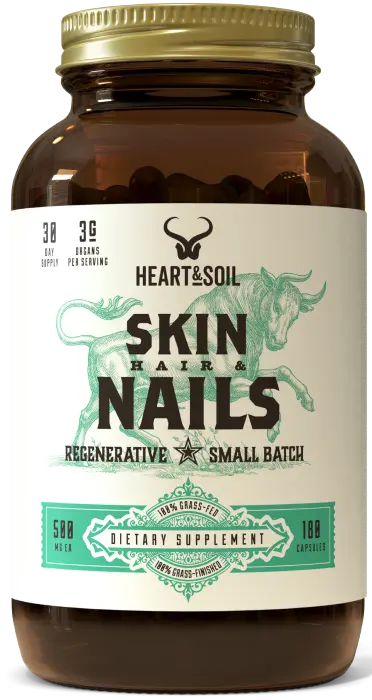
- Grass-fed cartilage, liver, and bone marrow
- Supports thick hair, strong nails, and soft skin
- Naturally occurring collagen, biotin, copper, B vitamins, and more
60-day risk-free guarantee. No questions asked.
2. Joint Support Under Increasing Load
As your pregnancy progresses, relaxin loosens your ligaments and your joints absorb more weight. Collagen forms the structural matrix of your cartilage and connective tissue. A combined RCT published in Nutrition Research found that daily collagen peptide supplementation improved both skin elasticity and joint health simultaneously, which are the same 2 systems under the most stress during pregnancy (14).
3. Gut Health and Nutrient Absorption
Collagen provides glycine and glutamine, both essential for maintaining the integrity of your gut lining (15). A healthy gut lining means better absorption of the nutrients your baby needs, such as iron, folate, calcium, fat-soluble vitamins. This is not a side benefit. Gut health during pregnancy directly affects fetal development.
4. Cervical Strength and Uterine Expansion
Your cervix is collagen. Your uterus is expanding with the help of collagen. These are not functions you can outsource to kale. The biological demand for collagen at the structural level of pregnancy is well-documented, which is exactly why your body ramps up collagen synthesis during gestation and why dietary collagen becomes conditionally essential (16).
5. Postpartum Recovery
Whether you deliver vaginally or via C-section, your body begins repairing and rebuilding collagen-rich tissue the moment delivery is complete. Glycine and proline — the dominant amino acids in collagen — are required for tissue healing. Women who supplemented with collagen protein in the third trimester showed 100% improvement in serum protein levels compared to 72% in the control group at 10 weeks postpartum (17).

Food-First: The Best Sources of Collagen During Pregnancy
The animal-based approach to collagen is simple: eat the whole animal, not just the muscle meat.
Collagen is concentrated in connective tissue, skin, and bones, which are the parts of the animal that modern eating habits tend to leave behind. Here is where to find it:
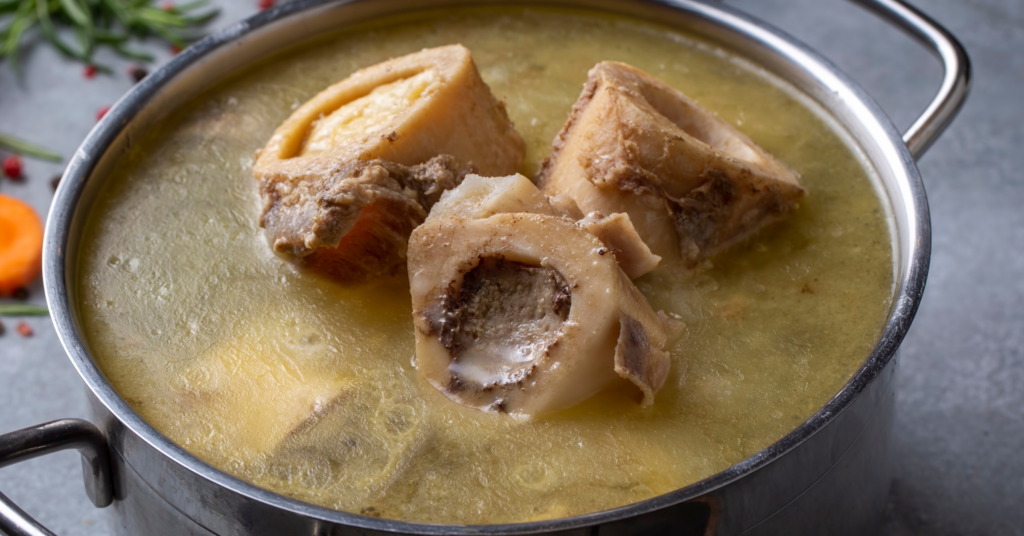
- Bone broth: slow-simmered bones release gelatin (cooked collagen) and glycine directly into the broth
- Slow-cooked tougher cuts: roasts, short ribs, oxtail, and shanks contain far more connective tissue than lean cuts like chicken breast
- Skin-on, bone-in poultry: chicken thighs and drumsticks, cooked with the skin
- Fish and shellfish: contain collagen in bones and scales
- Organ meats: liver and other organs are rich in the co-factors like copper and zinc required for collagen synthesis (18).
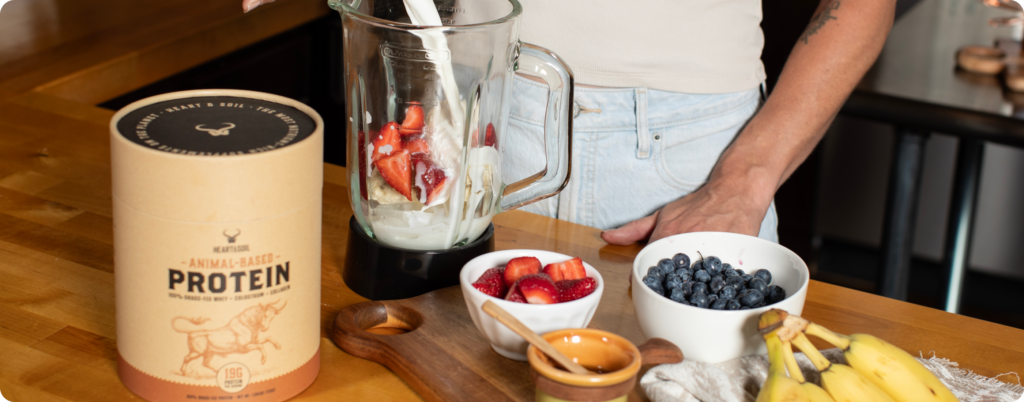
Looking for a convenient daily option? Heart & Soil’s Animal-Based Protein combines grass-fed collagen with whey and colostrum — a clean, complete protein designed around real animal nutrition, not isolated powders loaded with seed oils or artificial additives.
The World's Cleanest Protein Powder
Only 3 Grass-Fed Ingredients for Convenient Nutrition

- Whey protein concentrate for muscle synthesis
- Pure colostrum for immune function & gut health
- Collagen-containing trachea & scapula cartilage for joint health
60-day risk-free guarantee. No questions asked.
Why Animal-Based Collagen Beats Plant-Based Alternatives
There are no plant sources of collagen. Full stop. Plants contain no collagen protein. “Plant-based collagen boosters” contain vitamin C and a few amino acids that support collagen synthesis, but they do not contain collagen itself (19).
Plant foods do contain some glycine; pumpkin seeds, soy, and legumes have measurable amounts of glycine. But they do not deliver it in the concentrations found in animal connective tissue, and they provide none of the accompanying proline and hydroxyproline that collagen synthesis also requires. Glycine, proline, and hydroxyproline together account for 57% of the total amino acids in collagen, and all 3 are found together in meaningful amounts only in animal sources (20).
The richest dietary source of all 3 is animal connective tissue.
How Much Collagen Should You Take During Pregnancy?
General research suggests 2.5 to 15 grams of collagen peptides per day for adults (21), but please check with your doctor to determine what’s best for you. For pregnancy, most practitioners recommend starting at the lower end and building up.
Keep in mind:
- Protein needs increase to approximately 70–80 grams per day during the second and third trimesters (22).
- Collagen contributes to that total but does not replace complete protein sources
- Pair collagen with vitamin C-rich foods like fruit: vitamin C is required for collagen synthesis and activates the enzymes that stabilize collagen’s triple-helix structure
Always confirm dosing with your OB-GYN or prenatal dietitian based on your individual health status.
Collagen Across Each Trimester
First Trimester: Nausea makes eating difficult. Collagen powder mixed into warm broth or a smoothie is easy to digest and provides a gentle protein boost without the heaviness of a full meal. Collagen in capsule form is a great option here.
Second Trimester: Visible changes begin: skin stretching, belly growing, joints feeling the shift in weight distribution. This is when consistent collagen intake starts to matter most for skin elasticity and joint support.
Third Trimester: Glycine demand peaks. The baby is growing fastest. Your uterus is at peak expansion. Collagen content in the uterus is approaching that 800% increase (23). This is the trimester where supplementation has the strongest clinical backing, and where the postpartum recovery preparation begins.
Stronger Joints from the Inside Out
Flexibility. Mobility. Strength.
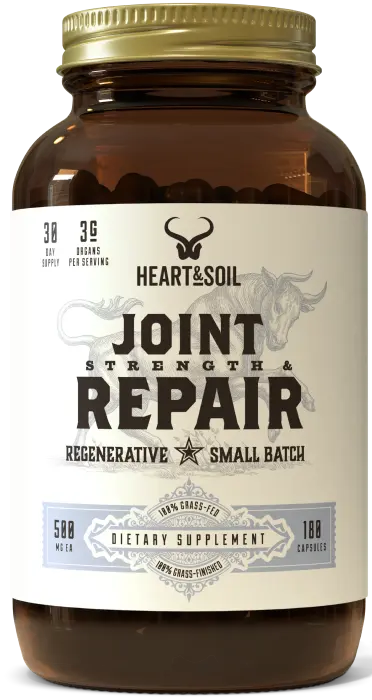
- Grass-fed cartilage & bone marrow
- Encourages the formation of cartilage & connective tissues
- Naturally occurring collagen, glucosamine, chondroitin sulfate, & more
60-day risk-free guarantee. No questions asked.
Learn how Melanie benefited from animal-based foods throughout her pregnancy HERE.
How to Choose a Clean Collagen Supplement
Not all collagen is the same. Here is what to look for:
- Grass-fed bovine: avoid collagen from factory-farmed animals or undisclosed sourcing
- No seed oils, artificial flavors, or additives
- Third-party tested for pesticides, heavy metals, etc.
- Short, clean ingredient list: if you cannot pronounce 3 or more ingredients, put it back
FAQ: Collagen During Pregnancy
Is collagen safe in the first trimester? Yes. Collagen from clean animal sources is safe throughout pregnancy and incredibly beneficial.
Does collagen help prevent stretch marks? Collagen supports the skin’s structural integrity and elasticity, which are the 2 factors most responsible for how skin handles rapid stretching. While no pregnancy-specific RCT has proven stretch mark prevention directly, the mechanism is well-supported, and the risk is essentially zero.
Can I get enough collagen from food alone? Yes, you can get meaningful amounts from a nose-to-tail animal-based diet that includes bone broth, slow-cooked cuts, skin-on poultry, and organ meats. A high-quality powder form such as Animal-Based Protein can help make it easier.
What is the difference between collagen and gelatin?S ame amino acid profile, same nutrition. Gelatin is heated and partially degraded collagen that solidifies when cooled. Both are excellent sources of glycine. Bone broth contains primarily gelatin: the reason quality broth solidifies in the fridge is a good sign.
Is whey protein safe during pregnancy? Yes. Whey is a complete protein. It contains all essential amino acids, including tryptophan, making it an excellent complement to collagen. Together, they cover the full spectrum of amino acid needs during pregnancy.
Should I continue collagen postpartum? Absolutely. The tissue repair demands after delivery require amino acids like glycine and proline in significant quantities. Collagen postpartum supports wound healing, skin recovery, postpartum hair retention, and uterine return to pre-pregnancy size.
Bottom Line
Your body needs more collagen during pregnancy than at almost any other time in your life. The demand is structural, not cosmetic. Your uterus, cervix, placenta, skin, joints, and gut lining all depend on the amino acids (especially glycine) that only animal-based collagen provides in meaningful quantities.
Get it from food first: bone broth, slow-cooked meat, skin-on poultry, organ meats. When your diet falls short, which it often does during pregnancy, supplement with a clean, grass-fed collagen protein.
Always consult your OB-GYN or prenatal healthcare provider before beginning any new supplement during pregnancy. Individual needs vary based on health status, dietary intake, and pregnancy progression.
Subscribe to future articles like this:
