


A Balanced, Ancestrally Inspired Bridge Toward Metabolic Health
Medical Disclaimer: This article is for educational purposes only and does not constitute medical advice. Consult a qualified healthcare provider before making changes to your diet.
The traditional animal-based movement did not emerge from a research committee or a consensus guideline. It came from one person paying close attention to what was happening inside his own body, and being willing to change course when the evidence demanded it.
That origin story matters because it reflects exactly the spirit this way of eating is built on: honest, evidence-driven, and grounded in what actually works.
TL;DR
The Traditional Animal-Based strategy is a balanced, nutrient-dense approach built around animal foods, fruit, honey, and other whole-food carbohydrates. It works especially well for people transitioning away from ketogenic, carnivore, or plant-based diets, and for young, metabolically healthy individuals and athletes.
While this approach can dramatically improve micronutrient status, energy levels, digestion, and performance, those looking to lose body fat or resolve deeper metabolic dysfunction often benefit from a more “pro-metabolic” animal-based diet vs a “traditional” animal-based diet.
The Origins of the Traditional Animal-Based Diet
The modern animal-based diet was built by Dr. Paul Saladino, founder of Heart & Soil. Dr. Paul was one of the most prominent voices in the carnivore space, but over time, he began noticing changes in his health that he could not explain away:
- Poor sleep quality, night after night
- Persistent muscle cramping that did not respond to electrolyte supplementation
- Declining total and free testosterone
- Worsening recovery and overall vitality
He tried every carnivore adjustment available: more fat, fewer workouts, more electrolytes, more organ meat, less organ meat. Nothing produced lasting improvement.
Eventually, Paul reintroduced carbohydrates, primarily fruit and honey. The response was rapid and unmistakable: sleep improved, cramping resolved, hormones stabilized, and vitality returned.
From that experience, the animal-based diet was born.

Ancestral Wisdom, With an Important Update
The animal-based approach draws heavily from the wisdom of the ancestral health movement, prioritizing:
- Nutrient-dense animal foods
- Organ meats and connective tissue
- Avoidance of the most problematic plant foods
- Avoidance of ultra-processed foods and seed oils
But it also acknowledges a critical and often overlooked reality:
Carbohydrates have always been available year-round in many regions of the world, especially tropical and equatorial environments.
Our ancestors did not avoid carbohydrates.
They prized them.
This is not theoretical. We see it clearly in modern and historical indigenous populations:
- The Tsimane of Bolivia maintain the lowest reported rates of coronary artery disease of any population ever studied, on a diet centered on complex carbohydrates alongside animal foods (1, 2)
- The Hadza of Tanzania consume honey and tubers regularly as core parts of their diet (3)
- The Pukapuka and Tokelauans of Polynesia thrive on diets built around coconut, fruit, and starchy foods, with no evidence of harm from their high saturated fat intake (4)
- The Tukisenta of Papua New Guinea consume carbohydrate-rich diets with minimal cardiometabolic disease
- The Yanomami of South America eat abundant plant carbohydrates alongside animal foods and show remarkably stable blood pressure across their entire lifespan (5, 6)
Across these populations, carbohydrate intake is not associated with metabolic disease. In many cases, it correlates with robust cardiovascular health, stable blood pressure, and strong physical capacity (7, 8, 9). The animal-based diet reflects this reality: animal foods form the foundation, but carbohydrates are not feared.The animal-based diet reflects this reality: animal foods form the foundation, but carbohydrates are not feared.
Who the Traditional Animal-Based Diet Is Best For
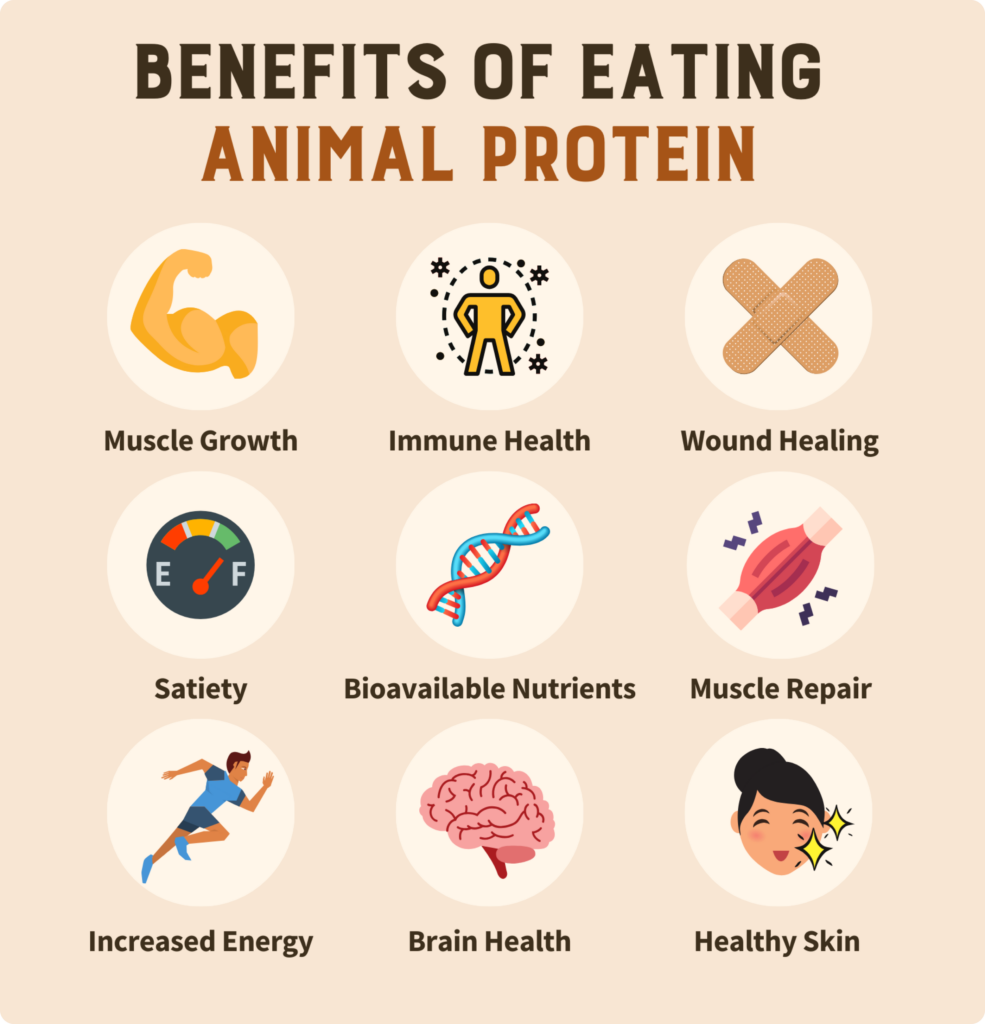
This approach works well as either a long-term strategy or a bridge phase. It tends to be an excellent fit for:
- People coming off plant-based or vegan diets who need rapid micronutrient and protein repletion
- Those transitioning off keto or carnivore who want to reintroduce carbohydrates without jumping straight into a higher-carb framework
- Metabolically healthy young people who have not accumulated significant metabolic stress or dysfunction
- High-level athletes who benefit from glycogen repletion alongside high protein and nutrient density
- Anyone who tries it and feels genuinely well: sustained energy, stable digestion, solid body composition, with no plateau in sight
For many people, animal-based eating is the first time food actually supports them rather than stresses their system.
Why Animal-Based Often Feels Better Than Keto or Carnivore
Compared to strict low-carb approaches, animal-based eating tends to improve:
- Sleep quality
- Electrolyte balance
- Muscle function and cramping
- Training performance
- Mood and stress tolerance
This makes sense physiologically.
Ketogenic and carnivore diets often come with trade-offs we discussed in the keto/carnivore article, including:
- Elevated stress hormone signaling, particularly cortisol, especially in the first weeks and post-exercise (10, 11)
- Reduced active thyroid hormone (T3) and increased reverse T3, which blocks T3’s metabolic actions (12, 13, 14)
- Chronically low muscle glycogen stores that impair high-intensity output
- Measurable impairment of athletic performance and exercise economy (15, 16, 17)
- Difficulty maintaining electrolyte balance
- An elevated NADH-to-NAD+ ratio that increases mitochondrial redox pressure (18, 19, 20)
- Greater reactive oxygen species (ROS) burden compared to carbohydrate-fueled oxidative metabolism (21, 22)
By reintroducing carbohydrates, animal-based eating can alleviate many of these stress signals.
What the Traditional Animal-Based Diet Looks Like in Practice
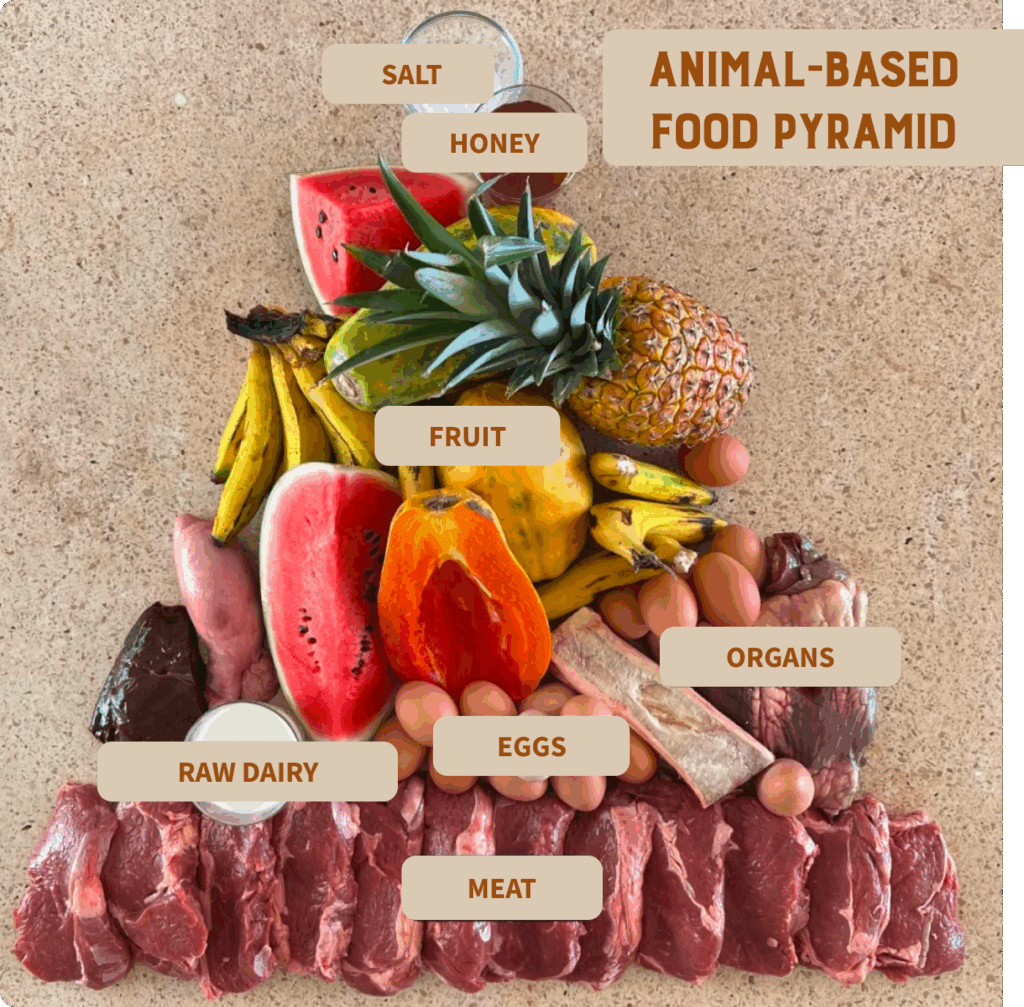
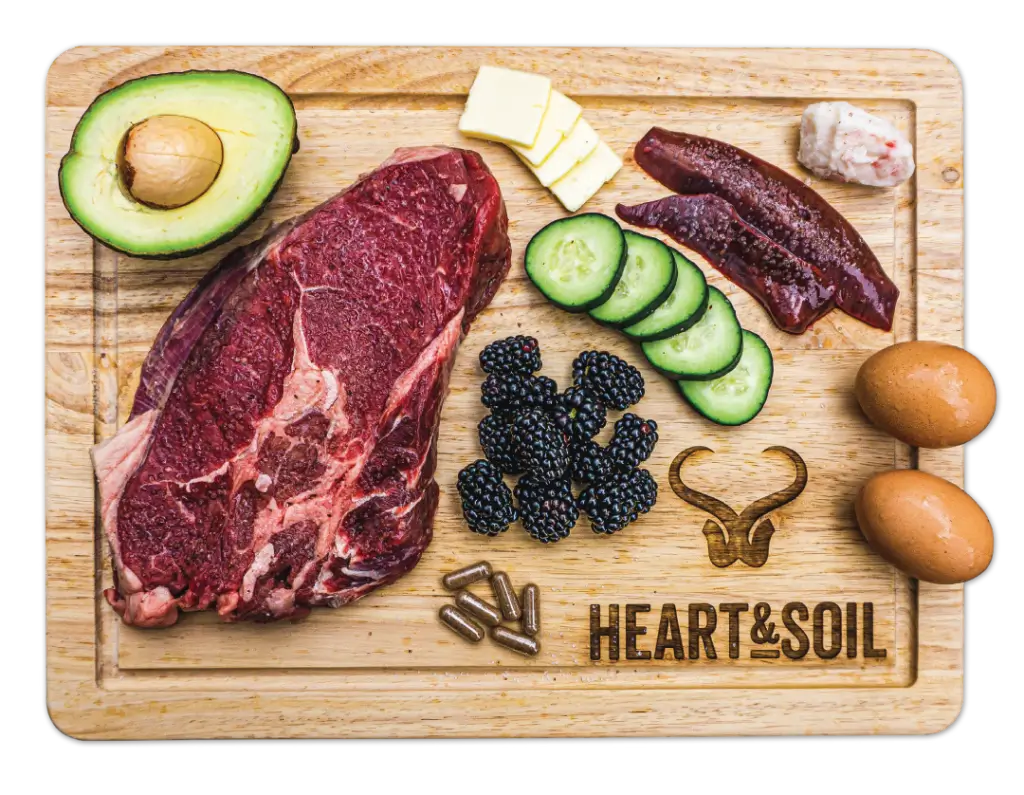
This is not a macronutrient prescription so much as a framework for eating. The foundation of this meat and fruit diet includes:
Animal foods (prioritized):
- Beef, lamb, bison, and other ruminant meats
- Offal, including organ meats
- Gelatin and collagen
- Eggs from pasture-raised hens
- Raw or minimally processed dairy (try A2)
- Fatty fish and seafood
Whole-food carbohydrates (welcomed):
- Fresh and dried fruit
- Raw honey
- Root vegetables and squash
- White rice
- Coconut water
What is excluded:
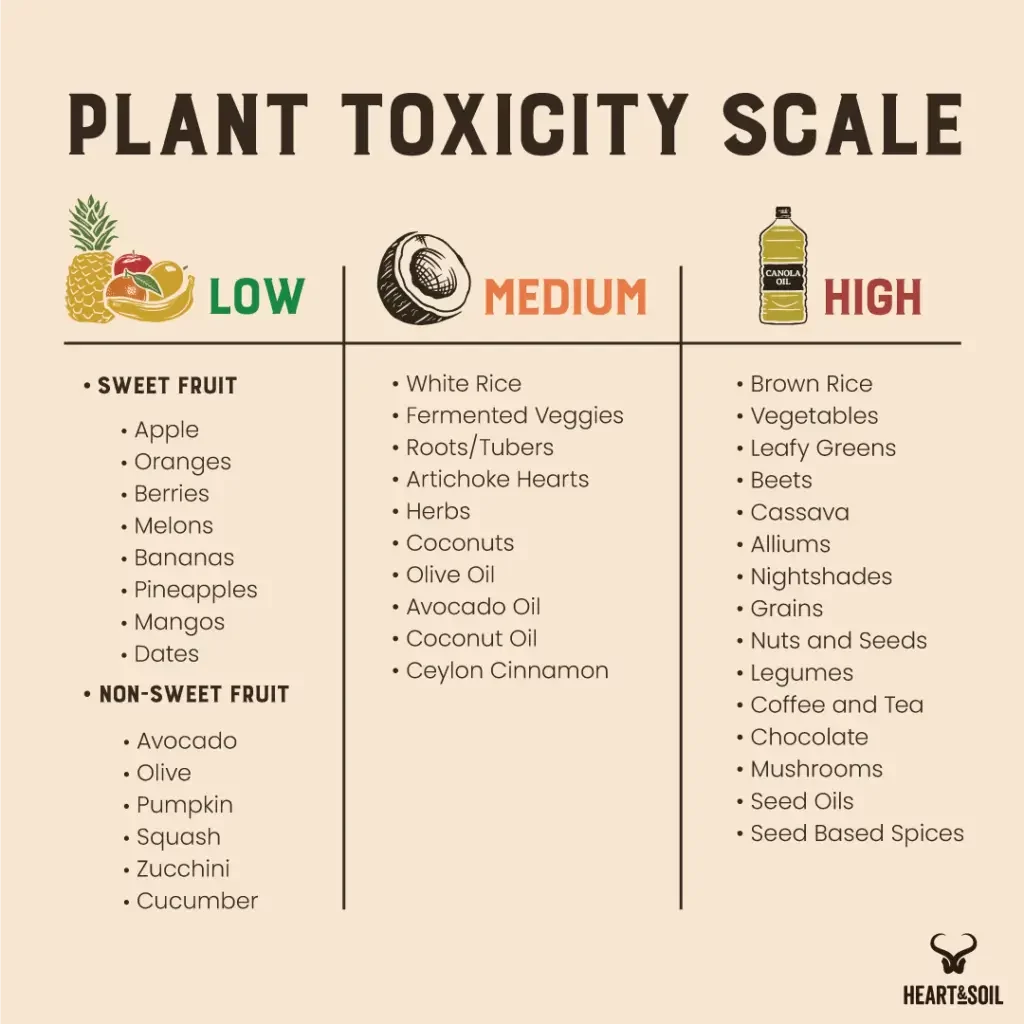
- All seed oils (soybean, canola, corn, cottonseed, sunflower, safflower, and others)
- Ultra-processed foods in any form
- High-antinutrient plant foods (grains, legumes, most raw leafy vegetables)
- Fortified foods and synthetic supplements as a substitute for real nutrition
The result is a diet that is both ancestrally grounded and practically sustainable, genuinely enjoyable to eat, without the rigidity and physiological strain of a strict low-carb approach.
Learn more here: The Ultimate Guide to the Animal-Based Diet
The Role of Organ Meats: Non-Negotiable
No animal-based diet is complete without organ meats. Liver is nature’s ultimate multivitamin: an incredible source of bioavailable B12, vitamin A, copper, CoQ10, choline, iron, and folate. No synthetic supplement comes close!
If the taste is a barrier, freeze-dried organ supplements like Heart & Soil’s Pure American Liver deliver the full nutritional profile of fresh liver in capsule form.
Nature's Ultimate Superfood
From Pure American Liver
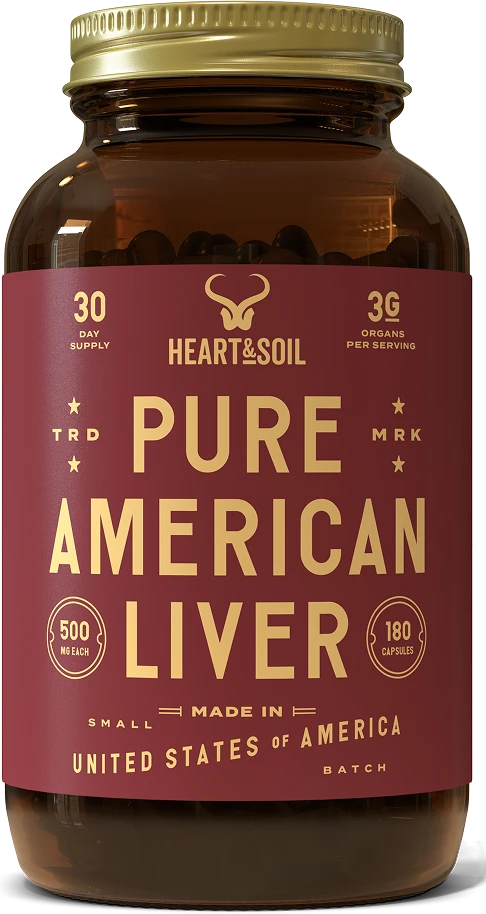
- Whole-food support for strength, energy, & vitality
- 100% American liver from grass-fed & pasture-raised cattle
- Nature's #1 superfood, freeze-dried to retain bioavailability
60-day risk-free guarantee. No questions asked.
When the Traditional Animal-Based Macronutrient Set-Up Starts to Fall Short
Despite its strengths, the traditional animal-based strategy is not always ideal as a long-term solution, especially when targeted metabolic healing is the goal.
It may be time to consider an evolution in approach if:
You are dealing with deeper metabolic dysfunction. A diet that is relatively high in fat and protein is not optimal for restoring insulin sensitivity or improving thyroid conversion. Healthy thyroid function and efficient glucose metabolism are foundational to long-term healing, and both depend on adequate carbohydrate intake (23, 24, 25).
You have hit a fat-loss plateau. Weight loss is possible on animal-based eating, but sustained fat loss and lean body composition maintenance require the metabolic conditions that higher-carbohydrate, lower-fat strategies are better positioned to support.
Your gut health improvements have stalled. Animal-based diets often improve digestion initially. But some people plateau without additional metabolic support, which tends to come through shifting toward higher-carbohydrate, slightly lower-fat intake patterns.
You are still experiencing low-carb symptoms. Cold hands and feet, hair thinning, poor sleep, declining muscle mass, or persistent fatigue on an animal-based diet often signal that the body still needs more targeted carbohydrate support and less reliance on fat-driven energy production.

A Brief Word on the Pro-Metabolic Approach
The pro-metabolic approach can look nearly identical to the traditional animal-based approach in terms of food selection. The difference is in macronutrient ratios — specifically, a shift toward higher carbohydrate and lower fat intake to more actively support cellular energy efficiency.
The principle is straightforward: when cells generate energy with high efficiency — high ATP output, high CO2 production, low reactive oxygen species — the tissues and organs they comprise tend to function properly. Highly efficient glucose metabolism supports:
- Lower stress hormone reliance (26, 27)
- Strong thyroid signaling (28, 29, 30)
- Better CO2 production
- A better NADH-to-NAD+ ratio (31, 32, 33)
- Reduced oxidative stress (34, 35, 36, 37)
- More stable energy and mood
When healing stalls on animal-based eating, it is often because the metabolism needs more targeted carbohydrate support and less reliance on fat-driven energy production (38, 39, 40).
That is where the pro-metabolic strategy becomes the next logical step.
When the Pro-Metabolic Strategy Becomes the Better Next Step
If you resonate with the animal-based approach but find yourself stuck with:
- Fat-loss resistance
- Lingering fatigue
- Cold hands and feet
- Poor stress tolerance
- Inconsistent energy
- Persistent gut health symptoms
- Hair loss
…it may be time to explore a pro-metabolic approach.
This doesn’t mean the animal-based strategy “failed.” It means it did its job, and your body is ready for a more targeted phase of healing.
Glossary
Animal-based diet: A dietary framework centered on nutrient-dense animal foods, including organs, muscle meat, eggs, and dairy, alongside whole-food carbohydrates like fruit and honey. Developed by Dr. Paul Saladino; popularized through Heart & Soil.
Organ meats: Nutrient-dense organs, including liver, kidney, heart, and spleen. Liver in particular is considered the single most micronutrient-dense food available, providing concentrated B12, vitamin A, copper, CoQ10, and choline.
Seed oils: Industrial vegetable and seed-derived oils such as soybean, canola, corn, cottonseed, sunflower, and safflower. They are high in linoleic acid (omega-6), associated with oxidative stress and inflammation. Excluded from all animal-based approaches.
Pro-metabolic approach: An evolution of animal-based eating that shifts macronutrient ratios toward higher carbohydrate and more moderate fat and protein intake to more actively support thyroid function, insulin sensitivity, and cellular energy efficiency.
Glycogen: The stored form of glucose in muscle and liver tissue. Chronically depleted on keto and carnivore diets; replenished on animal-based and pro-metabolic approaches, supporting training performance, sleep quality, and hormone production.
FAQ: Traditional Animal-Based Diet
Q: What is the difference between carnivore and animal-based? A: Carnivore eliminates all plant foods. The animal-based diet keeps animal foods as the foundation but welcomes whole-food carbohydrates like fruit, honey, root vegetables that traditional cultures have consumed alongside animal foods for thousands of years. Animal-based is more sustainable long-term and avoids the thyroid and hormonal costs associated with chronic carbohydrate restriction.
Q: Do I need to eat organ meats on an animal-based diet? A: To get the full micronutrient benefit, yes. Muscle meat alone does not provide the density of B12, vitamin A, copper, and CoQ10 that organs do. If fresh organ meat is not practical, a high-quality freeze-dried organ supplement covers the gap without compromise.
Q: Is fruit allowed on an animal-based diet? A: Fruit is actively encouraged. Whole fruit provides glucose for thyroid function, electrolytes, and antioxidants, and has been a staple of traditional human diets in virtually every region where fruit grows. The concern with fruit in most modern dietary frameworks stems from its consumption alongside seed oils, refined grains, and ultra-processed foods, not from an animal-based diet.
Q: Can athletes do well on a traditional animal-based diet? A: Yes, and athletes often do better on animal-based eating than on carnivore or keto specifically because of glycogen availability. Research consistently shows that low-carb diets impair exercise economy and high-intensity performance (41). The animal-based approach restores muscle glycogen while maintaining the nutrient density that animal foods uniquely provide.
Q: When should I consider moving from animal-based to pro-metabolic? A: If you have been eating animal-based for several months and still experience cold extremities, hair thinning, poor sleep, fat-loss plateau, persistent fatigue, or poor metabolic markers, those are signals that your metabolism needs more targeted carbohydrate support. The pro-metabolic approach builds on animal-based eating but adjusts the ratios to more actively restore thyroid function and metabolic efficiency.
Q: Is dairy included in an animal-based diet? A: Raw or minimally processed dairy is included, particularly full-fat grass-fed options like raw milk, kefir, and aged cheese. Pasteurized, homogenized, and low-fat dairy products are generally less emphasized. If you tolerate dairy well and can source quality products, it is a nutrient-dense addition. If it causes digestive issues or inflammation, skip it; the rest of the framework provides everything you need.
Beef Organs
Nature's Ultimate Multivitamin
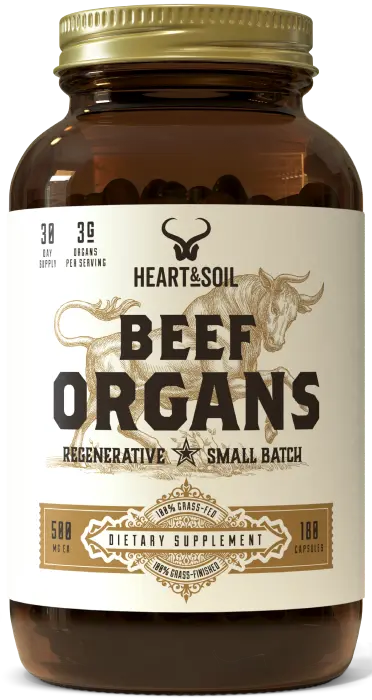
- Grass-fed liver, heart, pancreas, kidney, & spleen
- Designed to support overall energy & well-being
- Ideal daily foundation for nose-to-tail nutrition
60-day risk-free guarantee. No questions asked.
The Bottom Line
The traditional animal-based diet is a powerful, nutrient-dense, ancestrally grounded strategy. For many people, it serves as the perfect bridge between dietary extremes, restoring energy, performance, and confidence around food.
But if the fat loss, metabolic repair, thyroid function, hormone balance, or gut healing you’re chasing have stalled, then a pro-metabolic strategy may be the next logical step.
Subscribe to future articles like this:
