



Medical Disclaimer: This article is for educational purposes only and does not constitute medical advice. Consult a qualified healthcare provider before making changes to your diet or supplement routine.
Most approaches to nutrition focus on what to remove.
The pro-metabolic diet asks a different question: what does the body need to produce energy well?
The answer changes everything, from how you think about carbohydrates to why thyroid function sits at the center of nearly every chronic health issue.
TL;DR
The pro-metabolic diet is about restoring your body’s ability to produce energy efficiently. Instead of relying on stress hormones, fat oxidation, or chronic restriction, the pro-metabolic diet supports robust glucose oxidation, healthy thyroid function, high carbon dioxide production, and low oxidative stress. When cells can generate energy cleanly and consistently, healing becomes easier, hormones stabilize, digestion improves, and fat loss becomes more sustainable. If you deal with persistent fatigue, poor thyroid status, hormonal imbalance, insulin resistance, or stubborn body fat, this framework is worth understanding.
Table of Contents

What Is the Pro-Metabolic Diet?
The pro-metabolic diet is a nutrient-dense, animal-based diet that prioritizes quality carbohydrates alongside animal foods to restore efficient cellular energy production. It is not a restriction protocol. It is a restoration protocol.
At its core, the pro-metabolic diet looks like this:
Quality carbohydrates form the foundation:
- Ripe fruit
- Raw honey
- Root vegetables and squash
- White rice and other well-tolerated starches
Animal foods are actively included:
- Beef, lamb, and other ruminant meats
- Organ meats, especially liver
- Pastured eggs and high-quality dairy
- Fatty fish and seafood
- Collagen-rich foods: bone broth, gelatin, and collagenous cuts
What the pro-metabolic diet excludes:
- All seed oils (soybean, canola, corn, cottonseed, sunflower, safflower)
- Ultra-processed foods in any form
- Intermittent fasting and meal skipping
- Excessive dietary fat that crowds out carbohydrate intake
This is where the pro-metabolic diet diverges from keto and the carnivore diet. Those approaches remove carbohydrates in an effort to work around dysfunctional carb metabolism. The pro-metabolic diet uses carbohydrates strategically to restore the thyroid function, hormonal balance, and mitochondrial efficiency that chronic carbohydrate restriction erodes over time. The food selection is similar to a traditional animal-based diet. The macronutrient ratios are different, with carbohydrates playing a central therapeutic role rather than a supporting one.
What the Pro-Metabolic Diet Is Actually About
The pro-metabolic diet is best understood as a framework for improving how the body handles fuel. When metabolism is well-supported, food converts more easily into energy, stress signaling stays lower, and the body functions more predictably across different demands, such as building lean mass, producing and converting thyroid hormones, and generating energy at the mitochondrial level in a way that supports long-term health.
This framework is deeply inspired by the work of Dr. Ray Peat, whose central insight was that health rises and falls with the efficiency of cellular respiration. When cells can generate energy efficiently and cleanly, tissues organize, repair, and regulate themselves. When energy production falters, dysfunction appears, even if calories and nutrients are technically adequate.
From a metabolic standpoint, the goal is highly efficient oxidative phosphorylation: glucose is fully oxidized to carbon dioxide and water, producing abundant ATP with minimal collateral damage. Efficient glucose oxidation produces ATP quickly and reliably, leaving energy available for growth, repair, detoxification, and hormonal balance.
Inefficient pathways, especially those driven by stress hormones or excessive fat oxidation, produce less usable energy per unit time and generate more reactive byproducts that interfere with normal physiology.
Why Efficiency Matters: ATP, ROS, and CO₂
Every time your cells produce energy, they face a tradeoff between efficiency and stress.
When metabolism is running well, glucose moves smoothly through the mitochondria, ATP production is high, and electrons flow cleanly through the electron transport chain. Reactive oxygen species stay relatively low, redox balance is maintained, and cellular structures remain stable.
When metabolism is stressed, that balance breaks down. A high NADH-to-NAD+ ratio increases electron pressure at Complex I, raising the likelihood of electron leak and reactive oxygen species generation (1, 2, 3). Over time, excess ROS damages enzymes, lipids, and DNA, and interferes with insulin signaling, thyroid hormone action, and mitochondrial respiration itself.
This is one of the core reasons the pro-metabolic diet emphasizes glucose oxidation over fat-dominant metabolism. Fatty acid oxidation, especially when dominant, increases redox pressure and oxidative stress relative to carbohydrate-supported respiration (4, 5).
Carbon dioxide plays a surprisingly central role here. CO2 is often treated as a waste product, but physiologically, it is protective. Adequate CO2 improves oxygen delivery through the Bohr effect (6, 7), suppresses inflammation (8, 9), and buffers oxidative stress by stabilizing intracellular pH and limiting free radical reactivity (10). It also helps keep calcium soluble and properly distributed in tissues.
Low CO2 production is a hallmark of stress metabolism. High CO2 production signals efficient respiration. By restoring glucose oxidation and thyroid function, the pro-metabolic diet increases endogenous CO2 production, which supports metabolic stability across every system.

Energy Production as the Common Thread in Chronic Health Issues
Many chronic health problems appear unrelated on the surface but share a common foundation: cells that cannot reliably produce energy.
Digestive Health
Stomach acid production, pancreatic enzyme secretion, bile synthesis, and intestinal motility are all energy-dependent processes (11, 12). When cellular energy is low, digestion weakens, bacterial overgrowth becomes more likely, and nutrient absorption suffers. Low-energy intestinal tissue is also more vulnerable to increased permeability, setting the stage for endotoxin exposure and systemic inflammation.
Hormonal Issues
Estrogen dominance often reflects suppressed mitochondrial respiration. Detoxifying estrogen requires energy, particularly in the liver and intestines. When metabolism slows, estrogen clearance falters. At the same time, progesterone synthesis drops in low-energy states, removing a critical counterbalance to estrogen.
Sexual Function
Testosterone synthesis depends on active thyroid hormone (T3) and pregnenolone production, both of which fall when stress hormones dominate. Many people notice improvements in libido and sexual function as metabolic stress decreases and energy production improves.
Arterial Calcification
Calcification is not primarily a calcium or cholesterol issue; it reflects an energy failure in vascular smooth muscle cells (13, 14). Healthy cells use ATP to tightly regulate calcium gradients and rely on CO2 to keep calcium soluble. When ATP production falls and CO2 drops, calcium precipitates into tissues, contributing to vascular stiffness.
Body Composition
Efficient metabolism favors glucose oxidation, high ATP output, protein synthesis, and lean tissue maintenance. Stress metabolism suppresses glucose use, increases reliance on fatty acids and glycolysis, generates more ROS and lactate, and promotes muscle breakdown and fat storage. Restoring cellular respiration makes fat loss easier to achieve and easier to maintain. Learn more about fat loss here.

Clearing Up the Carbohydrate Confusion
Carbohydrates are frequently blamed for obesity, diabetes, heart disease, and fatty liver. These claims confuse cause with context.
Many people feel better on low-carbohydrate diets because their ability to oxidize glucose is already impaired. Removing carbohydrates can be a decent short-term solution, but it does not resolve the underlying dysfunction. It simply avoids triggering it.
The pro-metabolic diet targets the root cause: restoring the cell’s capacity to use glucose efficiently.
Insulin resistance is not caused by carbohydrates. It emerges when cells cannot safely oxidize glucose.
In healthy metabolism, insulin promotes glucose uptake and oxidation, increases ATP and CO2 production, and suppresses stress hormones. Blood sugar normalizes quickly with minimal insulin output, and little fat is stored.
Insulin resistance appears when oxidative metabolism is impaired by low thyroid function, elevated stress hormones, excessive fatty acid oxidation through the Randle cycle (15), and low CO2 production. In that state, insulin signaling is downregulated as a protective adaptation.
Why High-Carbohydrate Diets Can Restore Insulin Sensitivity
When carbohydrates are adequate and consistent, liver glycogen is replenished, cortisol output falls, adrenaline signaling quiets, and thyroid hormone conversion improves. Mitochondrial glucose oxidation increases, and cells become safer environments for glucose. As glucose oxidation improves, insulin sensitivity improves, not because carbohydrates were removed, but because cells are once again able to use them efficiently.
Carbohydrates also reduce reliance on the very stress hormones that contribute to insulin resistance. While circulating cortisol levels may normalize after several weeks on a low-carbohydrate diet, 11β-HSD1-mediated cortisol regeneration within tissues often remains elevated, sustaining a state of metabolic stress at the cellular level (16). Simply lowering circulating free fatty acids exerts a strong insulin-sensitizing effect on its own (17).
Thyroid hormone sits at the center of this process. T3 increases mitochondrial respiration, enhances GLUT-4 expression, improves insulin signaling, and supports glucose oxidation (18, 19, 20). Adequate carbohydrate intake supports liver conversion of T4 to T3, reduces reverse T3, and lowers cortisol interference.

Why More Fat and Protein Is Not Always Better
Fat and protein are essential, but more is not always better from a metabolic standpoint.
Both are highly satiating. When they crowd out carbohydrates, glucose intake falls, and the body shifts toward gluconeogenesis and stress hormone reliance. This fasting-mimicking state increases metabolic stress rather than supporting healing.
Excess protein also carries an energetic cost. Nitrogen disposal through urea and ammonia detoxification requires ATP, diverting energy away from repair, growth, and hormonal balance.
The pro-metabolic approach emphasizes adequate, not excessive, protein and fat, leaving room for the carbohydrates required for efficient glucose oxidation.

How to Follow the Pro-Metabolic Diet in Practice
Balancing macronutrients is an important part of the pro-metabolic framework, and our macronutrient calculator can help guide that process. But macronutrients are only part of the picture. Micronutrient balance and daily habits play an equally important role in supporting thyroid function, cellular energy production, and overall metabolic resilience.
Below are practical ideas we often suggest:
Prioritize calcium intake. Red meat is naturally high in phosphorus, which can elevate anti-metabolic hormones like parathyroid hormone (PTH) and prolactin when calcium intake is inadequate. Aim for at least a 1:1 calcium-to-phosphorus ratio each day using a tool like Cronometer.
Balance muscle meat with connective tissue. The amino acid profile of muscle meat can become pro-inflammatory and anti-thyroid when consumed in isolation. Balancing it with collagen-rich foods, such as bone broth, gelatin, collagen, and collagenous cuts, promotes a more pro-metabolic amino acid balance. Aim to get roughly one-third of total protein from gelatinous or collagen-rich sources.
Include liver regularly. Liver provides B vitamins essential for cellular energy metabolism along with vitamin A, which supports thyroid hormone signaling and transcriptional activity at the thyroid hormone receptor (21). 0.5 ounces per day is sufficient.
Nature's Ultimate Superfood
From Pure American Liver
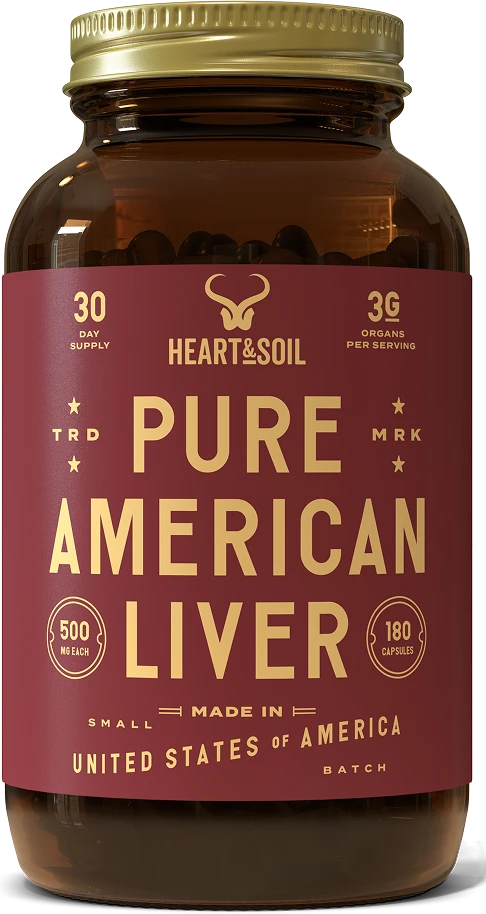
- Whole-food support for strength, energy, & vitality
- 100% American liver from grass-fed & pasture-raised cattle
- Nature's #1 superfood, freeze-dried to retain bioavailability
60-day risk-free guarantee. No questions asked.
Eat oysters weekly. Oysters are nature’s multi-mineral supplement, particularly rich in zinc and selenium, which are critical for thyroid hormone conversion and healthy sex hormone production.
Minimize PUFA exposure. Polyunsaturated fatty acids inhibit cellular energy production and increase oxidative stress. Avoid seed oils and omega-3 supplements, and be cautious with pork, poultry, and eggs from seed-oil-fed animals.
Check out the Complete List of Seed Oils.
Eat breakfast and avoid intermittent fasting. Skipping meals elevates stress hormones and increases circulating free fatty acids, directly inhibiting glucose oxidation.
Optimize vitamin D status. Vitamin D supports metabolic and hormonal health. Levels below 60 ng/mL may warrant increased sun exposure or supplementation. Use seed oil-free, lanolin-derived vitamin D3 and pair it with vitamin K2 and magnesium.
Consider raw milk if tolerated. Raw milk provides calcium, fat-soluble vitamins, and thiamine — all highly relevant to metabolic function. If raw milk is not available, consider supplementing with thiamine.
Consider desiccated bovine thyroid. Thyroid gland was historically part of the human diet until its removal from the food supply by regulation in the late 20th century (22). In many cases, supplemental thyroid glandular can provide meaningful support for those with sluggish thyroid function.
Nourish Your Thyroid, Naturally
100% Grass-Fed Thyroid, Liver, & Kidney

- Healthy thyroid hormone production
- Supports a strong metabolism to help you feel energized and maintain a healthy weight
- Contains iodine, copper, selenium, B12, and more
60-day risk-free guarantee. No questions asked.
Use targeted insoluble fiber to reduce endotoxin. Raw carrots and well-cooked button mushrooms provide insoluble fiber that can bind endotoxin and interrupt estrogen enterohepatic recirculation (23, 24), supporting detoxification of these potent anti-metabolic substances.
Signs the Pro-Metabolic Diet Is Working
When energy production becomes more efficient, the changes are not subtle — and they are often remarkably consistent across individuals.
Heat production is one of the most reliable early indicators. When cells generate energy efficiently, they also generate heat. Basal body temperature becomes a useful marker of metabolic status when measured consistently. Rising temperatures throughout the day, especially after meals, often indicate improved thyroid activity and oxidative metabolism rather than stress hormone reliance.
Resting pulse rate tends to rise in a healthy way as metabolism improves. As metabolic rate increases, tissues require more nutrients and oxygen. The body responds with increased circulation, reflected in a higher, steadier pulse rate. When this rise is driven by thyroid hormone, it typically comes alongside warmer body temperature, improved digestion, and greater energy stability.
Not all increases in pulse rate reflect improved metabolism. A pulse elevated by stress, caffeine, under-eating, or inflammation often feels different, accompanied by cold extremities, anxiety, or poor sleep. A thyroid-driven pulse increase tends to feel calm, warm, and sustainable. Interpret pulse alongside body temperature, subjective energy, sleep quality, and overall well-being rather than as a standalone metric.
Functional improvements that are harder to quantify but equally real include:
- Cold intolerance fading as heat production improves
- Sleep quality improving as nighttime stress hormone output falls
- Mood stabilizing with fewer energy crashes
- Hair, skin, and nails improving as hormone balance and nutrient delivery improve
- Energy becoming more consistent rather than arriving in surges followed by crashes
- Libido and sexual function improving as thyroid signaling strengthens
Taken together, these changes reflect a body that is spending less energy compensating for stress and more energy maintaining, repairing, and rebuilding tissue. That is the hallmark of a metabolism moving in the right direction, and a clear signal the pro-metabolic diet is doing its job.

Glossary
- Oxidative phosphorylation: The primary cellular process by which glucose is converted into ATP within the mitochondria. The most efficient and least damaging form of energy production, producing CO2 and water as byproducts.
- Reactive oxygen species (ROS): Chemically reactive molecules generated as byproducts of cellular metabolism. Low levels are normal. Chronically elevated ROS damages DNA, lipids, and proteins and impairs insulin signaling and thyroid hormone action.
- NADH-to-NAD+ ratio: A key measure of mitochondrial redox balance. A high NADH-to-NAD+ ratio signals metabolic stress, increases ROS generation, and impairs efficient energy production.
- The Randle cycle (glucose-fatty acid cycle): A metabolic mechanism in which fatty acid oxidation inhibits glucose oxidation in muscle and other tissues and vice versa. Chronic fat-dominant metabolism, via the Randle cycle, is a significant driver of insulin resistance.
- 11β-HSD1: An enzyme that regenerates active cortisol within tissues. Remains elevated in low-carbohydrate dieters even when circulating cortisol normalizes, sustaining a state of cellular metabolic stress.
- The Bohr effect: The physiological process by which increased CO2 (produced during efficient glucose oxidation) causes hemoglobin to release more oxygen to tissues, improving oxygenation throughout the body.
FAQ: Pro-Metabolic Diet
Q: What is the difference between a pro-metabolic diet and a carnivore or keto diet? A: Keto and carnivore restrict carbohydrates to shift the body into fat-oxidizing mode. The pro-metabolic diet works differently. It uses carbohydrates to restore efficient glucose oxidation and thyroid function, which are the foundations of durable metabolic health. Keto and carnivore are powerful short-term tools. The pro-metabolic diet is a long-term restoration strategy.
Q: Does a pro-metabolic diet mean eating a lot of carbohydrates? A: Not necessarily a lot, but enough. The pro-metabolic diet requires adequate carbohydrate intake to replenish liver glycogen, support T4-to-T3 conversion, reduce cortisol reliance, and fuel efficient mitochondrial respiration. The specific amount depends on your metabolic status, activity level, and goals. Our macronutrient calculator helps personalize this.
Q: Why does the pro-metabolic diet emphasize thyroid function so much? A: T3 (active thyroid hormone) sits at the control center of cellular energy production. It increases mitochondrial respiration, enhances glucose transporter expression, improves insulin signaling, and drives CO2 production. On low-carbohydrate diets, T3 consistently drops. When that happens, everything downstream slows: fat loss stalls, hormones become imbalanced, digestion weakens, and mood suffers.
Q: Is intermittent fasting compatible with the pro-metabolic diet? A: No. Skipping meals elevates stress hormones, depletes liver glycogen, and increases circulating free fatty acids. Each of these effects directly inhibits glucose oxidation and thyroid function. Eating breakfast and fueling consistently throughout the day is foundational to the pro-metabolic diet.
Q: What are the first signs that the pro-metabolic diet is working? A: The most common early signs are improved sleep quality, warmer hands and feet, more stable energy throughout the day, and a gradual rise in waking body temperature. Mood tends to stabilize and energy crashes become less frequent. Some people also notice improved digestion and reduced bloating within the first few weeks.
Q: Do I still eat animal foods on the pro-metabolic diet? A: Animal foods are a fundamental part of the pro-metabolic diet. Beef, liver, eggs, dairy, seafood, and organ meats remain central because they provide the micronutrient density and high-quality protein the body needs to rebuild. What distinguishes the pro-metabolic diet from strict carnivore or keto is the addition of quality carbohydrates: fruit, honey, root vegetables, and white rice to support thyroid function and efficient glucose metabolism.

Bottom Line
The pro-metabolic diet targets the most fundamental level of physiology: how well your cells generate energy. By emphasizing glucose oxidation, CO2 production, and stable hormone signaling, the pro-metabolic diet supports the body’s capacity to produce energy efficiently.
Because cellular energy production influences every organ system, this framework is relevant across a wide range of health goals — from resolving fatigue and hormonal dysfunction to achieving lasting fat loss and genuine metabolic resilience.
The pro-metabolic diet is not a list of foods to fear or a set of rules to follow. It is a framework built on the understanding that when cells can make energy cleanly and consistently, the body tends to do what it was designed to do: organize, repair, and thrive.
Subscribe to future articles like this:
