


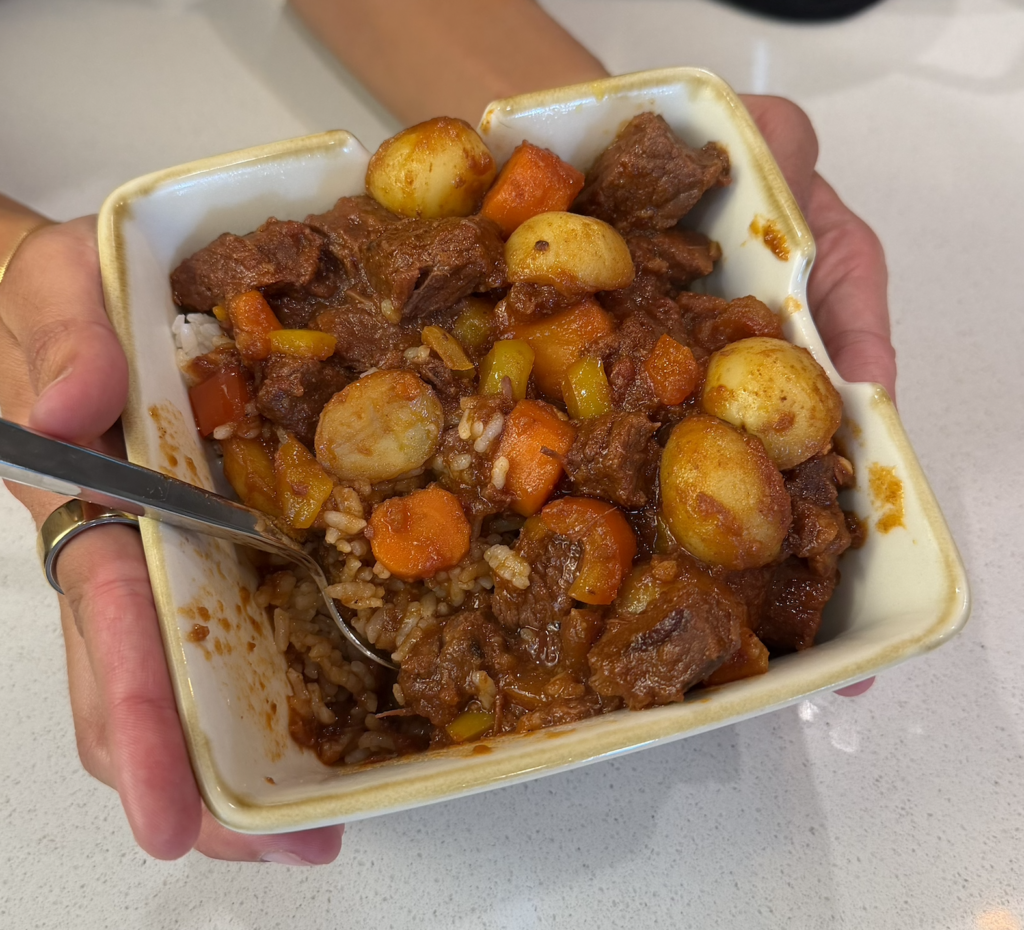
Caldereta is a traditional Filipino beef stew built around tomato sauce, root vegetables, and liver spread. It has been cooked this way for generations.
Liver thickens the sauce, deepens the flavor, and without it, you just have braised beef with vegetables. It also happens to be one of the most nutrient-dense ingredients you can cook with, rich in B12, copper, iron, and retinol.
Table of Contents
TL;DR
What is caldereta? Caldereta is a Filipino braised beef dish cooked in tomato sauce with liver spread, root vegetables, and bell peppers.
How to cook beef caldereta: Marinate beef chuck in coconut aminos, sear in butter, braise in tomato sauce and bone broth with bay leaves until tender, then add carrots, potatoes, liver spread, and bell peppers.
Total active time: under 30 minutes. Total cook time: 1.5 to 2 hours.
Why it matters nutritionally: Beef liver is one of the most nutrient-dense foods available, containing B vitamins, copper, iron, folate, and vitamin A (1). Liver combined with beef and vegetables creates a nutritious meal for the whole family.
What Is Caldereta?
Caldereta (also spelled kaldereta) is a Filipino stew with Spanish colonial roots. The name comes from the Spanish caldera, a cauldron or large pot.
Historically, it was made with goat, but beef has become the standard version across the Philippines and in Filipino households worldwide.
The defining characteristics of the beef caldereta dish:
- Braised beef (usually chuck, brisket, or short rib) cooked until pull-tender
- Tomato-based sauce deepened with liver spread
- Root vegetables (potatoes and carrots) added in the final stretch
- Bell peppers for brightness and texture
- Bone broth as the braising liquid, which builds body in the sauce
The liver spread is the ingredient that separates an authentic caldereta recipe from a generic tomato beef stew. It integrates into the sauce during the final cook, thickening it and adding a depth that no substitute replicates.
Why Beef Caldereta Belongs in an Animal-Based Kitchen
The Nutritional Case for Liver in the Sauce
Beef liver is dense in retinol, B vitamins, copper, iron, and zinc in forms your body reads directly.
Per 100 grams of lean beef liver tissue (2).
- Retinol (Vitamin A): 37.02 mcg/g
- Riboflavin (B2): 33.8 mcg/g
- Vitamin B12: 0.85 mcg/g
- Copper: 119.47 mcg/g
- Iron: 51.53 mcg/g
A caldereta recipe that uses half a cup of liver spread across 4 to 6 servings is a practical way to get liver into a meal where it is completely at home.
Bone Broth as the Braising Liquid
Standard caldereta recipes use water or canned broth. This one uses beef bone broth. The difference is not subtle. Bone broth carries collagen, gelatin, and minerals that a watery broth does not. It also gives the sauce a silkier body before the liver spread even goes in.
If you have access to homemade broth from grass-fed bones, use it. If not, a quality store-bought bone broth does the job.
Beef Chuck and Its Fat Profile
Beef chuck is the right cut for caldereta. It has enough intramuscular fat and connective tissue to stay moist through a 1.5 to 2 hour braise.
Subscribe to future articles like this:
How to Cook Caldereta: Full Recipe
Ingredients
- 2 lbs beef chuck, cubed
- 3 cloves garlic, crushed and chopped
- 1 onion, finely chopped
- 1/4 cup coconut aminos
- 2 cups beef bone broth
- 1 cup tomato sauce
- 1/2 cup liver spread
- 1 red bell pepper, sliced
- 1 yellow bell pepper, sliced
- 2 cups potatoes, cubed
- 2 cups carrots, sliced
- 3 dried bay leaves
- 1/4 cup butter
- Salt to taste
How to Cook Beef Caldereta: Step-by-Step
Step 1: Marinate the beef. Combine the cubed beef chuck with coconut aminos in a bowl. Mix well and let it sit for 30 minutes. The coconut aminos work as a marinade, adding depth without soy or gluten.
Step 2: Build the base. Melt the butter in a large pot or pressure cooker over medium heat. Add the garlic and onion. Sauté for 1 to 2 minutes until fragrant. Butter rather than seed oil here — it is the right fat for this dish.
Step 3: Sear the beef. Add the marinated beef to the pot. Cook while stirring for 3 to 5 minutes until the meat turns light brown on all sides. You are building fond, not cooking the beef through.
Step 4: Braise. Pour in the tomato sauce and bone broth. Add the dried bay leaves. Bring to a boil, then reduce the heat to low, cover, and cook until the beef is tender. In a standard pot this takes 1.5 to 2 hours. In a pressure cooker, 35 to 45 minutes at high pressure.
Step 5: Add the vegetables. Add the cubed potatoes and sliced carrots. Stir to combine and cook for 8 to 10 minutes until they begin to soften.
Step 6: Add the liver spread. Add the liver spread and stir it in fully. Continue cooking for 8 to 10 minutes, stirring occasionally. The sauce thickens visibly and deepens in color. This is the step that makes it caldereta.
Step 7: Finish with bell peppers. Add the red and yellow bell peppers. Cook for about 3 minutes — long enough to soften slightly, short enough to keep some structure.
Step 8: Season and serve. Season with salt to taste. Serve hot.
Watch it Made on Instagram
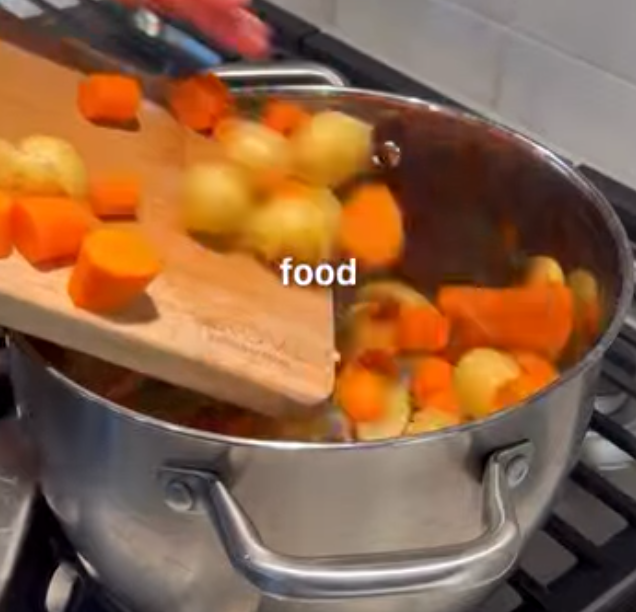
Watch Alex make this recipe on Instagram!
How to Cook Caldereta: Pressure Cooker vs. Stovetop
Both methods produce excellent results. The choice depends on your schedule.
| Stovetop | Pressure Cooker | |
|---|---|---|
| Braise time | 1.5 to 2 hours | 35 to 45 minutes |
| Texture | Gradual, deep flavor development | Comparable flavor, faster |
| Hands-on | Occasional stir | Set and release |
| Best for | Weekend cooking | Weeknight meals |
Add the vegetables and liver spread after the beef is tender in both cases. Do not pressure cook the liver spread; it integrates better in the final open-pot stage.
Sourcing and Product Notes
The liver spread in this recipe is doing the work of liver without requiring you to slice and sear it separately. If you prefer to use whole beef liver instead, about 100 to 150 grams of finely chopped liver added in Step 6 achieves the same effect, and gives you more control over sourcing.
For concentrated organ nutrition in a different format, Heart & Soil’s Beef Organs supplement delivers liver, heart, kidney, spleen, and pancreas from grass-fed New Zealand cattle in a capsule form. Not a substitute for this dish, but a practical addition if you are targeting consistent organ intake beyond what meals provide.
Beef Organs
Nature's Ultimate Multivitamin
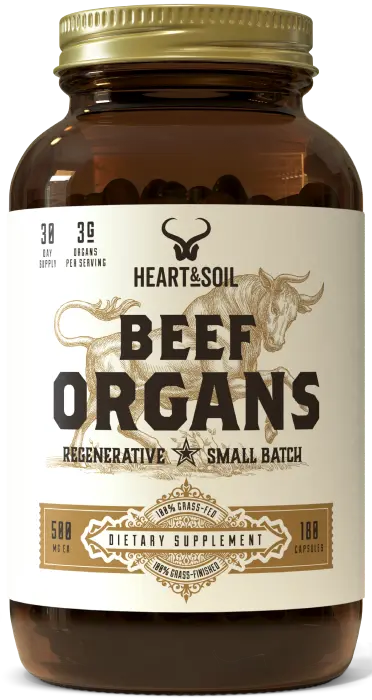
- Grass-fed liver, heart, pancreas, kidney, & spleen
- Designed to support overall energy & well-being
- Ideal daily foundation for nose-to-tail nutrition
60-day risk-free guarantee. No questions asked.
For the beef itself: grass-fed chuck from a quality butcher will have a better fatty acid profile and more fat-soluble vitamins than conventionally raised equivalents. It is worth the ask.
More Animal-Based Recipes
- Beef Tongue Tacos: A Delicious High-Protein, Animal-Based Recipe
- Animal-Based Chocolate Chip Cookie Dough Recipe
- Carnivore Pizza Recipe: The High-Protein, Zero-Grain Crust You Need to Try
- The 16 Bacon-Wrapped Jalapeno Poppers Recipe You’ll Love
- Crispy Lumpia Recipe: 4 Steps to Gluten-Free Perfection
- How to Make Delicious BBQ Meatballs in Just 30 Minutes
FAQ: Caldereta
What is the difference between caldereta and mechado? Both are Filipino beef braises with tomato sauce. Mechado typically uses soy sauce and does not include liver spread. The liver spread is what defines caldereta; it changes both the texture and depth of the sauce.
Can I use a different cut of beef? Chuck is the standard because its connective tissue breaks down during a long braise and keeps the meat moist. Brisket and short ribs also work well. Lean cuts like sirloin go dry. Stay with a well-marbled braising cut.
How do I cook beef caldereta without liver spread? You cannot make authentic caldereta without it. If you are working toward eating organ meats and want to start mild, liver spread is the easiest entry point; the flavor is integrated into the sauce and not immediately identifiable as liver. If you genuinely cannot source liver spread, finely minced chicken liver cooked into the sauce at Step 6 is the closest substitute.
Does caldereta freeze well? Yes. The braised beef, sauce, and vegetables all freeze well for up to 3 months.
Is the coconut aminos marinade necessary? The marinade adds depth and mild sweetness to the beef before it hits the pan. If you skip it, the dish still works; the braising liquid carries most of the flavor. The 30-minute marinade step is worth doing when you have the time.
Why butter instead of oil? Seed oils like canola, soybean, and sunflower are the default in most home kitchens, but they are not the right fat for this dish nutritionally or in terms of flavor. Butter holds up well to the sauté temperatures here and contributes to the richness of the finished sauce. Ghee works as an alternative.
Bottom Line
The caldereta recipe above is a traditional Filipino braised beef dish that happens to build liver into the sauce. The sauce is thicker, the flavor is deeper, and the nutrition is denser than any seed-oil tomato braise that skips it.
Beef caldereta is the kind of meal the animal-based framework points toward: beef, organs, bone broth, butter, and root vegetables.
Fuel Your Body with Nature's Best
Grass-Fed Bone Marrow & Liver
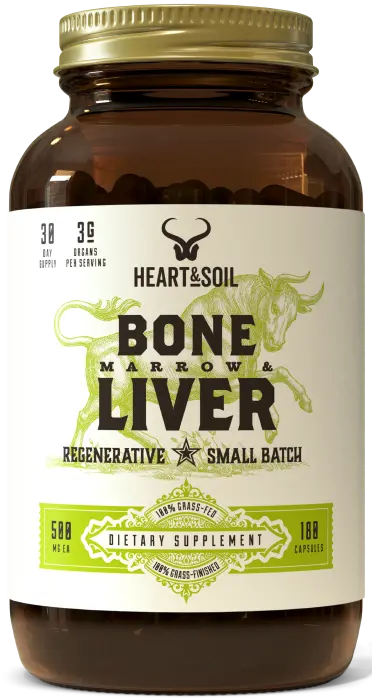
- Organ-based nutrition for bone strength, skin health, & emotional well-being
- Helps maintain energy levels and a healthy libido
- Delivers bioavailable vitamins, minerals, and nutrients for overall vitality
60-day risk-free guarantee. No questions asked.
Subscribe to future articles like this:
