
Train hard for a few weeks and you learn that recovery isn’t confined to the hours after a workout. You notice it at breakfast, when you try to sleep, and especially when you’re back in the gym before your body feels ready.
That’s one reason researchers have taken an interest in bovine colostrum, the first milk produced after birth. It contains naturally occurring immunoglobulins, lactoferrin, fats, and peptides that distinguish it from an ordinary whey shake. Some studies have looked at gut-barrier and immune measures during strenuous exercise, but that’s a long way from proving the testosterone and muscle-growth promises you sometimes see online.
We’d rather make sense of those findings than pretend a supplement can replace food, training, and sleep. When someone promises a dramatic benefit, it’s worth asking who was studied and what the researchers actually measured.
At Heart & Soil, we offer Grass-Fed Colostrum because we value whole first-milk nutrition and careful sourcing. We don’t sell it as a shortcut to bigger muscles or higher testosterone, and we’d prefer you judge it by the questions researchers have actually investigated.
Disclaimer: The information in this blog is for educational purposes only. It is not a substitute for professional medical advice. Consult your healthcare provider if you’re seeking medical advice, diagnosis, or treatment. These statements have not been evaluated by the Food and Drug Administration. Our products are not intended to diagnose, treat, cure, or prevent any disease.
Table of Contents
Key Takeaways
Colostrum is an interesting part of animal nourishment, but it isn’t a substitute for sleep, meals, or training. The research on exercise-related gut stress deserves attention without turning the ingredient into a miracle recovery shake.
- Colostrum research in men is strongest around exercise-related gut function and selected immune outcomes.
- Workout recovery findings are promising in some settings. Certain trials report benefits during repeated efforts, although results aren’t consistent.
- Colostrum isn’t an established testosterone booster. A very small pilot study doesn’t demonstrate a general hormonal effect.
- Muscle-building evidence is weaker than for whey. Complete protein and resistance training remain the stronger foundation.
- Product formulation matters. Whole versus defatted processing, sourcing, collection, and serving size can differ among supplements.
First Milk Is Not Just Another Protein Powder
First milk isn’t ordinary milk in a different package, and it’s certainly not just whey with a better story. Its composition is distinctive, which helps explain why people have become curious about it. That curiosity is a good reason to learn more, not to skip the evidence.
What Is Bovine Colostrum?
Bovine colostrum is the first milk a cow produces after giving birth, with a mix of fats, proteins, immunoglobulins, and other compounds unlike mature milk. That makes it interesting, but not the same thing as a twenty-gram whey shake. The useful question for an adult is what the actual human studies say.
For active men, much of that research focuses on intestinal permeability during prolonged exercise, selected immune responses, and recovery between efforts. The fact that colostrum contains a growth factor isn’t proof that it acts like hormone therapy after digestion, so we look to measured human outcomes rather than infer performance benefits from the ingredient list.
The Training Questions Worth Taking Seriously

Anyone who’s spent a long day training in the heat knows the effects can go well beyond the muscles. Researchers have explored whether colostrum changes some of those exercise-related gut measures. It’s an intriguing line of work, though individual studies can’t make every performance claim true.
What Are the Benefits of Colostrum for Men?
The more interesting colostrum research for active men has looked at exercise-related gut stress and certain immune measures. That’s much narrower than the testosterone, muscle-growth, and instant-recovery claims some companies advertise. We think the narrower story is worth understanding.
May Support Gut-Barrier Integrity During Hard Exercise
Strenuous exercise can temporarily increase intestinal permeability, particularly during prolonged endurance activity and other demanding conditions. The intestinal barrier normally regulates the passage of substances between the digestive tract and surrounding tissues.
Changes in permeability may occur alongside gastrointestinal stress during exercise. A meta-analysis of randomized clinical trials reported improvements in some measures of intestinal permeability after bovine-colostrum supplementation.
Study populations, doses, and methods varied, so the findings don’t establish a universal effect in every athlete. They do, however, provide a credible reason for continued interest in colostrum during periods of substantial training stress.
May Support Immune Responses During Heavy Training
Colostrum contains immunoglobulins and lactoferrin, which have important roles in immune biology. Researchers have examined whether supplementation influences immune-related measures during demanding exercise programs. A randomized crossover trial in endurance-trained men reported changes in post-exercise salivary IgA responses after supplementation, while several circulating immunoglobulin measures remained unchanged.
The researchers measured specific post-exercise outcomes, so the findings don’t establish a general increase in immunity. We consider this a promising research area, particularly for athletes whose training places sustained demands on normal immune processes.
Does Colostrum Help Workout Recovery?
Bovine colostrum may help with some aspects of recovery between strenuous efforts, although studies haven’t shown that it reliably improves every workout. In a controlled repeated-running study, the supplemented group didn’t perform meaningfully better in the first bout, but did better in a later bout after a recovery period.
That pattern suggests a possible role under repeated exercise stress rather than an immediate boost in maximum performance. It’s an interesting result for athletes doing several demanding sessions, but it doesn’t establish that colostrum prevents muscle soreness or speeds recovery from every type of training.
Is Colostrum Good for Athletes?
Colostrum may be worth exploring for athletes interested in the demands hard training places on the gut. Some studies have measured intestinal-barrier and immune-related responses under those conditions, but the details of each trial matter. A lab result isn’t the same thing as a guaranteed better race.
A sports-focused review found a stronger basis for discussing gastrointestinal and immune-related outcomes than for promising major improvements in body composition or performance. Results still differ by dose, study design, and population. For athletes, we see colostrum as a possible addition to an already sound program, not something that replaces fueling, training management, or recovery.
Does Colostrum Improve Endurance?
Colostrum hasn’t consistently been shown to improve endurance performance. Some studies have reported changes in particular measures, while others haven’t found meaningful gains. If a claim promises you’ll run faster next weekend, we’d want to see research that actually tested that outcome.
Because protocols and findings vary, we’d describe the evidence according to the exercise actually tested. An athlete may reasonably be interested in possible support during repeated effort, but companies shouldn’t promise that every customer will become faster.
Hormone Claims Deserve More Than Excitement
Testosterone claims tend to travel fast because they sound like a shortcut to everything men care about in the gym. But finding growth factors in a food doesn’t mean swallowing it raises hormones or builds muscle. Those ideas need direct evidence, not a clever label.
Does Colostrum Boost Testosterone?
There isn’t good evidence that bovine colostrum reliably raises baseline testosterone in men. One pilot study involving ten trained cyclists reported a possible effect on a temporary decline in salivary testosterone during multi-day competition, but preventing a stress-related dip isn’t the same as increasing ordinary testosterone levels.
Because the sample was extremely small, the result needs confirmation before it can support broader claims. That isn’t a basis for marketing colostrum as testosterone replacement, a treatment for low testosterone, or a reliable anabolic supplement, especially when its more credible research questions lie elsewhere.
Does Colostrum Increase IGF-1?
There’s no consistent evidence that drinking bovine colostrum raises circulating IGF-1 in adults. The ingredient contains interesting growth factors, but your digestive system doesn’t simply deliver everything on the label straight into the bloodstream. That’s why the actual human results matter more than the ingredient list alone.
A review of colostrum in sport discusses those findings and the limitations of interpreting colostrum as a systemic IGF-1 supplement. We wouldn’t choose a product on the assumption that it will deliberately raise IGF-1.
Does Oral IGF-1 in Colostrum Get Absorbed Intact?
We can’t assume IGF-1 in colostrum passes through digestion intact and acts like an injected hormone. The available human absorption work hasn’t established that. That’s an important bit of biology to remember whenever a company makes dramatic claims about naturally occurring growth factors.
In a study examining oral IGF-1 absorption, the results didn’t demonstrate the proposed intact uptake. That limits the hormone-related claims people can reasonably infer from the colostrum label, although it doesn’t erase the separate nutritional and gastrointestinal questions being studied.
Keep the Foundations of Training in View
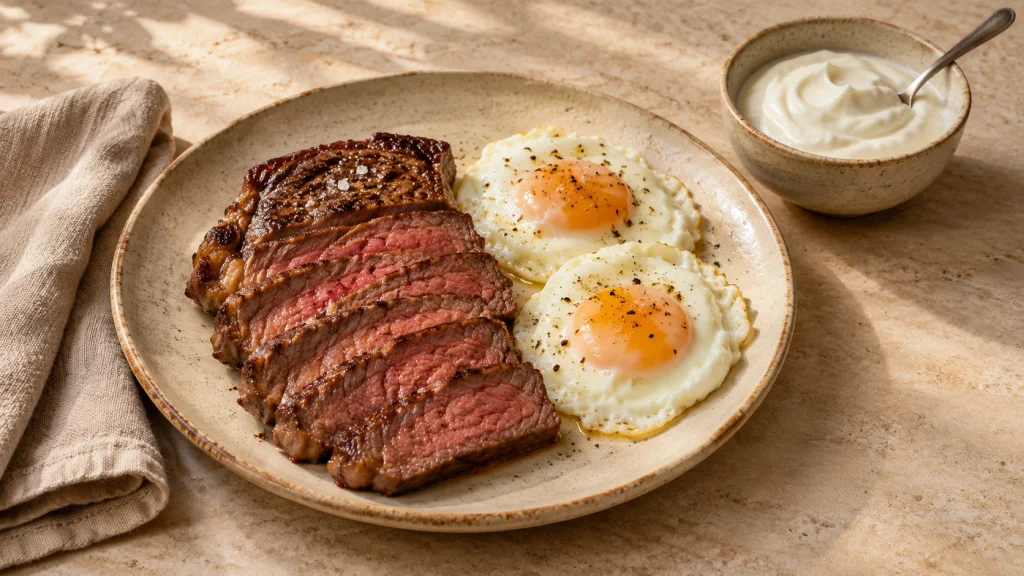
A reliable training routine is still built on food, progressive work, and enough rest to do the next session well. If you’re interested in colostrum for the research on gut stress, that belongs beside those foundations. It shouldn’t replace the complete protein your muscles actually need.
Does Colostrum Build Muscle?
Colostrum hasn’t been shown consistently to build muscle on its own. A typical serving isn’t designed to provide the same complete protein and leucine as whey, and training still supplies the stimulus that muscles need. If getting stronger is your main goal, we’d start with food and progressive resistance work.
If hypertrophy is your main goal, focus on progressive resistance training and enough complete protein from food or a suitable powder. Colostrum may be considered separately for gut or immune-related research, but it shouldn’t displace the more established foundations of muscle growth.
Colostrum vs. Whey for Muscle and Recovery
Whey and colostrum serve different purposes, so it helps to be clear about what you’re buying. Whey provides complete protein for muscle-focused nutrition, while colostrum has been studied for narrower questions involving exercise-related gut and immune measures. One doesn’t become better by borrowing the other’s claims.
| Feature | Bovine Colostrum | Whey |
| Main nutritional role | First-milk bioactive compounds | Complete protein |
| Muscle protein synthesis | Secondary role | Strong fit |
| Leucine per practical serving | Lower than dedicated whey servings | High |
| Essential amino acids | Present, but typical use differs | Complete protein |
| Exercise-related gut research | More directly studied | Less specific |
| Immune-related research | More directly studied | Less specific |
| Repeated-effort recovery | Some research | Relevant through protein nutrition |
| Testosterone enhancement | Not established | Not established |
If you’re struggling to consume sufficient complete protein, whey is generally the more direct choice. If you’re already meeting protein needs and want to explore colostrum’s distinct composition, it may occupy a complementary role.
Colostrum and Exercise-Induced Gut Stress
Long or intense exercise can be hard on the gut as well as the legs. Heat, changing blood flow, and other demands may influence the intestinal barrier, which is why researchers have examined colostrum under these conditions. It’s a focused research question, not a reason to promise protection from every digestive issue.
Researchers have studied colostrum in these circumstances using measures of intestinal permeability and related responses. A systematic review focused on exercise and gastrointestinal outcomes found encouraging results in several studies, although methods and findings differed. Not every trial has been positive, which makes the specific exercise conditions important when interpreting the evidence.

Colostrum and Training in the Heat
Colostrum hasn’t been shown to prevent heat stress or make hot-weather training safe, so hydration, appropriate training, and sensible recovery still matter when temperatures rise. Research on gut measures during strenuous conditions doesn’t replace any of those basics.
Researchers have examined whether colostrum affects exercise-related intestinal responses under those conditions, but results have been mixed. The most important strategies for exercising in hot conditions remain appropriate hydration, acclimatization, workload management, and recognizing symptoms of heat illness. Colostrum shouldn’t be used as a substitute for those measures.
Can Colostrum Reduce Muscle Soreness?
There’s no consistent evidence that colostrum takes away the soreness after a hard workout. A study measuring a recovery marker isn’t necessarily telling you whether stairs will feel easier tomorrow. Before leaning on any supplement, look at how hard you trained, what you ate, and whether you got enough sleep.
If soreness regularly disrupts your workouts, first consider how quickly you’re increasing the training load and whether sleep, food, and recovery time are adequate. Colostrum remains a research interest in certain recovery settings, not a proven remedy for sore muscles.
Fit the Supplement to the Life You Actually Lead
The person training for a long endurance event and the person hoping for a testosterone boost are asking completely different questions. One has some human research worth reading, while the other needs much stronger evidence. It helps to know which question you’re bringing to the tub.
Does Colostrum Help Men Lose Fat?
Colostrum isn’t a proven fat-loss product for men. Interest in an ingredient’s immune or gut properties doesn’t magically turn it into a way to change body composition. Good food, training, and habits you can sustain still deserve most of the attention.
Is Colostrum Good for Men Over 40?
Men over forty can be curious about colostrum, but birthdays don’t create a special need for it. What matters is the question you’re trying to answer and whether the research actually covers it. If the goal is maintaining muscle, we’d still start with sufficient complete protein and resistance training.
If those activities create substantial gastrointestinal stress, colostrum research may be relevant to the discussion. If the goal is preserving muscle as you age, complete protein and strength training remain the stronger nutritional and exercise priorities. Colostrum shouldn’t be presented as an age-reversal or testosterone-restoration product.
Should Men Take Colostrum Every Day?
There’s no reason to assume every man needs colostrum every day, because the studies have examined particular situations over defined periods, not everybody’s routine. We’d rather understand why you’re considering it before treating another scoop as a permanent obligation.
That matters when comparing a retail serving with a study using much larger daily amounts. Fat content, immunoglobulin concentrations, lactoferrin, and processing may all differ, so copying another product’s trial dose isn’t a reliable shortcut. If you decide to use colostrum, follow the serving directions for the specific product.
When Should Men Take Colostrum?
There isn’t a proven perfect time of day to take colostrum for all men. Studies have used different schedules, and a company’s morning-or-evening ritual isn’t proof of better results. If you use a product, follow its label and keep the bigger picture of your meals and training in view.
Follow the directions on the product you use and choose a time that fits your routine. Consistency is more practical than an elaborate timing ritual without supporting research.
Is More Colostrum Better?
More isn’t automatically better. Research doses vary and don’t establish that piling on extra colostrum produces extra benefit. We’d rather see you ask what a serving contains and what evidence supports the amount than guess that doubling the scoop doubles the result.
Ask Better Questions About the Finished Product
You wouldn’t buy meat without caring how it was raised or handled, and we’d ask the same questions about colostrum. When was it collected? How was it processed? What do we know about the finished product? Those details are more useful than a vague promise to supercharge your recovery.
What Should Men Look for in a Colostrum Supplement?
Look for clear sourcing, collection, and processing information, and ask what testing was done on the finished product. We’d rather see those answers than another vague promise about superhuman recovery.
- Animal sourcing: Information about the cattle and their feeding practices.
- Collection timing: Whether the manufacturer explains how early colostrum is collected.
- Whole versus defatted composition: Whether naturally occurring fats are retained.
- Processing methods: How the colostrum is handled and dried.
- Transparent serving size: The actual amount provided.
- Quality testing: Relevant testing for purity and contaminants.
- Realistic claims: Benefits should reflect human evidence rather than promises of dramatic hormonal or muscle-building effects.
Our Grass-Fed Colostrum
Our Grass-Fed Colostrum comes from grass-fed, pasture-raised cows, and we emphasize early collection, whole-colostrum composition, and careful processing. By retaining its naturally occurring fat, we preserve more of the mixture present in first milk instead of reducing the product to an immunoglobulin percentage alone.
That’s consistent with our belief in whole-food nourishment, although it doesn’t turn colostrum into a testosterone booster or guaranteed muscle-building supplement. For active men, the more relevant research concerns selected exercise-related gut and immune measures, and those findings are worth considering on their own terms.
Is Colostrum Safe for Men?
Colostrum is derived from cow’s milk, so men with a milk allergy should avoid it. Digestive tolerance and any individual health concerns also matter, and safety depends on the actual product and person. Natural isn’t a substitute for checking the ingredients and using good judgment.
Competitive athletes should consider whether a supplement has the relevant sport certification or quality information required for their circumstances. The fact that colostrum contains growth factors doesn’t automatically mean it raises circulating IGF-1 or functions like a prohibited hormone treatment. However, athletes should still verify product-specific testing and the rules governing their sport.
Colostrum Benefits for Men: The Heart & Soil Perspective
We think colostrum is interesting enough without claiming benefits that human studies have not demonstrated. Look at the research for exercise-related gut measures, keep the fundamentals of training in place, and be skeptical of anyone promising a hormone or muscle-building shortcut.
We value colostrum’s whole first-milk composition, but the research is strongest when you stay close to the actual setting studied. An endurance athlete curious about gut stress has a more defensible reason to investigate it than someone expecting a hormone boost. Complete protein, sufficient food, sleep, and well-planned training still do most of the work.
To explore our approach, see our whole Grass-Fed Colostrum or read our guide to choosing a colostrum supplement.
Frequently Asked Questions About Colostrum Benefits for Men
What Are the Benefits of Colostrum for Men?
Bovine colostrum may support intestinal barrier function and selected aspects of normal immune responses, particularly around strenuous exercise, and some studies suggest possible recovery-related benefits. The evidence is much weaker for direct muscle growth, consistent performance gains, or testosterone enhancement. Its most credible potential uses should reflect the specific populations and outcomes studied.
Does Colostrum Help Workout Recovery?
Possibly, since some controlled studies have found improvements in repeated-exercise performance or selected recovery-related outcomes after colostrum supplementation. The findings aren’t consistent across training protocols, though, so the result from one setting shouldn’t become a promise for every workout. Colostrum shouldn’t be treated as a guaranteed way to reduce soreness or accelerate recovery after every workout.
Does Colostrum Boost Testosterone?
There isn’t good evidence that bovine colostrum reliably raises baseline testosterone in men. One very small pilot study involving highly trained cyclists suggested it might influence a competition-related decline in salivary testosterone. That finding doesn’t establish a general testosterone-boosting effect or support using colostrum as hormone therapy.
Is Colostrum Good for Athletes?
Colostrum may be relevant to athletes experiencing substantial training stress, particularly because of research involving intestinal permeability and selected immune measures. Some performance and recovery studies have reported favorable outcomes, while others haven’t. Athletes should interpret the evidence according to the exact training conditions studied and verify relevant product-testing requirements.
Does Colostrum Increase IGF-1?
Research hasn’t established a consistent increase in circulating IGF-1 after oral bovine-colostrum supplementation. Some older studies reported changes, while later controlled trials found no significant effect. Human absorption research also doesn’t support the assumption that intact oral IGF-1 enters circulation and functions like an injected hormone.
Does Colostrum Build Muscle?
Evidence that bovine colostrum directly increases muscle mass is limited and inconsistent. Colostrum contains protein and other naturally occurring compounds, but complete protein and progressive resistance training have much stronger supporting evidence for hypertrophy. Men focused on muscle growth should prioritize adequate essential amino acids and a well-designed training program.
Should Men Take Colostrum Every Day?
Many clinical trials have used daily colostrum supplementation over several weeks, but their doses and product formulations vary considerably. There isn’t one universally established daily amount that applies to every commercial colostrum product. Follow the specific product’s serving instructions and consider individual health circumstances before beginning supplementation.
Is Colostrum Good for Men Over 40?
Colostrum may interest men over 40 for the same gut, immune, or exercise-related reasons as younger adults. However, there’s no evidence that turning 40 creates a special need for bovine colostrum. For muscle preservation and strength, adequate complete protein and resistance training remain more directly supported strategies.
Subscribe to future articles like this:
