
Whey and bone broth protein both come from animal foods, but they don’t supply the same mix of amino acids. Whey is a complete dairy protein rich in leucine, which makes it particularly useful when you’re trying to build or maintain muscle. Bone broth protein usually comes from bones and connective tissue, giving it a collagen-rich profile with more glycine and proline but less leucine.
A powder chosen to help meet a muscle-building protein target therefore isn’t necessarily the one you’d choose for more collagen-related amino acids. Even within the bone broth category, products differ in how concentrated and processed they are, so a commercial scoop shouldn’t be compared with a cup of homemade broth by name alone. We’ll look at those nutritional differences and what they mean for your meals, training, and dairy tolerance.
Our food-first approach at Heart & Soil leaves room for both muscle meat and connective tissues. Protein powders are there for convenience when they help meet a particular nutritional need, not to replace the meals that make up a nourishing diet.
Disclaimer: The information in this blog is for educational purposes only. It is not a substitute for professional medical advice. Consult your healthcare provider if you are seeking medical advice, diagnosis, or treatment. These statements have not been evaluated by the Food and Drug Administration. Our products are not intended to diagnose, treat, cure, or prevent any disease.
Table of Contents
What Is Bone Broth Protein?
Bone broth protein is a concentrated powder made from cooked or extracted animal bones and connective tissues. Those raw materials are rich in collagen, so the finished protein often supplies substantial glycine and proline but less leucine than whey. If you want a protein powder for muscle growth, that amino-acid difference matters more than the fact that both products have ‘protein’ on the label.
Because manufacturers use different tissues and extraction methods, one bone broth protein can have a different concentration or peptide profile from another. Some formulations are hydrolyzed, while others contain more gelatin-like material. The ingredient details matter if you’re comparing powders by their nutritional role.
Homemade broth starts with similar tissues, but the amount of protein in a mug depends on the bones, cooking time, and water used. A concentrated powder is made to provide a stated protein amount per serving, so the actual nutrition label is the better comparison.
What Is Whey Protein?
Whey is a complete milk-derived protein that contains all nine essential amino acids, including substantial leucine. Those amino acids supply both a signal and the building materials needed for muscle protein synthesis, which explains whey’s strong reputation in training nutrition. If your main goal is to add efficient complete protein and you tolerate dairy, whey is usually the more direct choice than collagen-rich bone broth protein.
Whey can be sold as concentrate, isolate, or hydrolysate. Concentrate retains more lactose and other milk components than isolate, while isolate is generally processed to increase protein concentration and reduce lactose and fat. Hydrolysate has been partially broken into smaller fragments.
Someone who tolerates dairy may prefer concentrate for its formulation, while an isolate can be useful when lower lactose matters. If the issue is an allergy to milk proteins, however, reducing lactose won’t make whey suitable.
Bone Broth Protein vs Whey at a Glance
Whey and bone broth protein come from animals but serve different nutritional purposes. Whey delivers a complete, leucine-rich amino-acid profile suited to muscle-focused nutrition, while bone broth protein generally provides more glycine, proline, and other collagen-related amino acids. The comparison below makes those differences concrete so you can match the powder to your goal instead of choosing based on protein grams alone.
| Feature | Bone broth protein | Whey protein |
| Main source | Bones and connective tissue | Milk |
| Protein profile | Collagen-rich, often lower in essential amino acids | Complete protein |
| Leucine | Generally lower | High |
| Glycine and proline | Generally higher | Lower relative amounts |
| Muscle protein synthesis | Less effective as the primary protein | Strong research support |
| Collagen-related amino acids | Notable contribution | Smaller contribution |
| Dairy-free | Usually, if no dairy ingredients are added | No |
| Lactose | Usually absent | Depends on concentrate vs isolate |
| Best nutritional role | Complementary collagen-rich protein | Muscle and complete-protein goals |
These are broad category patterns, so exact numerical comparisons still require the product’s current amino-acid and ingredient information. A protein powder that blends sources won’t necessarily match the profile of a single-source powder.
Is Bone Broth Protein Better Than Whey?
Whey is better suited to muscle-building because it supplies more essential amino acids and leucine, while bone broth protein may better fit someone seeking collagen-rich amino acids or avoiding dairy. Bone broth protein isn’t nutritionally equivalent to whey simply because both contain protein: a collagen-heavy serving supplies fewer of the essential amino acids most important for muscle protein synthesis. Decide which job you’re trying to accomplish before comparing brands or serving sizes.
Someone who avoids dairy may also prefer bone broth protein simply because it comes from animal connective tissue rather than milk. That can be a meaningful dietary fit, but it isn’t proof that bone broth protein is easier to digest for everyone or that it builds muscle as efficiently as whey.
Bone Broth Protein vs Whey for Muscle Gain
Whey is the stronger primary choice for muscle gain because it provides all essential amino acids in a pattern well suited to muscle protein synthesis. Bone broth protein typically contains more collagen-derived amino acids but relatively little leucine, making it a weaker sole protein source for hypertrophy. You can still include it for variety or connective-tissue-oriented nutrition, but don’t use equal protein grams as proof the two powders produce equal muscle-building responses.
A 10-week randomized resistance-training study compared whey with collagen peptides that had additional leucine added to match the whey condition. Whey produced larger increases in some measures of muscle thickness, although the groups experienced similar changes in strength and power. The study involved collagen peptides rather than every bone broth powder, but it helps explain the importance of a full essential-amino-acid profile instead of leucine alone.
Why Is Whey Better for Muscle Protein Synthesis?
Whey supports muscle protein synthesis effectively because it delivers both leucine and the remaining essential amino acids. Leucine participates in signaling the process, while the other essential amino acids provide material for building muscle protein. A collagen-rich powder may supply many amino acids overall, but it can’t replace that full essential-amino-acid profile when muscle gain is the specific objective.
Is Bone Broth Protein a Complete Protein?
Collagen-dominant bone broth protein generally isn’t a complete protein in the same nutritional sense as whey. Collagen is very low in tryptophan and contains relatively little leucine, so it doesn’t supply the full essential-amino-acid balance needed for optimal muscle protein synthesis. It still contributes dietary protein, but you should rely mainly on complete protein sources when planning intake for muscle maintenance or growth.
Collagen-rich protein still contributes glycine, proline, and other amino acids. It makes sense as a complement when most of your dietary protein already comes from foods such as meat, eggs, fish, or dairy.
If you’re calculating protein for muscle maintenance or growth, build most of that intake around complete protein sources. A bone broth product labeled complete protein should have an amino-acid analysis to support the claim, rather than relying on the fact that the ingredient came from an animal.
Bone Broth Protein vs Whey Amino Acids
Whey is richer in essential amino acids and leucine, while bone broth protein generally provides more glycine, proline, and hydroxyproline. Those differences reflect their origins: dairy protein supports a broad set of protein-building functions, whereas collagen-rich connective tissue has a distinctive amino-acid composition. Use the comparison table to evaluate what a serving contributes rather than treating the two powders as interchangeable protein blocks.
| Amino-acid feature | Bone broth or collagen-rich protein | Whey |
| Leucine | Lower | Higher |
| Total essential amino acids | Lower | Higher |
| Glycine | Higher | Lower |
| Proline | Higher | Lower |
| Hydroxyproline | Prominent | Very little |
| Tryptophan | Very little or absent in collagen | Present |
A human amino-acid comparison involving bone broth, collagen, and dairy proteins helps illustrate why these distinctions matter. The researchers observed different circulating amino-acid responses, particularly for glycine and leucine, and highlighted variation in actual broth composition.
Is Bone Broth Protein Better for Joints?
Bone broth protein supplies collagen-associated amino acids relevant to connective tissues, but generic bone broth powders haven’t been shown to deliver every joint benefit reported for specific collagen ingredients. Trials involving hydrolyzed collagen peptides or undenatured type II use defined preparations that may differ from an ordinary broth powder. Unless the product matches the tested material, its ingredient profile is a nutritional fact rather than proof of improved joint function.
Researchers have studied specific hydrolyzed collagen peptides and undenatured type II collagen preparations for various joint-related outcomes. Those ingredients have different processing and research histories, so the clinical results cannot simply be transferred to an unrelated bone broth powder because it also contains collagen.
Bone Broth Protein for Tendons and Ligaments
Bone broth protein may contribute amino acids found in tendons and ligaments, which are rich in type I collagen. However, human studies on tendon adaptation have often paired particular collagen preparations with exercise or rehabilitation loading, and direct ligament-specific evidence is more limited. It’s reasonable to consider collagen-rich nutrition alongside sensible training, but not to promise tissue repair from a powder alone.
A 2026 review of eight human randomized trials reported some favorable tendon outcomes in studies that combined collagen supplementation with mechanical loading. Exercise was part of every intervention, so the research doesn’t establish that collagen supplementation alone strengthens tendons.
Which Is Easier to Digest, Bone Broth Protein or Whey?
Neither powder is universally easier to digest, since tolerance depends on the person and formulation. Bone broth protein is usually dairy-free, whereas whey contains milk proteins and may also contain lactose, especially in concentrate form. Someone who avoids dairy might choose broth protein for that reason, but lactose intolerance and milk-protein allergy are distinct and should guide the choice differently.
Whey concentrate contains some lactose, which can matter for people with lactose intolerance. Whey isolate usually contains less lactose, although the exact amount depends on the product. Someone with a milk-protein allergy should not assume any whey formula is safe merely because it’s labeled lactose-free.
Bone broth protein is generally dairy-free when the formula contains no milk-derived ingredients, which may make it a practical option for dairy avoidance. Sweeteners, flavorings, gums, and other additives can still influence tolerance, so a simple ingredient list can make it easier to identify what works for you.
Can You Take Bone Broth Protein if You’re Lactose Intolerant?
Usually, yes. A bone broth protein made without milk ingredients is ordinarily suitable for someone avoiding lactose because its protein comes from animal connective tissues rather than dairy. Check the full ingredient label for blends or added milk components, since the product name alone doesn’t guarantee that a flavored or multi-protein formula is dairy-free.
Lactose intolerance means difficulty digesting lactose, the sugar in milk. Milk-protein allergy involves an immune reaction to proteins and is not solved by removing lactose. That distinction matters when someone is comparing broth protein with whey concentrate or isolate.
If you tolerate some dairy, a lower-lactose whey isolate may be possible, while a dairy-free broth or egg-derived option provides a different path. The deciding factor is the actual ingredient and individual response, not a broad claim that one protein is inherently gentler.
Bone Broth Protein vs Whey for Recovery
For resistance-training recovery, whey has the clearer evidence base because it delivers abundant essential amino acids and supports muscle protein synthesis. Bone broth protein can add protein and collagen-associated amino acids, but its amino-acid pattern makes it a less efficient main recovery powder for muscle. Recovery also depends on total food intake, training, and rest, so neither supplement replaces those foundations.
Bone broth protein may contribute collagen-related amino acids in a diet designed to include more connective-tissue nourishment. That role is different from claiming it produces the same acute muscle-protein response as whey.
Bone Broth Protein vs Whey for Weight Management
Neither whey nor bone broth protein causes fat loss by itself, but either can be a convenient way to add protein to a meal plan. Whey’s complete amino-acid profile gives it a clearer role when preserving muscle during an energy deficit is important, while a collagen-rich powder may fit other nutritional preferences. Judge the choice by your total dietary protein, calories, and tolerance rather than a weight-loss claim on the tub.
Adequate protein is particularly valuable when someone wants to maintain lean mass while changing body weight. Whey’s stronger essential-amino-acid profile makes it more directly suited to muscle maintenance than a collagen-dominant powder.
Bone Broth Protein vs Whey for an Animal-Based Diet
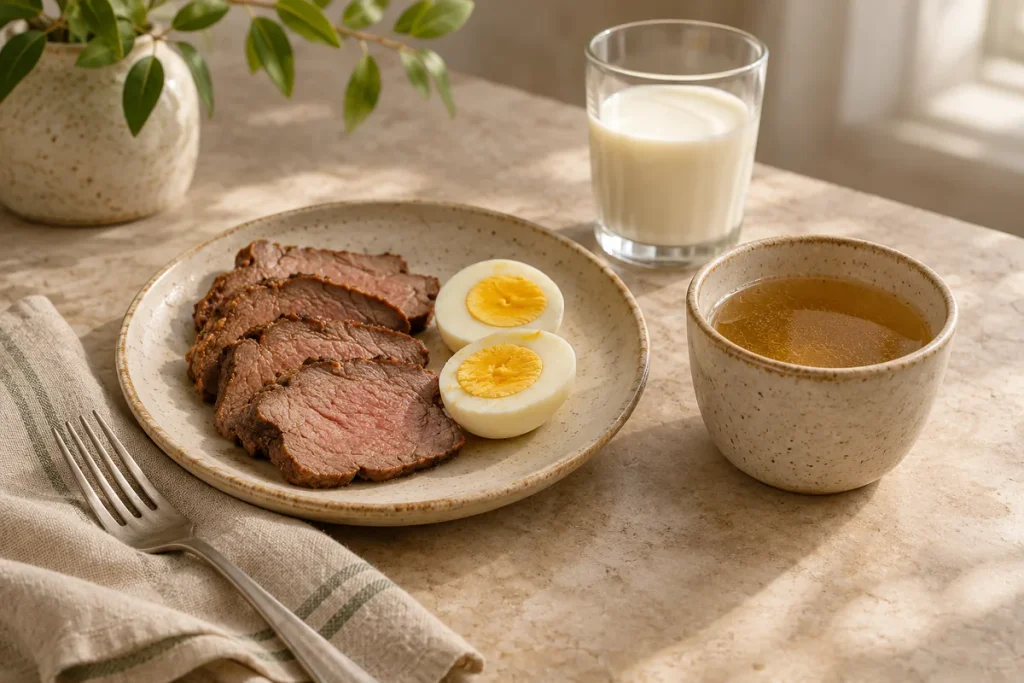
Both whey and bone broth protein can fit an animal-based diet, although they represent different parts of the animal-food spectrum. Whey comes from milk and supplies complete protein, while bone broth protein comes from bones and connective tissues and provides more collagen-related amino acids. If you eat dairy and want muscle-focused protein, whey is the stronger choice, whereas bone broth offers a dairy-free, nose-to-tail-oriented alternative for a different goal.
The deciding factor is the role you want the powder to play. Whey is a strong choice when your priority is complete protein and muscle support, while bone broth can add collagen-rich amino acids without dairy when the formula is genuinely milk-free.
Is Bone Broth Protein the Same as Collagen Peptides?
Not necessarily. Bone broth protein describes a powder made from concentrated animal broth or connective tissues, while collagen peptides refers specifically to collagen broken down through hydrolysis. A broth protein may contain collagen-derived material, but its exact peptide composition depends on processing. Don’t transfer clinical results from a standardized collagen-peptide ingredient to a generic broth protein without showing they’re comparable.
That distinction becomes especially important when research claims enter the conversation. A clinical study of one branded collagen peptide preparation isn’t automatically evidence that an unrelated bone broth product produces the same outcome.
Is Powdered Bone Broth the Same as Homemade Bone Broth?
No. Homemade bone broth is a liquid food whose protein content depends on the bones, cooking time, concentration, and water used, whereas bone broth protein powder is processed to deliver a stated protein amount per serving. A cup of lightly prepared broth may provide much less protein than a scoop of concentrate. Check the actual nutrition facts before treating a mug and a powder serving as equivalent sources of protein.
That makes powders easier to measure than homemade broth, although it doesn’t make the homemade version less worthwhile as food. They’re simply different servings, even when they begin with the same animal tissues.

Can You Use Bone Broth Protein and Whey Together?
Yes, whey and bone broth protein can be used together because they contribute different amino-acid profiles. Whey supplies complete protein and leucine for muscle-focused goals, while bone broth protein adds collagen-associated amino acids such as glycine and proline. The combination hasn’t automatically been shown superior in a clinical trial, but it can fit a varied diet if the total servings make sense for your needs.
We think about the combination much as we think about eating muscle meat alongside connective-tissue-rich cuts. They contribute different amino-acid profiles, and including both is a choice about dietary variety rather than a claim of special synergy.
If muscle is your immediate priority, make sure most of your dietary protein comes from complete sources first. You can then decide whether the different amino-acid profile of bone broth protein adds something you actually want.
What Should Count Toward Your Daily Protein Goal?
All protein grams contribute to dietary intake, but collagen-heavy protein shouldn’t make up most of a muscle-focused protein target. Whey, meat, fish, and eggs supply more complete essential-amino-acid profiles than collagen-rich broth powders. Build the main part of your intake around those complete proteins, then use bone broth protein as a complementary source if you enjoy it.
For muscle-focused protein goals, get most of your intake from foods and powders that supply all the essential amino acids. Collagen-rich protein can then add variety without displacing the protein your muscles need. There’s no reason to prescribe a fixed percentage without evidence supporting that number.
The same principle applies to supplement labels. Read grams of protein per actual serving, not merely the weight of a scoop or an ingredient blend.
Which Protein Should You Take Around a Workout?
Whey is usually the more effective powder to use around a muscle-building workout because it provides leucine and all essential amino acids in a convenient serving. The total protein you eat across the day remains important, so you don’t need to force a shake into a narrow post-exercise window. If you choose bone broth protein instead, understand that its collagen-heavy profile doesn’t provide the same muscle-building amino-acid balance.
Bone broth protein isn’t a comparable substitute for maximizing muscle protein synthesis, although it may fit elsewhere in a diet for collagen-related nourishment. The best time for it depends more on your routine and total dietary pattern than on a universal rule about a ‘recovery window.’
How to Choose a Bone Broth Protein
Choose a bone broth protein by checking its animal source, grams of protein per serving, amino-acid profile when available, and added ingredients. A powder derived mostly from collagen-rich tissues may supply far less leucine than a muscle-focused product with the same total protein grams. If your goal is connective-tissue nutrition or dairy avoidance, that can be a good fit, but the label should make the tradeoff clear.
Check the ingredient list for flavorings, sweeteners, and dairy-derived components if you’re avoiding milk. Look for an amino-acid profile when available, as well as useful information about sourcing and quality testing. The label should tell you whether the protein has been hydrolyzed if the distinction matters to your goal.
Clinical claims deserve the same scrutiny as the ingredient list. A study of a specific collagen peptide preparation doesn’t automatically establish a joint benefit for a different bone broth powder. Look for evidence matching the ingredient you’re considering.
How to Choose Whey Protein
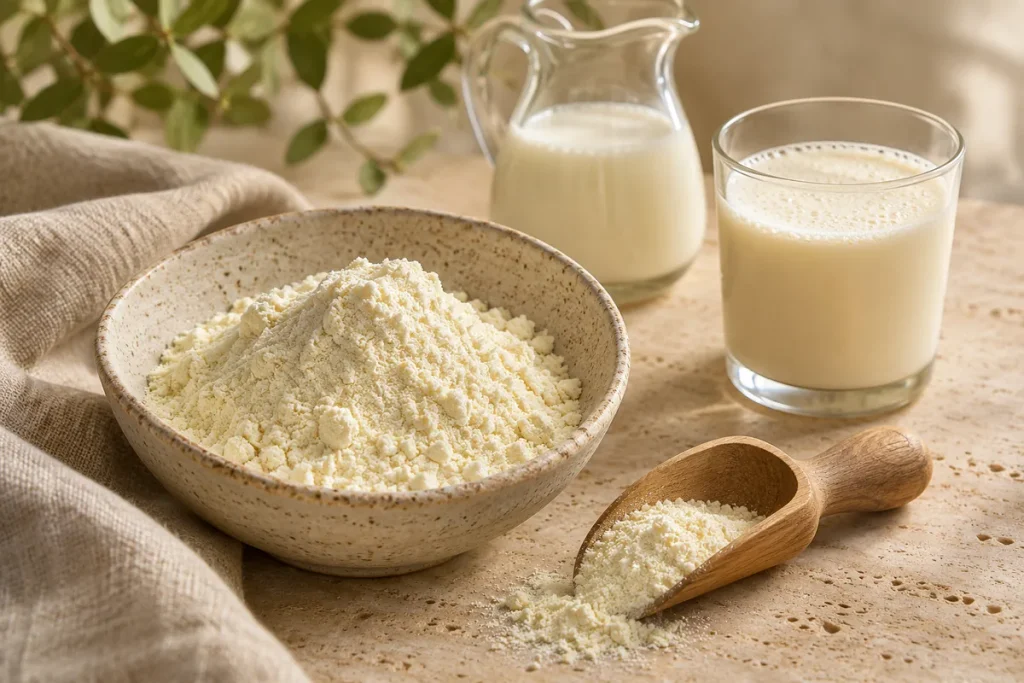
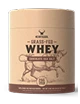
Choose whey based on whether you tolerate dairy, how much protein and leucine a serving provides, and whether you need a lower-lactose formulation. Concentrate generally retains more milk components, while isolate has less lactose and a higher percentage of protein, without being universally better for everyone. Our unflavored Grass-Fed Whey gives readers a simple single-ingredient option when they want complete protein without additional flavors.
If you tolerate dairy and want a simpler, less filtered option, concentrate may appeal. If lactose is a concern, isolate can be worth evaluating. Neither version is automatically superior for everyone, and people with a milk-protein allergy need to avoid whey regardless of lactose level.
Our unflavored Grass-Fed Whey is made with whey protein concentrate as its only listed ingredient. The product information lists 24 to 25 grams of complete protein and 2.5 grams of leucine per serving, making it a straightforward choice when muscle-focused protein is the priority. Those amounts refer to the labeled serving, not necessarily a single scoop.
Bone Broth Protein vs Whey: Which Should You Choose?
Choose whey if muscle protein synthesis and complete protein are your priorities, and consider bone broth protein if you’re looking for more collagen-associated amino acids or a dairy-free option. Their amino-acid compositions explain those differences rather than a simple healthy-versus-unhealthy ranking. Use the table below to find the closer fit, then check the specific product label for serving amounts and added ingredients.
| Your main goal | More direct fit |
| Building or maintaining muscle | Whey |
| Increasing complete protein | Whey |
| Adding glycine and proline | Bone broth or other collagen-rich protein |
| Avoiding dairy | Dairy-free bone broth, egg, or another suitable animal protein |
| Connective-tissue-oriented nourishment | Collagen-rich protein as a complement |
| A broad animal-based diet | Either, depending on the role |
| Combining muscle and collagen-related nutrition | Potentially both, without assuming special synergy |
Bone Broth Protein vs Whey: The Bottom Line
Whey is the more direct protein powder for building muscle because it supplies a complete, leucine-rich amino-acid profile. Bone broth protein is generally richer in collagen-associated amino acids and can complement the rest of an animal-based diet, especially when someone avoids dairy. Neither becomes a better choice by default: use complete protein for the bulk of muscle-related needs and collagen-rich protein for the additional nutritional role you’re actually seeking.
You can choose according to what your meals already provide. Someone eating enough meat, eggs, and dairy may not need a powder at all, while someone struggling to reach a muscle-focused protein goal might find whey convenient. If connective-tissue amino acids are the interest, check the actual composition of the bone broth product rather than assuming it’s identical to a clinically studied collagen peptide formula.
If you’d like to add a convenient protein without moving away from a food-first routine, here are two of our animal-derived options:
Explore complete dairy protein: View Grass-Fed Whey.
Compare animal-derived blends: See Animal-Based Protein.
Frequently Asked Questions About Bone Broth Protein vs Whey
Is bone broth protein better than whey?
Not universally. Whey is better suited to muscle protein synthesis because of its complete essential-amino-acid and leucine profile. Bone broth protein is typically richer in collagen-related amino acids such as glycine and proline.
Is bone broth protein or whey better for building muscle?
Whey is generally the stronger choice. It contains more essential amino acids and leucine, and human resistance-training research on whey and collagen-type proteins supports the importance of protein quality for muscle growth.
Is bone broth protein a complete protein?
Most collagen-rich bone broth proteins have a limited essential-amino-acid profile, particularly for tryptophan and leucine, and shouldn’t be relied on as the sole protein source. The exact formulation still matters.
Which is easier to digest, whey or bone broth protein?
It depends on the person and the formulation. Bone broth protein is generally dairy-free, while whey concentrate contains some lactose and isolate usually contains less. Lactose intolerance is not the same as milk-protein allergy.
Is bone broth protein good for joints?
It provides collagen-related amino acids found in connective tissues, but generic bone broth powder cannot automatically inherit clinical findings from specific collagen peptide or undenatured type II ingredients.
Can you take whey and bone broth protein together?
Yes. They supply different amino-acid profiles and can coexist in a diet. However, there is no universal need to combine them or direct evidence that every mixture produces superior results.
Does bone broth protein count toward daily protein?
Yes, although its essential-amino-acid profile is typically weaker than whey or complete animal foods. For muscle-focused diets, most protein should come from sources rich in all essential amino acids.
Subscribe to future articles like this:
