


Medical Disclaimer: This article is for informational purposes only and is not a substitute for professional medical advice, diagnosis, or treatment. Always consult your physician or another qualified healthcare provider before making changes to your diet or supplement routine.
Coconut water is a genuinely great drink. It’s naturally sweet, refreshing, and a real source of nutrition, not just marketing.
Here’s the part most labels don’t tell you: coconut water electrolytes only cover a fraction of what your body actually needs after exercise, a sauna session, or a hot day outside. There are seven major electrolytes your body relies on, and coconut water is strong in exactly one of them.
Key Takeaways
- Your body relies on six major electrolytes: sodium, potassium, calcium, magnesium, chloride, and phosphorus.
- Coconut water electrolytes include lots of potassium, but modest amounts of the rest.
- Sodium is the electrolyte you lose fastest and in the largest amount, whether the sweat comes from exercise, a sauna, or heat exposure.
- Heart & Soil Electrolytes blend keeps coconut water’s potassium and adds the sodium, magnesium, calcium, and chloride it’s missing.
Table of Contents
What Are the Major Electrolytes?
Your body relies on seven electrolytes, or charged minerals, to regulate fluid, nerve signals, and muscle function: sodium, potassium, calcium, magnesium, chloride, phosphate, and bicarbonate (1).
Bicarbonate is the outlier: your kidneys and lungs produce and regulate it internally, so it’s not something you get from a drink the way you get the other six.
Of the remaining six, five show up in meaningful amounts in sweat: sodium, potassium, chloride, magnesium, and calcium. Phosphate is well covered by a typical diet already.
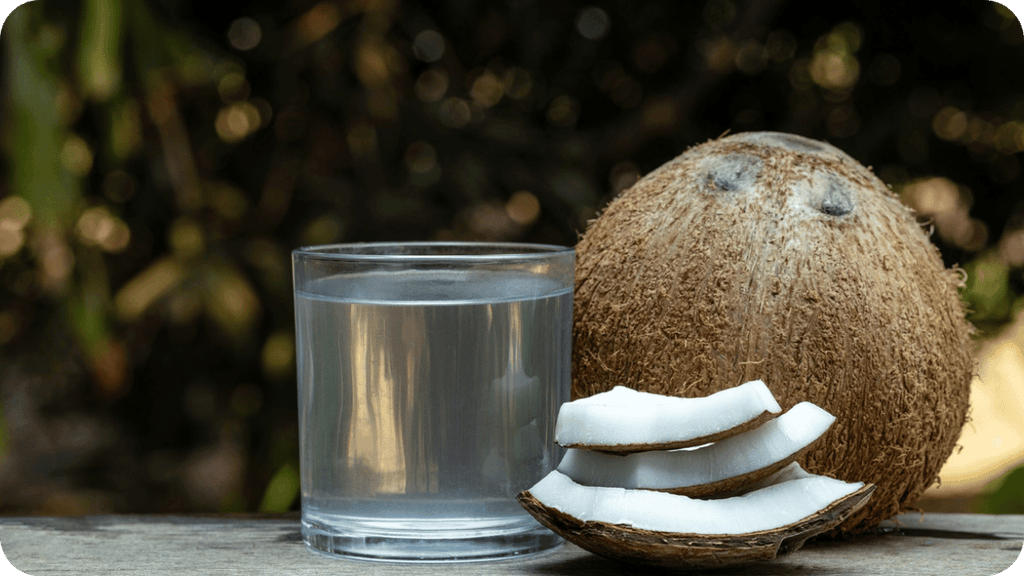
How Many of the 6 Does Coconut Water Electrolytes Actually Cover?
Coconut water just covers one electrolyte well.
Here’s how raw coconut water stacks up against the five electrolytes that actually matter for sweat replacement.
| Electrolyte | Amount in Coconut Water (per 100 g) | Covers Sweat Loss? |
|---|---|---|
| Potassium | 250 mg | Yes, strong |
| Sodium | 105 mg | No, far short |
| Magnesium | 25 mg | Partial |
| Calcium | 24 mg | Partial |
| Phosphate | 20 mg | Minor |
| Chloride | Not typically listed | No, negligible |
Why This Gap Matters After Exercise, Sauna, or Heat
Sodium is the electrolyte you lose fastest and in the largest amount, and that holds true whether the sweat comes from a workout, a sauna, or a hot afternoon outside (2).
Sauna sweat follows the same pattern. A typical dry sauna session can produce roughly 1,000 mg of sodium loss per hour, and sauna-induced sweat actually runs slightly higher in magnesium and calcium than exercise sweat does (3).
Passive heat exposure produces measurable shifts in fluid, electrolyte, and acid-base balance, not just water loss (4).
Reach for coconut water after any of these, and you’re replacing the one mineral you lost the least of, while barely touching sodium, the one you lost the most of.
How Does Heart & Soil Fill the Gap?
Heart & Soil’s Unsweetened blend starts with organic coconut water powder for potassium and natural carbohydrate, then adds what coconut water is missing:
- Premium low-heavy-metal salt for sodium and chloride
- Seawater for magnesium
- Bovine bone matrix (MCHA) for calcium and phosphorus
Raw Coconut Water vs. Heart & Soil Unsweetened
| Electrolyte | Raw Coconut Water (per 100ml) | Heart & Soil Unsweetened (per serving) |
|---|---|---|
| Sodium | 2 mg | 950 mg |
| Potassium | 204 mg | 330 mg |
| Magnesium | 6 mg | 175 mg |
| Calcium | 27 mg | 310 mg |
| Phosphorus | 5 mg | 42 mg |
| Chloride | Not listed | 1,816 mg |
Source: Yong et al., 2009, via ScienceDirect Topics, Table 26.1.
Potassium stays close to what coconut water provides on its own. Sodium, magnesium, calcium, and chloride all jump substantially, the four minerals plain coconut water leaves thin.
The natural carbohydrate intrinsic to the coconut water powder activates the SGLT1 transporter that pulls sodium and water in faster.
Magnesium comes from seawater rather than synthetic magnesium oxide, and calcium arrives paired with phosphorus in the same ratio found in bone.

Is Coconut Water Alone Enough During Exercise?
For light activity or casual daily sipping, plain coconut water is a perfectly reasonable choice.
For hard exercise, a long sauna session, or heavy sweating in heat, sports-medicine guidance recommends roughly 460 to 690 mg of sodium per liter of replacement fluid (5). A single cup of coconut water doesn’t come close to that on its own.
If you’re reaching for coconut water specifically to rehydrate after real sweat loss, pairing it with an added sodium source, or switching to a formula that already includes one, closes the gap plain coconut water leaves open.
Be First to Try Heart & Soil Electrolytes
Join the waitlist to be the first to know when they launch.
Glossary
- Electrolyte: A mineral that carries an electric charge in body fluid.
- MCHA: Microcrystalline hydroxyapatite, a bioavailable bone-derived source of calcium and phosphorus.
- SGLT1: An intestinal transporter that pairs sodium with glucose to speed water absorption.
- Chloride: The major extracellular anion, paired with sodium as table salt, that helps regulate fluid balance and acid-base equilibrium.
FAQ: Coconut Water Electrolytes
How many electrolytes does the human body need? Seven in total, though bicarbonate is regulated internally by your kidneys and lungs, not something you drink. Diet and hydration realistically need to cover the other six, and sodium, potassium, chloride, magnesium, and calcium matter most for sweat replacement.
Does coconut water cover all seven electrolytes? No. It’s strong in potassium and modest to thin on sodium, magnesium, calcium, and chloride.
Does sauna use deplete electrolytes the same way exercise does? Largely yes, sodium loss dominates in both, though sauna sweat runs slightly higher in magnesium and calcium than exercise sweat.
Why is coconut water so low in sodium? It’s a natural characteristic of the plant fluid; coconut water is potassium-dominant by composition, not sodium-dominant like sweat or blood plasma.
Related Reading
- Electrolytes for Fasting: 5 Reasons They’re Valuable
- Best Electrolyte Powder: 5 Powerful Things to Look For
- Electrolyte Imbalance: Signs to Pay Attention To
The Bottom Line
Coconut water is a genuinely good drink and a healthy option for hydration.
But your body needs several electrolytes working together, not one standout mineral, especially after exercise, a sauna session, or a hot day.
Heart & Soil’s Unsweetened blend keeps what coconut water does well and adds what’s short: sodium, magnesium, calcium, and chloride, in a formula built to match what sweat actually takes.
Subscribe to future articles like this:
