


Pollen gets the blame. But the real causes go much deeper than what is floating in the air.

If you ask most people what causes seasonal allergies, the answer is simple: pollen. Ragweed, grass, tree pollen. The stuff floating in the air every spring and fall. Your body reacts to it and you get symptoms.
That answer is not wrong. But it is incomplete in a way that matters. Pollen is the trigger. It is not the cause. The distinction changes everything about how you think about treatment and prevention.
The Question Nobody Asks
If pollen causes seasonal allergies, why does it only affect some people? And why are rates increasing so dramatically?
In 1819, a physician named John Bostock documented one of the first formal cases of hay fever and could only find 28 other cases in all of England. Today, 30% of adults are affected. The pollen has not changed. Human immune systems have.
And here is the observation that should make you reconsider the “pollen causes allergies” framing entirely: in the 1870s, Charles Blackley noted that farmers who spent their lives surrounded by pollen almost never developed hay fever. The condition was concentrated in cities. Something about modern living was making immune systems react to a substance they had coexisted with for hundreds of thousands of years.
Read the full history: Seasonal Allergies Are a Modern Problem
What Actually Causes the Reaction
The real answer to what causes seasonal allergies involves several systems working together (or failing to). Think of your immune system like a campfire. When the fire is well managed, pollen comes and goes without incident. But modern life keeps adding fuel. Processed foods. Seed oils. Chronic stress. Poor sleep. Over time, the fire grows beyond the pit. Now when pollen arrives, it is hitting an immune system that is already overreacting to everything. That is what seasonal allergies actually are. Not a pollen problem. A fire that was already burning too hot.
Here are the specific systems that determine whether your fire stays contained or burns out of control.
FREE DOWNLOAD
Your Seasonal Allergy Action Plan
The foods, nutrients, and lifestyle steps to start building a stronger foundation before pollen season peaks. One printable page. Zero guesswork.
Th2 Immune Dominance
Your immune system has different operating modes. When the mode responsible for responding to parasites and extracellular threats (Th2) becomes dominant over the modes that handle other threats and maintain balance, your body starts treating harmless substances like pollen as if they were dangerous invaders. This Th2 skew is the master switch. Without it, pollen exposure does not lead to allergic sensitization.
Th2 dominance does not happen overnight. It develops gradually as the factors below accumulate over months and years. By the time you notice seasonal allergy symptoms, the skew has been building for a long time.
Barrier Dysfunction
Your gut lining, nasal passages, skin, and airways are supposed to keep allergens out. When these barriers weaken (from processed foods, emulsifiers, seed oils, and nutrient deficiencies), allergens penetrate deeper and reach immune cells more easily. Barrier breakdown does not just happen in one place. All epithelial surfaces are connected, which is why allergic conditions often progress from gut issues to eczema to rhinitis to asthma over time. Researchers call this progression the allergic march.
Your gut barrier is ground zero for immune regulation.
Uncut Colostrum
Colostrum Powder in Its Purest Form

- Supports gut health, immunity, and exercise recovery
- 100% grass-fed, pasture-raised colostrum
- Third-party tested for biological activity
60-day risk-free guarantee. No questions asked.
Impaired Histamine Clearance
Your body has a built-in system for clearing histamine: an enzyme called DAO. When DAO activity is low (because its cofactors, copper and B6, are depleted, and because we no longer eat kidney, the richest source of DAO), histamine accumulates and symptoms persist long after pollen exposure ends. More on DAO and why it matters.
Daily Nourishment for Seasonal Wellness
Strategic Immune Support
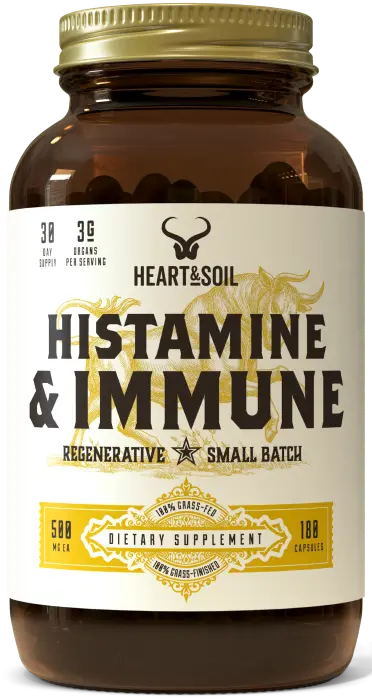
- Grass-fed thymus, lung, spleen, liver, and kidney
- Contains diamine oxidase (DAO) to aid histamine metabolism
- Helps your body respond naturally and stay resilient
60-day risk-free guarantee. No questions asked.
Reduced Microbial Diversity
Your gut microbiome trains the regulatory T cells (Tregs) that keep your immune system from overreacting. When microbial diversity drops (from antibiotics, processed food, excessive hygiene, and lack of environmental exposure), Treg function declines and the immune system loses its ability to say “stand down, this is not a threat.” This is the scientific basis of the hygiene hypothesis and explains why Blackley’s farmers, surrounded by soil microbes, were protected.
Seed Oil Consumption
This one deserves its own section because of how directly it affects the allergic response. Seed oils (canola, soybean, corn, sunflower, safflower) load cell membranes with arachidonic acid, an omega-6 fatty acid. When mast cells with arachidonic acid-loaded membranes degranulate, they produce more prostaglandins and leukotrienes, the inflammatory mediators that drive the late phase response and make symptoms worse and longer-lasting. The average American diet now contains dramatically more omega-6 from seed oils than at any point in human history. This directly primes mast cells for more aggressive inflammatory responses. More on seed oils and what to eat instead.

Chronic Stress and Cortisol
Cortisol directly promotes Th2 immune differentiation. This is not a secondary factor or a vague “stress is bad for you” claim. Elevated cortisol literally shifts the immune system toward the pattern that drives allergic sensitization. Chronic stress, poor sleep, overtraining, and alcohol all keep cortisol elevated. And cortisol also depletes magnesium and zinc, both of which are critical for mast cell stability. So stress simultaneously pushes the immune system toward overreaction and removes the nutrients that keep mast cells from firing inappropriately.
Nutrient Depletion
The nutrients that support immune regulation, barrier integrity, and histamine clearance (retinol, zinc, copper, vitamin D, magnesium, B vitamins) are concentrated in organ meats. They have been systematically removed from the modern diet as organ consumption has declined. The result is an immune system that lacks the raw materials to regulate itself.
See which foods make it worse and which help.
Why This Reframe Matters
If pollen is the cause, your only options are to avoid it or block symptoms. If the real cause is immune dysregulation driven by barriers, gut health, nutrition, stress, and microbial diversity, then you have multiple leverage points. You can actually influence the system that determines whether your body overreacts.
That is not a theory. It is the logical conclusion of the research. And it is the basis of every recommendation in our Ultimate Guide to Seasonal Allergies.
Allergies Stack
Nature's Shield Against Allergies
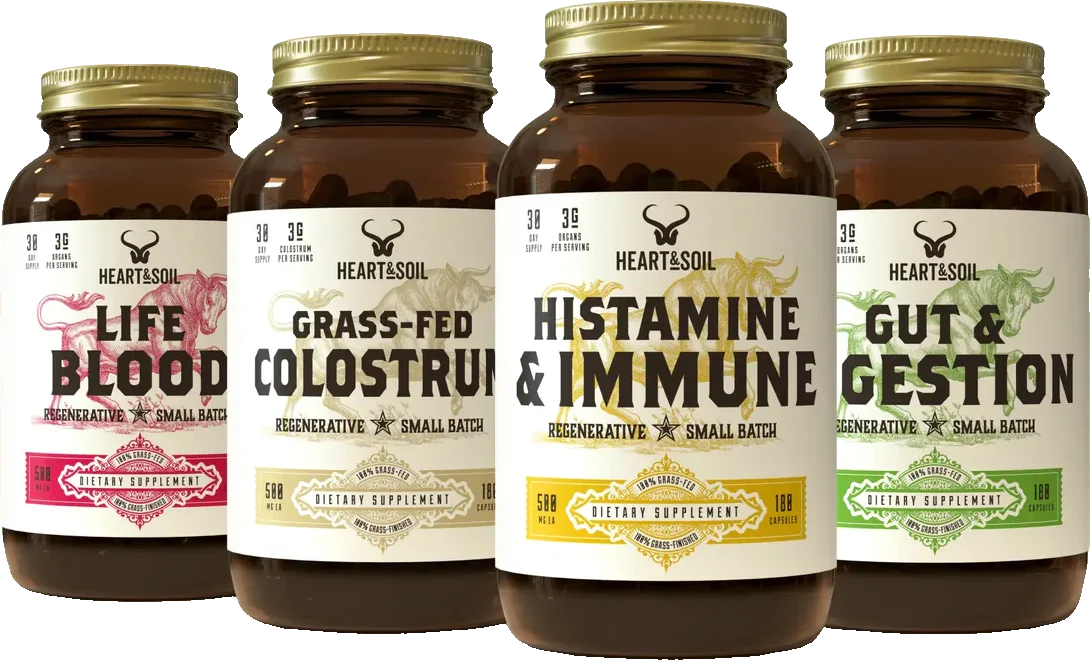
- Bioavailable nutrients from grass-fed organs and colostrum
- Helps fight inflammation and strengthen the immune response
- 100% allergen, pesticide, and GMO-free
60-day risk-free guarantee. No questions asked.
These statements have not been evaluated by the Food and Drug Administration. These products are not intended to diagnose, treat, cure, or prevent any disease.
Subscribe to future articles like this:
