
Why seasonal allergies happen, what antihistamines are missing, and how to build a stronger foundation with whole-food nutrition and lifestyle.

If you are looking for natural remedies for seasonal allergies that go beyond antihistamines and nasal sprays, you are in the right place. You already know the routine. Spring arrives. The sneezing starts. You reach for an over-the-counter pill and wait for it to kick in. Some days it helps. Some days it barely makes a dent. And every year, the cycle repeats.
Most of what you read about seasonal allergies focuses on managing symptoms. Take this pill. Try that nasal spray. Avoid going outside when the pollen count is high.
This guide takes a different approach. We are going to look at what is actually happening inside your body when you react to pollen. We are going to explore why seasonal allergies barely existed 200 years ago and now affect 30% of adults. And we are going to walk through the research-backed, whole-food strategies that target the root of the problem rather than just covering up the symptoms.
Whether you have been dealing with seasonal allergies for years or just started noticing them recently, this guide will help you understand what is driving the problem and what you can do about it.
What You Will Find in This Guide
01 — The Reframe: Why This Is Not a Pollen Problem
02 — A Disease That Barely Existed 200 Years Ago
03 — What Is Actually Happening Inside Your Body
04 — The Fire That Was Already Burning
05 — The Barriers Your Body Depends On
06 — Histamine and the Enzyme Most People Have Never Heard Of
07 — Foods That Make It Worse and What to Eat Instead
08 — Natural Remedies for Seasonal Allergies: What You Can Do Right Now
09 — The Seasonal Allergy Protocol
10 — Frequently Asked Questions

The Reframe: Why This Is Not a Pollen Problem
Here is the most important thing to understand about seasonal allergies: pollen is the trigger, but it is not the cause.
Think of your immune system like a campfire. When the fire is well managed and your nutrition, gut health, and stress levels are in good shape, pollen comes and goes without incident. Your body handles it the way it was designed to.
But modern life keeps adding fuel to the fire. Processed foods. Seed oils. Chronic stress. Poor sleep. Nutrient gaps from diets built on muscle meat and packaged food. Over time, the fire grows. It spills out of the pit. And now when pollen arrives, it is not landing on a controlled flame. It is hitting an immune system that is already overreacting to everything.
That is what seasonal allergies actually are. Not a pollen problem. A fire that was already burning too hot.
The good news? The state of the fire is something you can influence. And that is what this guide is about.
FREE DOWNLOAD
Your Seasonal Allergy Action Plan
The foods, nutrients, and lifestyle steps to start building a stronger foundation before pollen season peaks. One printable page. Zero guesswork.
A Disease That Barely Existed 200 Years Ago
In 1819, a London physician named John Bostock presented a paper to the Royal Medical and Chirurgical Society describing a peculiar condition he had been suffering from. Recurring sneezing, watery eyes, and respiratory distress that appeared every summer and vanished every fall. He called it “summer catarrh.” His original case report, documented in the medical literature, is one of the earliest formal descriptions of hay fever.
Bostock searched for other cases. In all of England, he could find only 28.
By 1873, another physician named Charles Blackley had identified pollen as the trigger. But he noticed something puzzling. Farmers who spent their entire lives surrounded by enormous quantities of pollen almost never developed hay fever. The condition was concentrated in cities and among the educated classes.
For most of human history, seasonal allergies essentially did not exist. The pollen was always there. Human immune systems handled it without issue for hundreds of thousands of years.
Today, roughly 30% of adults deal with seasonal allergies. And 25% of people have symptoms that persist year-round, not just in spring.
What changed was not the pollen. What changed was us. Our diets. Our gut health. Our relationship with microbes. Our stress levels. Our nutritional status. The modern environment has systematically undermined the immune regulation systems that once kept the fire contained.
Want the full historical deep dive? Read: Seasonal Allergies Are a Modern Problem
What Is Actually Happening Inside Your Body
When most people think about allergies, they think about sneezing and congestion. But the allergic response is a multi-stage cascade that involves your barriers, your immune cells, your mast cells, and your body’s ability to clear histamine. Understanding these stages changes how you think about treatment.
Stage 1: Sensitization
The first time your body encounters a specific allergen like ragweed pollen, it should not cause any symptoms. But if your immune system is skewed toward a pattern called Th2 dominance (more on that below), your naive T cells differentiate into Th2 cells instead of maintaining balance. These Th2 cells signal B cells to produce a specific antibody called IgE. That IgE then attaches to mast cells throughout your body and waits.
This is the priming step. No symptoms yet. But your immune system has now built a hair trigger for that specific allergen.
Stage 2: The Early Phase Response (0 to 30 minutes)
The next time that allergen shows up, it binds to the IgE antibodies sitting on your mast cells. The mast cells degranulate, which means they release their contents into the surrounding tissue. The primary molecule released is histamine.
Histamine causes the symptoms you know: sneezing, itching, runny nose, watery eyes, congestion. This is the early phase, and it happens within minutes of exposure.
This is also the only phase that antihistamines address. They block histamine receptors so you feel fewer symptoms during this window. But the cascade does not stop here.
Stage 3: The Late Phase Response (4 to 12 hours)
Hours after the initial reaction, a second wave of inflammation arrives. Your immune system recruits eosinophils, neutrophils, and additional inflammatory mediators to the area. This late phase causes the symptoms that linger and intensify throughout the day: nasal congestion that will not clear, sinus pressure, fatigue, brain fog, and tissue damage that makes your mucous membranes more reactive over time.
Antihistamines do very little for this phase because the late phase is driven by inflammatory cells, not histamine alone. This is why so many people feel like their allergy medication “stops working” as the day goes on. It was never addressing the full picture.
Related reading: The Best Medicine for Seasonal Allergies Is Whole Foods
Allergies Stack
Nature's Shield Against Allergies
- Bioavailable nutrients from grass-fed organs and colostrum
- Helps fight inflammation and strengthen the immune response
- 100% allergen, pesticide, and GMO-free
60-day risk-free guarantee. No questions asked.
The Fire That Was Already Burning: Th2 Dominance
If the allergic cascade is the explosion, Th2 dominance is the powder keg.
Your immune system has different modes. Th1 cells handle intracellular pathogens like viruses. Th2 cells handle extracellular threats like parasites. Regulatory T cells (Tregs) act as the referees, keeping both sides in check so neither overreacts.
In a healthy immune system, these are balanced. Pollen arrives and the Tregs say “stand down, this is not a threat.” No reaction.
But when the immune system is skewed toward Th2 dominance, the Tregs are suppressed and the Th2 response is amplified. Now pollen triggers a full immune mobilization as if it were a dangerous parasite. IgE production goes up. Mast cells become more reactive. The whole system is primed to overreact.
What Drives Th2 Dominance?
This is where modern life enters the picture. Several factors consistently push the immune system toward Th2 skew:
Chronic inflammation and leaky gut. When the gut barrier is compromised, partially digested food proteins and bacterial components leak into the bloodstream. The immune system mounts a response, and over time that response skews toward Th2. Your gut and your allergies are more connected than you think.
Chronic stress and elevated cortisol. Cortisol directly promotes Th2 differentiation over Th1. It also depletes magnesium and zinc, which are both critical for mast cell stability and immune regulation. Poor sleep, overtraining, alcohol, and chronic anxiety all elevate cortisol.
Reduced microbial diversity. Your gut microbiome plays a central role in training Treg cells. When microbial diversity drops (from antibiotics, processed food, or lack of environmental exposure), butyrate production decreases and Treg function suffers. This is the core of the hygiene hypothesis and why Blackley’s farmers, surrounded by microbes and soil, rarely developed allergies.
Nutrient gaps. Vitamin D supports Treg differentiation. Zinc stabilizes mast cells and supports immune balance. B vitamins are required for proper immune cell function. These nutrients are concentrated in organ meats and have been systematically removed from the modern diet.
Genetic predisposition. About 25% of the population carries HLA-DR gene variants that double the tendency toward allergic sensitization. You cannot change your genetics, but you can change the environment your genetics are operating in. A genetic predisposition does not become a clinical allergy without the environmental triggers listed above.

The Barriers Your Body Depends On
When people hear “leaky gut,” they usually think it only applies to digestion. But every epithelial surface in your body can become permeable. Your gut lining. Your nasal passages. Your skin. Your airways. And these surfaces are all connected.
The progression from one compromised barrier to another has a name in allergy research: the allergic march. It typically starts with gut dysfunction in infancy, progresses to eczema (skin barrier), then to allergic rhinitis (nasal barrier), and finally to asthma (airway barrier). Each stage represents a new epithelial surface losing its integrity.
The Gut Barrier
Approximately 70% of your immune system resides in gut-associated lymphoid tissue, or GALT. This makes the gut the single most important barrier for immune regulation. When tight junctions in the gut lining break down, the immune system is exposed to a constant stream of triggers, and the resulting chronic low-grade inflammation drives the Th2 skew that primes you for allergies.
Emulsifiers commonly found in processed foods (polysorbate 80, carboxymethylcellulose, carrageenan) directly damage these tight junctions. Seed oils promote inflammation in the gut lining. And a lack of microbial diversity means fewer short-chain fatty acids like butyrate to nourish the gut epithelium.
Read more: Your Gut and Your Allergies Are Connected
The Nasal Barrier
Your nasal epithelium is the first surface pollen contacts. When this barrier is strong, pollen is trapped in mucus and cleared before it ever reaches immune cells. When it is weak, allergens penetrate deeper and trigger the sensitization process directly. Retinol (vitamin A) and zinc are the primary nutrients that maintain nasal epithelial integrity and tight junction function.
Why This Matters for Treatment
If your barriers are compromised, blocking one histamine receptor with an antihistamine is like putting a bandage on a dam that is leaking from multiple cracks. The water (allergens, immune triggers, inflammation) keeps getting through. Strengthening the barriers themselves changes the equation at the source.
Histamine and the Enzyme Most People Have Never Heard Of
Everyone knows histamine as the molecule that causes allergy symptoms. Fewer people know that your body has a dedicated system for clearing it.
The enzyme is called diamine oxidase, or DAO. It is your body’s primary mechanism for breaking down extracellular histamine. DAO is produced in several tissues, but the highest concentration is found in the kidneys.
Here is what makes this relevant to seasonal allergies: DAO requires specific cofactors to function. It needs copper. It needs vitamin B6. When these cofactors are low, DAO activity drops and histamine accumulates even after the initial allergic trigger has passed.
The Double Burden
Modern life creates a situation where histamine production increases while histamine clearance decreases simultaneously.
On the production side: Th2 dominance means more IgE, more mast cell activation, and more histamine release. Unstable mast cells (from low magnesium, low vitamin D, and arachidonic acid-loaded membranes from seed oil consumption) degranulate more easily and more frequently.
On the clearance side: DAO cofactors (copper, B6) are depleted. Kidney, one of the richest sources of DAO, has been removed from the modern diet. Dietary histamine from aged cheeses, wine, fermented meats, and leftovers adds to the load.
The result is a system that is both overproducing histamine and unable to clear it. Antihistamines block one receptor type during one phase of the response. They do not reduce production. They do not increase clearance. They do not address the underlying imbalance.
Deep dive: DAO: The Enzyme That Clears Histamine
Mast Cell Stability
Beyond DAO and clearance, the stability of your mast cells determines how easily they release histamine in the first place.
Mast cells have vitamin D receptors. When vitamin D is low, mast cells are more likely to degranulate randomly, even without an allergen trigger.
Magnesium controls the calcium gate on mast cells. Calcium flowing into the cell triggers degranulation. Magnesium maintains the electrical gradient that keeps that gate closed. When magnesium is low (and it is depleted by stress, alcohol, and poor sleep), the gate opens too easily.
Zinc contributes to membrane stability. And seed oils load mast cell membranes with arachidonic acid, an inflammatory fatty acid that primes the cell to release its contents more aggressively when triggered. Reducing seed oil consumption and increasing omega-3 intake directly affects how reactive your mast cells are.
Daily Nourishment for Seasonal Wellness
Strategic Immune Support
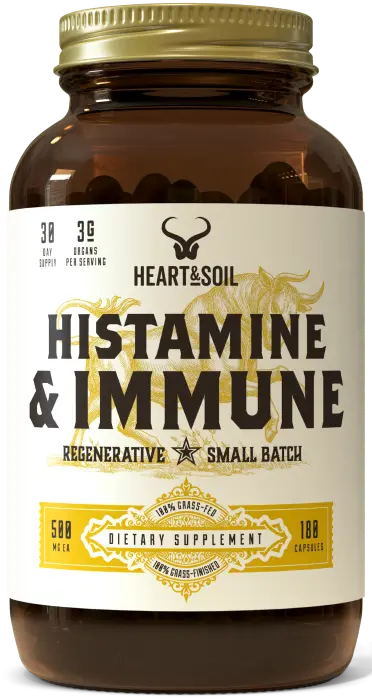
- Grass-fed thymus, lung, spleen, liver, and kidney
- Contains diamine oxidase (DAO) to aid histamine metabolism
- Helps your body respond naturally and stay resilient
60-day risk-free guarantee. No questions asked.
Foods That Make It Worse and What to Eat Instead
What you eat has a direct impact on barrier integrity, mast cell stability, immune balance, and histamine clearance. This is not general wellness advice. Each suggestion below maps to a specific mechanism in the allergic cascade.
What to Remove
Seed oils (canola, soybean, corn, sunflower, safflower). These oils load cell membranes with arachidonic acid, which is converted into prostaglandins and leukotrienes that amplify the allergic response. Seed oils are the single highest-leverage removal for mast cell stability. Check labels on sauces, dressings, and packaged foods. Cook with butter, ghee, tallow, or olive oil instead.
Processed foods and emulsifiers. Emulsifiers directly damage gut tight junctions. Processed foods compound barrier dysfunction across every epithelial surface. If it comes in a package with an ingredient list you cannot pronounce, it is probably working against you.
High-histamine foods during active flares. Aged cheeses, wine, beer, fermented meats, vinegar-based condiments, and leftovers (histamine builds as food sits). You do not need to avoid these year-round, but during active symptom periods, reducing dietary histamine gives your DAO system breathing room.
What to Add
Organ meats. Liver provides retinol for epithelial barriers, zinc for mast cell stability, copper for DAO function, and the full B-complex for immune regulation. Kidney is the richest known source of DAO. Thymus, spleen, and lung provide peptides that support immune cell differentiation and mucosal defense. If you are not eating organs regularly, a nose-to-tail supplement like Histamine & Immune puts all five in one capsule.
Fatty fish and omega-3 sources. Salmon, sardines, mackerel, and pastured egg yolks. Omega-3s counterbalance the arachidonic acid buildup from seed oils and support the resolution of inflammation.
Bone broth. Rich in glycine, proline, and glutamine, which support gut barrier repair and reduce intestinal permeability.
Grass-fed colostrum. Provides immunoglobulins (IgG), lactoferrin, and growth factors that provide nutritive support for gut epithelial integrity. Proline-rich peptides support healthy immune function. Research suggests colostrum supplementation may support a balanced response to environmental allergens.
Vitamin D, magnesium, and zinc-rich foods. Fatty fish, egg yolks, and organ meats for vitamin D. Bone broth, dark chocolate, and leafy greens for magnesium. Oysters, red meat, and liver for zinc. These three nutrients directly affect mast cell behavior, Treg function, and barrier integrity.
For the complete breakdown: Foods That Make Seasonal Allergies Worse (And What to Eat Instead)
Allergies Stack
Nature's Shield Against Allergies
- Bioavailable nutrients from grass-fed organs and colostrum
- Helps fight inflammation and strengthen the immune response
- 100% allergen, pesticide, and GMO-free
60-day risk-free guarantee. No questions asked.
Natural Remedies for Seasonal Allergies: What You Can Do Right Now
You do not have to overhaul your entire life at once. But if you want to build a stronger foundation before pollen season peaks, here is where to start.
Start 4 to 6 Weeks Before Your Symptoms Typically Begin
This is a priming approach, not instant relief. DAO cofactors need time to accumulate. Barrier nutrients need consistent intake to strengthen tight junctions. Immune balance shifts gradually. If your symptoms usually arrive in April, start in late February or early March. Mark it on your calendar and treat it like a seasonal practice.
How to Prepare Your Immune System Before Allergy Season
Nourish
Eat organ meats daily, whether whole food or supplemented. Support your gut barrier with bone broth and colostrum. Prioritize omega-3s over omega-6s. Get enough vitamin D, magnesium, and zinc. These are not optional extras. They are the raw materials your immune system needs to regulate itself properly.
Eliminate
Cut seed oils. Reduce processed foods and emulsifiers. Limit high-histamine foods during active flares. And address your stress load honestly. Cortisol is not a secondary factor. It directly drives the Th2 immune skew that makes allergies worse.
Move
Regular aerobic exercise (30 to 45 minutes, most days) directly modulates the leukotriene pathway involved in allergic inflammation. It lowers cortisol, improves sleep, supports gut microbiome diversity, and promotes the kind of parasympathetic nervous system activation that allows immune regulation to function. Walking, cycling, and swimming all count. Consistency matters more than intensity.
Get outside, even during pollen season. Morning and post-rain windows have lower pollen counts. Avoiding the outdoors entirely reinforces the sedentary pattern that worsens immune dysregulation. Practice nasal breathing during exercise to filter, warm, and humidify air before it reaches your lungs.
Build Long-Term Habits
Track your symptoms across seasons. Note what you are eating, your stress levels, sleep quality, and exercise consistency. Patterns emerge that help you refine your approach year over year. Invest in gut health year-round, not just during allergy season. The gut-immune axis does not take a season off.
The Seasonal Allergy Protocol
Every section of this guide points to the same pattern. Seasonal allergies are driven by barrier dysfunction, Th2 immune dominance, and impaired histamine clearance. Addressing these requires specific nutrients that are concentrated in organ meats and largely absent from the modern diet.
The Seasonal Allergy Protocol was designed to cover all three.
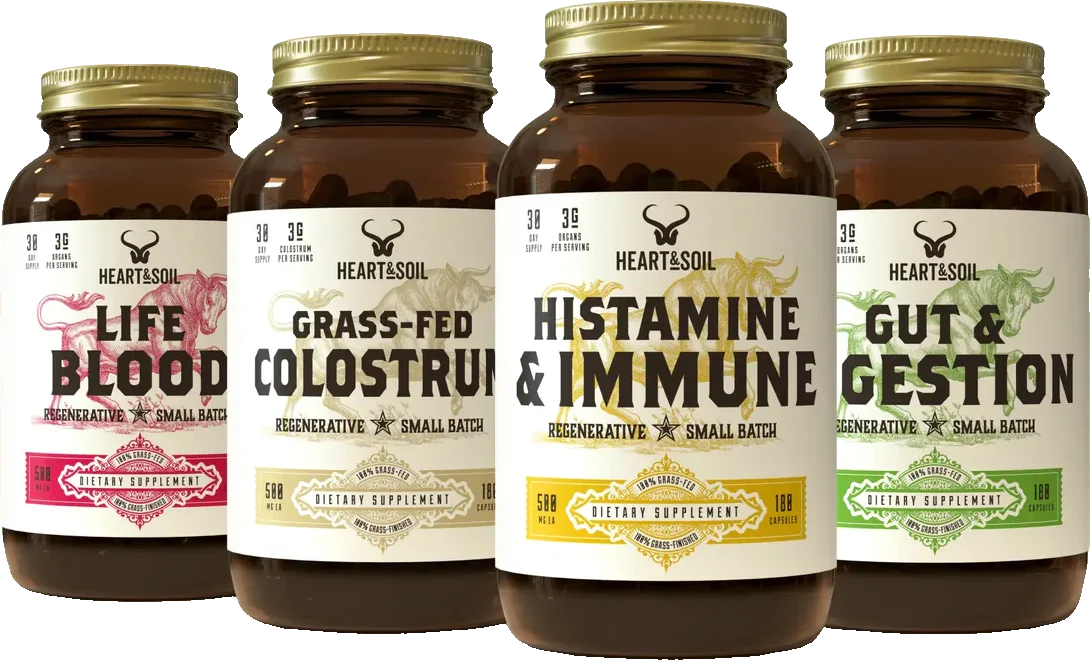
Histamine & Immune
A nose-to-tail blend of five organs, each chosen for a specific role in the allergic cascade:
Kidney: The highest known concentration of DAO (diamine oxidase), the enzyme that clears extracellular histamine. Also provides copper and B6, the cofactors DAO needs to function.
Thymus: Peptides that support T-cell differentiation and Treg function, helping shift immune balance away from Th2 dominance.
Liver: Retinol for epithelial barrier integrity. Zinc for mast cell stability and tight junction repair. Copper for DAO. The full B-complex for immune cell regulation.
Spleen: Tuftsin and splenic peptides for inflammation regulation.
Lung: Defensins and antimicrobial peptides that support mucosal defense in the airways.
Daily Nourishment for Seasonal Wellness
Strategic Immune Support
- Grass-fed thymus, lung, spleen, liver, and kidney
- Contains diamine oxidase (DAO) to aid histamine metabolism
- Helps your body respond naturally and stay resilient
60-day risk-free guarantee. No questions asked.
Grass-Fed Colostrum
With 70% of your immune system in your gut, barrier integrity starts here. Colostrum provides:
Immunoglobulins (IgG) that bind and neutralize pathogens and allergens in the gut before they trigger immune responses.
Lactoferrin with antimicrobial and anti-inflammatory properties that support gut barrier integrity.
Growth factors that promote epithelial cell repair and turnover in the gut lining.
Proline-rich peptides that modulate immune response. These are unique to colostrum and preserved in Heart & Soil’s processing.
Oligosaccharides that feed beneficial gut bacteria and support microbial diversity.
Uncut Colostrum
Colostrum Powder in Its Purest Form

- Supports gut health, immunity, and exercise recovery
- 100% grass-fed, pasture-raised colostrum
- Third-party tested for biological activity
60-day risk-free guarantee. No questions asked.
Build Your Stack
Start here: The Seasonal Allergy Bundle. Histamine & Immune plus Grass-Fed Colostrum. Nutritive support for barriers, immune balance, and histamine metabolism in two products.
Add the multiplier: Lifeblood. Blood, spleen, and liver. The full foundational nutrient stack. Additional retinol, zinc, copper, heme iron, B vitamins, and splenic peptides for comprehensive coverage.
Go all in: The Full Allergy Stack. Protocol plus Lifeblood plus Gut & Digestion. The comprehensive approach for severe or year-round symptoms.
Not sure which is right for you? Take the 60-Second Allergy Assessment for a personalized recommendation.
Allergies Stack
Nature's Shield Against Allergies
- Bioavailable nutrients from grass-fed organs and colostrum
- Helps fight inflammation and strengthen the immune response
- 100% allergen, pesticide, and GMO-free
60-day risk-free guarantee. No questions asked.
Frequently Asked Questions
How is this different from just taking an antihistamine?
Antihistamines block one histamine receptor during the early phase of the allergic response (the first 30 minutes). They do not address the late phase inflammatory response that causes lingering congestion, fatigue, and brain fog. They do not reduce histamine production. They do not improve histamine clearance. And they do not address the underlying immune dysregulation that makes you react to pollen in the first place. The natural remedies for seasonal allergies described in this guide target every stage of the cascade.
When should I start?
Four to six weeks before your symptoms typically begin. This is a priming approach. DAO cofactors, barrier nutrients, and immune balance need time to build. If your allergies usually arrive in April, start in late February or early March.
Can I take Histamine & Immune alongside my current allergy medication?
Histamine & Immune is a whole-food supplement, not a pharmaceutical. It provides the same nutrients you would get from eating organ meats. Many people take it alongside their existing allergy management approach. Always consult your healthcare provider before making changes to your regimen.
What is DAO and why does kidney matter?
DAO (diamine oxidase) is the enzyme responsible for breaking down extracellular histamine. It is your body’s natural histamine clearance system. Kidney tissue contains the highest known concentration of DAO, along with the copper and B6 cofactors it needs to function. This is why kidney is included in Histamine & Immune. Read the full DAO deep dive.
Why do some people have worse allergies than others?
Several factors. Genetic predisposition (HLA-DR variants affect about 25% of the population). Gut health and barrier integrity. Nutritional status, especially vitamin D, zinc, magnesium, and DAO cofactors. Stress load and cortisol levels. Microbial diversity. The full breakdown of what causes seasonal allergies.
Can seasonal allergies cause fatigue, nausea, or other unexpected symptoms?
Yes. The late phase inflammatory response and systemic Th2 activation can cause a wide range of symptoms beyond the typical sneezing and congestion, including fatigue, headaches, brain fog, nausea, skin reactions, and digestive issues. See the full symptom FAQ.
Do these principles apply to dogs too?
Dogs experience a remarkably similar IgE-mediated allergic response. The same principles of barrier integrity, immune balance, and nutritional support apply. Many Heart & Soil customers share their supplements with their dogs. Read our guide to seasonal allergies in dogs.
What if my allergies are year-round, not just seasonal?
Year-round symptoms suggest deeper barrier dysfunction and immune dysregulation, often driven by indoor allergens (dust mites, pet dander, mold) combined with gut health issues. The same foundational approach applies, but the Full Allergy Stack (which includes Gut & Digestion for deeper digestive support) may be more appropriate than the base Protocol alone.
Is this a replacement for medical treatment?
No. This guide is for educational purposes. The nutritional and lifestyle strategies described here are intended to support your body’s own regulatory systems, not to replace medical treatment. If you have severe allergies or asthma, work with your healthcare provider.
Keep Reading
The Best Medicine for Seasonal Allergies Is Not Medicine
What Actually Causes Seasonal Allergies
Your Gut and Your Allergies Are Connected
DAO: The Enzyme That Clears Histamine
Foods That Make Seasonal Allergies Worse (And What to Eat Instead)
Seasonal Allergies Are a Modern Problem
How to Prepare Your Immune System Before Allergy Season
Can Seasonal Allergies Cause Fatigue, Hives, Nausea? The Symptom FAQ
Seasonal Allergies in Dogs: What Every Owner Should Know
FREE DOWNLOAD
Your Seasonal Allergy Action Plan
The foods, nutrients, and lifestyle steps to start building a stronger foundation before pollen season peaks. One printable page. Zero guesswork.
These statements have not been evaluated by the Food and Drug Administration. These products are not intended to diagnose, treat, cure, or prevent any disease. The information provided is for educational purposes only and is not intended as medical advice. Consult your healthcare provider before making changes to your diet or supplement regimen.
Subscribe to future articles like this:
