

What if the most powerful thing you could do for allergy season started in your kitchen, not your medicine cabinet?
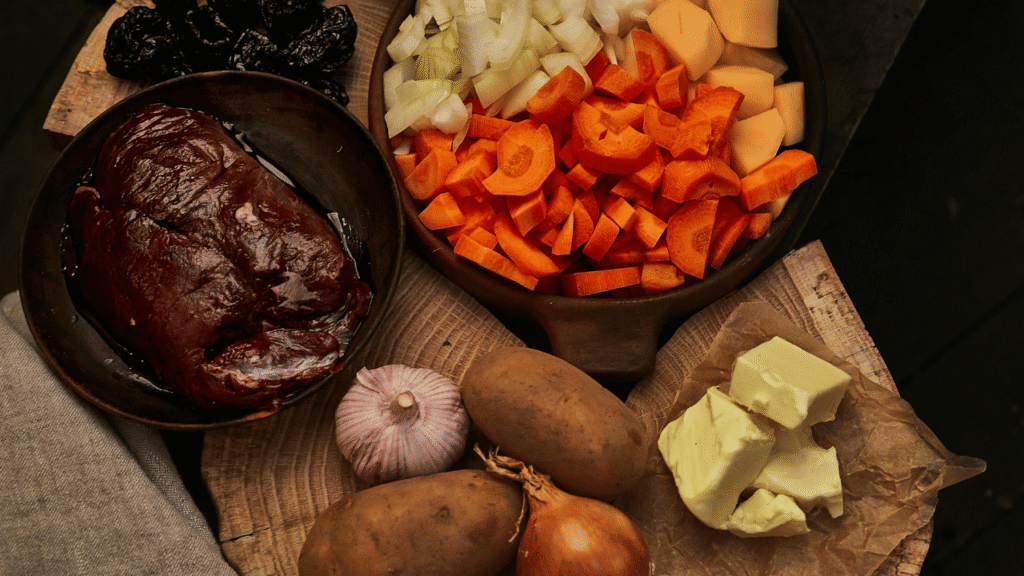
When people search for the best medicine for seasonal allergies, they usually expect a product recommendation. A pill, a spray, a supplement to add to the cart. And there are good options out there for managing symptoms when you need them.
But what if the most impactful thing you could do for allergy season is not something you take for 30 days? What if it is how you eat, how you move, how you sleep, and what you feed your body year-round?
That is the premise of this article. Not that you should throw away your allergy medication. But that whole foods and lifestyle changes can build a foundation that influences how your body responds to allergens in the first place. And that foundation is something no pill can replicate.
Why Food Matters for Seasonal Allergies
The allergic response involves multiple systems: your epithelial barriers (gut, nasal, skin, airways), your immune balance, your mast cell stability, and your body’s ability to clear histamine. Every one of these systems depends on specific nutrients to function properly.
When those nutrients are present in sufficient quantities, the systems work the way they are designed to. When they are absent, the systems break down and the body becomes more reactive to environmental triggers like pollen.
This is not a theory. It is basic physiology. Your immune cells require zinc, vitamin D, and B vitamins to differentiate and regulate properly. Your epithelial barriers require retinol and zinc to maintain tight junctions. Your histamine clearance enzyme (DAO) requires copper and B6 as cofactors. Your mast cells require magnesium to maintain the calcium gate that prevents inappropriate degranulation.
The question is not whether nutrition affects allergies. It is whether you are getting enough of the right nutrients to give your body what it needs.
What Modern Diets Are Missing
For most of human history, the nutrients listed above were abundant in the diet. Organ meats were dietary staples in every traditional culture. Liver, kidney, heart, thymus, and spleen provided concentrated sources of retinol, zinc, copper, B vitamins, and bioactive peptides that support immune regulation.
Today, the average diet is built on muscle meat, processed foods, and seed oils. Organ consumption has virtually disappeared. And the result is a population that is chronically low in exactly the nutrients that the immune system needs to regulate itself.
At the same time, modern diets have introduced compounds that actively work against immune regulation. Seed oils load cell membranes with arachidonic acid, which amplifies inflammatory responses. Emulsifiers in processed foods damage the gut barrier. Refined sugars and processed carbohydrates feed gut dysbiosis. The modern diet is simultaneously removing what helps and adding what hurts.
The complete food guide: what to eat and what to avoid for seasonal allergies.
The Nutrients That Support Immune Regulation
Here is what the research connects directly to the systems involved in the allergic response:
Retinol (Vitamin A). Maintains the integrity of epithelial barriers, including the nasal lining, gut lining, and skin. When retinol is low, barriers become permeable and allergens reach immune cells more easily. The richest dietary source is liver.
Zinc. Supports mast cell membrane stability, tight junction function in epithelial barriers, and overall immune cell regulation. Zinc deficiency is associated with increased allergic sensitization. Found in oysters, red meat, and liver.
Copper and Vitamin B6. Required cofactors for DAO (diamine oxidase), the enzyme that clears extracellular histamine. Without adequate copper and B6, histamine accumulates even after the initial allergic trigger has passed. Liver is the richest source of copper. More on DAO and why it matters.
Vitamin D. Supports regulatory T cell (Treg) differentiation, which is the immune mechanism that prevents overreaction to harmless substances. Mast cells also have vitamin D receptors, and low levels are associated with increased mast cell instability. Found in fatty fish, egg yolks, and produced through sun exposure.
Magnesium. Controls the calcium gate on mast cells. When magnesium is low, mast cells degranulate more easily. Depleted by stress, alcohol, and poor sleep. Found in bone broth, dark chocolate, leafy greens, and pumpkin seeds.
Omega-3 Fatty Acids. Counterbalance the pro-inflammatory effects of omega-6 fatty acids from seed oils. Omega-3s are incorporated into cell membranes and produce less inflammatory mediators when cells are activated. Found in fatty fish (salmon, sardines, mackerel) and pastured egg yolks.
FREE DOWNLOAD
Your Seasonal Allergy Action Plan
The foods, nutrients, and lifestyle steps to start building a stronger foundation before pollen season peaks. One printable page. Zero guesswork.
The Lifestyle Factors That Compound
Whole foods are the foundation, but they work best in combination with lifestyle practices that support the same systems.
Regular aerobic exercise. Research shows that consistent moderate exercise modulates the immune pathways involved in allergic inflammation. It lowers cortisol, supports gut microbiome diversity, and promotes parasympathetic nervous system function. Walking, cycling, and swimming all count. Consistency matters more than intensity.
Sleep. Sleep deprivation elevates cortisol, which promotes the Th2 immune skew that drives allergic sensitization. Seven to nine hours consistently is not a luxury recommendation. It is an immune regulation requirement.
Stress management. Chronic stress elevates cortisol, which directly promotes Th2 dominance, depletes magnesium and zinc, impairs gut barrier repair, and disrupts sleep. Addressing chronic stress removes fuel from the fire on multiple fronts simultaneously. More on what drives the allergic response.
Time outdoors. Sunlight for vitamin D production. Microbial exposure for immune training. Nature for stress reduction. The combination of these benefits is difficult to replicate with any single intervention.
Gut health. With 70% of the immune system in gut-associated lymphoid tissue, the health of your gut lining directly influences your immune regulation. Bone broth, colostrum, diverse whole foods, and the removal of barrier-damaging processed foods all support gut integrity. The gut-allergy connection explained.
Building the Foundation With Organ Meats
If you look at the nutrient list above, one food category covers almost every item: organ meats. Liver alone provides retinol, zinc, copper, B6, and the full B vitamin complex. Kidney provides the highest known concentration of DAO. Thymus provides peptides that support T cell regulation. Spleen and lung provide additional immune-supporting compounds.
This is why traditional diets that included organs regularly had dramatically lower rates of allergic disease. The nutrients were there. The immune systems had what they needed.
If eating organs daily sounds impractical, that is understandable. It is not how most people eat today. A nose-to-tail organ supplement can provide these nutrients in a convenient form. The Seasonal Allergy Protocol (Histamine & Immune plus Grass-Fed Colostrum) was designed to deliver the specific organ nutrients and gut barrier support that the research connects to immune regulation.
Allergies Stack
Nature's Shield Against Allergies
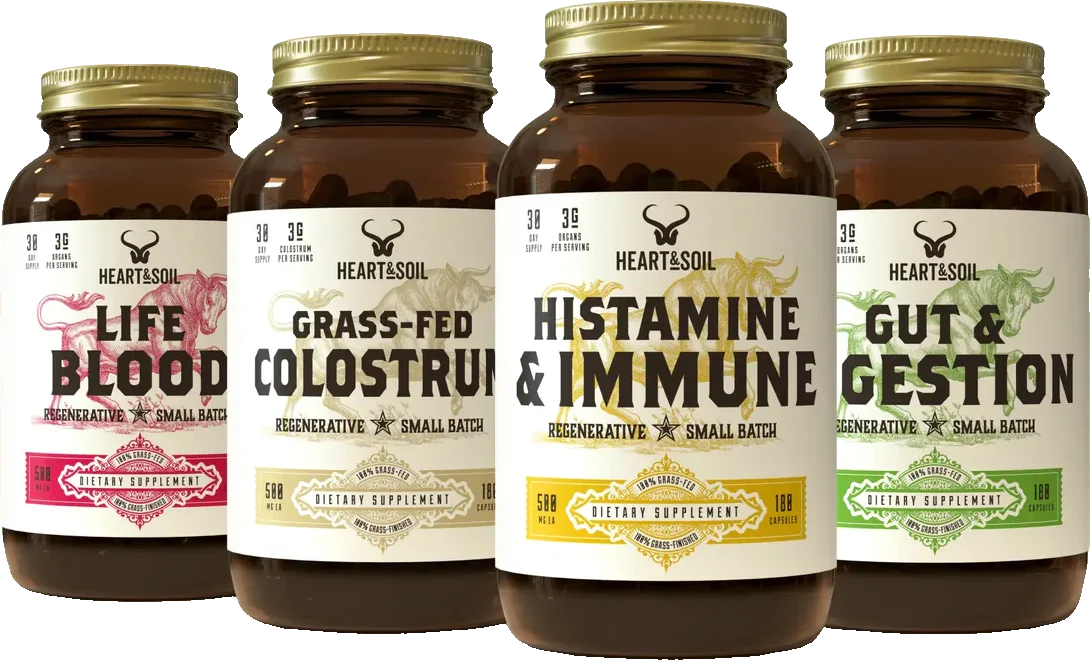
- Bioavailable nutrients from grass-fed organs and colostrum
- Helps fight inflammation and strengthen the immune response
- 100% allergen, pesticide, and GMO-free
60-day risk-free guarantee. No questions asked.
The Priming Approach
One important distinction between a whole-food foundation and a symptom-management approach: timing. Nutritional foundations take time to build. DAO cofactors need weeks to accumulate. Barrier nutrients need consistent intake to strengthen tight junctions. Immune balance shifts gradually, not overnight.
This is why we recommend starting 4 to 6 weeks before your symptoms typically begin. It is a priming approach. You are building the foundation before the demand arrives, not scrambling to construct it after the flood has started.
How to prepare your immune system before allergy season.
This Is Not Either-Or
Nothing in this article is a recommendation to stop any medication your doctor has prescribed. Whole foods and lifestyle are a foundation. They work alongside whatever else you and your healthcare provider decide is appropriate. How that foundation affects your seasonal experience over time is individual and something to discuss with your doctor.
But if you have been searching for the best medicine for seasonal allergies and all you have found is a list of pills, consider this: maybe the most powerful intervention is not a medicine at all. Maybe it is the food you eat every day, the way you move, how you sleep, and whether your body has the raw materials it needs to regulate itself.
That is a foundation worth building.
For the complete science and action plan: Read the Ultimate Guide to Seasonal Allergies.
These statements have not been evaluated by the Food and Drug Administration. These products are not intended to diagnose, treat, cure, or prevent any disease. The information provided is for educational purposes only and is not intended as medical advice.
Subscribe to future articles like this:
