
Open your pantry. There is a good chance that at least 3 of the 9 worst seed oils are already sitting on your shelf, doing more damage than the label admits.
This article ranks the worst seed oils for you, explains what makes each one a problem, and shows you exactly what to reach for instead.
Key Takeaways
- The worst seed oils for your health are ranked by linoleic acid content, topped by safflower and grapeseed at 70% each (1).
- Linoleic acid is an omega-6 polyunsaturated fat that oxidizes into aldehydes when heated (2). These oxidized compounds are linked to inflammation and cardiovascular strain in laboratory and human research (3).
- Frying research found sunflower and corn oil produce nearly double the toxic aldehydes of olive oil after 90 minutes of heat (4).
- Tallow, butter, ghee, and organ meats are stable, minimally processed swaps.
Table of Contents
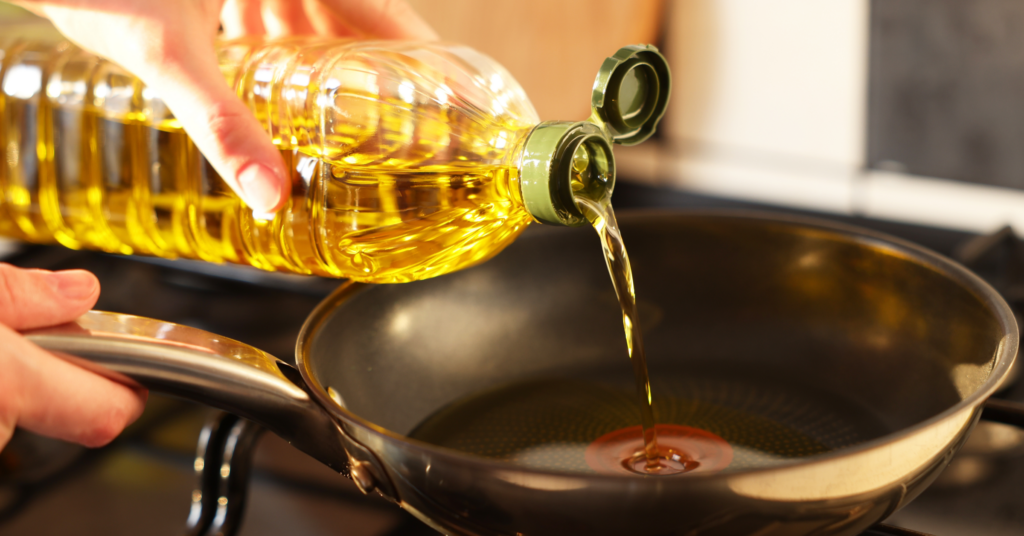
Why Do Seed Oils Matter to Your Health?
Seed oils are the primary source of linoleic acid in the Western diet (5). Linoleic acid is an omega-6 polyunsaturated fat that oxidizes into aldehydes when heated (6).
Dietary linoleic acid intake has climbed from roughly 2% to 3% of total calories a century ago to over 6% today, largely because seed oils replaced traditional animal fats in the food supply (7).
That shift matters because linoleic acid is chemically unstable, carrying 2 double bonds in its carbon chain. Researchers have measured that it degrades roughly 10 times faster than the oleic acid in olive oil or tallow (8).
When you heat an unstable fat, it breaks down. Heated linoleic acid forms aldehydes, reactive compounds including acrolein and 4-hydroxynonenal (4-HNE), studied for their role in oxidative stress on human cells (9). This is the mechanism behind most of the concern: not the fat itself, but what it becomes under heat.
What Are the 9 Worst Seed Oils?
Public health researchers and nutrition writers frequently group these 9 oils together as the ones to watch. Here they are, ranked from most to least concerning by linoleic acid content.
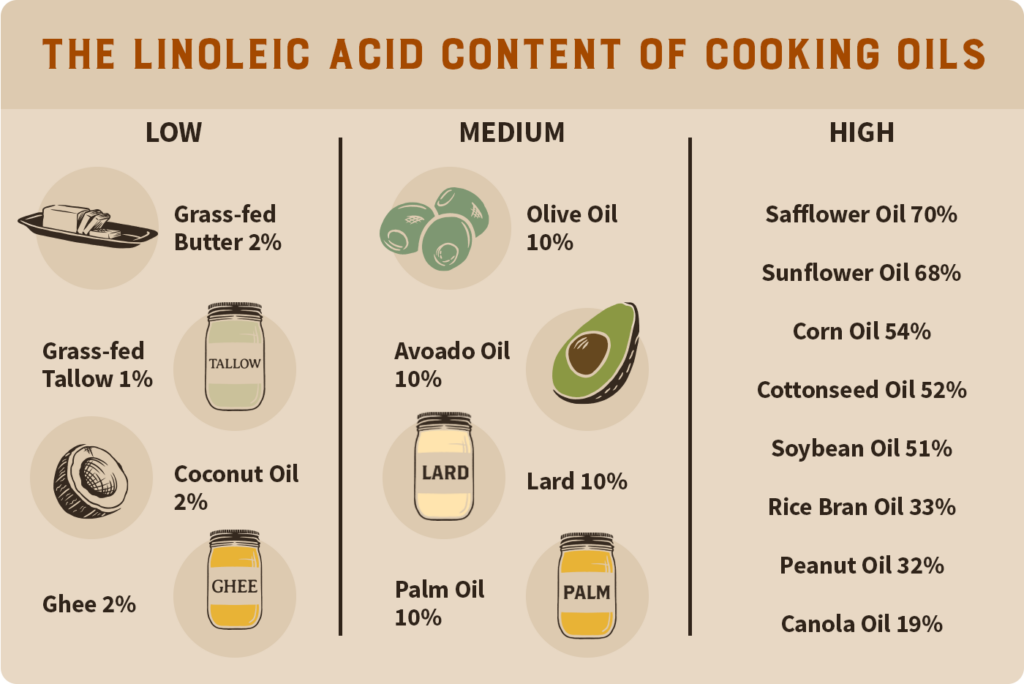
- Safflower oil: 70% linoleic acid
- Grapeseed oil: 70% linoleic acid
- Sunflower oil: 68% linoleic acid
- Corn oil: 54% linoleic acid
- Cottonseed oil: 52% linoleic acid
- Soybean oil: 51% linoleic acid
- Rice bran oil: 33% linoleic acid
- Peanut oil: 32%
- Canola oil: 19% linoleic acid
Which Seed Oil Is the Worst?
Safflower oil and grapeseed oil are tied for the worst seed oil. Both sit at 70% linoleic acid, the highest PUFA load of any oil on this list, and both oxidize fast under heat (10).
Safflower carries an additional, documented mark against it. In the Sydney Diet Heart Study, a controlled trial run from 1966 to 1973, men who replaced saturated fat with safflower oil saw higher cardiovascular mortality than the control group (11). That outcome ran opposite to what researchers expected at the time.
How Do the Worst Seed Oils Harm Your Body?
The worst seed oils for you are the ones you heat repeatedly. Frying is where the chemistry turns against you.
A Scientific Reports study measured toxic epoxy-aldehyde formation after 90 minutes of heating and found sunflower oil produced 1.17 mmol per mol of fatty acid, corn oil produced 1.22, and canola oil produced 0.91, compared to just 0.64 in extra-virgin olive oil (12).
That gap isn’t small: oils higher in linoleic acid generate measurably more reactive aldehydes when you reuse them for frying.
Skewed omega-6 to omega-3 intake is the second concern. A diet with far more omega-6 than omega-3 fat is associated with a pro-inflammatory pattern in Western populations (13). Seed oils are the largest dietary source pushing that ratio out of balance.
To be clear about where the science stands: some large observational studies link higher blood linoleic acid to lower cardiovascular risk (14), while mechanistic and frying-oil research raises separate concerns about oxidation byproducts.
Both bodies of research are real, and they are not yet fully reconciled. What is well established is the chemistry: linoleic acid oxidizes fast, and repeated high-heat use accelerates it (15).
Worst Seed Oils Chart
| Seed Oil | Linoleic Acid % | Primary Fat Type | Common Use |
|---|---|---|---|
| Safflower | 70% | PUFA | Commercial frying |
| Grapeseed | 70% | PUFA | Salad dressings |
| Sunflower | 68% | PUFA | Frying, baking |
| Corn | 54% | PUFA | Snack foods, margarine |
| Cottonseed | 52% | PUFA | Fried snack foods |
| Soybean | 51% | PUFA | “Vegetable oil” blends |
| Rice Bran | 33% | PUFA | Asian cooking |
| Peanut | 32% | PUFA | Deep frying |
| Canola | 19% | MUFA/PUFA | General cooking |
| Olive oil (for comparison) | ~10% | MUFA | Dressings, low heat |
| Grass-Fed Tallow(for comparison) | 1% | Saturated/MUFA | Frying, roasting |
(Source)
How Do You Avoid the Worst Seed Oils?
- Check the first 5 ingredients. If a seed oil appears there, put the product back.
- Watch for the “plant-based” halo. Many vegan cheeses and buttery spreads lean on canola or sunflower oil for texture.
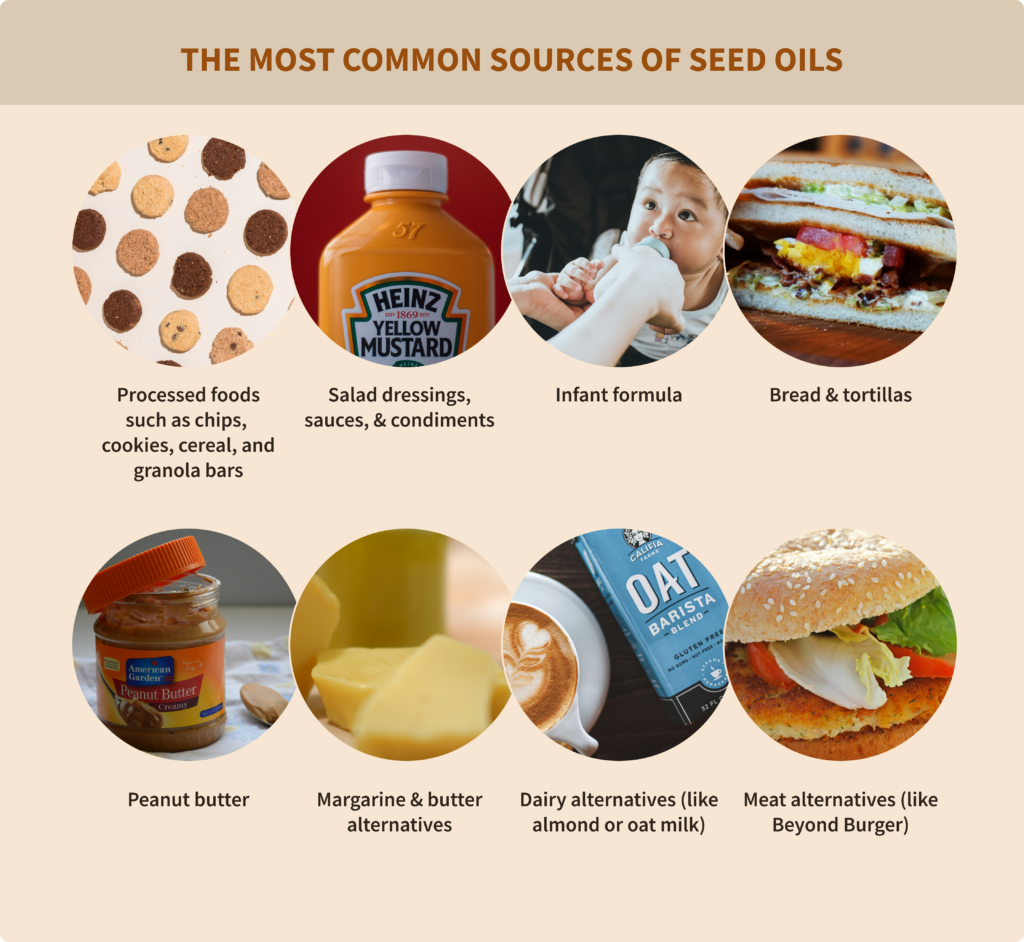
- Decode “vegetable oil.” On a label, it almost always means soybean or corn oil, hiding in dressings, crackers, and packaged baked goods.
- Replace, don’t just remove. Swap safflower, grapeseed, sunflower, corn, cottonseed, soybean, rice bran, and canola oil with tallow, butter, ghee, or extra-virgin olive oil, all of which are more stable at cooking temperatures.
- Rebuild the other side of the ratio. Omega-3 intake from fatty fish, grass-fed beef, and organ meats works alongside a lower omega-6 load, not instead of it.
Humans have been eating animal fats long before industrial seed oil extraction existed. Bone marrow, tallow, and butter contain fat-soluble nutrients that a bottle of soybean oil cannot.
Learn more: The 7 Best Healthy Alternatives to Vegetable Oil
Glossary
Linoleic acid: An omega-6 polyunsaturated fatty acid and the dominant fat in most seed oils. It oxidizes readily when heated, forming aldehydes linked to oxidative stress.
Seed oil: A vegetable oil extracted from the seed of a plant rather than its fruit. The 9 most discussed seed oils are canola, corn, cottonseed, grapeseed, peanut rice bran, safflower, soybean, and sunflower.
Polyunsaturated fatty acid (PUFA): A fat with 2 or more double bonds in its carbon chain, making it structurally unstable and prone to oxidation under heat, light, or air exposure.
Aldehyde: A reactive compound formed when PUFAs oxidize. Acrolein and 4-hydroxynonenal (4-HNE) are 2 aldehydes studied for their role in oxidative stress.
Omega-6 to omega-3 ratio: The proportional balance of these 2 essential fat families in your diet. Seed oils push this ratio toward excess omega-6.
FAQ
What are the worst seed oils? The worst seed oils are safflower, grapeseed, sunflower, corn, cottonseed, soybean, rice bran, peanut, and canola oil. All 9 are high in linoleic acid, an omega-6 fat that oxidizes when heated (16).
What is the worst seed oil? Safflower oil and grapeseed oil are tied for the worst seed oil, each at 70% linoleic acid, the highest of any common cooking oil (17). Safflower has the added distinction of being linked to higher cardiovascular mortality in the Sydney Diet Heart Study.
Which seed oils are the worst for frying? Sunflower and corn oil rank among the worst for frying. Research measuring toxic aldehyde formation after 90 minutes of heating found both oils produced more reactive aldehydes than olive oil (18).
Which seed oil is the least bad? Canola oil has the lowest linoleic acid content of the 9, at 19% (19). It still undergoes industrial solvent extraction and refining before reaching store shelves.
Learn more: Is Canola Oil Bad For You? Here’s What You Need To Know
What are the worst seed oils for you if you cook at home? Any seed oil you heat and reuse repeatedly, particularly safflower, sunflower, and corn oil, carries the highest oxidation risk in a home kitchen (20).
What does Heart & Soil suggest instead of seed oils? Instead of seed oils, cook with tallow, butter, ghee, and other animal fats. These are the fats humans relied on before seed oils existed.
Related Reading
- The Ultimate Guide to Seed Oils (Healthy or Not?)
- The Complete List of Seed Oils (Avoid These)
- The Hidden History and Controversial Rise of Seed Oils
Bottom Line
The 9 worst seed oils, ranked by linoleic acid content, are safflower, grapeseed, sunflower, corn, cottonseed, soybean, rice bran, peanut, and canola oil. Safflower and grapeseed sit at the top of that list, and any oil on it becomes riskier the more you heat and reuse it.
The fix isn’t complicated: read your labels, retire the seed oil bottle on your stove, and replace it with tallow, butter, ghee, or extra-virgin olive oil.
Pair that swap with animal-based, nutrient-dense foods like grass-fed organs and meat, and you’ve addressed both sides of the equation: what you removed, and what you replaced it with.
Beef Organs
Nature's Ultimate Multivitamin
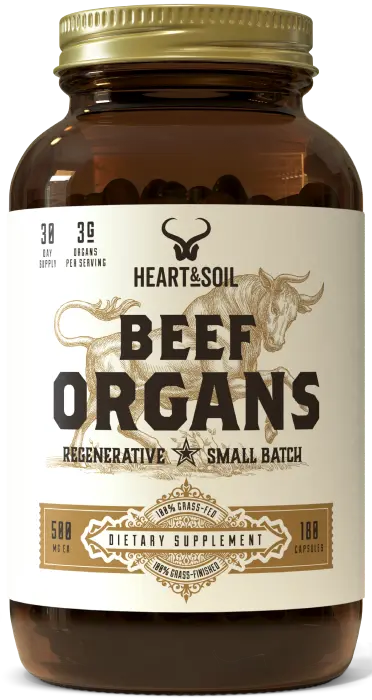
- Grass-fed liver, heart, pancreas, kidney, & spleen
- Designed to support overall energy & well-being
- Ideal daily foundation for nose-to-tail nutrition
60-day risk-free guarantee. No questions asked.
Subscribe to future articles like this:
