
Look up colostrum benefits for women and you’ll find promises about digestion, immunity, recovery after childbirth, and menopause, sometimes all on the same page. It’s easy to see why that gets attention, but those claims don’t all come from research on the same people or even the same outcomes.
Bovine colostrum is the first milk cows produce after birth, and it naturally contains immunoglobulins, lactoferrin, fats, and peptides. Researchers have studied it in adults, including athletes, but that doesn’t mean findings from a training study answer questions about nursing, postpartum recovery, or hot flashes.
We think you should be able to appreciate an interesting animal food without being asked to believe every possible benefit. Some questions have early research behind them, while others still need human studies designed to answer them.
That’s why our Grass-Fed Colostrum starts with whole, first-milking colostrum from grass-fed cattle, rather than a promise to treat menopause or other life-stage concerns. We believe the ingredient is worth understanding on its own terms, so we’ll look at what the evidence can and can’t tell us.
Disclaimer: The information in this blog is for educational purposes only. It is not a substitute for professional medical advice. Consult your healthcare provider if you’re seeking medical advice, diagnosis, or treatment. These statements have not been evaluated by the Food and Drug Administration. Our products are not intended to diagnose, treat, cure, or prevent any disease.
Table of Contents
Key Takeaways
Colostrum is worth getting curious about, but an interesting ingredient doesn’t make every headline true. The best place to start is understanding what first milk contains and what researchers have actually looked at in adults.
- Bovine colostrum contains naturally occurring bioactive compounds. These include immunoglobulins, lactoferrin, peptides, fats, and growth factors.
- Gut-barrier research is one of the stronger areas. Human studies suggest possible benefits in selected populations, although results vary.
- Some studies have specifically included female athletes. Researchers have examined exercise-related immune, oxidative-stress, and iron-regulation markers.
- Hormonal and menopause-specific benefits remain unestablished. Oral bovine colostrum isn’t proven to balance estrogen, reduce hot flashes, or accelerate postpartum recovery.
- Product choice and individual circumstances matter. Processing, sourcing, milk allergy, pregnancy, and breastfeeding are relevant considerations.
Why First Milk Deserves a Closer Look
Think of colostrum as the first chapter of milk, with a composition that changes as the animal moves into producing mature milk. That early nourishment is distinctive. The next question is what we can reasonably say about it when adults take it as a supplement.
What Is Bovine Colostrum?
Bovine colostrum is the first milk cows produce after giving birth, and its mix of immunoglobulins, lactoferrin, fats, and other compounds is quite different from ordinary milk. That first-milk story is fascinating enough without stretching it into a promise about what happens when an adult swallows a supplement.
Bovine colostrum isn’t human colostrum, and consuming it doesn’t recreate the hormonal physiology of pregnancy or breastfeeding. For adult women, the useful evidence comes from studies of oral bovine preparations and the outcomes researchers actually measured, not simply the list of interesting compounds on a label.
The Human Research Is Interesting, but Specific
Some of the most interesting human research has involved people training hard enough to put stress on their digestive systems. That’s a real question worth studying. It doesn’t tell us, on its own, what colostrum might do during menopause or the months after childbirth.
What Are the Potential Benefits of Colostrum for Women?
Colostrum has been studied for some exercise-related gut and immune measures, but there isn’t a single list of proven benefits that applies to every woman. If you hear it promised for menopause, hormone balance, and postpartum recovery all at once, ask which studies actually involved women with those concerns. The answer may surprise you.
Gut-Barrier Support
Bovine colostrum may support intestinal barrier function in certain populations. The intestinal lining helps regulate the movement of substances between the digestive tract and surrounding tissues.
Exercise, illness, and other stressors can influence intestinal permeability. A meta-analysis of randomized clinical trials reported reductions in some measures of intestinal permeability with bovine colostrum supplementation, although study designs and results varied. The findings support further interest in intestinal barrier function without establishing that colostrum treats every gastrointestinal condition.
Immune Support
Colostrum contains immunoglobulins such as IgG, IgA, and IgM, alongside lactoferrin and other compounds associated with immune processes. Researchers have evaluated these components and various immune-related outcomes in adults, including athletes undergoing demanding training.
Some trials report changes in selected markers, while others find little effect. A systematic review of bovine-colostrum applications describes substantial variation across the available studies. We therefore favor describing colostrum as a source of compounds relevant to normal immune function rather than claiming it consistently prevents illness.
Exercise Recovery
Some research in trained women suggests bovine colostrum can influence selected exercise-related biomarkers. In a trial involving female athletes, researchers examined oxidative-stress, inflammatory, and iron-related measures following prolonged supplementation and intense exercise.
The results add to scientific interest in colostrum during demanding training, but changes in biomarkers don’t necessarily establish faster recovery or improved athletic performance. For women who exercise regularly, the most reasonable interpretation is that colostrum has potential relevance to certain aspects of the exercise response, while complete protein, sufficient food intake, and training recovery remain essential.
Hormone Headlines Need More Than an Interesting Ingredient List
It’s easy to see a list of growth factors and think you’ve found something that can fix hormones. Biology isn’t quite that simple. Eating a substance that contains a naturally occurring compound doesn’t automatically make it behave like a medicine once it reaches your body.
Is Colostrum Good for Women’s Hormones?
There’s no good basis for calling colostrum a hormone-balancing supplement for women. It contains naturally occurring growth factors, but eating them isn’t the same thing as taking hormone therapy. An ingredient list identifies what the product contains, but you still need human research to assess claims about benefits.
Digestion can change proteins and peptides before they reach circulation, which is one reason it’s misleading to infer a hormonal effect from ingredient composition alone. If you’re considering colostrum for menstrual changes or menopausal symptoms, separate those questions from the gut and exercise outcomes that have received more direct clinical study.
Does Colostrum Raise IGF-1?
The name IGF-1 can make a label sound impressively scientific, but the important question is what happens after you eat the food. A naturally occurring growth factor in colostrum doesn’t prove that an oral supplement raises blood levels in women. That takes direct human evidence.
Human absorption research hasn’t supported the idea that intact supplemental IGF-1 simply enters the bloodstream and behaves like injected or endogenous IGF-1. We therefore wouldn’t describe a colostrum powder as an IGF-1 supplement or a reliable way to change a woman’s hormone levels.
Pregnancy, Postpartum, and Menopause Are Different Questions
A woman recovering from childbirth and a woman going through menopause are dealing with different things, and neither deserves to be handed an athlete study as a stand-in for answers. We can take colostrum seriously without pretending research has tested every claim attached to it.
Can Colostrum Help Postpartum Recovery?
We don’t have good evidence that bovine colostrum speeds postpartum recovery, even though it’s understandable to be curious about nourishment after childbirth. Studies involving athletes or exercise-related gut measures weren’t designed to answer questions about healing after delivery, so we shouldn’t borrow their results for a different promise.
Can Breastfeeding Women Take Bovine Colostrum?
Some women choose to include bovine colostrum in their routines while breastfeeding. That personal choice doesn’t establish its safety for nursing mothers or their babies, and research in this group is limited.
If you’re considering bovine colostrum while breastfeeding, speak with your healthcare provider to determine whether it’s appropriate for you.
Can Pregnant Women Take Bovine Colostrum?
Some women choose to include bovine colostrum as part of their approach to animal-based nourishment during pregnancy. However, personal experiences don’t establish its safety or benefits during pregnancy, and research in pregnant women is limited.
Before starting bovine colostrum, speak with your prenatal healthcare provider about the specific supplement and your individual needs.
Is Colostrum Good for Perimenopause?
Perimenopause can bring unfamiliar changes, and it’s understandable to look for food and lifestyle choices that make those years easier. But an ingredient associated with early nourishment hasn’t been shown to address perimenopausal symptoms. We’d rather say that clearly than use an appealing story as a substitute for evidence.
Is Colostrum Good for Menopause?
Bovine colostrum hasn’t been established as a treatment for menopausal symptoms. Researchers have looked at a topical colostrum preparation for one specific concern, but using something on the skin or tissue is very different from taking a powder by mouth. We’d keep those findings separate rather than stretch them into a general menopause claim.
If maintaining strength or physical function after menopause is the priority, adequate complete protein and resistance training have far more direct evidence. Colostrum can be considered separately for its gut- and immune-related research rather than as a substitute for menopause care.
Can Colostrum Help Hot Flashes?
There’s no solid evidence that taking bovine colostrum reduces hot flashes. If someone makes that promise, it’s fair to ask whether a well-designed human trial actually studied hot flashes in women at that life stage, because a plausible idea still needs testing.
Where Colostrum Fits Beside Protein and Training
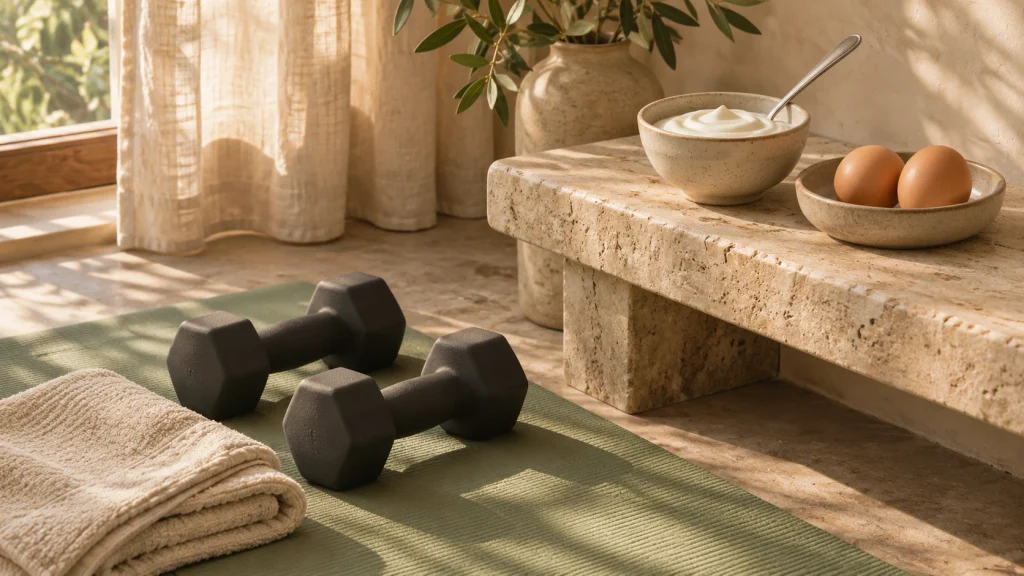
If staying strong is the goal, it makes sense to start with complete protein and resistance training rather than expect colostrum to do the whole job. Colostrum raises different research questions, which is interesting in its own right, but we don’t need one ingredient to cover every nutritional role.
Can Colostrum Support Muscle After 40 and 50?
If you’re working on strength after forty or fifty, start with resistance training and enough complete protein. Colostrum has some athletic research behind narrower questions, but a typical serving isn’t a replacement for whey, eggs, or meat. Different animal foods can contribute different nutrients.
Does Colostrum Help With Inflammation in Women?
Some studies have reported changes in inflammatory or oxidative-stress biomarkers following bovine-colostrum supplementation, but those findings don’t establish a universal anti-inflammatory effect. The female-athlete trial examined selected markers following intense exercise, where the body’s inflammatory response is influenced by physical stress and recovery.
Changes under those conditions shouldn’t automatically be applied to women with chronic inflammatory diseases or different medical circumstances. The results belong to trained women after intense exercise, not every woman with an inflammatory condition.
Colostrum and Iron Status in Women
A small trial in trained female athletes examined iron-regulation biomarkers after bovine-colostrum supplementation, including measures related to transferrin and lactoferrin. Those results are interesting because iron metabolism is relevant to athletic performance, but changes in laboratory markers don’t show that colostrum corrects low iron stores or treats anemia.
If symptoms suggest iron deficiency, clinical evaluation and appropriate testing matter more than guessing from a supplement label. Nutrient-dense animal foods can contribute iron, but the cause of a deficiency determines what care is needed, and colostrum’s lactoferrin content doesn’t replace that assessment.
Does Colostrum Help With Body Composition?
Colostrum isn’t an established body-composition shortcut. A few small trials have looked at fat or lean mass, but the findings aren’t consistent enough to treat a tub of first milk as a weight-loss plan. Food and training remain the places to begin.
Does Colostrum Support Bone Health After Menopause?
Colostrum hasn’t been shown to prevent bone loss after menopause or treat osteoporosis. Yes, first milk contains biologically interesting compounds, but that doesn’t mean the powder improves bone density or reduces fractures. It’s an important distinction when the stakes involve long-term health.
For bone health after menopause, factors with more direct relevance include adequate calcium and vitamin D, sufficient protein, appropriate weight-bearing and resistance exercise, and medical care when indicated. We wouldn’t replace those established considerations with a colostrum claim drawn from the chemistry of its ingredients.
Colostrum vs. Whey for Women Over 40
For muscle-focused protein, whey has the clearer role because it supplies complete protein and useful leucine. Colostrum brings different first-milk components, and researchers have measured different outcomes in colostrum studies. Comparing them only by the word protein misses the point.
| Feature | Bovine Colostrum | Whey |
| Main nutritional emphasis | Bioactive first-milk components | Complete protein |
| Typical supplement purpose | Gut and immune-related interest | Muscle and daily protein |
| Immunoglobulins | Prominent | Not the main feature |
| Leucine per practical serving | Lower than dedicated whey servings | High |
| Muscle protein synthesis | Secondary role | Strong fit |
| Exercise-related gut research | More specific | Less specific |
| Hormone balancing | Not established | Not established |
For women concerned about muscle maintenance after menopause, whey is generally the more direct choice. Colostrum may have a complementary role for women interested in other aspects of nutrition, but the two supplements shouldn’t be treated as substitutes.
Colostrum vs. Collagen for Women
Colostrum comes from first milk and collagen comes from connective tissue, which should tell you they’re different foods before you open either tub. One brings immunoglobulins and lactoferrin, while the other brings collagen-related amino acids. For complete muscle protein, we’d still look to meat, eggs, dairy, or a dedicated complete-protein powder.
Who Might Be Interested, and What Should They Check?
For some adults, the interesting questions involve sourcing, ingredients, and the studies on exercise-related gut measures. For others, a milk allergy or a particular life stage makes the safety conversation more important. Both deserve a clear answer before anyone reaches for a tub.
Who Might Consider Bovine Colostrum?
If you’re an active woman interested in research on exercise-related gut stress, there’s a sensible reason to read more about colostrum. If you’re hoping to restore estrogen or stop menopausal symptoms, there’s not enough evidence to make that claim. The question matters more than how exciting the ingredient sounds.
Your life stage alone doesn’t make colostrum necessary, since postpartum recovery, perimenopause, and menopause all involve different questions that research in athletes can’t answer for them. Think about what you’re hoping to learn or support and whether the studies actually involved women in comparable circumstances.
Who Should Avoid or Use Caution With Colostrum?
If you have a cow’s milk allergy, bovine colostrum isn’t for you. Lactose sensitivity may also matter depending on the product, and pregnancy or breastfeeding warrants added caution because direct safety data are limited. We’d rather you have those facts than be told every natural ingredient works for everyone.
Women with hormone-sensitive medical conditions should discuss supplementation with their healthcare professional, particularly when relevant hormonal concerns are already being managed. As with any supplement, the full ingredient list and individual health circumstances should guide the decision.
How to Choose a Colostrum Supplement
Ask where the colostrum comes from, when it was collected, how it was handled, and what the finished product was tested for. Those details offer a much clearer picture than one enormous immunoglobulin number on the label. We like the whole-food story, but we still want to see the work behind it.
- Animal sourcing: Information about the health, feeding, and raising of the cows.
- Collection practices: Clear details about when colostrum is collected.
- Whole versus defatted processing: Whether naturally occurring fats and other components are retained.
- Processing methods: Information about how the material is dried or otherwise prepared.
- Serving size: The actual amount of colostrum supplied.
- Testing: Relevant purity and contaminant information.
- Ingredient simplicity: Whether additional substances are included.
We explain these criteria in more detail in our colostrum buying guide.

Why We Keep Our Colostrum Whole
We care about colostrum as a whole first-milk food, not as a collection of buzzwords pulled apart for a label. Sourcing and processing are worth looking into because they tell you more about what you’re buying. The claims still have to stand on their own evidence.
Our Grass-Fed Colostrum

Our Grass-Fed Colostrum is made from bovine colostrum sourced from grass-fed, pasture-raised cows, with an emphasis on early collection and careful processing. We keep it whole rather than removing its natural fats because first milk contains a wider mix of nutrients than immunoglobulins alone.
That philosophy explains why we pay attention to sourcing and the finished composition, but it doesn’t turn colostrum into a menopause or postpartum treatment. We encourage you to apply the same standards to our product as any other colostrum supplement by asking what it contains, how it was handled, and what the human evidence actually supports.
Colostrum Benefits for Women: The Heart & Soil Perspective
We’re glad more women are asking about colostrum, and we’re equally glad when they ask hard questions about the claims. Its natural composition is interesting, the human research is specific, and we don’t need to exaggerate either point to make colostrum worth learning about.
We value whole colostrum as part of an animal-based approach to nourishment while keeping the strength of each claim tied to the studies behind it. For women considering supplementation, the reason to use it should come from a realistic nutritional goal, not a promise about female hormones that hasn’t been demonstrated.
You can explore our whole Grass-Fed Colostrum or read our evidence-focused guide to bovine colostrum to learn more about the product and the research.
Frequently Asked Questions About Colostrum Benefits for Women
What Are the Benefits of Colostrum for Women?
Bovine colostrum may support intestinal barrier function and aspects of normal immune function in certain populations. Some research has also examined exercise-related outcomes in female athletes. However, evidence for postpartum recovery, menopause symptoms, and female hormone balance is much less developed. Its most credible potential uses should be distinguished from those unproven life-stage claims.
Is Colostrum Good for Women’s Hormones?
There isn’t good evidence that oral bovine colostrum reliably balances estrogen, progesterone, or other reproductive hormones. Although colostrum naturally contains growth factors and signaling compounds, their presence doesn’t establish a hormone-therapy effect. Women seeking help for hormonal symptoms should discuss appropriate evaluation and treatment with a healthcare professional.
Can Colostrum Help Postpartum Recovery?
Direct evidence that bovine colostrum improves postpartum recovery is insufficient. Its proteins and other naturally occurring compounds have been studied in different contexts, but those findings don’t establish effects on uterine recovery, milk production, or postpartum healing. Breastfeeding women should also discuss supplementation with their clinician because direct safety data are limited.
Can Breastfeeding Women Take Colostrum?
Many breastfeeding women love taking bovine colostrum and include it in their daily routines while nursing. If you’d like to try it yourself, check with your healthcare provider to make sure it’s appropriate for you.
Is Colostrum Good for Perimenopause?
Bovine colostrum hasn’t been shown to treat or meaningfully improve perimenopause symptoms. Women in perimenopause may still be interested in its broader research involving gut and immune function, but those outcomes aren’t the same as correcting hormonal changes. A supplement shouldn’t be marketed as restoring estrogen or progesterone without relevant clinical evidence.
Is Colostrum Good for Menopause?
Evidence for oral bovine colostrum in menopausal women is limited. It hasn’t been established as a treatment for hot flashes, hormonal changes, or vaginal dryness. Research involving a topical preparation shouldn’t be applied automatically to oral supplementation. Women focused on maintaining muscle after menopause have stronger evidence for complete protein and resistance training.
Should Women Over 40 Take Colostrum?
Women don’t need bovine colostrum just because they’ve turned 40, since whether it fits depends on nutritional interests and individual circumstances. Research on intestinal barrier function, selected immune outcomes, and exercise-related measures provides a more relevant starting point than menopause-specific marketing claims. The broader diet and health needs remain important.
Does Colostrum Help Muscle Growth in Women?
Evidence that bovine colostrum directly improves muscle growth in women is limited and mixed. Some athlete studies have examined recovery-related outcomes, but complete protein and progressive resistance training have much stronger evidence for building and preserving muscle. Colostrum shouldn’t replace a complete protein source when muscle growth is the main goal.
Can Colostrum Help With Iron?
Bovine colostrum contains lactoferrin, and some athlete research has examined iron-related biomarkers following supplementation. However, those findings don’t establish colostrum as a treatment for iron deficiency or anemia. Women with suspected iron deficiency should obtain appropriate clinical evaluation rather than relying on colostrum’s lactoferrin content.
Subscribe to future articles like this:
