


Most people associate electrolytes with sweaty workouts, hot weather, or dehydration.
But many people take electrolytes for digestion in the form of powders and drinks, too.
Electrolytes don’t digest food themselves. But minerals such as sodium, chloride, potassium, and magnesium participate in several of the physiological processes that make normal digestion possible.
Here’s what the research actually shows.
This article is for educational purposes only and is not medical advice. These statements have not been evaluated by the Food and Drug Administration. Our products are not intended to diagnose, treat, cure, or prevent any disease.
Key Takeaways
- Electrolytes for digestion support processes involved in fluid absorption, nutrient transport, stomach acid production, and muscle and nerve function.
- Sodium works with glucose transporters in the small intestine to support sodium, glucose, and water absorption.
- Chloride is required to produce hydrochloric acid in the stomach.
- Randomized controlled trials show that certain forms and doses of magnesium can improve constipation.
- A randomized trial also found that increasing fluid intake improved stool frequency in adults with chronic functional constipation.
- Electrolyte powders are not treatments for digestive diseases, but they can make replacing water and minerals easier when losses are increased.
Table of Contents
What Are Electrolytes?
Electrolytes are minerals that carry an electrical charge when dissolved in body fluids.
They include:
- Sodium
- Chloride
- Potassium
- Magnesium
- Calcium
- Bicarbonate
These minerals help maintain fluid balance and participate in nerve signaling, muscle contraction, and transport across cell membranes.
Those functions explain why electrolytes for digestion can matter even if you haven’t been exercising.
5 Ways Electrolytes Can Help Digestion
1. Sodium Helps Your Intestines Absorb Water and Nutrients
One of the clearest connections between electrolytes for digestion occurs in the small intestine.
Cells lining the intestine contain a transporter called SGLT1, short for sodium-glucose cotransporter 1.
SGLT1 moves sodium and glucose from the intestine into intestinal cells. Water absorption is closely coupled to this movement of sodium and glucose (1).
Human intestinal experiments have demonstrated increased sodium absorption when glucose is present, helping explain why glucose-and-sodium solutions are so effective for oral rehydration (2)
It is also the physiological principle behind oral rehydration solutions used during significant diarrhea.
That doesn’t mean more sodium always equals better digestion. It means sodium is part of the normal machinery your intestine uses to absorb nutrients and fluid.
2. Chloride Is Part of Stomach Acid
Before nutrients reach the small intestine, food has to pass through the stomach.
The stomach produces hydrochloric acid, or HCl. Chloride is the “Cl” in HCl.
Parietal cells in the stomach secrete hydrogen ions and chloride into the stomach lumen to produce gastric acid (3).
Stomach acid helps prepare food for digestion and facilitates protein digestion. It also contributes to the absorption of nutrients including iron, calcium, and vitamin B12 (4).
This makes chloride one of the most direct examples of electrolytes for digestion.
However, adding extra salt has not been shown to simply “boost stomach acid” in healthy people. Gastric acid production is tightly regulated by several hormonal, neural, and cellular mechanisms.
So the scientifically accurate takeaway is simple: chloride is required for normal hydrochloric acid production, not that consuming extra chloride automatically improves digestion.
3. Sodium and Potassium Support Digestive Nerves and Muscles
Your digestive tract doesn’t just sit there.
Muscles contract in coordinated patterns to mix food and move it through the stomach and intestines, a process called gastrointestinal motility.
Those contractions depend on electrical activity in smooth muscle cells and specialized pacemaker cells called interstitial cells of Cajal.
Ion channels involving sodium, potassium, calcium, and chloride contribute to that electrical signaling (5).
That doesn’t mean an electrolyte drink has been proven to speed up normal digestion.
Rather, it shows why normal electrolyte balance is part of the basic physiology that allows intestinal nerves and muscles to function.
Think of electrolytes for digestion as supporting infrastructure, not a digestive shortcut.
4. Hydration Can Matter for Bowel Regularity
Digestion also depends on water. Water contributes to digestive secretions and influences stool consistency.
But claims that “drinking more water cures constipation” are usually too broad. The clinical evidence is more nuanced.
In one randomized trial, 117 adults with chronic functional constipation followed a diet containing about 25 grams of fiber per day.
One group continued drinking normally, averaging about 1.1 liters per day, while the other increased total fluid intake to approximately 2.1 liters per day.
After two months, both groups improved, but the higher-fluid group had a significantly greater increase in stool frequency and decrease in laxative use (6)
A 2023 systematic review that included 17 randomized controlled trials also found that some high-mineral waters improved constipation-related outcomes, although researchers emphasized that evidence for dietary interventions remains limited (7).
So hydration can matter, particularly when intake is inadequate, but more water is not automatically better for everyone.
5. Magnesium Has the Strongest Clinical Evidence for Constipation
Magnesium is where the evidence for electrolytes for digestion becomes especially interesting.
Certain forms of magnesium can draw water into the intestine and affect stool consistency.
In a randomized, double-blind, placebo-controlled trial, 34 women with chronic constipation received either placebo or 1.5 grams of magnesium oxide per day for four weeks.
Overall improvement occurred in 70.6% of the magnesium group compared with 25% of the placebo group. Magnesium also significantly improved spontaneous bowel movements, stool form, and colonic transit time (8).
A larger randomized controlled trial involving 90 adults compared magnesium oxide, senna, and placebo.
After four weeks, overall improvement occurred in 68.3% of participants taking magnesium oxide versus 11.7% taking placebo. Both spontaneous and complete spontaneous bowel movements increased significantly (9).
A 2026 randomized trial in healthy adults also found that magnesium-rich mineral water softened stools and increased bowel movement frequency compared with soft water (10).
Caveat: these studies tested specific magnesium products and doses. An ordinary electrolyte powder generally contains much less magnesium and should not be expected to act like a therapeutic laxative.
Electrolytes for Digestion: How They Compare
| Electrolyte | Digestive Role |
| Sodium | Participates in glucose, sodium, and water absorption in the small intestine |
| Chloride | Required for hydrochloric acid production in the stomach |
| Potassium | Participates in electrical signaling needed for muscle and nerve activity |
| Magnesium | Some forms increase intestinal water and can affect stool consistency |
| Calcium | Participates in cellular signaling and muscle contraction |
The table illustrates an important distinction.
Not every mineral has clinical trials showing that supplementation improves digestive symptoms. Some simply perform essential physiological functions.
Can Electrolytes Help With Constipation?
Electrolytes for digestion may be useful when inadequate fluid intake or specific mineral intake is contributing to the problem.
But constipation can also result from medication, inadequate food intake, pelvic-floor dysfunction, gastrointestinal disease, thyroid disorders, or many other factors.
An electrolyte powder shouldn’t be treated as a universal constipation remedy.
What About Diarrhea?
Diarrhea can rapidly remove both fluid and electrolytes from the body.
The connection between sodium, glucose, and intestinal fluid absorption is why medically formulated oral rehydration solutions contain carefully selected proportions of water, sodium, and carbohydrate (11).
Randomized trials in adults with viral gastroenteritis have also evaluated different oral rehydration beverages and found that several could successfully support rehydration, although the tested solutions were not identical in composition (12).
An everyday electrolyte powder is not the same as a medical oral rehydration solution.
Significant or persistent diarrhea, especially with signs of dehydration. requires appropriate medical care.

When Might Electrolytes for Digestion Make Sense?
Using electrolytes for digestion makes the most sense when hydration and mineral needs overlap with digestive health.
That might include times when you:
- Have been sweating heavily
- Exercise regularly
- Spend long periods in hot weather
- Haven’t been drinking enough
- Have experienced mild fluid loss
- Want an easy way to add sodium, potassium, and magnesium to water
If you are already well hydrated and consuming plenty of minerals, adding more electrolytes may not noticeably change digestion.
Why Heart & Soil Electrolytes?
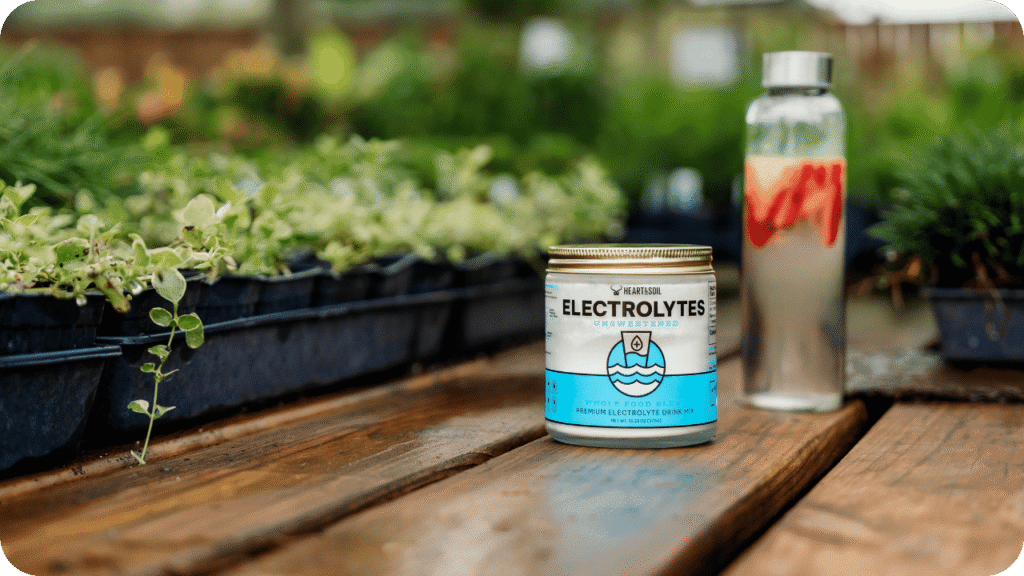
If you want electrolytes for digestion, Heart & Soil Electrolytes provide sodium, potassium, and magnesium, minerals involved in fluid balance, muscle function, nerve signaling, and normal digestive physiology.
Rather than claiming that an electrolyte powder “fixes your gut,” we think the better way to look at it is this:
Support the basic physiology digestion depends on.
Heart & Soil also offers an unsweetened version, giving you an option when you want minerals without a sweet-tasting drink.
They’re easy to use after workouts, in hot weather, or anytime fluid and mineral losses are higher than usual.
Be First to Try Heart & Soil Electrolytes
Join the waitlist to be the first to know when they launch.
FAQ
Do electrolytes help digestion?
Electrolytes participate in several processes required for normal digestion, including intestinal fluid transport, gastric acid production, nerve signaling, and muscle activity. Whether an electrolyte drink can support digestion is dependent on many factors. Clinical evidence is strongest for specific magnesium preparations used for constipation.
What is the best electrolyte for digestion?
There isn’t one universally “best” electrolyte. Sodium has a particularly important role in intestinal water and glucose transport and magnesium can be used for constipation. Heart & Soil electrolytes contains sodium, potassium, magnesium, calcium, and a small amount of natural carbs.
Can electrolytes help you poop?
Certain magnesium preparations can. In randomized controlled trials, 1.5 grams per day of magnesium oxide significantly improved bowel movement frequency and stool consistency in adults with chronic constipation (13). That dose is much higher than the magnesium content of most ordinary electrolyte drinks.
Can dehydration cause constipation?
Low fluid intake can contribute in some people. In a randomized trial of adults with chronic functional constipation, increasing total fluid intake from roughly 1.1 to 2.1 liters per day alongside a high-fiber diet significantly improved stool frequency compared with the control group (14).
When should I drink electrolytes for digestion?
Consider electrolytes for digestion when digestive needs overlap with increased fluid or mineral losses, such as after heavy sweating, prolonged exercise, or time spent in hot weather. Persistent digestive symptoms warrant evaluation by a healthcare professional.
Related Reading
- Electrolytes for Fasting: 5 Reasons They’re Valuable
- Electrolyte Imbalance: Signs to Pay Attention To
- Clean Electrolyte Powder: How to Tell What’s Actually Clean
- Sugar-Free Electrolyte Powder: What to Know Before You Buy
The Bottom Line
The science behind electrolytes for digestion is more interesting, and more nuanced, than saying electrolyte powders are simply “good for your gut.”
Extra sodium and hydration can help support the normal functions your gastrointestinal system relies on every day.
Electrolytes are a practical way to support hydration and provide minerals your digestive system uses to function normally.
Subscribe to future articles like this:
