
This content is for informational and educational purposes only. It is not intended to diagnose, treat, cure, or prevent any disease. Consult your healthcare provider before starting any new supplement.
Your great-grandparents ate liver once a week and never thought twice about it. Somewhere between then and now, the most nutrient-dense part of the animal became the part people throw away.
Beef organ supplements give you all the nutrients without the taste or cooking.
This post covers the 7 best beef organ supplements, what makes each one worth taking, and how to choose based on your goals.
Key Takeaways
- Why organs beat multivitamins: organ tissue delivers preformed, bioavailable nutrients like retinol and heme iron in forms synthetic supplements can’t replicate.
- Which nutrients stand out most: liver alone provides 411% of daily vitamin A and 1,322% of daily copper per 100 g (1, 2)
- What separates quality brands: grass-fed and finished sourcing, freeze-drying instead of heat processing, named organs instead of proprietary blends, and third-party testing.
- Which formula fits your goal: Beef Organs for daily foundational support, Her Package or Whole Package for hormonal goals, and the Fat Loss Stack for metabolic support.
Table of Contents
What Is a Beef Organ Supplement?
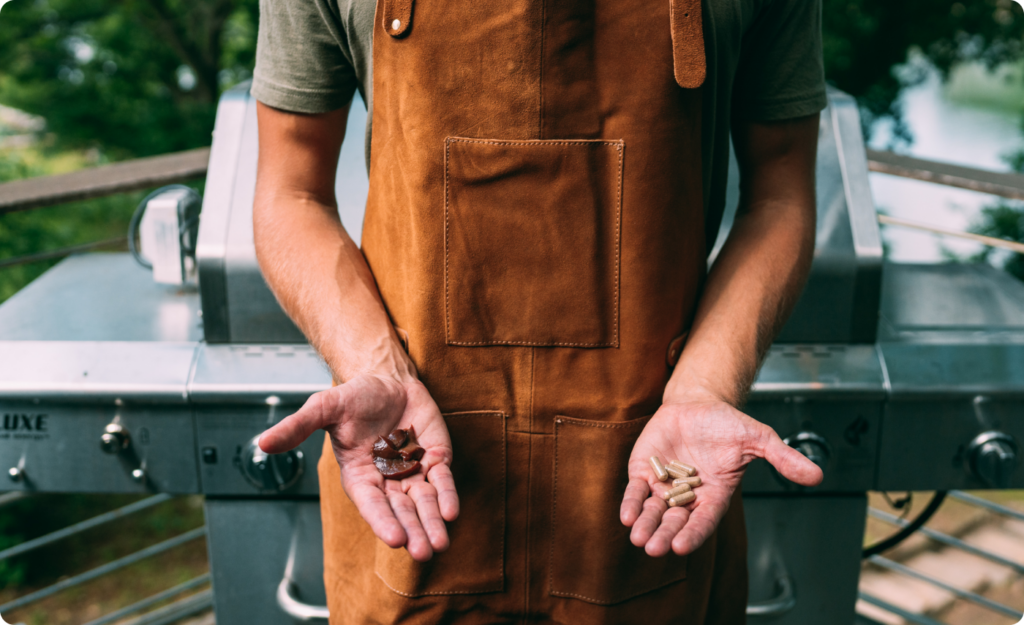
A beef organ supplement is a freeze-dried, encapsulated form of animal organs (such as liver, intestines, and spleen) that concentrates the nutrient density of nose-to-tail eating into a daily capsule.
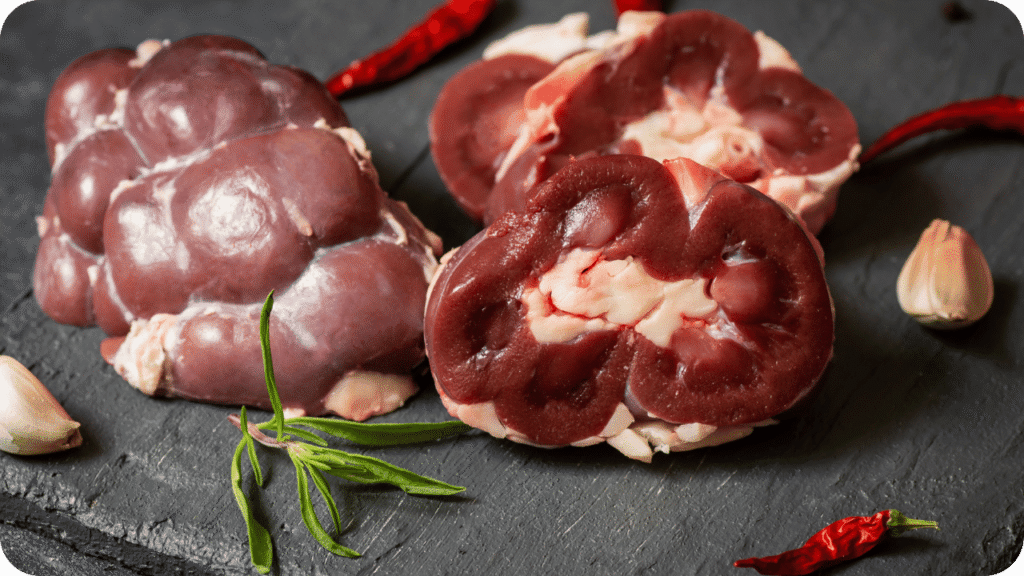
The organs most people stopped eating decades ago are, gram for gram, among the most nutrient-dense foods available (3).
Freeze-drying preserves that density without heat damage, separating quality supplements from cheap, heat-processed alternatives.
What Are the Benefits of Beef Organ Supplements?
Organs concentrate the vitamins, minerals, peptides, enzymes, antioxidants, and amino acids the body evolved to use, each organ specializing in its own set.
| Nutrient | Best Nose-To-Tail Source | Amount per 100 g | % Daily Value | Role in the Body |
| Vitamin A (retinol) | Liver | 3,702 mcg RAE | 411% | Vision, immune function, cellular development, skin integrity. Active retinol form — not beta-carotene, which requires conversion and is poorly converted by many people |
| Vitamin B2 (riboflavin) | Liver; also kidney | 3.38 mg | 260% | Cellular energy metabolism, fat oxidation, activation of B6 and folate, antioxidant support |
| Vitamin B5 (pantothenic acid) | Liver; also kidney, heart | 5.69 mg | 114% | Coenzyme A synthesis, fatty acid metabolism, hormone and neurotransmitter production |
| Vitamin B7 (biotin) | Liver | 100 mcg | 333% | Fatty acid synthesis, gluconeogenesis, amino acid metabolism, gene regulation |
| Iron | Blood | 49 mg | 272% | Hemoglobin oxygen transport, energy metabolism, and immune function. Heme form absorbs at 2–3× the rate of plant iron |
| Calcium | Bone | 645 mg | 50% | Bone and teeth structure, muscle contraction, nerve signaling, and blood clotting |
| Vitamin K2(MK-11) | Bone marrow | 5,287 mcg | 4,406% | Long-chain menaquinone with broad tissue distribution; same calcium-directing role as MK-4 with longer half-life |
| Copper | Liver | 11.9 mg | 1,322% | Iron absorption and metabolism, connective tissue formation, nerve function, and antioxidant enzyme activity |
(Source)
Peptides
For over 40 years, the Institute of Bioregulation and Gerontology in St. Petersburg has run clinical trials on peptide extracts from freeze-dried bovine organs. The findings from that body of research include (4):
- Thyroid peptides increase T3 levels
- Testicular peptides raise testosterone from 3.2 to 5.4 ng/mL
- Ovarian peptides cut hot flash rates by nearly half
- Pancreatic peptides halve post-meal glucose in a cohort where 54% of participants reduced their medication use
Like-Supports-Like: This is the same line of science that produced insulin in 1922 and thyroid medication in the 1890s. Both were originally derived from animal organs. The underlying principle has not changed: organs contain specific peptides and cofactors that appear to act on matching tissue in the body.
How Organ Peptides Work: These peptides survive the gentle method of freeze-drying AND digestion, cross the gut wall through specialized intestinal cells, and in some research models have been shown to bind directly to DNA and influence gene expression.
The peptides people pay to inject for recovery, hormonal support, and longevity have always been present in organs. The delivery method differs, but the source material remains the same.
Enzymes
Each organ contains enzymes specific to its job in the body, and those enzymes have been studied in detail for decades.
- Beef liver contains catalase, an essential antioxidant enzyme that protects cells from oxidative damage (5).
- Beef pancreas contains ribonuclease A, an enzyme that breaks down RNA in the digestive tract, the same job it does in the animal it came from (6). Beef heart contains cytochrome c oxidase, the enzyme that sits at the center of how your cells produce usable energy (7).
- Beef intestine contains alkaline phosphatase, an enzyme that supports gut barrier integrity and helps neutralize harmful bacterial byproducts in the digestive tract (8).
Antioxidants
- Beef liver has one of the highest concentrations of glutathione of any food (9). Glutathione is the body’s primary intracellular antioxidant, supporting cellular detoxification and immune response, and it is not meaningfully available from plants or stable in most supplement forms.
- Heart is one of the only practical dietary sources of CoQ10, a fat-soluble antioxidant central to mitochondrial energy production (10).
Amino Acids
- Liver and heart are dense sources of taurine, which plays a role in cellular health, energy production, and nervous system regulation (11).
- Beef brain and beef heart contain arginine, which supports circulation and blood flow throughout the body (12).
- Connective tissue organs supply glycine and proline for collagen synthesis, which supports the health of skin, hair, nails, and joints (13, 14).
The 7 Best Beef Organ Supplements, Ranked
Every formula below from Heart & Soil is grass-fed and finished, freeze-dried, and free of fillers and seed oils. The difference is which organs each one includes.
- Best Overall: Beef Organs. Liver, heart, kidney, pancreas, and spleen in one capsule. Liver delivers retinol, copper, B12, and heme iron; heart adds CoQ10; kidney brings selenium and zinc. If you only take one, this is it.
- Best for Men’s Hormonal Support: Whole Package. Testicles, liver, and whole blood extract; testicles are a good source of vitamin E and zinc and an excellent source of vitamin K2, all tied to testosterone production (15, 16, 17, 18).
- Best for Women: Her Package. Uterus, ovary, fallopian tube, liver, and kidney, one of the only blends including female reproductive tissue for hormone, libido, and fertility support.
- Best for Iron: Lifeblood. Whole blood extract, spleen, and liver; blood is the most iron-concentrated organ available (19).
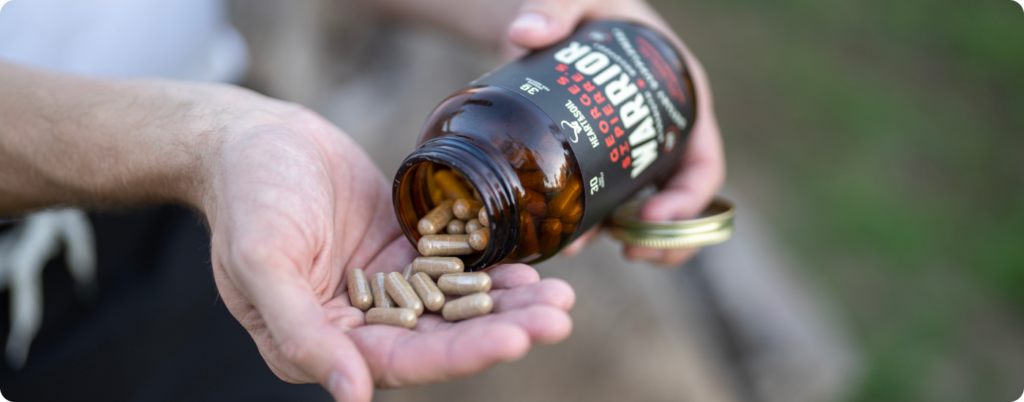
- Best for Performance: Warrior. Heart and liver, supporting energy production and vascular integrity for exercise and recovery.
- Best for Immune Support: Histamine & Immune. Thymus, lung, spleen, liver, and kidney, covering the nutritional layer most immune supplements miss.
- Best Fat-Soluble Vitamin Add-On: Bone Marrow & Liver. Concentrated vitamins A, E, and K1 for bone and connective tissue health.
| Supplement | Key Organs | Best For |
| Beef Organs | Liver, Heart, Kidney, Pancreas, Spleen | Best overall daily foundation |
| Whole Package | Testicle, Liver, Whole Blood Extract | Men’s hormonal and sexual vitality support |
| Her Package | Uterus, Ovary, Fallopian Tube, Liver, Kidney | Women’s hormonal, reproductive, and fertility support |
| Lifeblood | Whole Blood, Spleen, Liver | Iron levels, energy, endurance |
| Warrior | Heart, Liver | Exercise performance, heart health |
| Histamine & Immune | Thymus, Liver, Spleen, Kidney, Lung | Histamine, immune, allergy support |
| Bone Marrow & Liver | Bone Marrow & Liver | Fat-soluble vitamins, Vitamin K2 |
Beef Organs
Nature's Ultimate Multivitamin
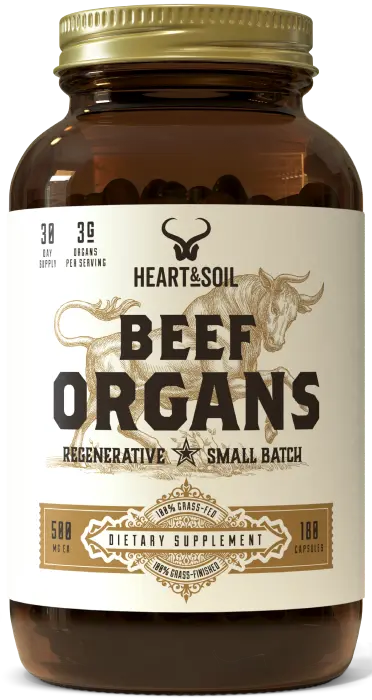
- Grass-fed liver, heart, pancreas, kidney, & spleen
- Designed to support overall energy & well-being
- Ideal daily foundation for nose-to-tail nutrition
60-day risk-free guarantee. No questions asked.
Which Beef Organ Supplement Is Best for You?
- What is the best beef organ supplement for women? Women should start with Her Package: uterus, ovary, fallopian tube, liver, and kidney, formulated for hormone, libido, and fertility support. Menstrual iron loss and pregnancy’s higher retinol needs make organs an efficient source of these nutrients.
- What is the best beef organ supplement for men? Men should start with Whole Package: testicles, liver, and whole blood extract, built to support testosterone, energy, and sexual vitality.
- What is the best beef organ supplement for weight loss? Weight loss is best supported by Firestarter, part of the Fat Loss Stack (Warrior, Firestarter, and Gut & Digestion), which supports metabolic function through B vitamins, iron, and CoQ10 rather than stimulants. Organ capsules are calorically minimal but deliver the micronutrient infrastructure mitochondria depend on. Learn More: Animal-Based Diet For Fat Loss: Does It Work?
When Is the Best Time to Take Beef Organ Supplements?
Beef organ supplements can be taken anytime of the day, with or without food. Many people feel best taking them in the morning for energy.
How to Choose a Quality Beef Organ Supplement
A quality supplement meets 4 criteria:
- Grass-fed and finished. Pasture-finished animals produce organs with higher fat-soluble vitamin content than grain-finished ones.
- Freeze-dried, not heat-processed. Heat degrades CoQ10, B vitamins, and enzymes; freeze-drying preserves bioactivity.
- Named organs, not “proprietary blend.” You need to know exactly what’s in the capsule.
- Third-party tested, with no fillers, binders, or seed oils.
Glossary
Animal-based diet: A dietary approach centered on animal foods (meat, organs, eggs, and dairy) with an emphasis on nutrient density over caloric restriction. Learn more: The Ultimate Animal-Based Diet Food List (PDF Included!)
Bioavailability: The proportion of a nutrient that is absorbed and utilized by the body. Heme iron from organ meats, for example, carries 2 to 3 times the bioavailability of non-heme iron from plant sources (20).
Desiccated: Dried and powdered. In organ supplements, “desiccated” typically refers to freeze-dried or heat-dried organ tissue. Freeze-dried is superior for nutrient preservation.
Freeze-dried: A processing method that removes moisture from food under low temperature and vacuum conditions, preserving heat-sensitive nutrients, enzymes, and bioactivity.
Grass-fed and finished: Cattle raised and finished on pasture rather than grain, affecting fatty acid and vitamin content.
Nose-to-tail eating: The traditional practice of consuming the whole animal, including organs, bone marrow, connective tissue, and blood, rather than only muscle meat.
FAQ: Best Beef Organ Supplement
What is the best beef organ supplement? Heart & Soil’s Beef Organs: a grass-fed, freeze-dried blend of liver, heart, kidney, spleen, and pancreas.
Can you take beef organ supplements while pregnant? Beef liver is one of the most historically recommended pregnancy foods for its retinol, iron, folate, and B12. Consult your provider to determine what’s best for you.
Are beef organ supplements safe? Grass-fed, freeze-dried organ supplements from reputable sources are generally well-tolerated, since organs are food, not pharmacological agents. Learn more: 6 Dangers Of Eating Liver: What You Need To Know
How many capsules should I take per day? The serving size for most Heart & Soil supplements is 6 capsules daily.
Related Reading
- The Ultimate Guide To The Animal-Based Diet
- Beef Liver Vs Chicken Liver Benefits: Which Is Healthier?
- Key Differences Between Organic And Conventional Foods
Bottom Line
Beef organs contain vitamins, minerals, peptides, and amino acids largely missing from the standard American diet, concentrated in the parts of the animal most people stopped eating. The best beef organ supplements close that gap without changing how you cook or eat.
Start with Beef Organs by Heart & Soil, built as your daily foundation.
Beef Organs
Nature's Ultimate Multivitamin
- Grass-fed liver, heart, pancreas, kidney, & spleen
- Designed to support overall energy & well-being
- Ideal daily foundation for nose-to-tail nutrition
60-day risk-free guarantee. No questions asked.
Subscribe to future articles like this:
