
The information in this blog is for educational purposes only. It is not a substitute for professional medical advice. Consult your healthcare provider if you’re seeking medical advice, diagnoses, or treatment. These statements have not been evaluated by the Food and Drug Administration. Our products are not intended to diagnose, treat, cure, or prevent any disease.
Beef protein sounds more ancestral. Whey sounds more conventional.
Those labels tell you surprisingly little about which powder fits your goal.
A powder can say beef on the front and still be made largely from collagen-rich tissue with a very different amino acid profile from muscle meat.
Whey comes from milk. It’s one of the most reliable ways to get a complete animal protein only if you tolerate dairy.
So the real questions are:
What kind of protein are you actually getting? How well does it match your goal? How much processing stands between the animal and the scoop?
That distinction is especially important with our own products:
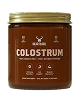
- Heart & Soil Animal Based Protein is not beef protein isolate. It combines grass-fed whey concentrate with collagen and colostrum.
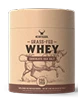
- Heart & Soil Grass-Fed Whey is a dedicated whey protein powder.
From there, the comparison gets much clearer.
We’ll look at beef protein versus whey for muscle, digestion, amino acid quality, and everyday use, then show where each Heart & Soil formula fits.
Table of Contents
Beef Protein vs Whey at a Glance
Beef protein is a bovine-derived protein that is usually dairy-free, but its amino acid profile can vary considerably by source tissue and processing. Whey comes from milk, is naturally complete, and is rich in leucine.
For muscle-focused buyers, whey is easier to evaluate. For dairy avoidance, beef can be a useful option when the amino acid profile is transparent.
|
Factor |
Beef protein |
Whey protein |
|
Source |
Bovine tissue |
Milk |
|
Dairy-free |
Usually |
No |
|
Complete protein |
Check the finished amino acid profile |
Yes |
|
Leucine |
Product-dependent |
Naturally leucine-rich |
|
Collagen content |
Can be substantial |
Very little |
|
Muscle research |
Smaller evidence base |
Extensive |
|
Biggest reason to choose it |
Avoiding dairy while keeping an animal-derived protein |
Reliable complete protein for muscle and daily protein intake |
|
What to check first |
Amino acid profile and source tissue |
Ingredients, sourcing, and whey type |
Why Beef Protein Powders Can Differ So Much

Beef protein powders can differ substantially because manufacturers may start with different bovine tissues and use different processing methods. Whey has a more consistent essential-amino-acid profile. With beef protein, the amino acid panel tells you far more than the word “beef” on the label.
Here’s where we get specific.
A 25-gram serving of whey protein isolate provides roughly 12.4 grams of indispensable amino acids and 3 grams of leucine, while whey concentrate provides about 11.7 grams of indispensable amino acids and 2.5 grams of leucine per 25 grams of protein, according to a review of commonly used protein sources.
That gives whey a fairly recognizable nutritional fingerprint.
Bovine protein can look very different depending on which tissues supplied it.
Collagen is the clearest example. Type I and Type III collagen are dominated by glycine, proline, and hydroxyproline, contain no tryptophan, and carry far less leucine than whey.
In published amino-acid tables, Type I collagen contains about 26 leucine residues per 1,000 amino acids, while Type III contains about 36. Whey isolate, by comparison, is roughly 12% leucine by weight in commonly cited protein-composition data.
So two powders can both come from cattle and still deliver very different protein.
Then processing changes the picture again.
Researchers took the same porcine liver protein and hydrolyzed it with four different enzymes. They produced 44 peptides that differed significantly between preparations, along with measurable differences in antioxidant activity. The study did not test commercial beef powders, but it does show that the way an animal protein is processed can materially change the peptide profile.
This gives you a much more useful way to read a beef protein label. Look for:
- Total essential amino acids
- Leucine
- Tryptophan
- Glycine
- Proline
- Hydroxyproline
- The tissue or raw material when the manufacturer discloses it
Should You Take Beef Protein or Whey for Muscle?
If building muscle is your main goal and you tolerate dairy, whey is the easier choice to make with confidence. It has a much larger resistance-training evidence base and consistently provides a strong essential-amino-acid profile. Beef protein can also support muscle gain, but there is far less human research on beef protein supplements.
Protein powder gets marketed like the source alone decides the outcome.
Your muscles care about something more basic. They need amino acids, enough total protein, and a reason to grow. That reason is resistance training.
The best direct comparison we have is a 2019 systematic review and meta-analysis covering seven randomized trials and 270 people. Researchers found no significant difference between beef and whey for changes in lean body mass or fat mass.
That sounds like a tie until you look closer.
Only four of those studies directly compared beef with whey. The trials were small, lasted 8 to 16 weeks, and used specific beef preparations rather than the whole range of products now sold as beef protein.
So beef protein has earned a seat at the table. It just has nowhere near the body of evidence whey has.
Whey has been studied for decades around resistance training, muscle protein synthesis, recovery, and lean mass. Its essential amino acid profile is well characterized, and leucine comes along naturally in meaningful amounts.
That makes the decision fairly simple.
If dairy works well for you and your main reason for buying protein powder is muscle, whey is the more established option.
If you avoid dairy, a quality beef protein can still fit that goal. Choose one with enough transparency to show you what the protein actually provides rather than trusting the number of grams on the front.
And keep the hierarchy straight.
Lift hard. Eat enough high-quality animal protein. Sleep. Recover. Use protein powder when it makes those things easier.
Which Is Easier to Digest: Beef Protein or Whey?

Pure beef protein is typically lactose-free, so it may be easier for people who do not tolerate lactose. Whey can be easy to digest for people who tolerate dairy, and whey isolate generally contains much less lactose than whey concentrate. Milk-protein allergy is a separate issue because whey itself is a milk protein.
A lot of people lump every bad reaction to whey into the same bucket.
That’s too crude.
If lactose is the problem, whey concentrate may give you trouble because it still contains some lactose. Whey isolate usually contains much less, so some people may tolerate isolate better.
If you have a true milk-protein allergy, the situation is different. Whey itself is a milk protein, so stripping out most of the lactose does not solve that problem.
Beef protein removes dairy from the equation entirely, assuming the rest of the formula is dairy-free.
Then there’s the part people tend to overlook.
Sometimes the protein is fine. The product is the problem.
Gums, sugar alcohols, artificial sweeteners, large serving sizes, flavor systems, and a long list of extras can all change how a shake feels in your gut.
And “hydrolyzed” deserves some skepticism too. Breaking protein into smaller peptides can change how quickly it’s absorbed, but that doesn’t automatically mean your stomach will love it.
Pay attention to what happens when you drink it. If whey sits well, there’s no prize for avoiding it.
If dairy consistently leaves you bloated, uncomfortable, or running to the bathroom, that’s useful information too.
Your gut is giving you data. Use it.
Can You Take Beef Protein and Whey Together?
Yes. There is no known reason healthy adults who tolerate both proteins need to keep beef protein and whey separate. Different protein sources can be consumed together and still support muscle protein synthesis.
Your body already knows how to deal with mixed proteins.
Think about a normal meal. You may eat meat, eggs, dairy, and other protein sources together without needing to separate them into different windows of the day.
Researchers have tested this idea too. In a human resistance-exercise study, a blend of whey, casein, and soy still stimulated muscle protein synthesis and kept amino acids elevated later into recovery.
So there is no physiological reason to be afraid of mixing protein sources.
The bigger question is whether combining beef and whey actually gives you anything useful.
We do not have evidence showing that beef plus whey creates some special anabolic effect. The major drivers are far less exotic: resistance training, enough total protein, and enough essential amino acids across the day. That is also where the International Society of Sports Nutrition position stand puts the emphasis.
If you like the taste of combining them, do it.
If you are using beef because you avoid dairy, whey obviously does not fit that goal.
And if one scoop already gives you the protein you need, adding another powder simply makes the shake more complicated.
Protein powder should make eating well easier. It does not need to become a science project.
Where Heart & Soil Fits
Neither Heart & Soil protein is a beef protein powder. Both use grass-fed whey concentrate. Grass-Fed Whey Protein is the more focused complete-protein option, with 24–25 grams of protein and 2.5 grams of leucine per serving. Animal Based Protein provides 19 grams of protein and adds 2 grams each of collagen and colostrum.
This is really a choice between two different jobs.
Grass-Fed Whey: When Protein Is the Main Goal
If you want a powder primarily because you want more complete protein, Heart & Soil Grass-Fed Whey Protein keeps the formula simple.
The unflavored version contains grass-fed whey concentrate from Australian cows. A serving provides 24–25 grams of complete protein, all nine essential amino acids, and 2.5 grams of leucine.
It’s also NSF Certified for Sport and independently tested for heavy metals, pesticides, and impurities.
There’s something refreshing about knowing exactly what the scoop is there to do.
You are getting whey. You are getting a substantial serving of complete protein. You know how much leucine is in it.
That makes Grass-Fed Whey the clearer fit when your priority is lifting, recovery, or simply making it easier to eat enough high-quality protein.
Animal Based Protein: When You Want More Than Whey Alone
Heart & Soil Animal Based Protein starts with the same basic idea, then broadens the formula.
Each serving provides 19 grams of protein from grass-fed whey concentrate alongside 2 grams of collagen and 2 grams of colostrum. The collagen comes from trachea and scapula cartilage, and the unflavored formula contains just three ingredients.
So someone choosing Animal Based Protein is making a different trade.
You get less total protein per serving than with Grass-Fed Whey, but you also get collagen and bovine colostrum in the same scoop.
That is useful if you already wanted those foods in your routine and would rather have one simple formula than three separate tubs.
Which One Makes More Sense?
|
If you care most about… |
Better fit within Heart & Soil |
|
More complete protein per serving |
Grass-Fed Whey |
|
A disclosed 2.5 g leucine serving |
Grass-Fed Whey |
|
One-ingredient unflavored formula |
Grass-Fed Whey |
|
NSF Certified for Sport |
Grass-Fed Whey |
|
Whey + collagen + colostrum together |
Animal Based Protein |
|
Fewer separate powders in your routine |
Animal Based Protein |
Both come back to the same principle.
Know what you want the scoop to accomplish. Then choose the formula that actually does that job.
Beef Protein vs Whey: The Bottom Line
If you tolerate dairy and want a protein powder mainly for muscle and complete protein, whey is the more established choice. Beef protein makes more sense when avoiding dairy is a priority, but the amino acid profile matters because beef powders can vary substantially from one formula to another.
There is no need to turn this into a tribal choice.
Choose the protein that solves the problem you actually have. Then get back to eating real food, training hard, and living your life.
Frequently Asked Questions
Is beef protein better than whey?
Beef protein is not inherently better than whey. Whey has the larger muscle-building research base and a more predictable essential-amino-acid profile. Beef protein can still be useful, especially for people avoiding dairy, but its quality depends more heavily on the source material and finished amino acid profile.
Is beef protein powder dairy-free?
Pure beef protein is dairy-free because it comes from bovine tissue rather than milk. Flavored products can still contain milk-derived ingredients, so check the full ingredient list and allergen statement rather than assuming every beef protein powder is dairy-free.
Is beef protein a complete protein?
Some beef protein powders provide all nine essential amino acids, but the category is too variable to assume every product has the same profile. Check for tryptophan, leucine, and the total essential amino acid content. A collagen-heavy powder can look very different from a complete beef protein.
Is Animal Based Protein the same as beef protein powder?
No. Heart & Soil Animal Based Protein is made with grass-fed whey concentrate, collagen, and colostrum. It is an animal-based protein formula, but it is not beef protein isolate and should not be treated as a dairy-free alternative to whey.
Is grass-fed whey better than regular whey?
Grass-fed sourcing tells you how the cattle were raised, but it does not automatically make the protein better for muscle. Protein content, leucine, ingredient quality, processing, and testing still matter. Heart & Soil Grass-Fed Whey Protein provides 24–25 grams of complete protein and 2.5 grams of leucine per serving.
Can beef protein replace whey protein?
Yes, if the beef protein provides the amino acid profile you need and works better for your diet. People avoiding dairy may prefer it. If you tolerate dairy and want a straightforward muscle-focused powder, whey remains easier to evaluate because its composition and research base are much more consistent.
Subscribe to future articles like this:
