
The difference in origin is the easiest way to understand colostrum vs collagen.
One’s a complex first food built around immune and growth signaling. The other’s a structural protein built around connective tissue.
So there’s no real showdown here.
They’re different animal foods with different reasons you might want them in your diet.
Table of Contents
What Is the Difference Between Colostrum and Collagen?
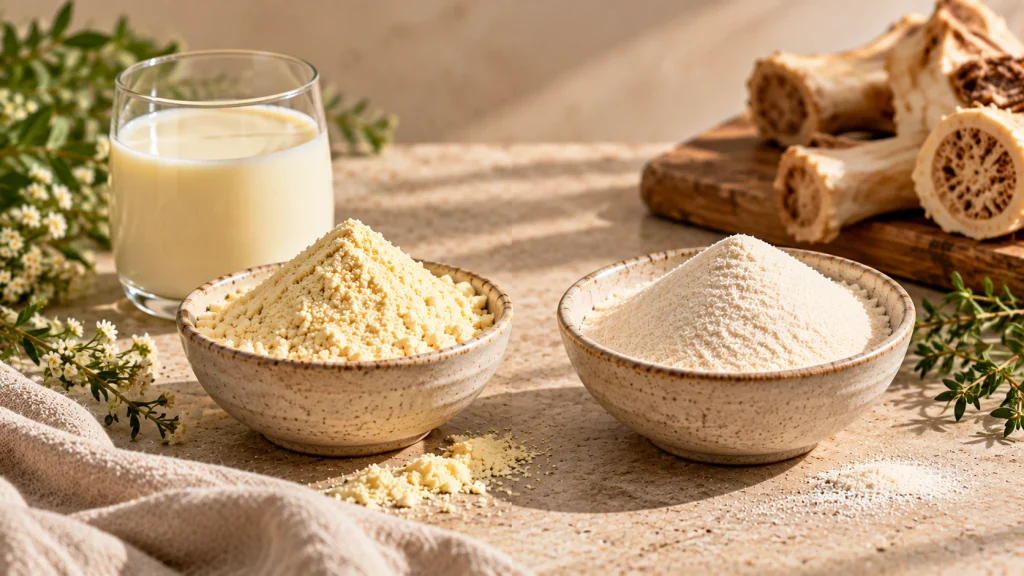
The difference between colostrum and collagen is their biological role. Colostrum is a whole first-milk matrix built to nourish, signal, and support the newborn, while collagen is a structural protein built to give tissues their strength and framework.
One works through a mix of bioactive compounds, while the other is primarily structural material.
| Bovine colostrum | Collagen | |
| What is it? | First milk produced after calving | Structural protein |
| Source | Dairy / mammary secretion | Connective tissue |
| Notable components | Immunoglobulins, lactoferrin, peptides, growth factors | Glycine-, proline-, and hydroxyproline-rich protein |
| Main research areas | Intestinal permeability, some athlete respiratory outcomes | Skin, tendons, connective tissue |
| Dairy-derived? | Yes | No, when sourced directly from connective tissue |
| Interchangeable? | No | No |
This is also why comparing colostrum and collagen only by the word protein misses most of the story.
What Is Bovine Colostrum?
Bovine colostrum is the nutrient-dense fluid cows produce in the first few days after giving birth, before mature milk production takes over.
It’s especially rich in protein, IgG antibodies, lactoferrin, growth factors such as IGF-I and IGF-II, vitamins, and minerals, while generally containing less lactose than regular cow’s milk.
Embed video: https://www.youtube.com/watch?v=gJ2IBV5buPc
Is colostrum a protein?
Colostrum is not one protein. It’s a fluid that contains a high concentration of protein alongside other naturally occurring compounds.
Bovine colostrum is roughly 15% protein, compared with about 3% in mature cow’s milk.
That’s why calling colostrum simply “protein” sells it short. You’re getting a much broader first-milk food matrix, not an isolated protein powder.
Is colostrum dairy?
Yes. Bovine colostrum is a dairy food and contains cow’s-milk proteins, including casein and whey.
That means it’s not dairy-free and may not be appropriate for someone with a diagnosed cow’s-milk protein allergy.
Colostrum generally contains less lactose than mature milk. This is important because lactose intolerance and milk allergy are different issues.
What Is Collagen, and What Are Collagen Peptides?
Collagen is a structural protein found throughout skin, cartilage, tendons, ligaments, bone, fascia, and other connective tissues. Collagen peptides are smaller fragments produced when collagen is broken down through hydrolysis.
Collagen is particularly rich in:
- Glycine
- Proline
- Hydroxyproline
That amino acid profile looks very different from whey or other complete proteins.
Collagen is also not a complete protein because it lacks tryptophan. If your main goal is meeting complete-protein needs, collagen should not replace whey, meat, eggs, or another complete protein source gram for gram.
Is collagen dairy?
Bovine collagen itself is not dairy. It comes from connective tissue rather than milk.
A finished supplement can still contain dairy when collagen is blended with whey, casein, colostrum, or another milk ingredient.
Heart & Soil’s Animal Based Protein is one example. It contains whey, collagen, and colostrum in the same formula.
Should I Take Colostrum or Collagen?
Start with what you’re trying to support. The main reason humans take colostrum is for gut benefits. Collagen is a different tool, with research centered much more on skin and tendons. They are not substitutes for each other.
|
Your main interest |
More directly relevant research |
|
Exercise-associated intestinal permeability |
Colostrum |
|
Skin hydration and elasticity |
Collagen |
|
Tendon adaptation with training |
Collagen |
|
Upper-respiratory symptoms during heavy training |
Colostrum, with important evidence limitations |
|
Complete protein intake |
Neither should replace a complete protein source |
|
Getting both ingredients |
A combination formula |
Colostrum vs Collagen for Gut Health
For intestinal permeability, bovine colostrum has the more direct human evidence. This is one of the areas where colostrum is especially interesting, particularly when the gut is being stressed by hard training, heat, or other physical stressors.
A hard run, a brutal CrossFit session, or prolonged training in the heat does more than make you tired.
Blood flow shifts away from the digestive tract, and intestinal permeability can temporarily increase. The classic “runner’s trots” are the obvious real-world example. They push the system hard enough and your gut lets you know.
That’s where the colostrum research becomes more interesting.
A 2024 meta-analysis included 10 studies evaluating bovine colostrum and intestinal permeability. Colostrum significantly reduced two urinary permeability ratios in the pooled analysis.
The results were not uniform. One permeability endpoint had 99% heterogeneity, and plasma intestinal fatty acid-binding protein did not significantly improve.
So the evidence supports something much more specific than “colostrum heals the gut”:
Colostrum has human evidence for supporting intestinal-barrier function, especially in settings where exercise is putting that barrier under stress.
In other words, it’s an adjunct for people doing things like marathon training, CrossFit, Hyrox, or hard training, rather than as a cure-all.
And that qualifier matters because there’s no panacea and everybody’s individual.
What About Collagen for Gut Health?
Collagen has a plausible nutritional connection to connective tissue, but it does not currently have the same human clinical evidence for intestinal permeability that colostrum does.
Collagen provides amino acids used throughout the body. But saying the intestinal wall contains connective tissue is not the same as showing that oral collagen supplementation improves a damaged intestinal barrier in humans.
That’s the difference between a plausible mechanism and a demonstrated outcome.
For a deeper look at the first-milk compounds and research behind this, see Heart & Soil’s guide to bovine colostrum benefits.
Colostrum vs Collagen for Skin
For skin, collagen is the more directly relevant choice. Skin is a collagen-rich tissue, and collagen supplies large amounts of glycine, proline, and hydroxyproline.
If you eat only lean muscle meat, you’re getting a different nutritional package than you get from bone broth, skin, tendons, cartilage, or tougher connective-tissue-rich cuts. Those parts of the animal naturally bring more collagen.
Foods like bone broth and fibrous cuts of meat are also skin. They supply collagen in the context of real animal foods rather than treating skin health as a single isolated nutrient problem.
And collagen is only part of the picture.
Nutrients such as biotin and iron, along with compounds found in organs and cartilage, are part of the broader nutritional support for skin. So a healthy skin reflects the whole nutrient environment, not one trendy ingredient.
Colostrum belongs in a different lane.
Its value comes from immunoglobulins, peptides, growth factors, fats, and other signaling compounds rather than from being a major source of the structural amino acids that dominate collagen.
So for skin specifically, collagen makes more biological sense. Colostrum may offer other benefits, but collagen provides the raw material that connective tissue is built around.
Colostrum vs Collagen for Tendons, Joints, and Exercise Recovery
For tendon and connective-tissue adaptation, collagen has more directly relevant human research. Colostrum research in active people has focused more heavily on intestinal permeability, respiratory symptoms, and immune-related outcomes.
“Recovery” can mean half a dozen different things, so it helps to get specific.
Collagen and tendon adaptation
Our way of thinking about collagen starts with the animal itself.
Take skirt steak for example. It contains more fibrous tendon tissue.
That makes collagen an obvious nutritional fit when the conversation turns to tendons and other connective tissues.
The clinical research lines up with that biology. In resistance-training studies, collagen has been investigated alongside mechanical loading for changes in tendon size, stiffness, and remodeling.
But the important part is the combination:
You load the tissue, and you give the body the amino acids associated with that tissue.
Collagen is not replacing the training signal.
For a broader look at collagen and joint research, see Heart & Soil’s guide to joint supplements and connective tissue.
Treat colostrum and recovery differently
A newborn mammal needs colostrum to grow, repair, establish its gut, and interact with the outside world very quickly. The signal can simply be described as:
“Grow, grow, grow.”
For an adult, colostrum should be viewed more cautiously. It potentially provides a “gentle signal” around growth and repair.
That becomes especially interesting when training gets extreme.
Colostrum won’t make you stronger by itself. But it may help support the gut barrier when prolonged, intense training temporarily increases intestinal permeability.
Does colostrum boost immunity?
Colostrum isn’t something that simply boosts immunity, but it does modulate it.
In particular, colostrum’s proline-rich polypeptides are potentially working in both directions. It’s helping calm an excessive response while also supporting a response that is too weak.
It’s not one molecule doing one job. It’s a complex food that may help the body handle stress, repair, gut integrity, and immune signaling at the same time.
Can You Take Colostrum and Collagen Together?
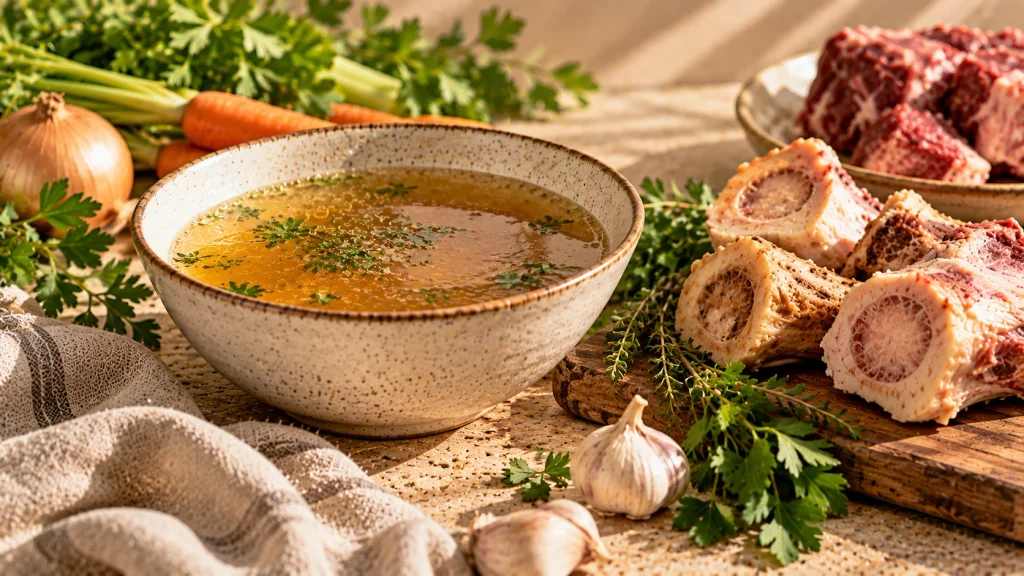
Yes. Colostrum and collagen can be taken together because they bring completely different things to the diet.
There does not need to be some mysterious “synergy” between the two for that combination to make sense.
Muscle meat is not liver. Liver is not cartilage. Milk is not colostrum. And collagen-rich connective tissue is not whey.
That is why reducing any of these foods to one number can be misleading. A higher IgG percentage may look impressive on a label, but if getting there required stripping away fat, casein, peptides, or other parts of the original food, that’s an incomplete version of colostrum.
Why Heart & Soil Combines Whey, Colostrum, and Collagen
That same nose-to-tail logic is built into Animal Based Protein.
One serving combines:
- Grass-fed whey concentrate
- 2 grams of bovine colostrum
- 2 grams of collagen from trachea and scapula cartilage
- 19 grams of total protein
The whey supplies complete protein and all nine essential amino acids.
The collagen brings the amino-acid profile of connective tissue.
The colostrum brings a completely different class of compounds from first milk.
None of them is being asked to do the other ingredient’s job.
How to Choose Between Colostrum and Collagen Products
Once you know which ingredient fits your goal, the label gets easier to read.
For colostrum, check
- The amount of actual colostrum per serving
- Whether the company defines first or early milking
- Whole vs defatted colostrum
- Processing method
- Testing for contaminants
- Immunoglobulin documentation where provided
- Added ingredients
Heart & Soil’s standalone colostrum is currently described as first-milking, whole and non-defatted, grass-fed and pasture-raised, low-temperature and low-pressure processed, and independently tested.
If you want to go much deeper into those buying criteria, Heart & Soil already has a full guide on how to choose a colostrum supplement.
For collagen, check
- Source tissue
- Collagen type where relevant
- Hydrolyzed peptides vs other formats
- Grams per serving
- Additional ingredients
- Finished-product testing
- Whether the research being cited used a comparable dose and outcome
A front-label claim only becomes useful when you know what is actually in the serving.
The Bottom Line on Colostrum vs Collagen
Colostrum and collagen can both come from the same animal. They can both contribute protein.
But these are not the same food in the way that your body perceives them when you ingest them.
There’s just incredible complexity and information in real simple food.
Frequently Asked Questions
What is the difference between colostrum and collagen?
The difference between colostrum and collagen is that colostrum is first milk, while collagen is a structural protein from connective tissue. Colostrum contains immunoglobulins, lactoferrin, growth factors, peptides, fats, and milk proteins. Collagen is rich in glycine, proline, and hydroxyproline and is concentrated in skin, cartilage, tendons, ligaments, and bone.
Is colostrum a protein?
Colostrum is not one protein. Colostrum is first milk that contains many proteins plus fats, carbohydrates, minerals, and other compounds. Its protein fraction includes immunoglobulins, lactoferrin, whey proteins, caseins, and peptides. That makes colostrum a complex dairy food rather than a single isolated protein.
Does colostrum contain collagen?
Colostrum is not a meaningful source of supplemental collagen. Bovine colostrum is dominated by milk proteins and bioactive proteins such as immunoglobulins and lactoferrin. Collagen supplements come from collagen-rich connective tissues such as skin, cartilage, bone, tendons, trachea, or other structural tissues.
Does collagen contain immunoglobulins?
Collagen does not provide the immunoglobulin-rich protein profile found in bovine colostrum. Collagen supplements primarily provide collagen-derived peptides rich in glycine, proline, and hydroxyproline. Immunoglobulins are immune-related proteins naturally abundant in colostrum, while collagen is a structural protein from connective tissue.
Is colostrum better than collagen for gut health?
Colostrum has more direct human evidence than collagen for reducing intestinal permeability, especially when strenuous exercise temporarily increases gut-barrier permeability. Collagen does not currently have the same level of human evidence for this outcome. Colostrum should not be presented as a treatment for IBS, bloating, or every condition described as “leaky gut.”
Is collagen or colostrum better for skin?
Collagen has much more direct human evidence than colostrum for skin hydration and elasticity. Oral collagen supplementation has produced improvements in some controlled trials, although the strongest benefits have not appeared consistently in higher-quality, non-industry-funded research. Colostrum does not have comparable human evidence for improving wrinkles, hydration, or elasticity.
Which is better for tendons, colostrum or collagen?
Collagen has more directly relevant human evidence than colostrum for tendon adaptation. The clearest tendon-stiffness improvements have appeared when 15–30 grams of collagen per day were combined with resistance or plyometric training. Colostrum has not been studied as extensively for tendon structure or connective-tissue adaptation.
Can you take colostrum and collagen together?
Colostrum and collagen can be taken together and can be included in the same supplement formula. They provide different compounds and do not need to be separated nutritionally. There is no established human evidence showing that combining colostrum and collagen creates a special synergistic effect beyond what each ingredient provides individually.
Is colostrum dairy-free?
Colostrum is not dairy-free. Bovine colostrum is the first milk produced by a cow after calving and contains cow’s-milk proteins. Someone with a diagnosed cow’s-milk protein allergy should not treat bovine colostrum as a dairy-free alternative. Milk allergy is an immune reaction to milk proteins, not the same condition as lactose intolerance.
Does Animal Based Protein contain both collagen and colostrum?
Heart & Soil Animal Based Protein contains both collagen and bovine colostrum. Each serving currently provides 2 grams of collagen, 2 grams of bovine colostrum, and 19 grams of total protein alongside grass-fed whey concentrate. The collagen is sourced from trachea and scapula cartilage.
Subscribe to future articles like this:
