
There’s a reason people have made bone broth for generations. Simmering bones and connective tissue makes use of more of the animal, and the result can be a satisfying part of a meal.
The confusion starts when people compare bone broth powder with whey or egg protein using only the number of grams on the tub. Two products can each list twenty grams of protein, yet collagen-rich broth provides a very different mix of amino acids, especially the essential ones muscles need. If you’re buying a powder for strength training, that difference is worth understanding.
We love the idea of using more of the animal, and there’s no reason to give up broth just because it isn’t the same as whey. What matters is knowing where collagen-rich protein belongs and where you’d benefit from a complete protein source.
That’s why we offer Grass-Fed Whey as a straightforward source of complete animal protein at Heart & Soil. We appreciate collagen-rich foods for what they bring to the table, but we don’t pretend one scoop can do every job. A closer look at amino acids makes room for both.
Disclaimer: The information in this blog is for educational purposes only. It is not a substitute for professional medical advice. Consult your healthcare provider if you’re seeking medical advice, diagnosis, or treatment. These statements have not been evaluated by the Food and Drug Administration. Our products are not intended to diagnose, treat, cure, or prevent any disease.
Table of Contents
Key Takeaways
We like having bone broth at the table, but the protein in it isn’t the same as the protein in a steak or an egg. That difference isn’t an insult to broth. It’s simply what happens when you’re eating a different part of the animal.
- Plain bone broth protein is generally not a complete protein. Its collagen-rich amino-acid profile typically contains little or no tryptophan and comparatively little leucine.
- Bone broth protein and whey aren’t interchangeable. Whey provides substantially more essential amino acids for muscle protein synthesis.
- Bone broth protein offers a different nutritional contribution. It’s rich in glycine, proline, and hydroxyproline.
- Formulations vary. A product combining bone broth with another complete protein needs to be evaluated according to its finished amino-acid profile.
- Complete proteins should remain the foundation for muscle goals. Bone broth protein can complement them without replacing them.
The Short Answer, and Why It Matters
So, is bone broth protein complete? Collagen-rich broth generally isn’t, because it contains little or no tryptophan and relatively little leucine. That matters if you’re counting on a scoop to do the work of a complete protein, but it doesn’t make a good bowl of broth worthless.
Is Bone Broth Protein a Complete Protein?
Generally, no, because plain bone broth protein is usually dominated by collagen, which provides little or no tryptophan and comparatively small amounts of other essential amino acids, including leucine. A review of protein quality explains why collagen scores poorly when evaluated as a complete source of indispensable amino acids.
What Does “Complete Protein” Mean?
Complete protein means a food provides all nine essential amino acids in adequate proportions. Think of them as materials your body has to get from the diet, because it can’t make them all itself. Bone broth brings plenty of other amino acids, but that doesn’t automatically cover the whole list.
- Histidine
- Isoleucine
- Leucine
- Lysine
- Methionine
- Phenylalanine
- Threonine
- Tryptophan
- Valine
Why Is Bone Broth Protein Incomplete?
Bone broth protein is generally incomplete because collagen contains little or no tryptophan and relatively little leucine. That makes sense when you remember the powder comes largely from connective tissue rather than muscle. Different tissues bring different nutritional strengths.
In a 2024 comparison of specific collagen and whey preparations, 25 grams of collagen supplied roughly 4.6 grams of essential amino acids and 0.86 grams of leucine, compared with about 12.5 grams of essential amino acids and 2.7 grams of leucine from whey. Those figures aren’t a universal nutrition label for every bone broth powder, but they illustrate why equal protein grams can have very different implications for muscle nutrition.
Bone Broth Protein Amino Acid Profile
Look beyond the big protein number and you’ll see the real story in the amino acids. Collagen-rich broth tends to offer more glycine, proline, and hydroxyproline, while complete proteins such as whey, eggs, and meat give you a different balance of essentials. That’s why two twenty-gram servings shouldn’t be treated as identical.
| Amino Acid or Feature | Collagen-Rich Bone Broth Protein | Whey Protein |
| Glycine | Very high | Lower |
| Proline | High | Lower |
| Hydroxyproline | High | Minimal |
| Leucine | Relatively low | High |
| Total essential amino acids | Lower | High |
| Tryptophan | Minimal or absent in collagen | Present |
| Complete protein | Generally no | Yes |
| Main nutritional emphasis | Collagen-rich amino acids | Muscle-oriented complete protein |
The amounts vary with the ingredients and manufacturing process, so we’d want to see the actual amino-acid panel. If a bone broth powder lists leucine, tryptophan, glycine, and proline, you can tell more easily whether it’s mainly collagen-rich protein or includes other protein sources.
What Collagen-Rich Foods Bring to the Table
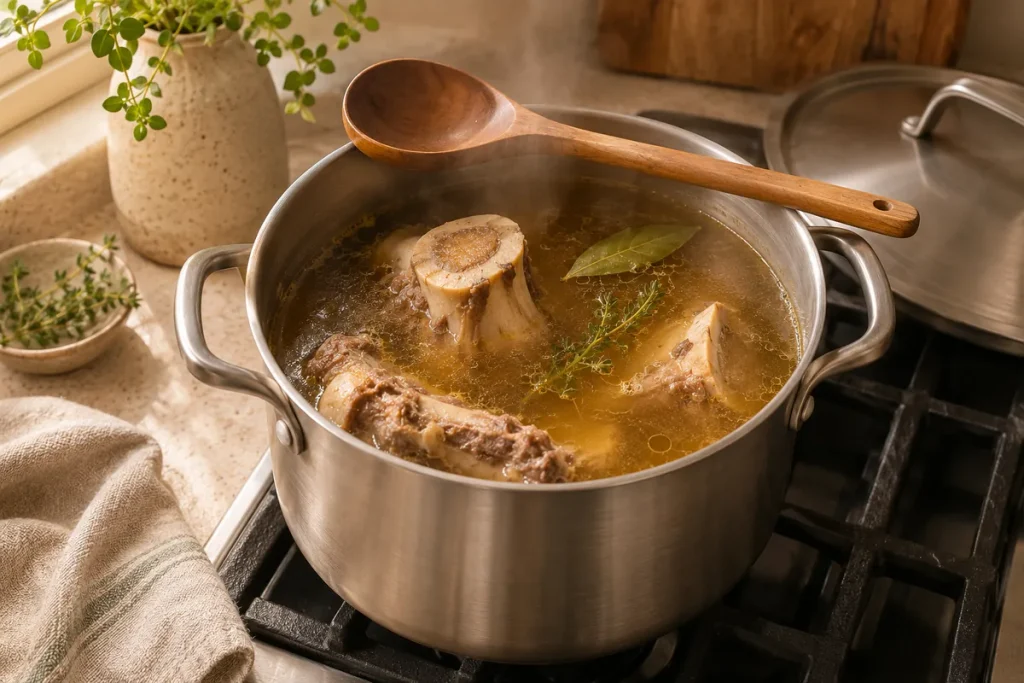
We love the idea of using more of the animal, especially the bones and connective tissues that many kitchens have forgotten how to use. They bring a different mix of amino acids from muscle meat, which is exactly why variety makes sense. You don’t need one part of the animal to replace all the others.
What Amino Acids Are in Bone Broth Protein?
The standout amino acids in collagen-rich broth include glycine, proline, and hydroxyproline. Those are common in connective tissues, and they’re part of why nose-to-tail eaters value broth. But the essential amino acids are a different question, and broth generally can’t answer it alone.
The same servings generally contain fewer essential amino acids than whey or egg protein. A separate distinction is worth making between a cup of ordinary broth and a concentrated protein powder. Research comparing bone broths has found considerable variation in their amino-acid content.
Is Bone Broth Protein the Same as Collagen Protein?
They’re closely related, though the exact product matters. Bone broth gets much of its protein from collagen-rich tissues, while collagen powders concentrate proteins from those tissues more directly. Neither should be treated as equivalent to complete protein just because the label lists the same number of grams.
Does Bone Broth Protein Build Muscle?
Bone broth protein contributes amino acids, but it generally isn’t as effective as whey for supporting muscle protein synthesis. Collagen-rich proteins contain less leucine and a weaker essential-amino-acid balance, while muscle construction requires the full set of indispensable amino acids. A review comparing protein sources describes these differences in anabolic potential.
Why Does Leucine Matter for Muscle?
Leucine helps signal the body to make new muscle protein, but it doesn’t supply everything needed to build it. That work also requires the other essential amino acids. That’s why a single number isn’t enough to judge the amino acids in a serving.
Can You Make Bone Broth Protein “Complete”?
You can absolutely build a meal around broth and make it complete by adding eggs, meat, or dairy. That doesn’t change the amino acids in the broth itself, but it lets the different foods contribute what they do best.
Does Incomplete Protein Mean Bad Protein?
Not at all. Incomplete doesn’t mean worthless, especially when you’re talking about collagen-rich foods that bring different amino acids from muscle meat. It means you wouldn’t rely on that food alone to supply every essential amino acid your body needs.

Where the Evidence Begins, and Where It Stops
It’s tempting to hear that collagen has been studied for something and assume the same result applies to your broth. But a carefully measured collagen peptide preparation and a pot simmering on the stove aren’t identical. The details matter, especially when a claim sounds a little too good to be true.
What Is Bone Broth Protein Good For?
Bone broth can bring flavor, warmth, and collagen-related amino acids to a meal. You can enjoy it for those qualities without claiming broth powder rebuilds joints or replaces complete protein. You can value a food for what it provides without expecting it to meet every nutritional goal.
Is Bone Broth Protein Good for Joints?
Bone broth is often marketed for joints because its protein is rich in collagen-derived amino acids. That’s understandable, but studies of specific collagen preparations aren’t the same as proof that every broth powder improves joint outcomes. We’d rather keep the appealing food tradition and ask more careful questions of the claims.
Is Bone Broth Protein Good for Tendons and Ligaments?
Tendons and ligaments contain collagen, so it’s natural to wonder whether eating collagen-rich broth helps them. The body doesn’t simply ship the collagen from your cup straight to a tendon, and the research on particular peptide products can’t be stretched to every powder on the shelf. This is where the details of the studies matter.
However, studies involving specific collagen peptides or gelatin preparations often use defined doses and exercise protocols. Research on a particular peptide preparation can’t automatically substantiate claims for ordinary broth powder.
Different Protein Sources, Different Strengths
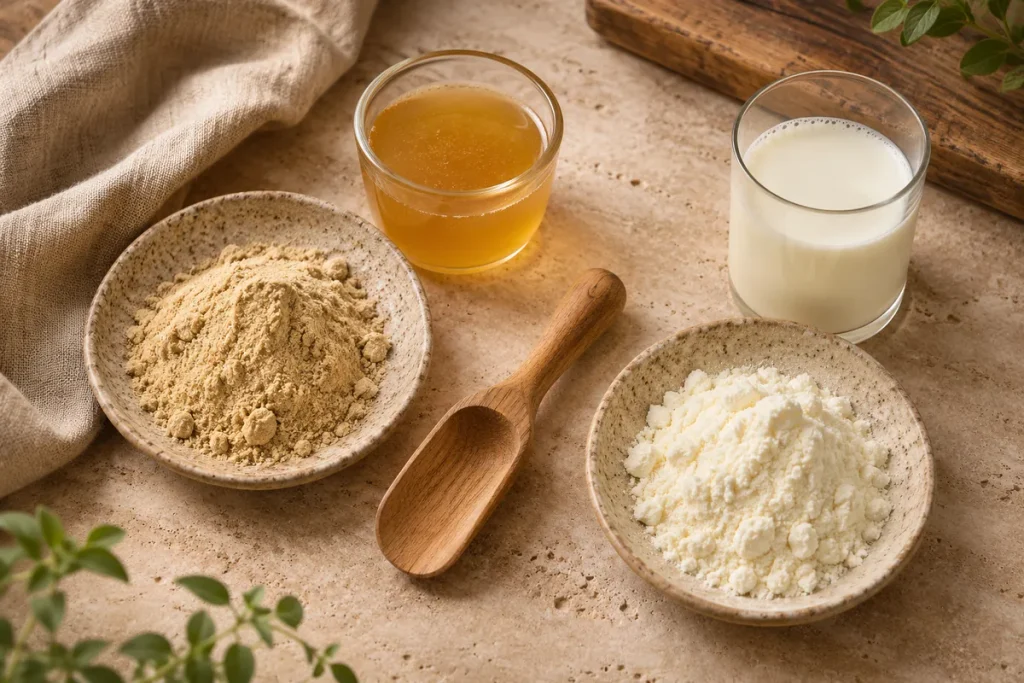
If you’re choosing a protein powder for your muscles, here’s the comparison that matters. Whey supplies all nine essential amino acids and more leucine, while collagen-rich broth offers a very different balance. Both come from animals, but they aren’t duplicates of each other.
Bone Broth Protein vs. Whey
If building muscle is your priority, whey is usually the more direct protein choice because it contains all nine essential amino acids and more leucine. Broth brings a different mix that’s richer in collagen-related amino acids, so there’s no reason to abandon it. You just wouldn’t ask it to replace every other source of protein.
| Feature | Bone Broth Protein | Whey |
| Complete protein | Generally no | Yes |
| Essential amino acids | Lower | High |
| Leucine | Lower | High |
| Glycine | Very high | Lower |
| Proline | High | Lower |
| Hydroxyproline | High | Minimal |
| Muscle protein synthesis | Weaker primary source | Strong fit |
| Dairy-free | Usually | No |
| Collagen-related amino acids | Prominent | Less prominent |
| Best use | Complementary protein | Primary muscle-focused protein |
If you want a complete animal protein for muscle maintenance, whey is generally the better supplement. If your diet already provides plenty of complete protein and you’re interested in collagen-rich amino acids, bone broth can serve a different purpose.
Bone Broth Protein vs. Meat
Meat and broth come from different animal tissues, and that’s why they don’t provide the same protein. Muscle meat is rich in complete protein, while broth draws much of its amino-acid character from connective tissue. It’s one more reason we like the idea of eating more of the animal, not just one part.
Bone Broth Protein vs. Egg Protein
Egg protein is another complete protein, while broth provides more collagen-related amino acids. They’re different foods with different strengths, and you can enjoy them at the same meal without expecting one to replace the other.
Making Room for Broth Without Losing the Foundation
There’s no need to throw out the broth pot because a protein chart calls collagen incomplete. Have your broth, enjoy it, and let the rest of your meal bring the complete protein. That’s a more nourishing way to think about food than demanding every ingredient tick every box.
Does Bone Broth Protein Count Toward Your Daily Protein?
Bone broth protein does count toward your total protein intake, but it shouldn’t be your only source when essential-amino-acid needs matter. When you only look at total protein grams, you may miss differences in essential amino acids. Your overall meals fill in the picture.
How Much of Your Protein Should Come From Collagen-Rich Sources?
There’s no universally established percentage of daily protein that must come from collagen. The more useful approach is to ensure adequate complete protein first, then include collagen-rich foods or supplements according to preference.
Someone eating a varied animal-based diet may consume collagen through meat containing connective tissue, broth, and other foods. A concentrated collagen or bone broth protein powder can be another source, but it shouldn’t displace all complete protein simply to reach an arbitrary collagen target.
Is Bone Broth Protein Powder Good for You?
Bone broth powder can be a useful food addition if you enjoy it and it fits what you’re eating. We’d judge it by the ingredients, what it tastes like, and what it contributes, not by a promise that it will somehow replace every other protein on your plate.
Who Might Choose Bone Broth Protein?
Someone who avoids dairy and appreciates collagen-rich foods may enjoy bone broth protein, particularly alongside meals already providing enough complete protein. A person lifting hard or an older adult struggling to eat enough essential amino acids has a different priority. That person may find whey, egg, or another complete source a more practical starting point, while broth remains a complement.
Can You Take Bone Broth Protein and Whey Together?
Yes, you can use broth protein and whey in the same routine because they contribute different amino acids. There’s no need to pick a side in a protein rivalry that makes no sense at the dinner table. Just make sure complete protein still has a place in your meals.
Buying Broth Powder With Your Eyes Open
Once broth is sold as powder, companies often package it much like whey or other protein supplements. Turn the tub around and see what it’s made from, how many grams you’re getting, and whether the amino acids match what you wanted. You can’t make that judgment from the name alone.
How to Choose a Bone Broth Protein Powder
Start by asking whether the powder is actually made from broth or mostly isolated collagen, then look at the serving and amino acids where available. Twenty grams of total protein isn’t enough information to judge the amino-acid profile. If the brand can’t explain what’s in the tub, that’s useful information too.
- Protein per serving: How many grams of protein are actually provided?
- Animal source: Is the protein derived from beef, chicken, or another source?
- Amino-acid information: Are leucine, tryptophan, glycine, and proline disclosed?
- Processing: Is the product hydrolyzed, concentrated, or produced using another method?
- Sodium and other ingredients: Do the amounts suit your diet?
- Testing and sourcing: Are relevant quality claims transparent?
- Intended goal: Are you buying collagen-rich amino acids or complete protein for muscle?
If the manufacturer’s marketing emphasizes muscle growth but the formula is predominantly collagen-derived, the amino-acid information deserves particular scrutiny.
Bone Broth Protein and Heart & Soil
We value collagen-rich animal tissues in nose-to-tail eating, but they aren’t a substitute for complete muscle protein. Bone broth contributes one pattern of amino acids, while meat, eggs, and whey provide a stronger complement of essential amino acids and leucine.
If muscle maintenance is your main reason for using a powder, our Grass-Fed Whey provides complete animal protein, while bone broth offers a different mix of amino acids. You can still include broth or other collagen-rich foods for their different nutritional contribution. Understanding that difference is what makes a nose-to-tail diet more varied, rather than simply adding up interchangeable grams of protein.
Is Bone Broth Protein Complete? The Heart & Soil Perspective
Bone broth and complete protein belong in the same food conversation, but they bring different things. We value the variety in nose-to-tail eating, which is why we’d pair broth with meat, eggs, or another complete protein when muscle nutrition is the priority.
For a simple complete-protein option, explore our Grass-Fed Whey or compare the animal-based proteins we offer.
Frequently Asked Questions About Bone Broth Protein
Most of the confusion comes from one innocent-looking number on a label. Here are the answers that help you decide what broth contributes and what the rest of your meal still needs to provide.
Is Bone Broth Protein a Complete Protein?
Generally, no, since plain bone broth protein is usually collagen-dominant and contains relatively little of several essential amino acids, particularly tryptophan and leucine. That makes it a weaker primary protein for muscle-building than whey, eggs, or meat. Blended products may differ, so check the actual ingredients and amino-acid profile.
What Amino Acids Are in Bone Broth Protein?
Bone broth protein is typically rich in glycine, proline, hydroxyproline, and alanine. It also contains some essential amino acids, but generally in smaller proportions than complete protein sources such as whey. The exact composition depends on the raw materials and manufacturing process, making published amino-acid information useful when comparing products.
Does Bone Broth Protein Build Muscle?
Bone broth protein contributes amino acids, but it’s generally less effective than whey for stimulating muscle protein synthesis because it contains fewer essential amino acids and less leucine. If muscle gain is your main goal, complete protein plus resistance training is the stronger foundation. Bone broth can still complement that diet.
Does Bone Broth Protein Count Toward Daily Protein?
Yes, bone broth contributes to your daily protein intake, although its incomplete essential-amino-acid profile means equal grams of bone broth and whey aren’t nutritionally equivalent for muscle growth. Make sure your daily diet includes sufficient complete protein rather than relying entirely on collagen-rich powders.
Is Bone Broth Protein Better Than Whey?
Not for muscle-building, where whey provides more essential amino acids and leucine and therefore makes a stronger primary protein for maintenance and growth. Bone broth brings more collagen-associated amino acids, including glycine and proline. Their nutritional roles differ, so the better choice depends on what you want the product to contribute.
Is Bone Broth Protein the Same as Collagen?
No, although they’re closely related. Bone broth protein is usually derived from broth prepared with bones and connective tissue, while collagen peptides are more specifically extracted and processed collagen. Both can be rich in glycine and proline, but their final compositions and manufacturing methods vary.
Is Bone Broth Protein Good for Joints?
Bone broth protein supplies amino acids found in collagen-rich connective tissues. However, that doesn’t establish that every bone broth powder improves joint comfort. Clinical findings involving specific collagen peptide or undenatured type II collagen preparations shouldn’t automatically be applied to generic bone broth protein products.
Can I Take Bone Broth Protein and Whey Together?
Yes. Whey supplies complete protein and substantial leucine, while bone broth protein contributes more collagen-related amino acids. Their different profiles can complement one another within a varied diet. There’s no need to consume them together at one specific time, provided your overall diet meets your nutritional needs.
Subscribe to future articles like this:
