
Medical Disclaimer: This article is for educational purposes only and is not medical advice. Talk with a qualified healthcare professional about your individual dietary needs.
If you’ve started checking ingredient labels for seed oils, you may have wondered: Is palm oil a seed oil?
Here’s what to know about its fatty acid profile, potential benefits and downsides, and where palm oil fits within an animal-based diet.
Key Takeaways
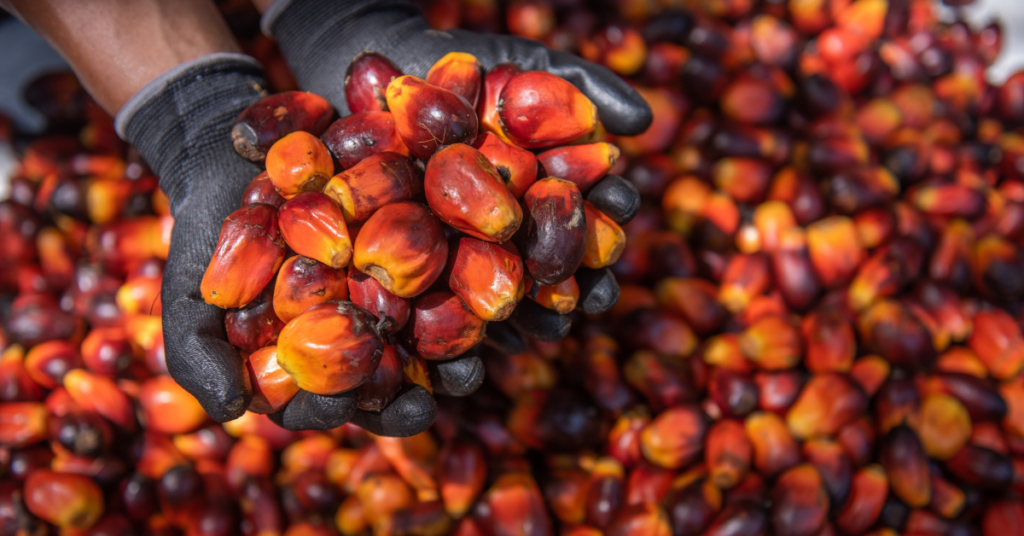
- Palm oil is not a seed oil. It is extracted from the fleshy portion, or mesocarp, of oil palm fruit.
- Palm kernel oil comes from the kernel, or seed, and has a different fatty acid profile.
- Palm oil contains roughly 40–45% saturated fat, around 40% monounsaturated fat, and approximately 10% linoleic acid (1).
- Clinical research suggests red palm oil can improve vitamin A status in populations at risk of deficiency, largely because it contains carotenoids that the body can convert to vitamin A (2).
- Palm oil has produced more favorable blood-lipid changes than trans fats in clinical comparisons, but it can raise LDL cholesterol when it replaces fats higher in MUFAs or PUFAs (3).
- Heart & Soil generally prioritizes traditional animal fats such as tallow, butter, and ghee.
What Is Palm Oil?
Palm oil is an edible oil produced from the fruit of the oil palm, most commonly Elaeis guineensis.
It has a long history of culinary use in parts of Africa and Asia and is now used around the world in cooking oils, baked goods, packaged foods, cosmetics, soaps, and other products.
Typical palm oil contains approximately:
- 44–45% palmitic acid, a saturated fatty acid
- 39–40% oleic acid, a monounsaturated fatty acid
- 10–11% linoleic acid, a polyunsaturated omega-6 fatty acid
Its relatively low linoleic acid content also makes it more resistant to oxidative deterioration than oils much higher in polyunsaturated fat (4).

Is Palm Oil a Seed Oil?
No. Palm oil is a fruit oil. It’s not included in the list of seed oils.
Oil palm fruit is used to produce two different oils:
- Palm oil comes from the fleshy outer portion of the fruit called the mesocarp.
- Palm kernel oil comes from the kernel, or seed, inside the fruit.
The two oils also have different fatty acid profiles.
- Palm oil is especially rich in palmitic and oleic acids
- Palm kernel oil contains much more lauric acid and more closely resembles coconut oil in its fatty acid composition (5).
Palm Oil vs. Common Seed Oils
Palm oil has a very different fatty acid profile from many industrial seed oils.
| Palm Oil | Soybean Oil | Sunflower Oil | Tallow | |
| Source | Palm fruit | Soybean seed | Sunflower seed | Beef fat |
| Seed oil? | No | Yes | Yes | No |
| Linoleic acid | ~10% | ~51% | ~68% | ~1% |
| Saturated fat | High | Low | Low | High |
| Common uses | Frying, baking, packaged foods | Frying, packaged foods | Frying, dressings | Cooking, frying |
Palm oil’s combination of saturated and monounsaturated fats contributes to its semi-solid texture and relative heat stability.
That does not make it nutritionally identical to traditional animal fats, but it also means it should not be lumped together with every high-linoleic seed oil simply because it comes from a plant.
Learn more: The 9 Worst Seed Oils Hiding in Your Kitchen Today
Red Palm Oil vs. Refined Palm Oil
Processing makes a significant difference.
Red Palm Oil
Unrefined or minimally refined red palm oil gets its reddish-orange color from naturally occurring carotenoids.
It also contains:
- Beta-carotene and other carotenoids
- Tocopherols
- Tocotrienols
- Phytosterols
Those compounds are one reason research on red palm oil cannot automatically be applied to heavily refined palm oil.
Refined Palm Oil
Much of the pale palm oil found in packaged foods undergoes refining, bleaching, and deodorization.
These processes create a more neutral-tasting and lighter-colored oil but can substantially reduce naturally occurring carotenoids and other compounds.
That means the phrase “palm oil” on an ingredient label doesn’t tell you everything about the finished product.
Potential Benefits of Palm Oil
Palm oil isn’t a miracle food, but there are several evidence-backed reasons it differs from the typical industrial seed oils people are trying to avoid.
1. Red Palm Oil Can Provide Provitamin A
Red palm oil is particularly rich in carotenoids, including beta-carotene, which the body can convert into vitamin A.
A meta-analysis of nine randomized controlled trials found that red palm oil supplementation reduced the risk of vitamin A deficiency and increased serum retinol and beta-carotene levels in children and adults (6).
A newer randomized controlled trial in vitamin-A-deficient schoolchildren also investigated carotenoid-rich red palm olein as a strategy for improving vitamin A status (7).
This benefit applies specifically to carotenoid-rich red palm oil, not necessarily the highly refined palm oil found in packaged foods.
2. It Has Performed Better Than Trans Fats in Clinical Comparisons
Palm oil does not consistently outperform every dietary fat, but the comparison matters.
A meta-analysis of clinical trials found that when palm oil replaced trans fats, researchers observed several favorable changes in cardiovascular risk markers, including higher HDL cholesterol and apolipoprotein A-I and lower apolipoprotein B, triglycerides, and the total-cholesterol-to-HDL ratio (8).
In one controlled crossover trial, a palm-oil-based diet also produced higher HDL cholesterol than a diet containing partially hydrogenated soybean oil (9).
Importantly, this does not mean palm oil produced the most favorable lipid profile overall. In the same research, fats higher in unsaturated fatty acids sometimes produced lower LDL cholesterol.
The evidence is better summarized this way: palm oil can be a better alternative to trans fats, but its effects depend heavily on what fat it replaces.
3. Palm Oil Is Relatively Heat-Stable
This is more of a chemical property than a clinical health benefit, but it matters when comparing cooking oils.
Palm oil contains much less linoleic acid than oils such as soybean or sunflower oil. Its higher saturated-fat content and relatively low PUFA concentration make it more resistant to oxidative deterioration during food preparation (10).
That is one reason palm oil has historically been useful for frying and other high-temperature cooking applications.
Potential Downsides of Palm Oil
There are also good reasons not to treat palm oil as automatically healthy simply because it isn’t a seed oil.
1. Its Effects on Cholesterol Depend on What It Replaces
Clinical research on palm oil and cardiovascular risk markers is mixed.
In a meta-analysis of dietary intervention trials, palm oil produced higher total cholesterol, LDL cholesterol, and ApoB when it replaced fats rich in monounsaturated and polyunsaturated fatty acids.
However, palm oil produced more favorable changes in several markers when it replaced trans fats. Researchers ultimately concluded that both favorable and unfavorable changes occurred depending on the comparison fat (3).
A separate meta-analysis similarly found that palm oil increased LDL cholesterol by approximately 0.24 mmol/L compared with vegetable oils lower in saturated fat (11).
So statements that palm oil is inherently “heart healthy” or inherently harmful oversimplify the evidence.
2. Refining Can Create Processing Contaminants
High-temperature refining can produce compounds known as 3-MCPD esters and glycidyl esters.
These contaminants can occur in multiple refined vegetable oils, but the European Food Safety Authority has identified palm oil and palm fats as important dietary sources of 3-MCPD esters.
EFSA notes that exposure is considered safe for most consumers but could be a concern among some high-consuming younger populations (12).
Improved refining techniques can substantially reduce these compounds, so levels vary depending on processing.
3. Repeated Heating Can Degrade the Oil
Even relatively heat-stable fats deteriorate when exposed repeatedly to high heat, oxygen, and long cooking times.
Commercial fryers may reuse oil through multiple heating cycles. Over time, this can increase oxidation products and decrease naturally occurring antioxidants.
This concern isn’t unique to palm oil, but it is one reason we wouldn’t consider repeatedly heated restaurant palm oil equivalent to fresh, minimally processed red palm oil.

Is Palm Oil Animal-Based?
At Heart & Soil, we generally prioritize traditional animal fats such as:
- Beef tallow
- Butter
- Ghee
These fats are naturally low in linoleic acid and work well for frying, roasting, and everyday cooking.
Coconut oil is another relatively saturated plant-derived option.
So palm oil wouldn’t be our first choice for cooking on an animal-based diet. But that doesn’t mean palm oil and high-linoleic seed oils are nutritionally or chemically identical.
Promote Healthy Weight Management
Metabolism. Energy. Drive.

- 1 ingredient: grass-fed & finished suet
- Rendered at low temperatures to preserve nutrients
- Encourages the absorption of fat-soluble vitamins
60-day risk-free guarantee. No questions asked.
FAQ
Is palm oil inflammatory?
Palm oil contains less linoleic acid than many common seed oils, but there isn’t good clinical evidence showing that palm oil itself is inherently inflammatory. Its effects depend on the type of palm oil, amount consumed, processing, and the overall diet.
Is palm oil better than seed oils?
Palm oil has a different fatty-acid profile from high-linoleic oils such as soybean and sunflower oil, including substantially less polyunsaturated fat. Heart & Soil still generally favors traditional animal fats like tallow, butter, and ghee for everyday cooking.
Is red palm oil healthier than refined palm oil?
Red palm oil retains considerably more carotenoids and vitamin E compounds than highly refined palm oil. Refining removes much of its characteristic red color and reduces some of these naturally occurring compounds.
Can you cook with palm oil?
Yes. Palm oil’s relatively high saturated- and monounsaturated-fat content makes it more resistant to oxidation than many oils high in polyunsaturated fat. Repeated heating for long periods can still degrade it.
What can I use instead of palm oil?
For an animal-based approach, beef tallow, butter, and ghee are our preferred options. Coconut oil is another relatively saturated plant-derived cooking fat.
Related Reading
- 20 Surprising Foods With Seed Oils (Avoid These)
- Electrolyte Imbalance: Signs to Pay Attention To
- Easy Animal-Based Tacos with Protein Tortillas
The Bottom Line
So, is palm oil a seed oil? No. Palm oil comes from the fleshy fruit of the oil palm, while palm kernel oil comes from the seed.
Compared with many common seed oils, palm oil contains considerably less linoleic acid and is more resistant to oxidative deterioration. Less-refined red palm oil also retains carotenoids and other compounds that can be lost through refining.
But that doesn’t mean every palm oil product is ideal. Clinical research on blood lipids depends heavily on what fat palm oil replaces, while refining, repeated heating, environmental impacts, and production practices are all worth considering.
When cooking at home, Heart & Soil still generally prioritizes traditional animal fats such as tallow, butter, and ghee.
Fat Loss Stack
Grass-Fed Organs for Metabolic Health

- Firestarter, Gut & Digestion, Warrior
- Supports sustainable fat loss while enhancing metabolism and muscle retention
- Help fight cravings, boost energy, and nourish your gut
60-day risk-free guarantee. No questions asked.
Subscribe to future articles like this:
