
Two bottles can both say desiccated liver and still be very different products.
One may start with frozen liver and remove moisture under low pressure, while another uses warmer air or more prolonged heat. By the time both end up as brown powder in a capsule, that difference is impossible to see.
Desiccated liver simply means dried liver, so the term alone doesn’t tell you how the drying happened. That matters because heat-sensitive nutrients and other compounds don’t all respond to processing the same way.
Heat-dried liver isn’t useless, and cooked liver is still excellent food. But if the goal is to preserve an already nutrient-dense organ for storage, there’s little reason to expose it to more heat than necessary.
That’s why we freeze-dry Pure American Liver and Beef Organs. The organ already brings the nutrition, so our job is simply to preserve it carefully and make it easier to eat consistently.
Table of Contents
What Is Desiccated Liver?
Desiccated liver is liver with most of its water removed. It’s usually dried, milled into powder, then sold loose or put into capsules.
What the word desiccated leaves out is just as important, because it doesn’t tell you whether the liver was cooked first, how much heat it saw, how long the process took, or how the finished powder was handled. So while two products may carry the same description, the actual processing can be very different.
Every freeze-dried liver product is desiccated, but not every desiccated liver product is freeze-dried.
Is Desiccated Liver the Same as Freeze-Dried Liver?
No. Freeze-dried liver is one type of desiccated liver.
- Desiccated liver means liver dried by any method.
- Freeze-dried liver is frozen first, then dried under reduced pressure.
- Heat-dried liver uses warm or hot air, ovens, heated surfaces, drums, or another thermal process.
- Spray-dried liver is turned into a liquid or slurry, then sprayed into heated air to form a powder.
If a label only says desiccated, don’t assume it means freeze-dried. Look for the actual processing method.
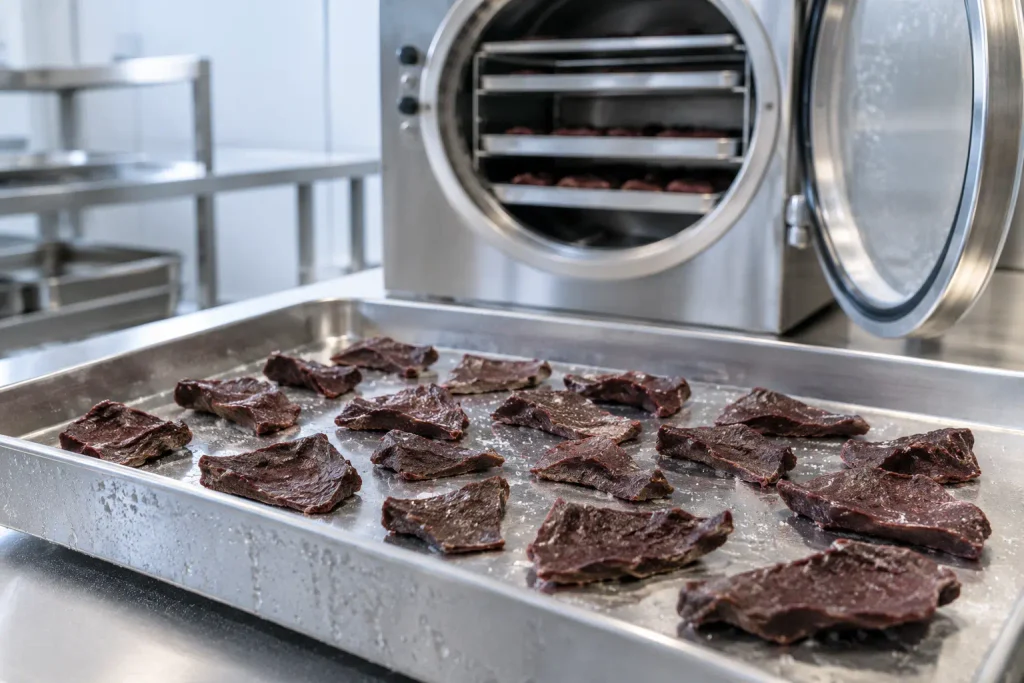
How Does Freeze-Drying Work?
Freeze-drying removes water from frozen tissue under reduced pressure. Instead of melting first, the ice leaves the tissue as vapor through sublimation, which allows most of the drying to happen without prolonged high heat.
- Freezing: The organ is frozen solid.
- Primary drying: Pressure drops, and most of the ice leaves as vapor.
- Secondary drying: Remaining moisture is removed under controlled conditions.
- Grinding and encapsulation: The dry organ is milled and put into its finished format.
Scientific reviews describe freeze-drying as a useful way to preserve foods and heat-sensitive biological materials because it can retain structure and sensitive compounds comparatively well.
That doesn’t mean the food stays completely unchanged, because freezing, dehydration, oxygen, packaging, and storage all matter too. Still, when you start with real organs and the goal is preservation, using less heat makes sense.

How Are Heat-Dried Organ Supplements Made?
Heat-dried organ supplements use warmer air, heated surfaces, or another thermal process to remove moisture. But “heat-dried” covers a lot of ground, so a brief controlled heat step and hours of aggressive heating shouldn’t be treated as the same thing.
- Hot-air or convective drying
- Oven drying
- Drum drying
- Spray drying
- Cooked dehydration
Temperature matters, but so do time, airflow, oxygen exposure, product thickness, and storage, which is why two heat-dried products can still come out differently.
Even then, heat doesn’t erase nutrition. Minerals are generally stable, much of the protein remains, and many vitamins survive cooking and drying, so the better question is how much thermal stress the food saw along the way.
Freeze-Dried vs Heat-Dried Organs at a Glance
| Feature | Freeze-dried organs | Heat-dried organs |
| Basic method | Water removed from frozen tissue under reduced pressure | Water removed using heated air or surfaces |
| Thermal exposure | Generally lower | Generally higher |
| Food structure | Often better retained | More structural change may occur |
| Heat-sensitive vitamins | Often better retained | More vulnerable as heat and time rise |
| Heat-sensitive proteins and peptides | Lower thermal exposure may better preserve structure and activity | Some may denature or lose activity with enough heat |
| Minerals | Generally stable | Generally stable |
| Total protein | Usually retained, though structure can change | Usually retained, though heat can denature proteins |
| Production cost | Usually higher | Often lower |
We’re not adding neat retention percentages because those depend on the organ, nutrient, and exact process. A very precise number isn’t useful if nobody actually measured the finished product.
Why Can Heat Change Nutritional Quality?
Heat changes some nutrients more than others, and sometimes the change is about activity rather than quantity. Minerals such as iron, copper, zinc, and selenium are relatively stable, while certain B vitamins, enzymes, proteins, and peptides are more sensitive to temperature and exposure time.
That distinction matters because a protein can still be present after heating even if its structure has changed enough to reduce its biological activity. We cook food all the time, so this doesn’t make heated liver worthless.
But when the job is preservation, exposing the organ to less unnecessary heat gives those more sensitive compounds a better chance of staying closer to their original state.
What Happens to Specific Nutrients During Drying?
Different nutrients respond to processing differently, so there isn’t one useful percentage that tells you how much “nutrition” survives. Looking at the major nutrients and compounds separately gives you a clearer picture.
Vitamin B12
Vitamin B12 can be affected by heat, light, oxygen, moisture, and storage, so avoiding prolonged heat makes sense for a B12-rich food like liver. But the drying method still can’t tell you the exact B12 content of a finished bottle. That’s what testing is for.
Vitamin A
Liver is naturally rich in preformed vitamin A, which is one reason we value it so highly. Unlike beta-carotene from plant foods, preformed vitamin A doesn’t need to be converted first.
Because vitamin A can be affected by heat, oxygen, light, and fat oxidation, lower-temperature drying helps reduce one of those stresses. We generally encourage about 0.5–1 ounce of liver per day as part of roughly 1–3 ounces of total organs, since liver is concentrated food and a relatively small amount can bring a lot to the table.
Pregnancy and high-dose isolated retinol are separate questions, but regular liver intake doesn’t need to be treated like a nutritional emergency.
Minerals
Iron, copper, zinc, and selenium are much more stable during drying than many vitamins. Removing water also makes the dried tissue more concentrated by weight, so a gram of dry liver isn’t directly comparable with a gram of fresh liver.
Protein
Protein doesn’t vanish because food gets warm, but total protein only tells part of the story. Heat can unfold proteins, change their solubility, and reduce the activity of heat-sensitive proteins or enzymes even when the grams of protein barely change.
Cooked meat is still excellent protein, so denaturation isn’t the same as nutritional destruction.
Freeze-drying avoids prolonged high heat, which matters when the goal is to preserve more than just the amino acids. Research on lyophilized proteins shows stability depends on the individual protein and processing conditions, so the useful comparison isn’t “unchanged” versus “destroyed.” It’s gentler versus harsher processing.
Enzymes, Peptides, and Growth Factors
This is where processing matters most. Enzymes rely on their three-dimensional structure, while peptides vary widely in how well they tolerate heat. Some are relatively stable, while others can lose activity when exposed to enough heat, so there isn’t one cutoff that applies to everything.
Preparation can also change the peptide profile itself. In one porcine-liver study, four different processing methods produced 44 peptides that differed significantly between treatments, along with differences in measured biological activity. Same organ, different processing, different finished material.
That doesn’t prove every peptide in a freeze-dried organ supplement survives digestion intact or produces a specific effect in the body. But it does give us another reason to keep processing gentle when the goal is to preserve what was naturally in the organ.
Is Freeze-Dried Liver Raw?
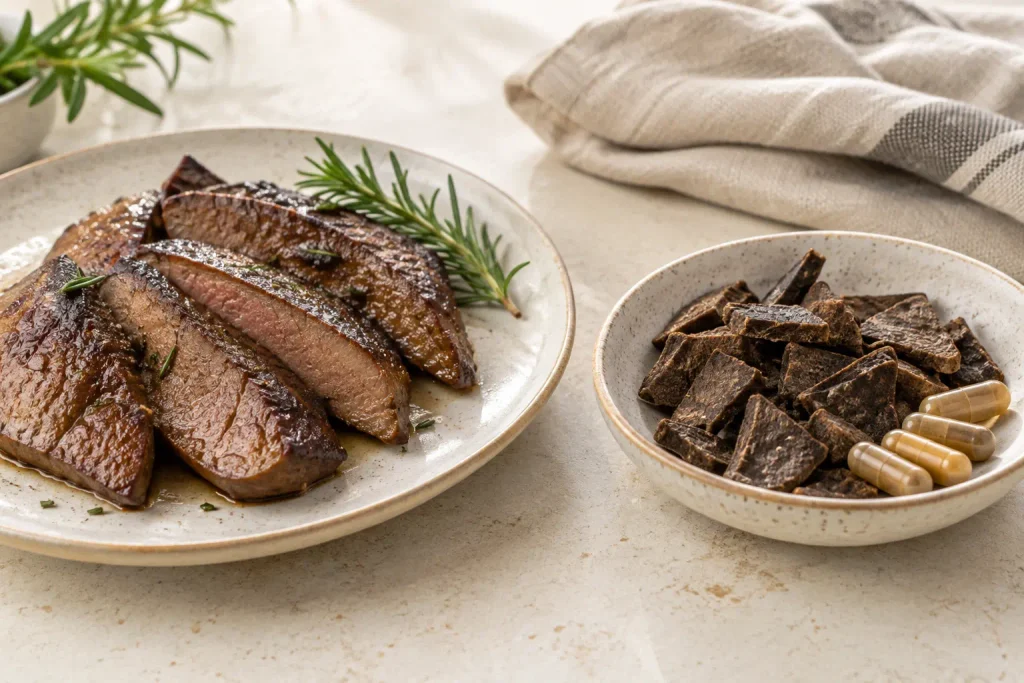
Not necessarily. Freeze-dried tells you how the water was removed, but it doesn’t tell you whether the liver was raw, cooked, pasteurized, or otherwise treated beforehand.
We’re fans of fresh organs, raw or cooked, when they come from a high-quality source and are handled appropriately. Still, neither raw nor freeze-dried should become a shortcut for judging the whole product, because careful drying can’t turn poor raw material into great food.
We care about the animal first and the processing second.
Is Freeze-Dried Liver as Good as Fresh Liver?
Fresh and freeze-dried liver are two practical ways to eat the same organ. Fresh liver gives you the complete culinary food, while freeze-dried liver removes most of the water so it becomes shelf-stable and much easier to keep around.
Fresh liver is great if you enjoy it and will actually eat it, but it also asks you to buy it, store it, cook it, and deal with a flavor plenty of people don’t love. Freeze-dried liver solves that practical problem, which is why we don’t treat the two as rivals.
Eat fresh liver when it works for you, use freeze-dried liver when convenience matters, or use both if that makes consistency easier. There’s no prize for forcing down a plate of liver you hate. The point is to bring the organ back into the diet.

Is Heat-Processed Liver Nutritionally Worthless?
No. Heat-processed liver can still be a nutrient-dense food. As heat and exposure time rise, some sensitive compounds may change, while minerals and much of the protein remain, so the difference is one of degree rather than nutritious versus worthless.
That’s also why we don’t freeze-dry because every other method ruins liver. We freeze-dry because, when preservation is the job, using less heat makes sense.
Is Freeze-Drying Always the Best Method?
Freeze-drying has real advantages for limiting thermal exposure, but it costs more, uses more energy, and takes longer. That trade-off is worth understanding before treating the method as automatically superior in every situation.
- Lower thermal exposure
- Good retention of food structure
- Better protection for many heat-sensitive compounds
- Long shelf life when packaged correctly
- Higher production cost and energy use
Scientific reviews identify energy demand and operating cost as major limitations of freeze-drying. We accept that because it fits the way we want to handle food: preserve what’s already there instead of processing it more than necessary.
Our Freeze-Dried Organ Options
Our approach is simple: start with nutrient-dense animal foods, freeze-dry them, and make them easier to keep in your routine. Within that approach, Pure American Liver goes deeper on liver, while Beef Organs goes broader across the animal.
Pure American Liver
Pure American Liver is our liver-only formula, made from freeze-dried beef liver. We made it for people who want liver to be a regular part of the diet without having to cook and taste fresh liver every day.
The goal isn’t to reinvent liver. We just made it easier to eat.
Beef Organs
Beef Organs goes broader with liver, heart, pancreas, spleen, and kidney. Most people aren’t cooking five different organs every week, but those tissues don’t all bring the same nutrition, so Beef Organs makes nose-to-tail variety much easier to keep in the routine.
Pure American Liver vs Beef Organs
| Feature | Pure American Liver | Beef Organs |
| Organs included | Liver only | Liver, heart, pancreas, spleen, kidney |
| Processing | Freeze-dried | Freeze-dried |
| Best fit | More focused liver intake | Broader nose-to-tail organ intake |
You don’t have to treat the two as mutually exclusive, because our organ supplements are designed to work together. Beef Organs already contains liver, so there’s some expected overlap, but overlap by itself isn’t a reason to avoid combining them. For more background, see our guides to organ meat benefits and beef organ supplements.

What Should You Look for in a Desiccated Liver Supplement?
You should be able to tell what the organ is, where it came from, how it was processed, how much you’re getting, and what was tested.
- Processing: Look for the actual drying method instead of assuming desiccated means freeze-dried.
- Sourcing: Look for clear cattle sourcing and meaningful farming standards.
- Ingredients: If it’s liver, the label should say liver. If it contains several organs, those organs should be named.
- Serving amount: Look at milligrams per capsule and the full serving, not just the capsule count.
- Testing: Look for finished-product testing around identity, purity, and contaminants.
- Claims: Good liver doesn’t need promises that every nutrient survives perfectly or that one capsule fixes everything.
Most importantly, don’t engineer something complicated when the thing you wanted was real food in the first place.
How to Store Freeze-Dried Organ Supplements
Freeze-dried powders are very good at losing water, but they’re also very good at taking it back from humid air, which is why storage matters once the bottle is open.
- Keep the bottle tightly closed
- Store it somewhere cool and dry
- Keep it out of direct sunlight
- Avoid humid bathrooms and steamy kitchens
- Don’t leave capsules in a hot vehicle
The freeze-dryer did its job. There’s no need to invite the humidity back in.
Common Myths About Desiccated Liver
| Myth | Reality |
| Desiccated always means freeze-dried | Desiccated only means dried. |
| Freeze-drying preserves 100% of everything | It reduces thermal stress, but the food still changes. |
| Heat makes liver nutritionally worthless | Cooked and heat-dried liver can still provide substantial nutrition. |
| Freeze-dried liver is automatically raw | Freeze-dried describes water removal, not every step beforehand. |
| Fresh liver and freeze-dried liver have to compete | They’re two practical ways to keep the same organ in the diet. |
Is Desiccated Liver Effective?
Yes, if what you want is a practical way to eat liver more consistently. Fresh liver is still the food itself, but freeze-drying removes most of the water and makes that same organ much easier to store, travel with, and keep in your routine.
That convenience matters because liver used to be ordinary food, while today plenty of people rarely eat it at all. So rather than treating a capsule like some strange nutritional intervention, we see it as a practical way to make liver normal again.
Eat fresh liver when that works for you, use freeze-dried liver when convenience helps, or use both! Fresh or freeze-dried, the point is the same: keep liver in the diet so you’re regularly getting the concentrated vitamin A, B12, copper, iron, and other nutrients that make liver such a valuable food.
What Matters Most When Buying Desiccated Liver?
- Desiccated means dried. It doesn’t automatically mean freeze-dried.
- Freeze-drying uses less thermal stress.
- Heat affects some nutrients more than others.
- Freeze-drying is gentler, not magical.
- Fresh liver is great food. Freeze-dried liver simply makes it easier to keep around.
- Sourcing and testing still matter.
We freeze-dry our organs because the processing should stay in the background while the food stays at the center. Pure American Liver keeps that idea focused on liver, while Beef Organs goes broader across five organs.
Fresh organs are food, and freeze-drying simply makes them easier to show up for consistently.
Frequently Asked Questions About Desiccated Liver
What is desiccated liver?
Desiccated liver is liver that has been dried to remove most of its water, then usually milled into powder or put into capsules. The term describes the finished state, but not the drying method.
Is desiccated liver the same as freeze-dried liver?
No. Freeze-dried liver is one type of desiccated liver, while desiccated simply means dried.
Does freeze-drying preserve nutrients?
Freeze-drying generally preserves food structure and many heat-sensitive nutrients better than prolonged high-temperature drying, although it doesn’t preserve every compound perfectly.
Does heat destroy nutrients in liver?
Some nutrients are more sensitive to heat than others. Certain B vitamins, enzymes, peptides, and oxidation-sensitive compounds can change with heat, while minerals and much of the protein are more stable.
Is freeze-dried liver raw?
Not necessarily. Freeze-dried describes how the water was removed, not whether the liver was raw, cooked, pasteurized, or otherwise treated beforehand.
Is freeze-dried liver as good as fresh liver?
Both give you real liver in different forms. Fresh liver gives you the whole culinary food, while freeze-dried liver makes the same organ shelf-stable, portable, and easier to use consistently.
Is desiccated liver effective?
Yes, as a practical way to eat liver consistently. Quality still depends on sourcing, processing, serving amount, packaging, storage, and testing.
Is freeze-dried liver better than heat-dried liver?
Freeze-drying generally has an advantage when the goal is to reduce thermal exposure and better preserve heat-sensitive compounds. A well-made heat-dried liver can still be nutritious, though.
What is Pure American Liver?
Pure American Liver is our freeze-dried liver-only formula for people who want a simple way to keep liver in their routine.
What organs are in Beef Organs?
Beef Organs combines liver, heart, pancreas, spleen, and kidney in one freeze-dried formula for broader nose-to-tail organ intake.
Subscribe to future articles like this:
