

Iron supplements can help correct a real deficiency. But they can also be hard on the gut.
A large oral dose leaves some iron unabsorbed in the digestive tract, where it can contribute to constipation, nausea, and stomach discomfort.
Heart & Soil looks at the bigger picture.
Iron status involves absorption, transport, storage, recycling, and nutrients like copper that help the system work properly.
When food fits the situation, beef, liver, spleen, whole blood, and seafood provide highly available heme iron alongside other nutrients involved in healthy blood formation.
If you’d rather talk through your options first, talk to our Health Success Team about what might fit.
Table of Contents
Why Do Iron Supplements Cause Constipation?
Iron supplements can cause constipation because your body absorbs only part of the iron you swallow. The rest stays in the gut, where larger doses can irritate digestion and contribute to harder, less frequent stools.
Your body controls iron absorption pretty carefully.
After an oral dose, a hormone called hepcidin rises and temporarily reduces how much additional iron can move into circulation.
Research has found this effect can last for about 24 hours after larger doses, which helps explain why simply taking more iron doesn’t always produce more absorption.
The iron that stays behind still has to travel through your digestive tract. Studies have linked that unabsorbed iron with irritation and changes in the gut microbiome, which can show up as constipation, nausea, abdominal discomfort, or diarrhea.
In short, your body wants iron. It also wants it in amounts it can handle.
Look at the Elemental Iron
Two iron pills can look similar on the front of the bottle and deliver very different amounts of actual iron.
| Iron compound | Approximate elemental iron |
| Ferrous fumarate | 33% |
| Ferrous sulfate | 20% |
| Ferrous gluconate | 12% |
A 325 mg ferrous sulfate tablet, for example, provides about 65 mg of elemental iron.
According to the NIH iron guidance, higher supplemental doses can cause constipation or worse. The adult upper intake level is 45 mg per day, although clinicians may prescribe more when treating iron deficiency.
So when your gut starts pushing back, look at the actual dose before assuming iron itself is the problem.
Constipation Can Have More Than One Driver
Heart & Soil sees symptoms as information. If your iron supplement is making digestion noticeably worse, pay attention to that signal instead of treating it as something you just have to put up with.
If your iron is improving one number while your digestion gets noticeably worse, bring both pieces of information to the person treating you.
The answer may be a different dose, schedule, form of iron, or treatment route.
Is Constipation Normal When Taking Iron?
Constipation is a common side effect of oral iron. That doesn’t mean you should just endure it if it’s severe or making treatment impossible.
Mild symptoms often improve with a formulation change, a supervised dose adjustment, food, better hydration, or added fiber.
Reach out to a healthcare professional if constipation is severe, persistent, or paired with vomiting, blood in the stool, or abdominal swelling.
Which Iron Forms Are Most Likely to Cause Constipation?
| Form | Elemental Iron | Common Reputation |
| Ferrous sulfate | About 20% | Effective and inexpensive, often hard on the gut |
| Ferrous fumarate | About 33% | Higher elemental dose per tablet |
| Ferrous gluconate | About 12% | Lower elemental dose, still can cause symptoms |
Ferrous sulfate isn’t a bad supplement. It’s effective, well studied, and affordable, though research confirms ferrous sulfate is associated with gastrointestinal side effects more often than some alternatives.
It’s also one of the forms most commonly associated with gastrointestinal complaints, which is why people looking for a gentler option often start by comparing alternatives to ferrous sulfate.
MedlinePlus lists the full iron supplement side effects and precautions for ferrous sulfate specifically, including nausea and stomach pain beyond constipation. That reputation is exactly why the search for iron supplements that don’t cause constipation usually starts here.
Ferrous fumarate packs more elemental iron into each tablet. That can mean fewer pills, but also more gastrointestinal exposure and a higher chance of constipation for some people.
Ferrous gluconate carries less elemental iron per tablet, which can make gradual dosing easier.
Iron Supplements That Don’t Cause Constipation and What Tends to Help
Start With Heme-Rich Animal Foods
Red meat is rich in heme iron. Liver brings heme iron alongside copper, B12, folate, and vitamin A.
Spleen is one of the richest animal sources of heme iron, which makes sense when you consider its role in filtering blood and recycling red blood cells.
Whole blood belongs in that conversation too.
Lifeblood combines grass-fed and grass-finished whole blood extract, spleen, and liver in one formula. It gives you naturally occurring iron alongside the wider nutritional package found in those tissues.
This is the Heart & Soil preference for everyday iron support. Get the mineral in the foods where nature already put it.
The Dose Can Matter as Much as the Form
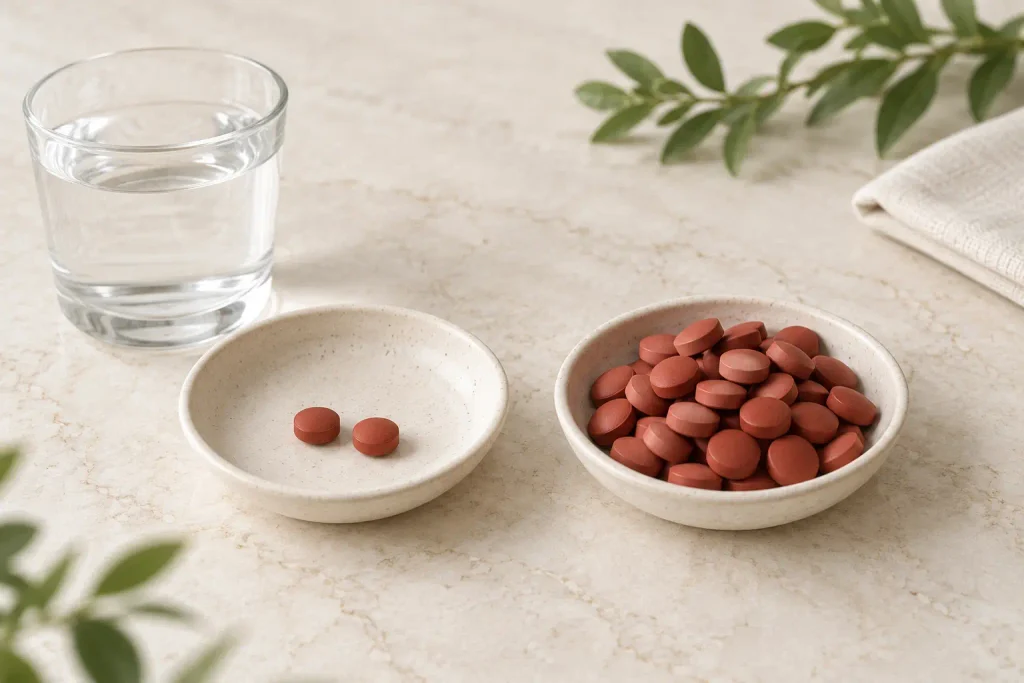
More iron swallowed doesn’t produce a matching increase in iron absorbed.
In iron-depleted women, oral doses of 60 mg or more raised hepcidinfor about 24 hours and reduced absorption from the following dose by roughly 35% to 45%. A sixfold increase in dose produced only about a threefold increase in the amount of iron absorbed.
Other randomized trials have found that alternate-day iron can produce fewer gastrointestinal side effects than daily dosing.
So when a prescribed iron tablet is causing constipation, the conversation with your clinician can include the amount and the schedule, not just switching brands.
Iron Bisglycinate Can Be Easier for Some People
Iron bisglycinate gives you a measured dose of iron in a form many people tolerate better than ferrous sulfate. If conventional iron is backing you up, this is one of the first forms worth asking about.
In a randomized crossover trial using the same 50 mg elemental iron dose, women tended to report less constipation, bloating, and nausea with the bisglycinate form than with ferrous sulfate, and more participants preferred it.
Heme Iron Supplements Keep the Animal-Based Advantage
Heme iron supplements use iron derived from animal tissue.
That gives them the same basic advantage we have been talking about throughout this article.
Heme iron is readily absorbed and is less dependent on what else is sitting on the plate.
Heme iron polypeptide has been studied as an alternative to traditional iron salts, with reviews noting potential advantages in absorption and tolerability, although the clinical evidence is smaller than the evidence base for standard ferrous salts.
For Heart & Soil, whole animal tissues are the more natural extension of that idea.
Red meat, liver, spleen, and whole blood deliver heme iron as part of food rather than separating iron from everything that came with it.
Match the Tool to the Job
Food-based iron and therapeutic iron are doing different jobs.
Red meat, liver, spleen, seafood, and whole-food organ products can help build a strong everyday intake of heme iron and the nutrients involved in healthy blood formation.
A confirmed iron deficiency may call for a known elemental dose that can be followed with bloodwork.
Use food to build the foundation. When treatment calls for more, use enough iron to do the job without assuming the biggest dose is the smartest one.
Can Taking Iron With Food Help?
Yes. Taking iron with a small amount of food can make it easier on the stomach, especially if you get nausea, cramping, or constipation when you take it on an empty stomach.
The tradeoff is that some foods can reduce absorption.
If you need food with your iron, keep the meal simple and avoid taking it alongside large amounts of calcium or antacids.
For Heart & Soil, the practical takeaway is simple:
More iron on the label is not always more iron in your body. Once absorption tops out, the rest is mostly a digestive burden.
How to Reduce Constipation From Iron

There are many general ways to manage constipation, and a few are especially relevant when iron is the trigger:
- Confirm the elemental-iron dose: compound weight and elemental iron aren’t the same number.
- Ask about a different form: bisglycinate, heme iron polypeptide, carbonyl iron, polysaccharide complexes, a lower dose, or whole-food nutritional support.
- Check if food helps: a small meal alongside the dose may ease nausea.
- Stay hydrated: dehydration makes constipation worse.
- Add fiber as tolerated: fruit such as pears, berries, kiwi, or other well-tolerated fruit can fit naturally here, along with root vegetables if they work well for you.
- Keep moving: regular activity supports bowel motility, though it won’t fix severe constipation alone.
- Review other medications: calcium, antacids, opioids, antihistamines, antidepressants, and prenatal vitamins can all slow the gut.
- Ask about a different route: some people can’t tolerate or absorb oral iron well enough, and other treatment approaches exist.
Should You Stop Taking Iron If You’re Constipated?
If prescribed iron is causing constipation, bring the side effect back to the person treating you before you stop taking it. There are usually other ways to deliver the iron you need.
A dose can be changed. A different form may sit better. Taking it with food may help. Some people do better with a different schedule or treatment route.
The point is to solve both problems. Your iron needs attention, and so does a gut that suddenly stops working normally.
Iron-deficiency anemia treatment often continues beyond the point when you first start feeling better because rebuilding iron stores takes time.
A treatment you cannot stick with is worth rethinking, not silently suffering through.
Does Iron Bisglycinate Cause Constipation?
Iron bisglycinate can cause constipation, but many people find it easier on digestion than traditional ferrous salts such as ferrous sulfate.
Part of the appeal is that it can deliver iron effectively at relatively modest elemental doses. Less iron left sitting in the gut can mean less digestive trouble.
Your response still depends heavily on the dose. Two products can both say “bisglycinate” on the bottle and deliver very different amounts of elemental iron.
Look past the ingredient name. The amount of iron your gut actually has to deal with still counts.
Does Heme Iron Cause Constipation?
Heme iron can cause digestive symptoms, but its higher bioavailability means the body can absorb it efficiently.
Heme iron is the form naturally found in meat, liver, spleen, whole blood, and seafood. Heme iron polypeptide supplements concentrate that form, while whole-food organ products provide it as part of the animal tissue it came from.
Heart & Soil favors that whole-food context for everyday nutrition because iron arrives alongside nutrients such as B12 and copper that participate in healthy blood formation and iron handling.
For treating a diagnosed deficiency, the dose still needs to match the job.
Why Can Iron Also Cause Diarrhea?
Iron can cause diarrhea because unabsorbed iron changes the environment inside the gut.
The same leftover iron that can contribute to constipation may irritate the digestive tract enough to produce cramping, loose stools, or nausea in someone else. The NIH lists both constipation and diarrhea among the gastrointestinal effects seen with higher supplemental iron intakes.
Your gut does not read the side-effect list. It gives you its own answer.
A major change in bowel habits after starting iron is useful feedback about how that dose or form is landing.
Are Dark Stools From Iron Normal?
Dark stools are common after starting oral iron because some of the iron passes through the digestive tract unabsorbed.
That color change by itself is expected.
Black stool that is tarry, sticky, or accompanied by visible blood, severe abdominal pain, dizziness, weakness, or vomiting blood deserves medical attention because bleeding can look dark too.
The useful distinction is texture and symptoms, not color alone.
Iron can darken stool. A stool that looks or feels like bleeding deserves a closer look.
Meet Heart & Soil’s Organ-Based Options for Iron Support
Heart & Soil makes three organ-based products that can support iron intake in different ways. Lifeblood is the most targeted, Beef Organs gives you a broader nose-to-tail blend, and Pure American Liver keeps the focus on liver.
Lifeblood
Lifeblood brings together whole blood extract, spleen, and liver from grass-fed and grass-finished cattle.
Spleen and blood are especially relevant here because both are naturally rich in heme iron. Liver adds more iron along with B12, folate, riboflavin, vitamin B6, and copper.
For someone specifically looking to bring more iron-rich animal tissues into the diet, Lifeblood is Heart & Soil’s most focused option.
It keeps the approach close to the foods themselves rather than reducing iron to one isolated mineral.
Beef Organs
Beef Organs combines liver, heart, pancreas, spleen, and kidney.
The spleen and liver bring iron into the formula, while the wider organ blend provides a much broader range of naturally occurring nutrients.
Think of it as the nose-to-tail option. Lifeblood puts more emphasis on blood-building tissues. Beef Organs gives you more of the animal.
Pure American Liver
Pure American Liver is exactly what the name says. Freeze-dried beef liver from American, grass-fed, pasture-raised cattle.
Liver naturally provides heme iron alongside B12, folate, riboflavin, vitamin B6, and copper. Those nutrients belong in the same conversation because healthy blood formation and iron handling require more than iron alone.
Pure American Liver is the simplest choice for someone who wants liver itself. Lifeblood goes deeper on iron-rich tissues. Beef Organs casts the widest nutritional net.
That’s the Heart & Soil approach in practice.
Choose the organ food that matches the job you are trying to support.
| Product | Key Ingredients | Best Fit For |
| Lifeblood | Whole blood extract, spleen, liver | Targeted iron and blood-related support |
| Beef Organs | Liver, heart, pancreas, spleen, kidney | Broad nose-to-tail nutrition |
| Pure American Liver | Liver only | Focused liver-derived nutrients |
Whole-Food Iron vs. Gentle Conventional Iron
| Feature | Whole-Food Organ Product | Gentle Conventional Iron |
| Source | Spleen, liver, blood, or other animal tissue | Chelate, complex, or heme isolate |
| Elemental iron listed | Often not standardized | Usually clearly stated |
| Cofactors | May include B12, copper, B6, folate, riboflavin | May contain select added nutrients |
| Primary use | General nutritional support | Prevention or treatment, by dose |
| Constipation risk | May be lower for some, not guaranteed | Varies by form and dose |
| Best for confirmed deficiency | Not automatically | Often easier to dose appropriately |
| Vegetarian or vegan | No | Some forms are suitable |
Neither column is the automatic winner. The right choice depends on why you need iron in the first place, not just which one sounds gentler.
Can Food Replace an Iron Supplement?
Food can cover everyday iron needs very well, especially when the diet includes heme-rich foods such as beef, liver, spleen, shellfish, sardines, poultry, and blood-based foods. A confirmed deficiency is a different job and may require a measured dose of iron for a period of time.
Heart & Soil would rather see iron coming in with the rest of the animal.
Liver brings heme iron alongside B12, folate, riboflavin, vitamin B6, and copper. Spleen and whole blood are especially rich in heme iron. Beef and seafood add more without turning every meal into an iron protocol.
Our beef liver for iron guide goes deeper on those foods, while our organ meat benefits guide explains why organs bring much more to the table than iron alone.
For regular organ intake, Heart & Soil generally recommends around 1 to 3 ounces of organs per day, with roughly 0.5 to 1 ounce coming from liver.
Fresh organs work beautifully when you eat them consistently. Freeze-dried organs make the same habit easier when you do not.
How to Choose an Iron Supplement for a Sensitive Stomach
This checklist can help you evaluate iron supplements that don’t cause constipation for your specific situation.
- Confirm why you need iron. Fatigue alone isn’t a diagnosis. Get bloodwork first.
- Check the elemental-iron amount, not just the compound weight.
- Compare the form: bisglycinate, heme iron polypeptide, carbonyl iron, polysaccharide complexes, a lower dose, or whole-food support.
- Review the full formula for added vitamin C, calcium, magnesium, herbal ingredients, or multiple iron sources.
- Check for testing: identity, purity, heavy metals, and label accuracy.
- Be wary of absolute claims like “zero constipation guaranteed” or “fixes anemia naturally.”
Who Should Not Experiment With Iron Alone?
Some situations call for a clinician’s input before trying anything new:
- Pregnant people and children
- Postmenopausal women or men with suspected iron deficiency
- People with GI bleeding, IBD, celiac disease, or prior bariatric surgery
- People with hemochromatosis or liver disease
- Anyone with unexplained or recurring anemia
- People taking levothyroxine, levodopa, or multiple mineral supplements
Iron can interact with levothyroxine and levodopa, and antacids or calcium can reduce non-heme iron absorption. A pharmacist or clinician should guide the timing. This article won’t.
Iron Safety Around Children
Iron overdose can be fatal in young children.
The FDA warns that accidental iron overdose in children is a leading cause of fatal poisoning in children under six.
Keep every iron product, including whole-food organ supplements, well out of reach.
When Constipation Requires Medical Attention
Most constipation from iron eases with simple changes, but some constipation symptoms that require medical attention need prompt care. Get medical care for:
- Severe or worsening abdominal pain
- Persistent vomiting or inability to pass stool or gas
- Marked abdominal swelling
- Blood in the stool or black, tarry stool
- Fainting, severe dizziness, or signs of dehydration
- Constipation that doesn’t improve despite reasonable changes
- Inability to continue prescribed treatment
None of these are symptoms to wait out on your own.
The Best Iron Is the One You Keep Taking
Your body needs iron it can absorb, move, recycle, and actually use. Loading your gut with more than it can handle doesn’t make the process work better.
Heart & Soil takes the whole-food route whenever it fits the job.
Spleen, liver, whole blood, red meat, and seafood provide highly available heme iron alongside nutrients such as copper and B12 that belong in the same blood-building system.
Iron is supposed to help you build healthy blood. Your digestion shouldn’t have to pay the price.
Still figuring out which approach fits? Talk with our Health Success Team.
Frequently Asked Questions
Why do iron supplements cause constipation?
Iron supplements can cause constipation because some oral iron stays unabsorbed in the digestive tract. That leftover iron can irritate the gut and change bowel habits. Higher elemental doses generally leave more iron behind, which can make constipation more likely.
Which iron supplement causes the least constipation?
Iron bisglycinate is often one of the better-tolerated iron supplements for constipation. Heme iron may also be easier on digestion for some people. The elemental dose still matters, since larger doses generally leave more unabsorbed iron moving through the gut.
Does ferrous sulfate cause constipation?
Ferrous sulfate can cause constipation. It delivers iron effectively and is widely prescribed, but constipation, nausea, and stomach discomfort are common reasons people have trouble taking it. The amount of elemental iron in each dose plays a big role in tolerance.
Does iron bisglycinate cause constipation?
Iron bisglycinate can cause constipation, although many people tolerate it better than ferrous sulfate. Its chelated form is commonly used when digestive tolerance is a priority. The actual elemental iron dose still influences how your gut responds.
Does heme iron cause constipation?
Heme iron can cause constipation, but its high bioavailability may make it easier to tolerate for some people. Heme iron occurs naturally in meat, liver, spleen, blood, and seafood and is also available in concentrated supplement forms.
Can I take iron with food?
You can take iron with food when an empty-stomach dose bothers your digestion. A small meal may reduce nausea and stomach discomfort. Calcium and antacids can interfere with absorption, so follow the timing instructions for the iron product or treatment you are using.
How can I prevent constipation while taking iron?
You can help prevent constipation from iron by looking at the dose, form, hydration, movement, and other things slowing your digestion. A clinician may recommend a different iron form, smaller dose, or different schedule if constipation becomes persistent.
Should I stop iron if it makes me constipated?
If iron makes you constipated, talk with the clinician managing your iron before stopping a prescribed treatment. A different form, dose, schedule, or route may give you the iron you need while sitting much better with your digestion.
Why does iron make stool dark?
Iron makes stool dark because some of the iron you swallow passes through the digestive tract. That color change is common with oral iron. Black stool that is tarry, sticky, bloody, or accompanied by significant pain or dizziness deserves medical attention.
Can iron supplements also cause diarrhea?
Iron supplements can also cause diarrhea. Unabsorbed iron can irritate the digestive tract in different ways, so one person may become constipated while another gets loose stools, cramping, nausea, or abdominal discomfort.
Is whole-food iron easier on the stomach?
Whole-food iron may feel easier on the stomach for some people because foods such as liver, spleen, and whole blood provide naturally occurring heme iron rather than a large isolated elemental dose. Individual tolerance still varies, especially when treating a significant deficiency.
What is Heart & Soil Lifeblood?
Heart & Soil Lifeblood is an organ-based formula made with grass-fed and grass-finished whole blood extract, spleen, and liver. These tissues naturally provide heme iron and nutrients involved in healthy red blood cell formation, oxygen transport, and iron metabolism.
Is Beef Organs a gentle iron supplement?
Beef Organs provides naturally occurring iron through liver and spleen within a five-organ blend. It is designed for broader nose-to-tail nutrition, making it a good fit for people who want organ-derived iron alongside nutrients from heart, pancreas, kidney, liver, and spleen.
Is Pure American Liver an iron supplement?
Pure American Liver provides naturally occurring heme iron from freeze-dried beef liver. It also brings B12, folate, riboflavin, vitamin B6, copper, and other liver nutrients, making it a straightforward way to keep liver in your routine.
When should I seek help for constipation from iron?
Seek medical help for constipation from iron when it becomes severe, persistent, very painful, or comes with vomiting, bleeding, marked dizziness, or an inability to continue prescribed treatment. Those signs deserve more than simply switching supplement brands.
Subscribe to future articles like this:
