
Medical disclaimer: This article is for informational purposes only and is not medical advice. Consult your healthcare provider before changing your diet or supplement routine.
If you are tired, foggy, or cold all the time, your iron status is worth a look.
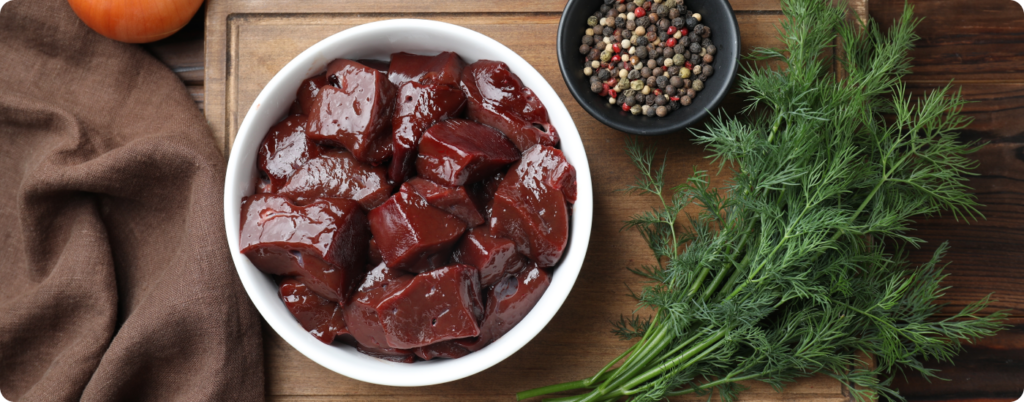
Beef liver for iron is one of the most direct, food-based ways to raise your intake of a mineral your blood cannot function without.
This guide breaks down exactly how much iron beef liver contains, how your body absorbs it, and how to use supplements and beef liver for iron.
Key Takeaways
- Beef liver for iron gives you about 5.2 mg of heme iron per 100 g, a form your body absorbs 2 to 3 times better than plant-based iron. (1, 2).
- Whole blood carries nearly 10 times more iron by weight than liver, which is why Lifeblood tests at 9.678 mg of iron per serving (54% DV).
- Iron deficiency affects an estimated 1.62 billion people worldwide, according to the World Health Organization.
- How you cook and pair beef liver changes how much of its iron your body actually absorbs.
Table of Contents
Is Beef Liver Good for Iron?
Yes. Beef liver is one of the most concentrated whole-food sources of iron available, delivering roughly 5.2 mg per 100 g in the heme form, which your body absorbs 2 to 3 times more efficiently than the non-heme iron found in plants (3, 4).
Heme iron is iron bound to hemoglobin and myoglobin in animal muscle and organ tissue. Your intestinal cells absorb it through a dedicated transport pathway, so absorption sits at 15% to 35%. Non-heme iron, the kind found in spinach and lentils, absorbs at just 2% to 20% (5).
Raw U.S. beef liver qualifies as an “Excellent Source” of iron under USDA labeling standards, a threshold that requires at least 20% of the Reference Daily Intake per 100 g serving (6). It hits that same threshold for niacin, riboflavin, copper, phosphorus, and zinc.
Support Your Iron Levels, Naturally
Anemia Stack
- 100% grass-fed organs and whole blood extract
- Supports iron stores, red blood cell production, and energy
- Highly bioavailable nutrients. Nothing synthetic.
60-day risk-free guarantee. No questions asked.
Why Does Beef Liver Matter for Iron Deficiency?
Beef liver for iron deficiency matters because it solves two problems at once: low intake and low absorption.
The World Health Organization estimates iron deficiency is the leading cause of anemia worldwide, affecting roughly 1.62 billion people, or 24.8% of the global population (7).
Common signs linked to low iron levels include:
- Persistent fatigue that does not improve with rest
- Pale skin or pale inner eyelids
- Cold hands and feet
- Shortness of breath during normal activity
- Brittle nails or unusual hair shedding
These symptoms overlap with other conditions, so treat them as a reason to test, not a reason to self-diagnose. For most healthy adults, beef liver for low iron is one of the highest-yield choices on the plate, though it doesn’t replace a blood test or a doctor’s guidance if anemia is suspected.
How Do You Cook Beef Liver for Iron Deficiency?
Liver overcooks fast because it’s lean and low in connective tissue, so speed and high heat work in your favor:
- Slice thin, about 1/4 inch thick, for even cooking.
- Soak in milk or lemon water for 20 to 30 minutes to mellow the flavor.
- Pat completely dry before it hits the pan; moisture prevents browning.
- Sear hot and fast, 2 to 3 minutes per side in tallow or butter.
- Pull it while the center is still slightly pink; overcooked liver turns chalky.
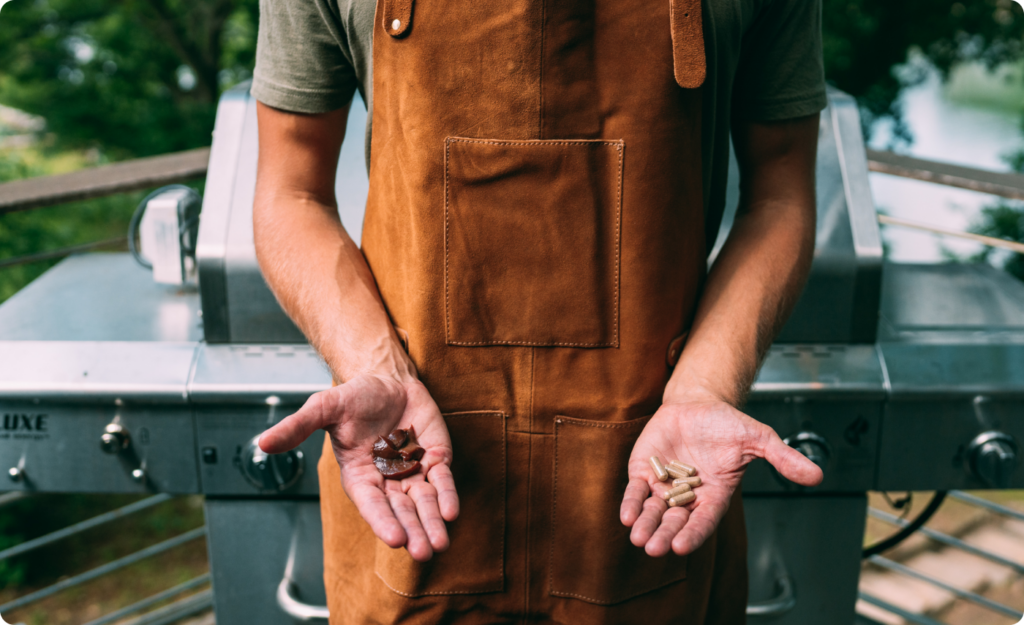
If texture or smell is a barrier, freeze-dried liver capsules or desiccated beef liver powder carry the same nutrient profile without any cooking.
Are Beef Liver Supplements Good for Iron Deficiency?
Beef liver supplements for iron deficiency work by concentrating the same nutrients found in the whole organ into a capsule or powder form. Freeze-drying preserves the natural iron, B12, copper, and retinol content without cooking losses.
Heart & Soil’s Pure American Liver capsules use grass-fed, grass-finished or USDA organic organs that are freeze-dried and encapsulated with no synthetic fillers or additives. This gives you a practical way to support your normal iron intake on days when cooking organ meat is not realistic.
Liver pills for anemia are not a treatment for a diagnosed medical condition; they are a food-based way to add nutrient-dense iron to a normal or animal-based diet.
Learn more: Beef Liver Supplements: Benefits, Dosage, & How to Choose the Best
Is Blood a Better Source of Iron Than Beef Liver?
Yes. Whole blood contains roughly 49.1 mg of iron per 100 g raw, nearly 10 times the iron density of liver by weight, making it the single richest iron source among common beef offal items (8).
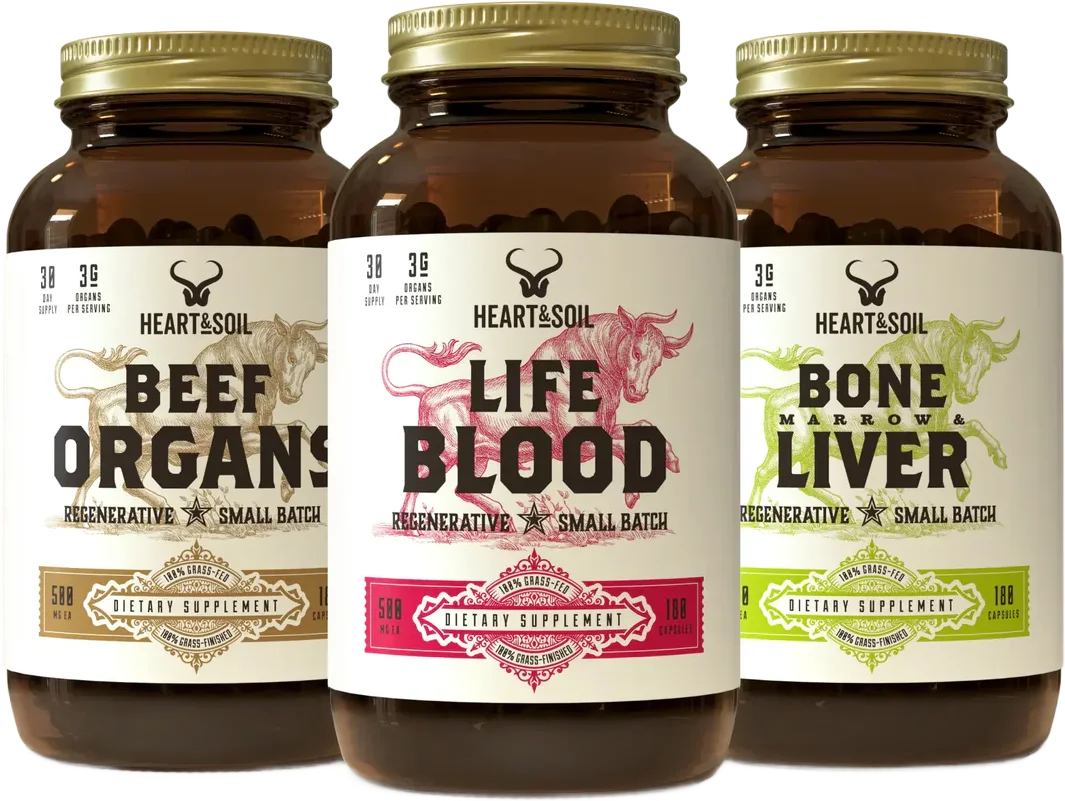
Liver earns its reputation as a multivitamin, but when the goal is iron specifically, blood is the more concentrated raw material. That is the gap Lifeblood is built to close: it combines whole blood extract, spleen, and liver, organs naturally rich in heme iron and B vitamins, to provide strategic support for energy, endurance, and cardiovascular resilience.
Per Heart & Soil’s own nutrient testing, one serving of Lifeblood delivers about 9.678 mg of iron, or 54% of the Daily Value, compared with 0.785 mg (4.3% DV) in a serving of Pure American Liver.
Many people use both together rather than choosing one over the other, since Beef Liver and Pure American Liver still bring their own strengths in vitamin A, copper, and riboflavin.
Support Your Iron Stores
With Lifeblood from Heart & Soil
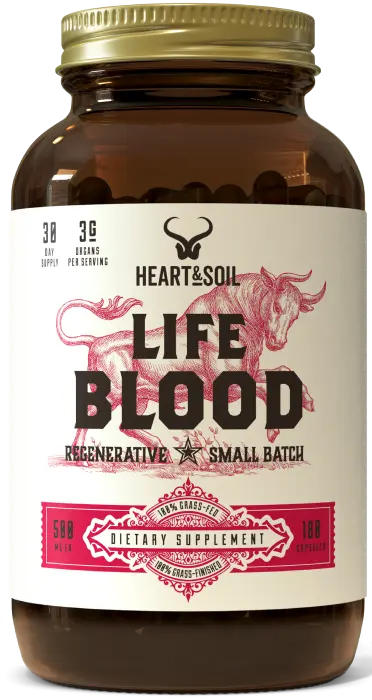
- Grass-fed whole blood extract, spleen, and liver
- Encourages red blood cell formation, oxygen delivery, and heart health
- Promotes stamina and exercise performance
60-day risk-free guarantee. No questions asked.
How Does Iron in Beef Liver Compare to Other Foods?
Beyond organs, several familiar foods in your kitchen already contribute to your iron total, just at a lower concentration. Daily Value percentages below are based on the current 18 mg adult DV for iron.
| Source | Iron per Serving | % Daily Value |
|---|---|---|
| Whole blood, raw (100 g) | ~49.1 mg | 273% |
| Lifeblood (1 serving) | ~9.678 mg | 54% |
| Beef liver (100 g, raw) | 5.2 mg | 29% |
| Ground beef, 85% lean (100 g, cooked) | ~2.7 mg | 15% |
| Beef sirloin steak (100 g, cooked) | ~2.7 mg | 15% |
| Pure American Liver (1 serving) | ~0.785 mg | 4.3% |
| Cooked lentils (100 g) | ~3.3 mg | 18% (non-heme iron) |
| Cooked spinach (100 g) | ~3.6 mg | 20% (non-heme iron) |
Sources: meat products (9); lentil and spinach (10).
Learn more: Beef Liver Supplement Benefits: Worth the Hype?
How Much Iron Do You Need During Pregnancy?
Iron needs increase significantly during pregnancy because your body is building extra blood volume for both you and your baby. The American College of Obstetricians and Gynecologists (ACOG) states the RDA for iron rises from 18 mg per day to 27 mg per day during pregnancy (11).
Glossary
- Heme iron: Iron bound to hemoglobin and myoglobin, found in animal muscle and organ tissue, absorbed at a higher rate than plant iron.
- Non-heme iron: Iron from plant sources such as legumes and leafy greens, absorbed less efficiently and affected by compounds like oxalates and phytates.
- Iron deficiency anemia: A diagnosed medical condition in which the body lacks enough iron to produce adequate healthy red blood cells; confirmed through blood testing.
- Ferritin: A protein that stores iron in the body; blood ferritin levels are the standard clinical marker used to assess iron stores.
- Desiccated liver: Liver that has been dehydrated or freeze-dried and ground into powder or capsules, concentrating its nutrients into a smaller volume.
FAQ
Is beef liver good for iron? Yes. Beef liver delivers about 5.2 mg of heme iron per 100 g, a form your body absorbs far more efficiently than plant-based iron. Whole blood extract is still the more concentrated source by weight.
Do beef liver supplements have iron? Yes. Because they’re made from whole dehydrated liver rather than isolated iron, they carry the same heme iron, B12, and copper profile as fresh liver, adjusted for water loss.
Is blood a better source of iron than beef liver? Yes. Whole blood is nearly 10 times denser in iron than liver by weight.
How do you cook beef liver for iron deficiency? Slice it thin, soak it in milk or lemon water, pat it dry, then sear it hot and fast for 2 to 3 minutes per side. Pull it from the heat while the center is still pink to keep the texture tender.
Related Reading
- Heart & Soil Guide to Balanced Hormones, Mood, and Libido
- 6 Dangers Of Eating Liver: What You Need To Know
- Beef Liver Vs Chicken Liver Benefits: Which Is Healthier?
Bottom Line: Beef Liver for Iron
Beef liver for iron is one of the most nutrient-dense, absorbable food sources on your plate, and whole blood extract goes further still when iron is your specific priority. Together, they cover both the everyday gap and the higher-dose need.
Iron deficiency anemia still requires a blood test and a healthcare provider, but for most people closing an everyday gap, food and supplements do real work.
When your iron levels sit in a healthy range, you’re more likely to feel energetic, clear-headed, and steady through the afternoon instead of winded by things you used to do without thinking.
Subscribe to future articles like this:
