
This article is for informational purposes only and is not medical advice. It does not diagnose, treat, cure, or prevent any disease.
You’re finally seeing the number on the scale move.
But the scale doesn’t tell you what kind of weight you’re losing. While many people lose mostly fat, research suggests that some people taking GLP-1 medications may also lose lean mass, including muscle, as part of their weight loss.
This post explores the possibility of GLP-1 muscle loss, why preserving lean mass matters, and 10 evidence-based ways to help support muscle health while taking these medications.
TL;DR
GLP-1 muscle loss can occur during GLP-1 therapy, largely because these medications often reduce overall food intake. Supporting adequate protein intake, meeting leucine needs, and incorporating resistance training may help preserve lean mass while pursuing weight-loss goals.
Key Takeaways
- In clinical trials, lean mass has accounted for approximately 25–40% of total weight lost in some people taking GLP-1 medications (1).
- Losing muscle isn’t just cosmetic: it weakens blood sugar regulation and reduces the energy reserve your body draws on to recover from illness or injury.
- A verified 2.5g of leucine (an amino acid) per serving is the clinical threshold shown to activate muscle protein synthesis (MPS).
- Distributing protein evenly across meals, not just at dinner, better supports lean mass than a single large protein meal a day.
- Resistance training and consistent, high-leucine protein intake work together; neither offsets GLP-1 muscle loss on its own.
Table of Contents

Why Does GLP-1 Muscle Loss Happen?
GLP-1 medications work by slowing digestion and suppressing appetite, which is exactly why they’re effective for weight loss. That same appetite suppression often reduces total food intake.
When protein and overall energy intake become too low, the body may lose some lean mass, including muscle, alongside fat.
A 2024 systematic review and meta-analysis in Metabolism, covering 22 randomized controlled trials and 2,258 participants, found that GLP-1 medications reduced lean mass by an average of 0.86 kg, with lean tissue accounting for 25 to 40% of total weight lost in some patient groups (2).
The STEP-1 trial’s body composition data found lean body mass dropped 9.7% from baseline in semaglutide users, even as fat mass fell by 19.3% (3).
This doesn’t mean the medication isn’t working or that someone has done anything wrong. Because appetite often decreases on GLP-1 medications, it can become more challenging to consume enough protein and calories to fully support muscle maintenance.
Muscle protein synthesis (MPS) is the process your body uses to repair and build muscle tissue. It requires enough total protein, and specifically enough leucine, to switch on.
Why Does Losing Muscle Mass Actually Matter?
Muscle isn’t just about strength or appearance. It’s active, calorie-burning tissue that supports nearly every system in your body. Maintaining healthy muscle mass supports many aspects of health, and excessive muscle loss may have important consequences.
- It weakens blood sugar regulation. Skeletal muscle is the body’s primary site for glucose disposal, the process of clearing sugar from the bloodstream after a meal (4).
- It raises fracture risk. A 2022 study found low skeletal muscle mass was one of the strongest predictors of distal radius fracture, with an odds ratio of 8.06, well above BMI or bone density alone in that analysis (5).
- It shrinks your body’s protein reserve. Skeletal muscle is your body’s primary storage depot of amino acids; during illness, injury, or recovery, the body draws on that reserve to fuel immune defense and tissue repair. A clinical review found that losing more than 10% of lean body mass measurably decreases immune function and increases infection risk (6).
- It’s linked to higher mortality risk. A 2023 meta-analysis of 16 prospective studies and over 81,000 participants found low skeletal muscle mass was associated with a 57% higher risk of all-cause mortality compared to normal muscle mass (7).
This is exactly why lean mass preservation, not just total weight loss, is the metric worth watching on a GLP-1.

Subscribe to future articles like this:
10 Ways to Protect Your Muscles on a GLP-1
1. Anchor every meal with a leucine-rich protein.
Leucine is the specific amino acid that triggers muscle protein synthesis through the mTORC1 pathway. Hitting a leucine threshold, not just a protein gram target, is a key determinant of whether a meal actually builds muscle (8).
2. Know your number: 2.5g of leucine per serving.
Research identifies roughly 2.5 to 3g of leucine as the threshold needed to maximize MPS in a single sitting (9). Below that threshold, the anabolic signal doesn’t fully switch on, regardless of total protein consumed.
3. Choose fast-absorbing protein over slow-digesting protein.
Whey protein produces the most rapid plasma leucine spike of any commercially available protein source, reaching MPS-triggering levels faster than casein, soy, or plant-based alternatives (10).
4. Consider spreading protein across the day, not just dinner. A controlled feeding study found spreading protein evenly across three meals produced a 25% higher acute muscle protein synthesis response than concentrating it at dinner (11).
5. Target 1.2 to 1.6g of protein per kilogram of body weight daily.
A 2025 international consensus commentary in Obesity Pillars recommended this range for GLP-1 users specifically, roughly 50% above the standard RDA of 0.8g/kg (12).
6. Pair protein with resistance training at least 3 times a week.
A 2025 case series found patients combining 1.6 to 2.3g/kg fat-free mass daily with resistance training preserved lean mass within 7% of baseline, even while losing a third of their body weight (13)
7. Don’t stack additional caloric restriction on top of the medication.
Your GLP-1 is already creating a significant deficit. Adding additional caloric restriction may make it more difficult to consume enough protein and other nutrients needed to support lean mass.
8. Prioritize whole-food nutrient density when appetite is limited.
With less room for food overall, every bite needs to carry more protein and micronutrients, not empty calories.
9. Stay consistent, even on low-appetite days.
A small, high-leucine protein serving on a day you don’t feel like eating may better support muscle protein synthesis than skipping protein altogether.
10. Choose a third-party tested protein source.
Verified leucine and protein content matters when you’re working against a threshold. NSF Certified for Sport testing confirms what’s actually in the product you’re taking.
Comparing Protein Sources for Muscle Synthesis
| Protein Source | Leucine Content | Absorption Speed | MPS Response |
| Grass-Fed Whey | ~11% by weight (highest of common sources) | Fast | Highest acute response |
| Casein | Moderate | Slow | Delayed, sustained response |
| Soy | Moderate | Medium | Moderate response |
| Pea/Plant Blends | Lower | Medium | Lower acute response |
Where Grass-Fed Whey Fits
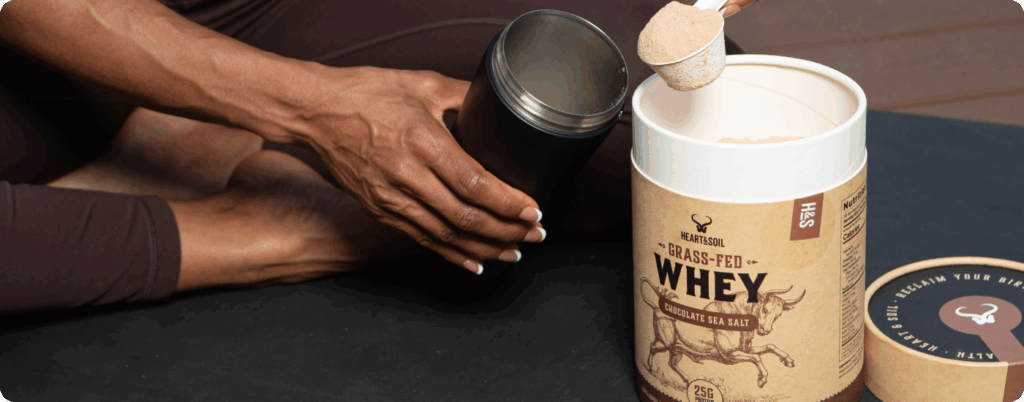
If your goal is to increase high-quality protein intake while taking a GLP-1 medication, Grass-Fed Whey can be a convenient way to help meet protein and leucine targets, especially when appetite is reduced.
One serving contains 24g of protein and verified 2.5g of leucine, a leucine amount that research suggests is sufficient to stimulate muscle protein synthesis in many adults.
Grass-Fed Whey Chocolate Sea Salt
Protein. Recovery. Taste.

- Supports muscle repair and daily protein intake
- Naturally flavored with maple syrup, cacao, and sea salt
- 100% plastic-free packaging (including the scoop!)
60-day risk-free guarantee. No questions asked.
Glossary
- GLP-1: Glucagon-like peptide-1, an incretin hormone that slows digestion and signals fullness. GLP-1 medications extend this effect pharmacologically.
- Muscle Protein Synthesis (MPS): The biological process of building and repairing muscle tissue, triggered by adequate protein and leucine intake.
- Leucine Threshold: The minimum amount of leucine (roughly 2.5 to 3g) needed in a single meal to maximally activate MPS.
FAQ: GLP-1 Muscle Loss
Does GLP-1 muscle loss happen to everyone on the medication?
Not identically, but it’s a documented pattern across trials. The degree varies based on protein intake, resistance training, and starting body composition.
How much protein do I actually need on a GLP-1?
Research points to 1.2 to 1.6g per kilogram of body weight daily, distributed across meals rather than concentrated in one sitting (14).
Can whey protein help support muscle while taking a GLP-1?
Protein is one part of the equation. Adequate daily protein intake, sufficient leucine, and regular resistance training are all associated with supporting muscle health. Whey protein can be a convenient way to help meet protein goals, but it should be considered one component of an overall nutrition and exercise plan.
What makes whey different from other protein powders for this?
Whey has the highest leucine content by weight of commonly available proteins and produces the fastest plasma leucine spike, both tied to a stronger muscle protein synthesis (MPS) response.
Is it too late to address muscle loss once it’s already started?
Muscle is a responsive tissue. Increasing leucine intake and adding resistance training can support rebuilding lean mass at any point during GLP-1 therapy, though earlier action reduces total loss.

Save This For Later & Share
Related Reading
- 10 Tips to Lower Blood Pressure Naturally
- The Ultimate Guide To The Animal-Based Diet
- The Complete List Of Seed Oils To Avoid
- 6 Dangers Of Eating Liver: What You Need To Know
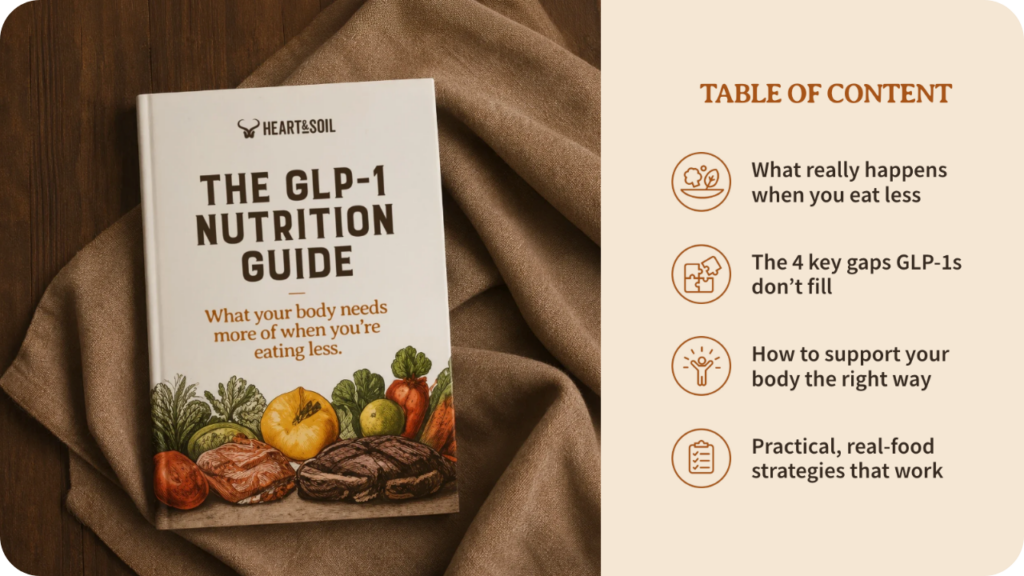
Check out the full GLP-1 Nutrition Guide here
Bottom Line
GLP-1 muscle loss can occur during GLP-1 therapy, particularly when overall protein and energy intake decline.
Prioritizing adequate protein, distributing it throughout the day, and incorporating resistance training may help support lean mass while pursuing weight-loss goals.
Subscribe to future articles like this:
