
Not really. Turkey contains tryptophan, but so do chicken, beef and other protein-rich foods. If Thanksgiving dinner leaves you sleepy, the size of the meal and everything eaten with the turkey offer a better explanation than the turkey alone.
It’s easy to see why tryptophan gets the blame. Your body uses it to make serotonin, which can then be converted into melatonin, a hormone involved in sleep. The missing piece is that eating tryptophan doesn’t guarantee it’ll reach the brain in large amounts.
Protein brings other amino acids along with tryptophan, and those amino acids compete for access to the brain. That makes the rest of the meal relevant, so it’s worth looking at the whole plate rather than treating one food as the cause of the Thanksgiving slump.
Table of Contents
Does Turkey Make You Sleepy?
No, turkey isn’t inherently more sleep-inducing than chicken. Its tryptophan content is comparable, and there’s more going on at Thanksgiving than on a normal day, from the portions to the rest of the meal. That’s why leftover turkey at lunch doesn’t have the same reputation.
For context, a typical 3-ounce serving supplies about 250 milligrams of tryptophan, according to Harvard Health; USDA’s roasted-breast entry works out closer to 300 milligrams per 3 ounces. Either way, it’s in the same range as chicken.

What Is Tryptophan?
Tryptophan is an essential amino acid, which means the body can’t make it and must get it from food. It’s used to build proteins, and some of it also contributes to serotonin production. The body can then convert serotonin into melatonin, a hormone involved in sleep timing.
But that doesn’t mean every gram of tryptophan you eat becomes melatonin. It first has to reach the brain, and other amino acids from the same meal compete for transport.
Harvard Health estimates that adults need roughly 250 to 400 milligrams of tryptophan each day, an amount ordinary protein-containing meals can provide. Some sleep studies, however, have used 1,000 milligrams or more of isolated tryptophan, which isn’t comparable to eating turkey with dinner.
How Much Tryptophan Is in Turkey Compared With Other Foods?
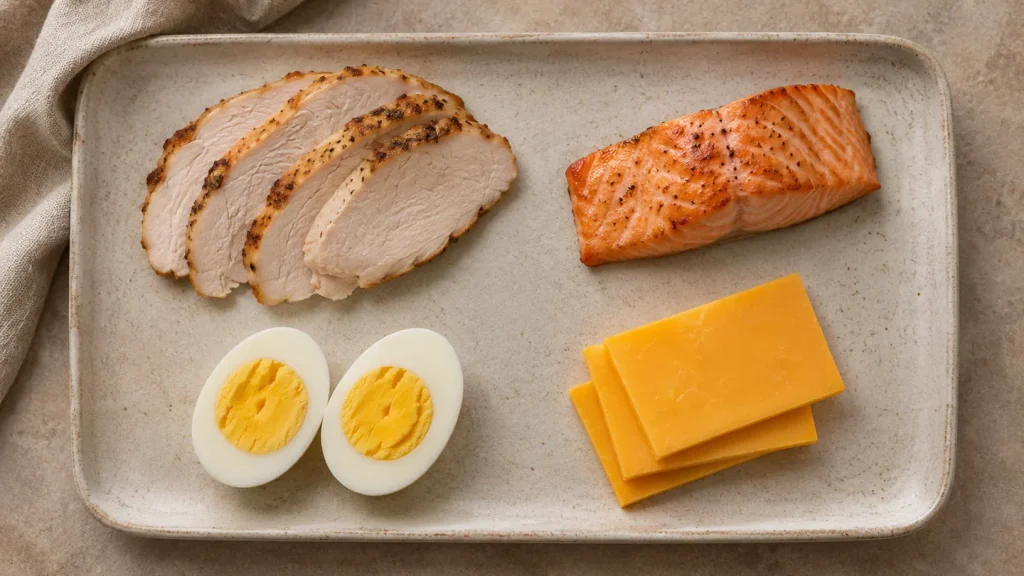
Put turkey alongside other familiar foods and it’s clear the bird isn’t an outlier. The table compares 100-gram portions so serving sizes don’t distort the differences. These are rounded USDA FoodData Central values, so the amounts can differ with the cut, moisture content and cooking method.
| Food | Tryptophan per 100 g | Preparation used |
| Turkey breast | 360 mg | Roasted, meat only |
| Chicken breast | 360 mg | Roasted, meat only |
| Beef top sirloin | 200 mg | Cooked, broiled, lean only |
| Salmon | 250 mg | Atlantic, cooked, dry heat |
| Eggs | 150 mg | Hard-boiled, whole egg |
| Cheddar cheese | 550 mg | Regular cheddar |
Seen alongside other foods, turkey and chicken are close in these USDA entries, while cheddar has more tryptophan by weight. That comparison makes it hard to single out turkey as the cause of Thanksgiving drowsiness.
Why Doesn’t Eating Protein Automatically Make You Sleepy?
Protein doesn’t automatically make you sleepy because its tryptophan arrives with other amino acids that compete for transport into the brain. So eating more turkey doesn’t necessarily mean more tryptophan enters the brain or more melatonin is made.
Carbohydrates can change that competition. After a carbohydrate-rich meal, insulin encourages some competing amino acids to enter muscle, leaving tryptophan relatively more available. That helps explain a possible mechanism, but it doesn’t establish that eating a potato or a roll will make you sleepy.
Researchers have also tested how a meal’s composition affects that competition. A 2011 controlled feeding study found that the glycemic characteristics of a meal affected the balance between tryptophan and competing amino acids in a small group of 10 healthy young men. It demonstrates a possible mechanism, although it doesn’t prove that particular Thanksgiving sides cause naps.
The question of sleep itself was tested on a much smaller scale. In a 2007 study of just 12 healthy young men, participants fell asleep faster after a high-glycemic-index rice meal eaten four hours before bed than after a lower-GI meal. That result is interesting, but it can’t tell us exactly what happens after Thanksgiving dinner.
If any part of the Thanksgiving plate is nudging you toward a nap, it is more likely the stuffing, rolls, potatoes and pie than the turkey. Still, carbohydrates are only part of the explanation, because a heavy meal, alcohol, timing and a short night of sleep can all matter.
What Actually Makes You Tired After Thanksgiving Dinner?
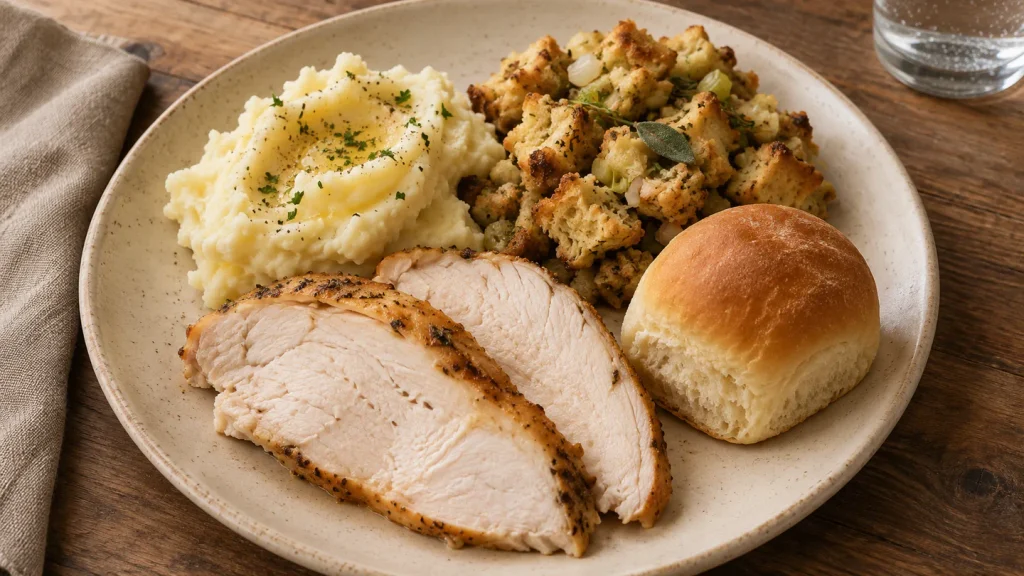
A holiday meal often means bigger portions, several starchy sides, dessert and sometimes alcohol in the same sitting. All of that can contribute to the sluggish feeling people call a turkey coma, especially when you’re already tired.
The Size of the Meal
Most people eat more at Thanksgiving than at a normal lunch. Appetizers, a full plate and dessert add up, and feeling overly full often goes hand in hand with feeling less alert.
That heavy, sluggish feeling has a name: postprandial somnolence, although most of us call it a food coma. The term describes sleepiness after eating rather than identifying a medical problem.
A Generous Helping of Starchy Sides
Stuffing, mashed potatoes, rolls, sweet casseroles and pie can make for a carbohydrate-heavy plate, especially when you have a little of everything. Because carbohydrates may affect tryptophan availability, they’re part of the explanation, but meal size and timing still matter.
Alcohol With Dinner
Alcohol can make you feel drowsier on top of a big meal, and it can affect sleep quality later. If you’re having wine or beer with dinner, it’s worth factoring that in before blaming the turkey.
Timing, Travel and the Day Itself
Thanksgiving dinner often lands in the early afternoon, when many people naturally feel a dip in alertness. That dip can be more noticeable if you’ve also been up early cooking, traveling or getting less sleep than usual.
That helps explain why leftover turkey at a normal weekday lunch doesn’t usually have the same reputation. The setting and size of the meal are part of the story.
Is Turkey Healthy?
Yes. Turkey supplies complete protein along with B vitamins and minerals. That’s a better reason to pay attention to it than the turkey-coma story, and it fits the food-first approach we take at Heart & Soil.
A 3-ounce serving of roasted, skinless turkey breast has roughly 25 grams of protein and under 2 grams of fat, according to USDA FoodData Central. It also contributes niacin, vitamin B6, vitamin B12, selenium and zinc. Dark meat generally has more iron and zinc than breast meat, so the different cuts bring different nutrients to the table.
That’s also why it’s worth distinguishing roasted turkey from processed products. Deli slices and turkey bacon may contain added sodium or other ingredients, so their nutrition depends on how they’re made, not simply on the word ‘turkey’ on the package.
If you’re interested in getting more from the whole bird, there’s more to turkey than breast and leg meat. Our turkey giblets guide explains how to cook the heart, liver and gizzard and why we value those overlooked parts.
How to Stay Awake After Thanksgiving Dinner
You don’t need to skip turkey or give up your favorite sides to enjoy Thanksgiving and still feel comfortable afterward. A few simple habits can help you finish the meal without feeling uncomfortably full.
- Start with turkey and other protein foods: Give the protein a meaningful place on your plate, then choose the sides you most want instead of taking a little of everything out of obligation.
- Eat at a conversational pace: The holiday is about the people at the table, too. Put down your fork, talk and give yourself time to notice when you’re comfortably full.
- Keep alcohol in perspective: Water with dinner is easy to overlook, especially when several people are offering drinks.
- Take a short walk afterward: A relaxed 10- to 20-minute walk gives everyone a chance to move and talk after sitting for a long meal. Research on light post-meal activity has also examined its effect on post-meal glucose responses, although it isn’t a guaranteed fix for feeling tired.
- Wait before going back for seconds: You can always enjoy dessert later. Taking a break helps distinguish genuine hunger from the fact that another delicious dish is still on the counter.
- Get enough sleep the night before: It’s easier to enjoy the entire holiday when you’re not already exhausted from the cooking, traveling or late-night preparation.
When Should You Pay Attention to Sleepiness After Meals?
Feeling drowsy after a big holiday meal is common. But if you’re extremely sleepy after ordinary meals on a regular basis, it’s worth talking with a healthcare professional rather than assuming it’s always the same food-coma effect.
Keep Nourishment at the Center of the Holidays
At Heart & Soil, we start with real food and build from there. Turkey brings complete protein and other nutrients to the meal, so it can take center stage without turning the rolls or pie into forbidden foods. How much you eat and what you do around the meal still matter for how you feel afterward.
Our guides to the animal-based diet, meat and fruit and choosing protein explain how we carry that food-first perspective beyond the holiday table.
Frequently Asked Questions
The turkey story sounds convincing until you compare it with other protein foods and consider the whole meal.
Does turkey make you sleepier than chicken?
No. Turkey and chicken contain similar amounts of tryptophan, and neither is uniquely responsible for post-meal drowsiness.
How much tryptophan is in turkey?
Harvard Health gives about 250 milligrams for a typical 3-ounce serving. Exact values vary by cut and preparation, with some USDA cooked-breast entries yielding a higher estimate.
Why do I feel tired after Thanksgiving dinner?
The large meal, starchy sides, alcohol, timing and a long day are more convincing explanations than turkey’s tryptophan alone.
What is a food coma?
It’s the everyday name for feeling sluggish or sleepy after a large meal. The scientific term is postprandial somnolence.
How can I avoid a food coma on Thanksgiving?
Build a satisfying plate around protein and your favorite sides, eat slowly, be mindful of alcohol and take a relaxed walk afterward. Getting enough sleep beforehand helps, too.
Enjoy the Turkey and Keep the Afternoon
Turkey has carried the blame for the Thanksgiving nap for years, but its tryptophan isn’t unusually high compared with other protein foods. The size of the meal, the starchy sides, alcohol and the time of day offer a fuller explanation. That’s useful because it means you can enjoy the turkey without treating an ordinary serving as something that will automatically make you sleepy.
At Heart & Soil, we’d rather look at the whole meal than make a villain of one ingredient. Start with satisfying animal protein, add the sides you actually enjoy and take your time eating. If you’ve had a short night or a long day, be mindful of that, too. Paying attention to those everyday factors gives you more to work with than worrying about turkey alone.
The same food-first thinking works after Thanksgiving. For a practical look at how meat, organs, fruit and other whole foods can fit into everyday meals, explore our animal-based diet guide. The goal is to understand your food and make choices that work for you, not to turn a holiday dinner into a list of rules.
Subscribe to future articles like this:
