
Turkey giblets are the heart, liver and gizzard, usually packed inside the bird along with the neck. Once you’ve removed the bag before roasting, you can use its contents to add flavor to gravy, dressing and homemade stock.
Many recipes tell you to remove the giblets without explaining what to do with them. Yet each part is edible, and understanding how it cooks makes it easier to include in the meal.
That’s where nose-to-tail cooking becomes practical. The heart and gizzard add texture to gravy, the liver brings a richer flavor, and each organ contributes a different nutrient profile. At Heart & Soil, we think those are good reasons to make more of the bird you’ve already bought.
Table of Contents
What Are Giblets?
Giblets are the edible organs of poultry: the heart, liver and gizzard. Whole turkeys usually have them packaged in the body or neck cavity, although some birds are sold without them.
The neck often comes in the same bag, although it isn’t technically a giblet. Its bones and connective tissue give stock more flavor and body, which is why it’s worth saving alongside the organs.
Because the giblets and neck can be packed separately, check both the body and neck cavities before roasting. And if you’re planning to make gravy, check the turkey’s label before buying, since some birds are sold without giblets.
What’s in the Turkey Giblet Bag?
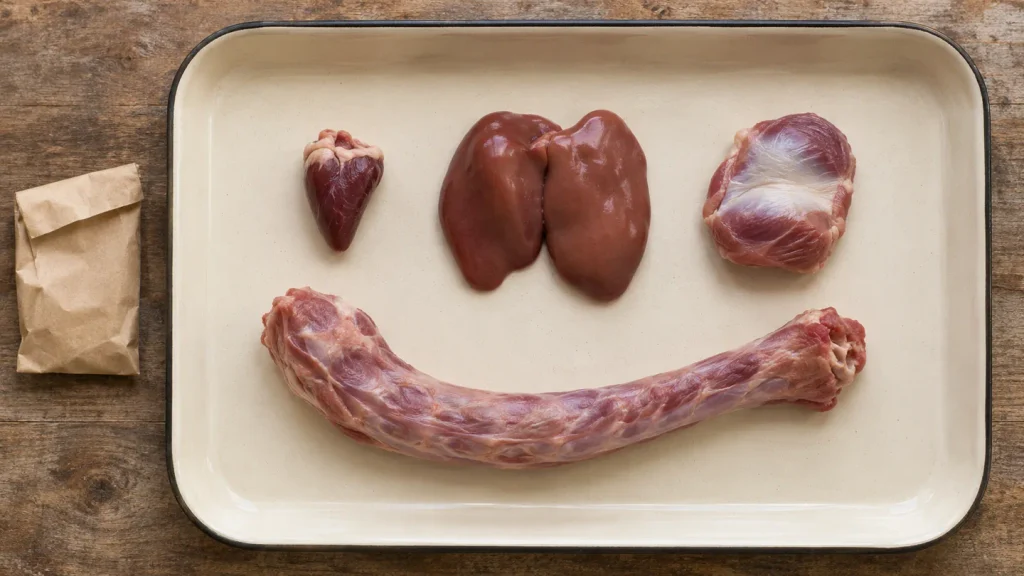
Each part cooks differently because it has a different texture. The heart and gizzard are muscular and benefit from a long, gentle simmer, while the liver cooks quickly. The neck brings bones and connective tissue to the pot, so it’s especially useful for stock.
Turkey Heart
A turkey heart is small, firm and dark red, with a flavor similar to dark-meat turkey. Once cooked, you can chop it into gravy or dressing, where its firmer texture adds a little bite.
If you’d rather try the heart on its own, halve it and sear it in tallow or butter, cooking it through to 165°F before slicing and serving.
Turkey Liver
Turkey liver is soft, reddish-brown and much richer-tasting than the other giblets. It can add depth to a small batch of gravy, but it dries out and turns grainy if cooked too long. That’s why many cooks add it toward the end or save it for pâté.
Turkey Gizzard
The gizzard is a thick muscle that helps a turkey grind its food. It’s tough when raw and doesn’t soften with a quick sear, so simmering is the easiest way to make it tender.
Allow about 1 to 2 hours at a gentle simmer, checking the texture as you go. Once tender and fully cooked, it’s mild enough to chop into gravy, dressing or rice.
Turkey Neck
The neck’s bones and connective tissue give simmering liquid its body, while the meat adds more turkey flavor. That’s why it’s especially useful for stock and gravy.
After cooking, pull the edible meat from the neck for gravy, then add the bones to turkey bone broth with the other bones saved from the roasted turkey.
Are Turkey Giblets Healthy?
Yes. Giblets are animal foods with distinct nutrient profiles, and turkey liver is especially notable for vitamin A, vitamin B12 and folate. Heart and gizzard contain protein and minerals, so using them gives you nutritional variety beyond breast meat.
Because the organs have different nutrient profiles, it helps to compare each one with breast meat on the same basis. The table below uses 100 grams of cooked meat for each food. The mixed-giblet column is a separate USDA sample of whole cooked giblets (FDC 171084), not an average of the other three organs.
| Nutrient, per 100 g cooked | Turkey liver | Turkey heart | Turkey gizzard | Mixed giblets* | Turkey breast, skinless |
| Protein | 27.0 g | 24.9 g | 26.4 g | 26.4 g | 29.5 g |
| Vitamin A (µg RAE) | 10,751 | 16 | 11 | 4,619 | 3 |
| Vitamin B12 (µg) | 28.2 | 13.9 | 3.91 | 15.9 | 1.76 |
| Folate (µg DFE) | 691 | 8 | 13 | 303 | 9 |
| Riboflavin (mg) | 2.69 | 1.54 | 0.36 | 1.54 | 0.19 |
| Iron (mg) | 1.79 | 6.96 | 3.68 | 3.39 | 1.0 |
| Zinc (mg) | 4.53 | 4.60 | 3.92 | 4.29 | 1.5 |
| Selenium (µg) | 102 | 56.8 | 44.1 | 71.1 | 30.7 |
| Copper (mg) | 1.05 | 0.82 | 0.27 | 0.69 | 0.10 |
Compared side by side, turkey liver stands out for vitamin A and B12. Breast meat still supplies protein, but including the organs adds different nutrients to what you’d otherwise get from the bird.
A Note on Vitamin A
Turkey liver contains preformed vitamin A, or retinol, which the body uses in processes including vision and immune function. Because it’s so concentrated, portion size matters, especially if you eat liver often.
For adults, the upper intake limit for preformed vitamin A is 3,000 micrograms RAE per day. USDA data put cooked turkey liver at about 10,751 micrograms per 100 grams, so a large serving can exceed that limit. A little liver distributed through a batch of Thanksgiving gravy is a different amount from a large serving every day. People who are pregnant or could become pregnant need particular care with high vitamin A intakes.
Why Do So Many People Throw Giblets Away?
Part of the reason giblets are overlooked is that they don’t resemble the cuts most people cook every day. Preparation matters, too. Liver can turn grainy if overcooked, while the gizzard needs time to soften, so treating them like ordinary turkey meat can be disappointing.
Yet organ meats have long had a place in cooking. In many cuisines, offal goes into gravies, pies, skillet dishes and broths because it adds flavor and makes good use of the animal.
There’s a nutritional reason to revisit those recipes, too. Liver offers a different nutrient mix from muscle meat, while heart contributes its own. Starting with a little chopped heart or gizzard in gravy lets you explore the flavor without taking on an unfamiliar dish.
How to Remove and Store Turkey Giblets Safely
Remove the giblet bag before roasting and handle the contents as raw poultry. Keeping them cold and cooking them thoroughly matters just as much with these small pieces as it does with the rest of the bird.
- Check both cavities: Look in both the body cavity and the neck cavity, since the bag and neck can be packed separately. Remove what you find before roasting.
- Skip the rinse: USDA advises against washing raw poultry because splashes can spread bacteria around the sink. Pat the giblets dry if needed, then wash your hands and utensils.
- Use a thermometer: Giblets should reach 165°F at the center, just like other poultry.
- Refrigerate promptly: The FoodSafety.gov cold-storage chart gives fresh chicken or turkey 1 to 2 days at 40°F or below, while USDA freezer guidance lists 3 to 4 months for giblets at best quality.
- If the bag was left inside: Arkansas Cooperative Extension explains that paper wrapping is not a concern. If a plastic bag melted or changed shape, discard the bird and giblets. If it stayed intact, the food can be safe once the turkey reaches 165°F.
How to Cook Turkey Giblets
For an easy first use, simmer the heart, gizzard and neck with a few aromatics. They’ll flavor the water as they soften, giving you a stock you can turn into gravy. Hold the liver until the end because it cooks much faster.

- Set the heart, gizzard and neck in a saucepan. Add enough water to cover, half an onion, one celery stalk, one bay leaf and a small pinch of salt. Keep the liver separate for now.
- Bring to a boil, reduce the heat and simmer gently for 1 to 2 hours, or until the gizzard is tender when pierced.
- Add the liver for the final 10 to 15 minutes. Check that each organ reaches 165°F with a food thermometer.
- Strain the liquid into a heat-safe container. This is your giblet stock, the base of a savory gravy.
- Pull the edible meat from the neck. Chop the heart and gizzard finely, then add as much chopped liver as your family enjoys.
Taste the cooked pieces before adding them to the gravy. If you prefer a milder sauce, use the heart and gizzard, then cook the liver separately.
How to Make Giblet Gravy
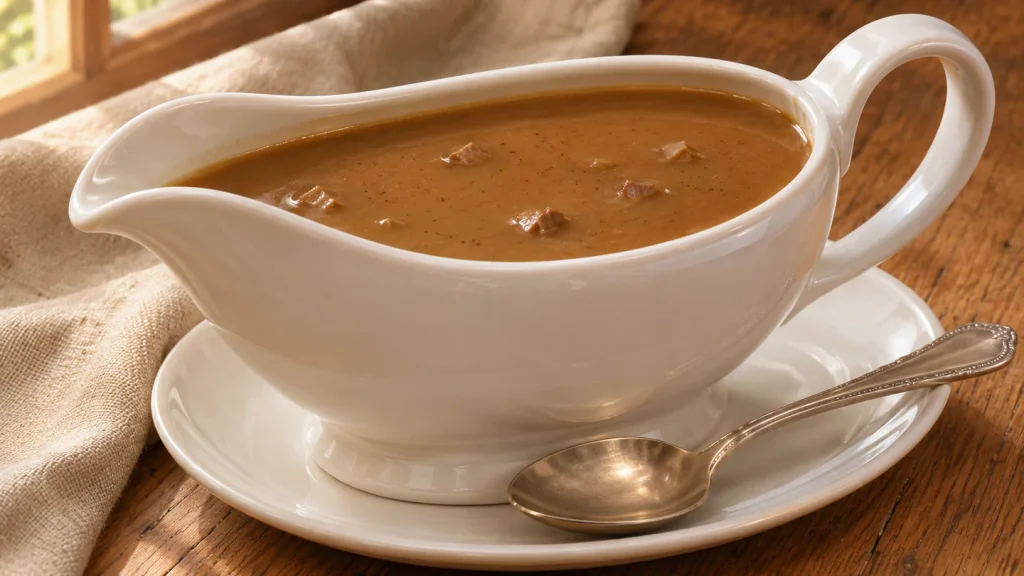
Giblet gravy starts with the stock you just made. Add turkey pan drippings and a simple flour-based roux for body, then stir in the cooked giblets so their flavor carries through the sauce.
- Pour the turkey pan drippings into a measuring cup and let the fat rise. Spoon off 3 to 4 tablespoons of the fat and keep the darker juices.
- Melt that turkey fat in a saucepan. Butter or beef tallow also works. Whisk in the same amount of all-purpose flour and cook until the roux smells nutty and turns golden.
- Gradually whisk in 3 to 4 cups of warm giblet stock, along with the defatted pan juices. Simmer until the gravy coats the back of a spoon.
- Stir in chopped heart, gizzard and, if desired, some liver. Finish with salt, black pepper and a little sage.
Some Southern versions include chopped hard-boiled egg, which gives the gravy extra texture. And because you already have turkey fat in the pan, you can put it to work in the roux rather than reaching for vegetable oil. Our guides to seed oils and other cooking fats explain our approach to cooking fats in more detail.
Other Ways to Use Giblets
Once you’ve made gravy, the remaining cooked giblets don’t have to go to waste. Their different textures offer other ways to use them, especially if you want to explore organ meats beyond a holiday sauce.
- Stuffing or dressing: Mix finely chopped, fully cooked giblets into a pan of dressing for extra savory flavor. Don’t put raw giblets into stuffing inside the turkey.
- Turkey liver pâté: Blend fully cooked liver with softened butter, sautéed onion and thyme. Keep the seasoning simple because liver already has a strong flavor.
- Pan-seared hearts: Halve, dry and season the hearts, then sear in a little tallow and cook through to 165°F.
- Another pot of stock: Add the cooked neck bones and any other leftover turkey bones to a pot after dinner. Our turkey bone broth guide covers stovetop, slow cooker and pressure cooker methods.
Can You Buy Turkey Giblets on Their Own?
Yes. Butchers, poultry farms and some grocery meat counters sell hearts, livers and gizzards on their own. Turkey giblets may be harder to find outside the holidays, but chicken versions are often more readily available and can be cooked in similar ways.
If giblet gravy is on your Thanksgiving menu, check the label on the whole bird before buying. Not every turkey comes with the organ bag.
What If You Don’t Like the Texture of Organ Meat?
We think organ meats deserve a place in a nose-to-tail diet, although their flavor and texture take some getting used to. If you like the idea of including organs but don’t enjoy cooking liver, capsules offer another way to explore those ingredients alongside real food.
Our Beef Organs capsules contain freeze-dried grass-fed bovine liver, heart, pancreas, spleen and kidney. They’re meant to complement food, and our guide to beef organ supplements explains the ingredients in more detail.
Frequently Asked Questions
Once you know what’s in the bag, the remaining questions are mostly about how to prepare the giblets and which parts to use.
What are giblets in a turkey?
They’re the heart, liver and gizzard, usually packed in a bag inside the bird, often with the neck.
Are turkey giblets good for you?
They’re nutrient-dense organ foods. Liver is especially concentrated in vitamin A, vitamin B12 and folate, while heart and gizzard supply protein and minerals. Portion size still matters, particularly for liver.
What part of the giblets should you not use?
All three organs are edible when handled and cooked safely. Some cooks omit the liver from gravy because its flavor can dominate, then prepare it separately.
Do you cook giblets inside the turkey?
Remove the bag before roasting and cook the giblets separately to 165°F.
Is the turkey neck a giblet?
Technically no. The neck is commonly packaged with giblets and is excellent for stock, broth and gravy.
Make More of the Turkey You Bought
Once you know which part is which, that little bag offers more than a single gravy ingredient. The neck makes flavorful stock, the heart and gizzard add texture to dressing or gravy, and a little liver brings richness if you enjoy its stronger taste. You can use each part in a familiar recipe instead of learning an entirely new way to cook.
The nutritional differences are worth understanding, too. Turkey liver has much more vitamin A and vitamin B12 per 100 grams than breast meat, while the heart and gizzard have their own protein and mineral profiles. You don’t need to eat large portions of liver or treat every organ the same to appreciate what they contribute.
That’s how we look at nose-to-tail eating at Heart & Soil: respect the whole animal, understand the food in front of you, and make good use of it. After the meal, turn the leftover turkey bones into broth for soups and sauces, and the same bird can nourish more than one dinner.
Subscribe to future articles like this:
