
Most people think of beef and picture a steak.
We think that leaves some of the best nutrition on the animal.
A small serving of liver delivers an extraordinary concentration of vitamin A, B12, riboflavin, folate, copper, heme iron, choline, and complete protein. That is where the nickname “nature’s multivitamin” comes from.
Yes, muscle meat is excellent food. Organs bring another layer of nutrition because different tissues do different jobs in the animal and carry different nutrient profiles. Liver is the standout.
At Heart & Soil, liver belongs in the normal rotation of an Animal-Based diet, alongside meat, eggs, dairy, seafood, fruit, and other organs.
If you want help deciding how liver fits into what you already eat, our Health Success Team can help.
Table of Contents
What Does Nature’s Multivitamin Really Mean?
Calling liver nature’s multivitamin means you can get unusually high amounts of several essential nutrients from a surprisingly small piece of real food.
Take B12.
A 3-ounce serving of cooked beef liver provides about 70.7 mcg of vitamin B12, or nearly 30 times the Daily Value. And B12 is only one part of the story. Liver also stands out for preformed vitamin A, copper, riboflavin, folate, and heme iron.
This’s the bigger idea behind nose-to-tail nutrition.
We have become used to pulling individual nutrients out of food and putting them into separate bottles. Vitamin A over here. B12 over there. Iron in another pill. Copper somewhere else.
Liver already brings many of those nutrients together in one food.
Nature built a pretty impressive package before we started building supplement aisles.
The rest of an Animal-Based diet brings nutritional breadth. Meat provides abundant protein. Dairy brings calcium. Seafood adds iodine, selenium, and omega-3 fats. Fruit contributes vitamin C and carbohydrates.
Liver has a specific job within that larger diet. It packs a remarkable amount of micronutrition into very little food.
What Makes Beef Liver So Nutrient-Dense?
Beef liver is nutrient-dense because the liver is one of the most metabolically active organs in the animal. Its work requires it to handle, store, transform, and move an enormous range of nutrients and compounds.
That biology shows up on the plate.
Liver contains concentrations of vitamin A, B12, riboflavin, folate, copper, and iron that can far exceed those found in ordinary skeletal muscle. That is one reason nose-to-tail eating gives you nutritional variety that steak alone cannot provide.
There is also a strange myth that deserves retiring.
People sometimes hear that the liver helps process unwanted compounds and conclude that eating liver means eating a storage tank full of toxins.
That misunderstands what a liver does.
The liver is a processing plant. It transforms compounds, packages them for use or elimination, makes proteins, manages fuel, and stores valuable nutrients such as vitamin A, B12, iron, and copper.
The same biology that made people suspicious of liver is part of what makes it such remarkable food.
And that gets to the Heart & Soil view.
We spent generations eating the animal nose to tail. Then we decided muscle meat was normal and organs were weird.
Maybe liver was never the strange food. Maybe throwing away one of the most nutrient-dense parts of the animal was the strange part.
What Vitamins and Minerals Are in Beef Liver?
Beef liver is unusually rich in several nutrients that are harder to get in the same concentrations from muscle meat. The values below are based on raw beef liver data from USDA FoodData Central.
| Nutrient | Why Liver Stands Out | Normal Role |
| Vitamin A | Exceptionally rich in preformed retinol | Vision, immune function, skin, cell growth |
| Vitamin B12 | One of the richest common food sources | Red blood cells, nervous system, DNA synthesis |
| Riboflavin | Far higher than most muscle meats | Energy metabolism, antioxidant systems |
| Folate | Unusually rich for an animal food | DNA synthesis, red blood cell formation |
| Vitamin B6 | Meaningful contribution | Amino-acid metabolism, nervous-system function |
| Copper | Exceptionally concentrated | Iron metabolism, connective tissue |
| Heme iron | Highly bioavailable animal-derived form | Hemoglobin, oxygen transport |
| Choline | Meaningful amounts | Cell membranes, neurotransmitters |
| Selenium | Solid contribution | Antioxidant enzymes, thyroid processes |
| Protein | Complete, as whole food | Muscle and tissue maintenance |
Liver’s Standout Nutrients Explained
Vitamin A
Beef liver is one of the richest food sources of preformed vitamin A, also called retinol.
Your body uses vitamin A for vision, immune function, skin, and normal cell growth. Unlike provitamin A carotenoids from plant foods, retinol is already in a form the body can use directly.
That also means total intake matters. The adult upper limit for preformed vitamin A is 3,000 mcg RAE per day from food and supplements combined.
Pregnancy deserves extra attention here. Too much preformed vitamin A during pregnancy can affect fetal development, so liver intake should be considered alongside prenatal vitamins, cod liver oil, and other supplements.
Vitamin B12
Liver is also exceptionally rich in vitamin B12. B12 supports red blood cell formation, nervous-system function, and DNA synthesis.
If you’re already getting enough, more B12 doesn’t suddenly create extra energy. But liver can be a strong food source for keeping intake up.
People who eat little animal food, take metformin or acid-suppressing medication, or have had bariatric surgery may need to pay closer attention to B12 status.
The Rest of the B Vitamins
Liver doesn’t stop at B12. It also provides riboflavin, folate, B6, niacin, pantothenic acid, and biotin.
Together, these nutrients help with energy metabolism, red blood cell formation, and nervous-system function.
They’re part of the reason a small serving of liver brings so much nutritional value to the diet.
Copper
Liver is extremely rich in copper. Copper helps with iron metabolism, connective tissue formation, and antioxidant enzyme activity.
Because liver contains so much, it’s worth paying attention to other sources in your routine. Organ supplements, multivitamins, and separate copper products can all add to the total.
The adult upper limit is 10 mg per day.
People with Wilson disease or another disorder that affects copper metabolism should get medical guidance before making liver a regular part of the diet.
Heme Iron and Blood-Supporting Nutrients
Liver provides heme iron, the form of iron found in animal foods.
It also brings B12, folate, B6, riboflavin, and copper, all of which play roles in normal red blood cell formation.
Heme iron is generally absorbed more efficiently than nonheme iron from plant foods, but liver isn’t a treatment for every kind of anemia.
If iron deficiency is suspected, bloodwork matters. B12 deficiency, folate deficiency, and iron-deficiency anemia all need different approaches.
For more, see our guide to beef liver for iron.
People with hereditary hemochromatosis or iron overload should be especially careful with regular liver intake.
Choline
Choline helps build cell membranes, supports lipid transport, and is used to make the neurotransmitter acetylcholine.
Liver is a strong food source.
That doesn’t mean eating liver “detoxes” your body. It simply gives your own liver, brain, and other tissues nutrients they already use.
Complete Protein
Fresh beef liver provides complete protein with all essential amino acids.
That said, liver is usually eaten in small amounts, so it shouldn’t replace larger protein staples like beef, eggs, dairy, seafood, or poultry.
Freeze-dried liver capsules provide even less total protein. Their main value is concentrated liver-derived micronutrients, not serving as a protein source.
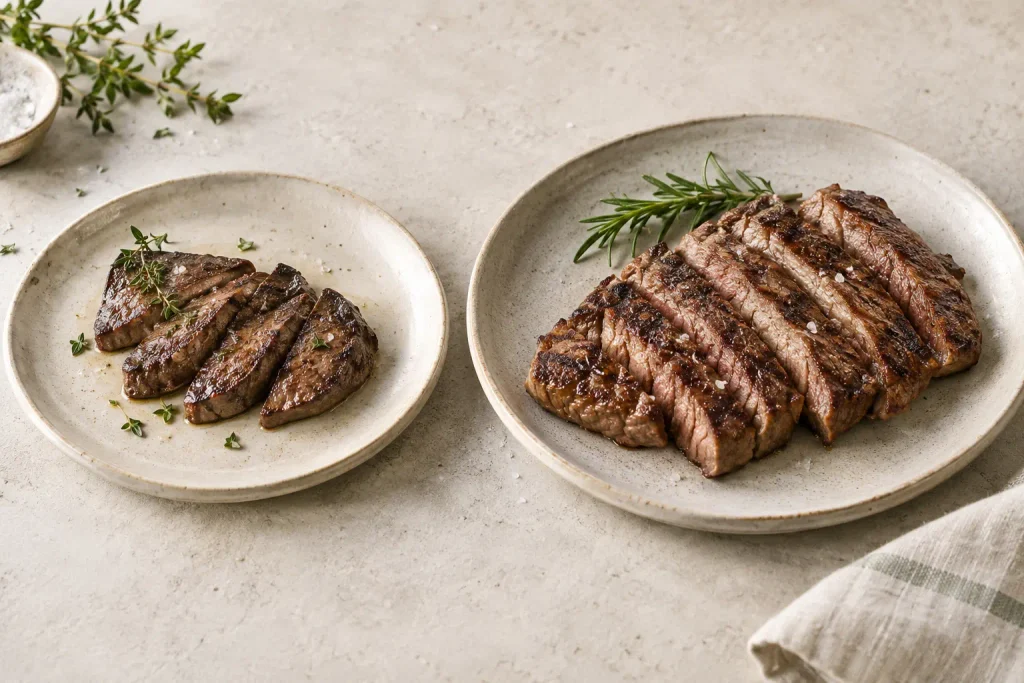
How Does Liver Compare With Muscle Meat?
| Feature | Beef Liver | Beef Muscle Meat |
| Vitamin A | Exceptionally high | Generally low |
| Vitamin B12 | Exceptionally high | Good source |
| Riboflavin | Exceptionally high | Lower |
| Folate | High for an animal food | Generally low |
| Copper | Exceptionally high | Much lower |
| Zinc | Present | Often excellent |
| Protein | Complete | Complete |
| Main excess concern | Vitamin A and copper | Depends on cut and diet |
Liver and muscle meat do different jobs, which is why Heart & Soil takes a broader nose-to-tail approach.
Muscle meat gives you most of the protein and calories in a meal. Liver brings a much denser hit of certain vitamins and minerals in a smaller portion.
A 2024 review of edible offal found that organ meats often match or exceed skeletal muscle for specific micronutrients, though the exact profile depends on the organ.
And liver is only one piece of the picture. Heart, kidney, spleen, pancreas, marrow, and other organs all bring something different to the table.
Can Liver Replace a Multivitamin?
Liver can replace a lot of what people are hoping to get from a multivitamin, especially vitamin A, B12, riboflavin, folate, copper, and iron. Heart & Soil would rather build that foundation from food than make a daily pill the center of the plan.
That is the bigger issue with the “nutritional insurance” idea.

A multivitamin can make it feel like the diet matters less because the gaps are supposedly covered later. Heart & Soil flips that around.
Build the diet around meat, organs, eggs, dairy, seafood, fruit, and other animal-based foods first. Then look at what is actually missing.
Liver earns such a prominent place because it brings several important nutrients together in one food. Preformed vitamin A, B12, heme iron, copper, folate, riboflavin, and choline all show up in the same tissue.
What Nutrients Does Liver Lack?

- Vitamin C: Liver isn’t a reliable source here. Fruit like oranges, berries, mango, and kiwi can help cover it.
- Calcium: Dairy, sardines with bones, and bone-based foods or supplements do more of the work here.
- Magnesium: Liver isn’t especially rich in magnesium. Seafood, dairy, fruit, avocado, and mineral-rich water can help fill that gap.
- Vitamin D: Fatty fish, egg yolks, sunlight, and targeted supplementation where needed are better sources.
- Vitamin E: Eggs, seafood, avocado, and other foods in the broader diet contribute more.
- Fiber: Liver contains none. Fruit and root vegetables can add it when desired.
- Omega-3 fats: Salmon, sardines, mackerel, and other fatty fish are much stronger sources.
Heart & Soil’s animal-based grocery list shows how liver fits into the bigger picture.
The point isn’t to make the liver do everything but to use it for what it does exceptionally well. Then, let the rest of the diet cover the rest.
Liver vs. Conventional Multivitamin
| Feature | Liver or Liver Supplement | Conventional Multivitamin |
| Source | Whole animal tissue | Isolated vitamins and minerals |
| Nutrient amounts | Naturally variable | Usually standardized |
| Main strengths | Vitamin A, B12, riboflavin, folate, copper, iron | Broad coverage, defined Daily Values |
| Main gaps | Several nutrients low or absent | Depends on formulation |
| Dose precision | Lower | Higher |
| Excess risk | Vitamin A, copper, iron | Depends on formulation and stacking |
A multivitamin gives you standardized amounts across a wider nutrient panel. Liver gives you a much denser hit of certain nutrients in whole-food form.
Heart & Soil still starts with food. Liver naturally provides preformed vitamin A, heme iron, B12, riboflavin, copper, folate, choline, and other nutrients in the tissue they came from.
That doesn’t mean every whole-food nutrient is automatically absorbed better than its isolated counterpart. It just means the liver brings a lot of nutrition to the table in a very small serving.
Are Whole-Food Vitamins Better Absorbed?
Many nutrients in animal foods come in forms your body can use very efficiently. Liver is a good example. Its vitamin A is already in the preformed retinol form, and its iron includes highly bioavailable heme iron.
That’s what Heart & Soil likes about whole food. You are getting nutrients as part of a nutritional package, not one isolated number on a label.
Some isolated vitamins and minerals are absorbed very well too, and precise dosing has a clear place when bloodwork or a specific life stage calls for it.
For everyday nourishment, though, Heart & Soil starts with foods that already carry a lot of the nutritional work.
Your body was built to get nutrients from food. Give it the foods that bring the most to the table.
Fresh Liver vs. Freeze-Dried Liver
Fresh liver is the food-first option. You get the whole food, including protein, calories, water, vitamins, minerals, and everything else naturally present in the tissue.
Freeze-dried liver makes that easier to maintain. It removes water, keeps the product shelf-stable, and avoids the taste and prep that stop a lot of people from eating liver regularly.
The two aren’t identical serving-for-serving, but freeze-dried liver is a practical way to keep liver in the routine when fresh liver isn’t realistic.
Research on freeze-drying supports its ability to limit prolonged heat exposure and preserve quality and some heat-sensitive compounds, though the exact retention depends on the food and the processing method.
Meet Heart & Soil Pure American Liver
Pure American Liver is the simpler option if you want liver and nothing else.
It’s made from freeze-dried beef liver sourced from grass-fed, pasture-raised cattle on American family farms. Each capsule contains 500 mg, with 180 capsules per bottle.
Pure American Liver is also NSF Certified, giving you an independent quality signal beyond sourcing and processing claims. You can read more about Heart & Soil’s third-party certification standards.
The appeal is that you get concentrated liver nutrition without having to cook or taste fresh liver every day.
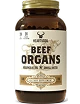
Heart & Soil Beef Organs
Beef Organs takes the same idea further by combining liver with heart, pancreas, spleen, and kidney.
That gives you a broader nose-to-tail mix of organ-derived nutrients, including vitamin A, B12, riboflavin, B6, biotin, heme iron, copper, iodine, CoQ10, and vitamin B5.
If you specifically want liver, Pure American Liver is the cleaner choice. But if you want more variety from several organs in one formula, Beef Organs makes more sense.
Five organs still don’t make the product nutritionally complete, but they do give you a wider range of whole-food nutrients than liver alone.
For more on what each organ brings to the table, see our guide to organ meat benefits.
Pure American Liver vs. Beef Organs
Pure American Liver and Beef Organs can be taken together. They simply bring different levels of organ variety to the routine.
| Product | Ingredients | Main Emphasis | Best Fit |
| Pure American Liver | Liver only | Focused liver nutrients | Readers specifically seeking liver |
| Beef Organs | Liver, heart, pancreas, spleen, kidney | Broader nose-to-tail nutrition | Readers wanting wider organ variety |
| Conventional multivitamin | Standardized isolated nutrients | Broad, measured coverage | Readers needing defined amounts |
Pure American Liver keeps things simple with one organ. Liver brings concentrated vitamin A, B12, riboflavin, folate, copper, heme iron, and other naturally occurring nutrients.
Beef Organs widens the lens. You still get liver, plus heart, pancreas, spleen, and kidney, each with its own nutritional profile.
Taking both gives you more liver alongside greater nose-to-tail variety.
For a broader comparison, see our guide to the 7 best beef organ supplements.
Can You Take Liver With a Multivitamin?
Yes. Liver can fit alongside a multivitamin, but the full nutrient picture matters.
Fresh liver, liver capsules, Beef Organs, cod liver oil, prenatal vitamins, and multivitamins can all contribute preformed vitamin A, copper, iron, B12, folate, selenium, and other nutrients.
The goal isn’t to avoid overlap completely, but to know where concentrated nutrients are coming from.
Liver is real food, and its nutrients still count toward total intake. If a multivitamin is being used for a diagnosed deficiency or specific clinical reason, follow the dosing plan from the healthcare professional managing it rather than adjusting it around liver intake independently.
Is Liver Safe to Take Every Day?
Yes. Heart & Soil generally recommends around 0.5–1 ounce of liver per day as part of a broader nose-to-tail animal-based diet.
That small daily amount reflects how nutrient-dense liver is. It doesn’t take a large serving to bring meaningful amounts of vitamin A, B12, copper, heme iron, folate, choline, and other nutrients into the diet.
Heart & Soil’s daily organ-intake guidance places total organ intake at roughly 1–3 ounces per day, with about 0.5–1 ounce coming from the liver.
Total intake still matters, especially for preformed vitamin A and copper. The adult upper limit for preformed vitamin A is 3,000 mcg RAE per day from food and supplements combined, so fresh liver, organ supplements, cod liver oil, multivitamins, and separate vitamin A products should be considered together.
For a deeper look at that balance, see Heart & Soil’s guide to vitamin A toxicity.
Who Should Be Careful With Liver Supplements?
- People who are pregnant or trying to conceive, since excess preformed vitamin A can affect fetal development
- People with hereditary hemochromatosis or another iron-storage disorder
- People with Wilson disease or another copper-metabolism disorder
- People with gout, since organ meats are high in purines
- People with liver or kidney disease
- People already taking Pure American Liver, Beef Organs, Lifeblood, cod liver oil, or a multivitamin together
- Children, without pediatric guidance first
For a broader look at sourcing, contaminants, vitamin A, and food safety, see our guide to eating liver safely.
What a Whole-Food Multivitamin Routine Should Include
Liver works best as part of the bigger animal-based picture.
Use muscle meat for your main protein, organs for a wider mix of micronutrients, eggs and dairy for additional protein and minerals, seafood for omega-3 fats, and fruit or root vegetables for carbohydrates, vitamin C, and fiber.
The goal isn’t to make liver do everything. It’s to let each food bring something different to the diet.
How to Choose a Whole-Food Multivitamin Product
Don’t buy the front label. Read what’s actually in the bottle.
A good whole-food multivitamin should make a few things easy to verify:
- Clearly named ingredients. Liver, heart, kidney, and other organs should be listed plainly, not buried in a vague proprietary blend.
- A real serving size. Check milligrams per capsule, capsules per serving, and the total amount of organ tissue you’re actually getting.
- Nutrient disclosure. A clear Supplement Facts panel is more useful than broad claims about “whole-food nutrition.”
- Transparent sourcing. Grass-fed, pasture-raised, and traceable sourcing are all worth looking for.
- Processing details. Freeze-dried, desiccated, or heat-dried should be stated clearly.
- Third-party testing. Look for testing around identity, purity, contaminants, and label accuracy.
- Reasonable claims. Be skeptical of anything promising perfect absorption, detoxification, or every nutrient your body needs.
For more on sourcing and testing, see our organ supplement safety guide.
Common Myths About Liver and Multivitamins
| Myth | Reality |
| Liver contains every vitamin and mineral | It’s exceptionally rich in some nutrients and much lower in others, including calcium, magnesium, and vitamin C |
| Liver completely replaces a multivitamin | It can cover a lot of ground, but not every nutrient or individual need |
| Synthetic vitamins can’t be absorbed | Many isolated vitamins and minerals are absorbed and used just fine |
| Whole-food nutrients can’t be overdone | Too much preformed vitamin A, copper, or iron can still be a problem |
| Liver “detoxes” your body | Liver provides nutrients, eating it doesn’t perform a cleanse |
| Liver capsules equal a full serving of fresh liver | Capsules contain much less total food, protein, and calories |
Is Pure American Liver the Best Whole-Food Multivitamin?
If you specifically want liver, Pure American Liver is the cleaner choice. It gives you freeze-dried liver from grass-fed, pasture-raised American cattle in a simple, single-organ formula.
If you already eat liver regularly, though, you may not need it. And if you want a broader range of organs, Beef Organs is the better fit because it adds heart, pancreas, spleen, and kidney.
Neither one is a complete conventional multivitamin. They’re food-based organ supplements with different strengths.
Nature’s Multivitamin Still Has Limits
Liver earned the “nature’s multivitamin” nickname. But the bigger picture is even better.
Different foods bring different things to the table. Liver brings concentrated micronutrients. Meat brings protein, zinc, creatine, and B vitamins. Dairy brings calcium. Seafood brings iodine, selenium, and omega-3 fats. Fruit brings vitamin C and carbohydrates.
Pure American Liver makes that one organ easy to keep in the routine. Beef Organs brings liver together with heart, pancreas, spleen, and kidney for broader nose-to-tail nutrition.
The real win is putting the missing parts of the animal back into the diet.
Still deciding what fits your routine? Talk with Heart & Soil’s Health Success Team.
Frequently Asked Questions
Is liver a natural multivitamin?
Liver is called a natural multivitamin because it concentrates vitamin A, B12, riboflavin, folate, copper, heme iron, choline, and other nutrients into a remarkably small serving. Within Heart & Soil’s Animal-Based approach, it is one of the most valuable foods for building micronutrient density.
Why is beef liver called nature’s multivitamin?
Beef liver is called nature’s multivitamin because few foods deliver so many essential vitamins and minerals in such a small amount. Vitamin A, B12, riboflavin, folate, copper, iron, and choline are all naturally concentrated in liver.
Can organ meats replace a multivitamin?
Organ meats can cover many of the nutrients people commonly look for in a multivitamin, especially vitamin A, B12, riboflavin, folate, copper, and heme iron. Heart & Soil pairs organs with meat, eggs, dairy, seafood, and fruit to build broader nutrition from food.
What vitamins are in beef liver?
Beef liver contains vitamin A, B12, riboflavin, folate, vitamin B6, niacin, pantothenic acid, biotin, and other vitamins. B12 is especially concentrated, which is one reason a relatively small serving of liver can contribute so much nutrition.
What minerals are in beef liver?
Beef liver contains copper, heme iron, selenium, phosphorus, zinc, and other minerals. Copper and iron stand out because both play important roles in healthy blood formation, oxygen transport, and normal iron metabolism.
Is beef liver nutritionally complete?
Beef liver provides exceptional concentrations of several nutrients, while a broader Animal-Based diet supplies the rest. Meat, dairy, seafood, eggs, and fruit complement liver with calcium, vitamin C, omega-3 fats, additional protein, and other nutrients.
Is liver better than a multivitamin?
Liver is Heart & Soil’s preferred everyday source for nutrients such as vitamin A, B12, riboflavin, folate, copper, and heme iron because they arrive in real food. A targeted supplement still has a useful role when a specific nutrient needs to be delivered in a measured amount.
Does liver contain every vitamin?
Liver contains an impressive range of vitamins, especially vitamin A, B12, riboflavin, folate, B6, niacin, and biotin. Heart & Soil builds the rest of the diet around complementary foods such as dairy, seafood, eggs, and fruit.
Does liver contain vitamin C?
Beef liver contains some vitamin C, while fruit is Heart & Soil’s more dependable everyday source. Oranges, kiwi, berries, mango, and other fruit bring vitamin C alongside carbohydrates and other naturally occurring compounds.
Does liver contain vitamin D or calcium?
Beef liver contains relatively little vitamin D and calcium. Within an Animal-Based diet, dairy is a major calcium source, while egg yolks and fatty fish contribute vitamin D. Sunlight also plays an important role in maintaining vitamin D status.
Is a liver capsule the same as fresh liver?
Fresh liver and freeze-dried liver capsules both provide nutrients from real liver. Fresh liver also contributes more protein, calories, and food volume, while capsules make regular liver intake much easier when sourcing, cooking, travel, or taste gets in the way.
Is beef liver good for energy?
Beef liver supports normal energy metabolism by providing B12, riboflavin, iron, copper, and other nutrients your cells use every day. Heart & Soil also combines liver with other nutrient-dense animal foods when building a strong nutritional foundation for everyday energy.
Is it safe to take liver every day?
Daily liver can fit well in modest amounts. Heart & Soil generally recommends around 0.5 to 1 ounce per day as part of an Animal-Based diet, with total intake adjusted for other sources of vitamin A, copper, iron, and organ supplements.
What is Heart & Soil Pure American Liver?
Heart & Soil Pure American Liver is a freeze-dried beef liver supplement made from American, grass-fed, pasture-raised cattle. Each capsule contains 500 milligrams of liver, with 180 capsules per bottle, making regular liver intake easy without cooking or tasting fresh liver.
What’s the difference between Pure American Liver and Beef Organs?
Pure American Liver gives you liver only, while Beef Organs combines liver, heart, pancreas, spleen, and kidney. Pure American Liver goes deeper on one organ. Beef Organs brings broader nose-to-tail variety. They can also be used together when that fits your routine.
Can I take liver capsules with a multivitamin?
Liver capsules can be taken alongside a multivitamin. Compare total vitamin A, copper, iron, folate, B12, and selenium across everything you use so the stack stays intentional rather than accidentally doubling up on the same nutrients.
Who should not take liver supplements?
People who are pregnant or trying to conceive, have iron- or copper-storage disorders, gout, or liver or kidney disease should get individual guidance before adding liver supplements. The same goes for anyone already taking concentrated vitamin A, iron, or copper products.
Subscribe to future articles like this:
